



A CalenVoy guide
Vikings
in SwedenWhere to see the real Viking Age
Where the Viking Age can still be seen in Sweden, what is genuine and what is theatre, and how to put the places together into a trip.
Sweden has about 2,500 runestones, more than any other country. Many still stand outdoors, in fields, by churches and beside old roads.

Updated · 11 min read
The short answer
Birka and Uppsala,
then Gotland,
over five days
The Viking Age in Sweden is mostly in the ground, on stones and in museum cases, and the best of it is within two hours of Stockholm. Start on Lake Mälaren at Birka, the trading town on Björkö, and Hovgården across the water: a World Heritage Site since 1993. Add Uppsala for the royal mounds and the Valsgärde helmets, and the runestones of Uppland. With longer, Gotland has the silver and the picture stones. Go between late spring and early autumn, when the Birka boats run, and give it five days.
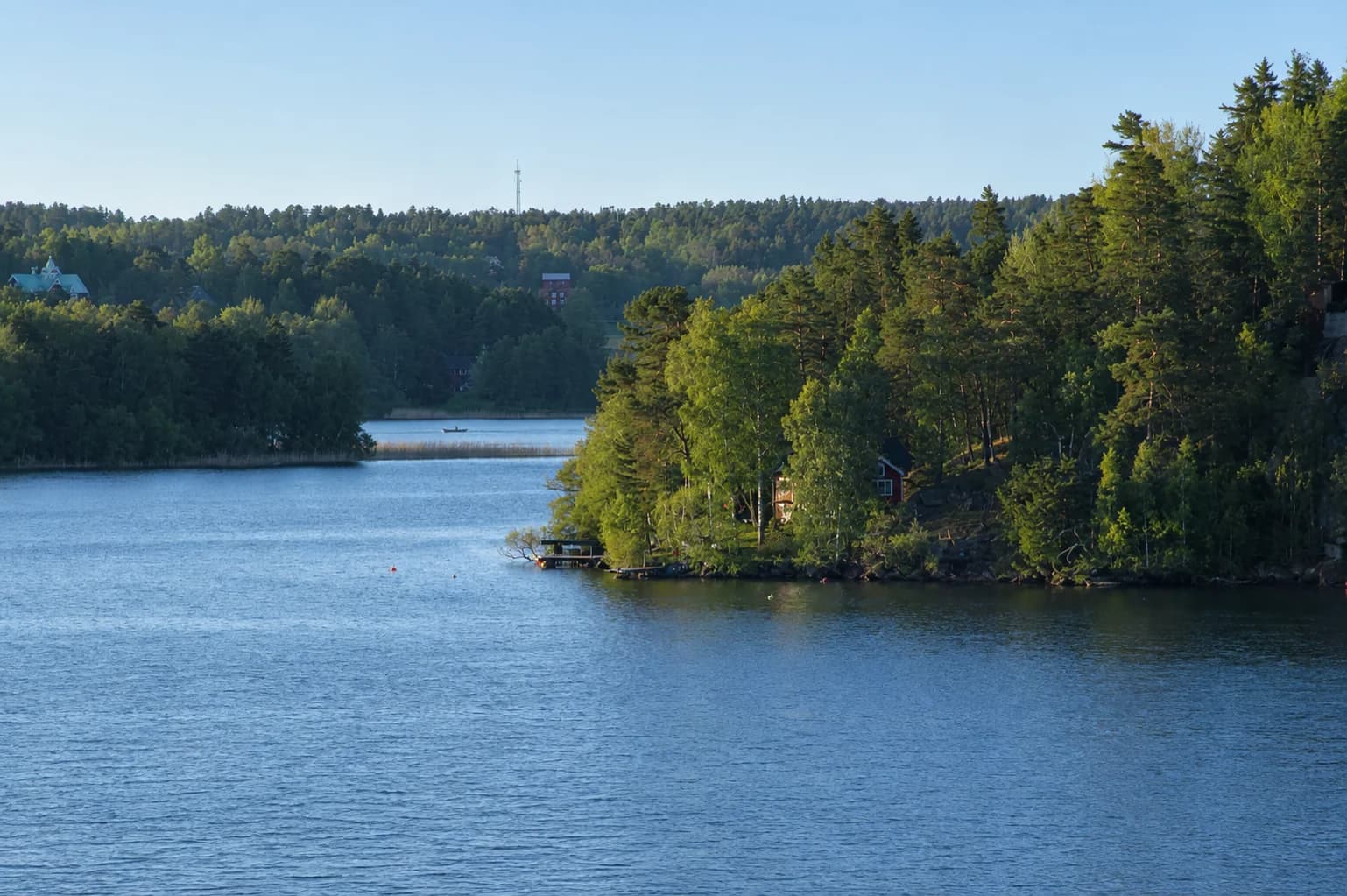
The three great mounds at Gamla Uppsala were raised in the 500s and 600s, generations before the first Viking raids.
Older than it looks
Much of what is sold as Viking is older, later or rebuilt. Knowing which is which is most of the pleasure.
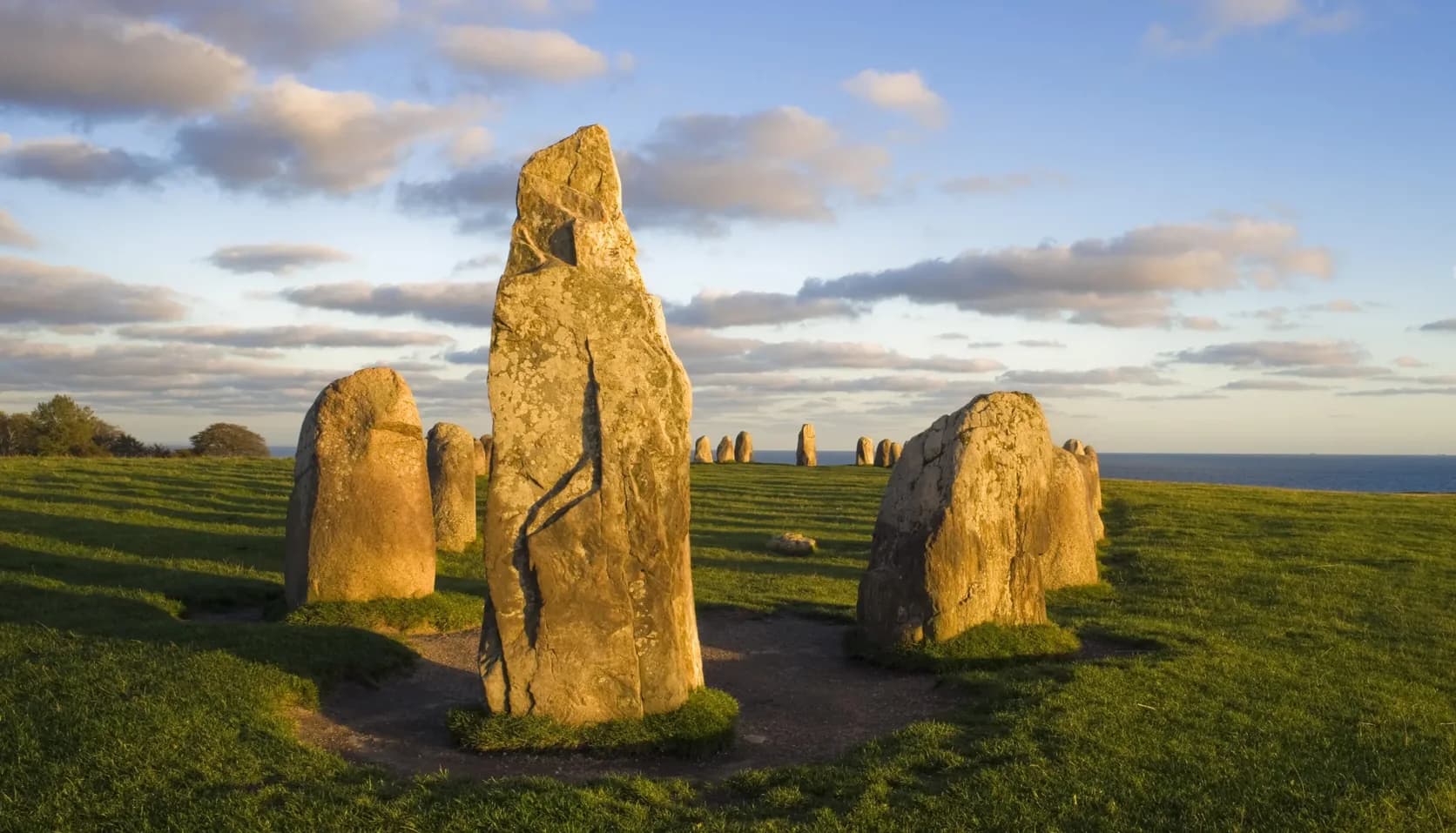
Ales stenar's 59 stones are dated to between about 600 and 1000: possibly Viking, possibly older.
Most of the Valsgärde helmets at Gustavianum come from that earlier period too.
What the Viking Age was
Historiska museet, the Swedish History Museum, puts the Viking Age at about 750 to 1100; Gotlands Museum uses 800 to 1050. Either is defensible. It is a period defined by what changed, not by a date carved on a stone.
What the museums agree on is the word. To go i viking was something you did: raiding or trading by sea. It was not the name of a people. Most Scandinavians of the period were farmers, and most of them never went.
That matters for a trip, because what survives in Sweden is mostly in the ground and in museum cases: graves, mounds, the outlines of towns, hoards of silver, and about 2,500 runestones. The best way to see it is to pair a site with the museum that holds its finds, and to go with someone who can read the ground.
Birka and Hovgården
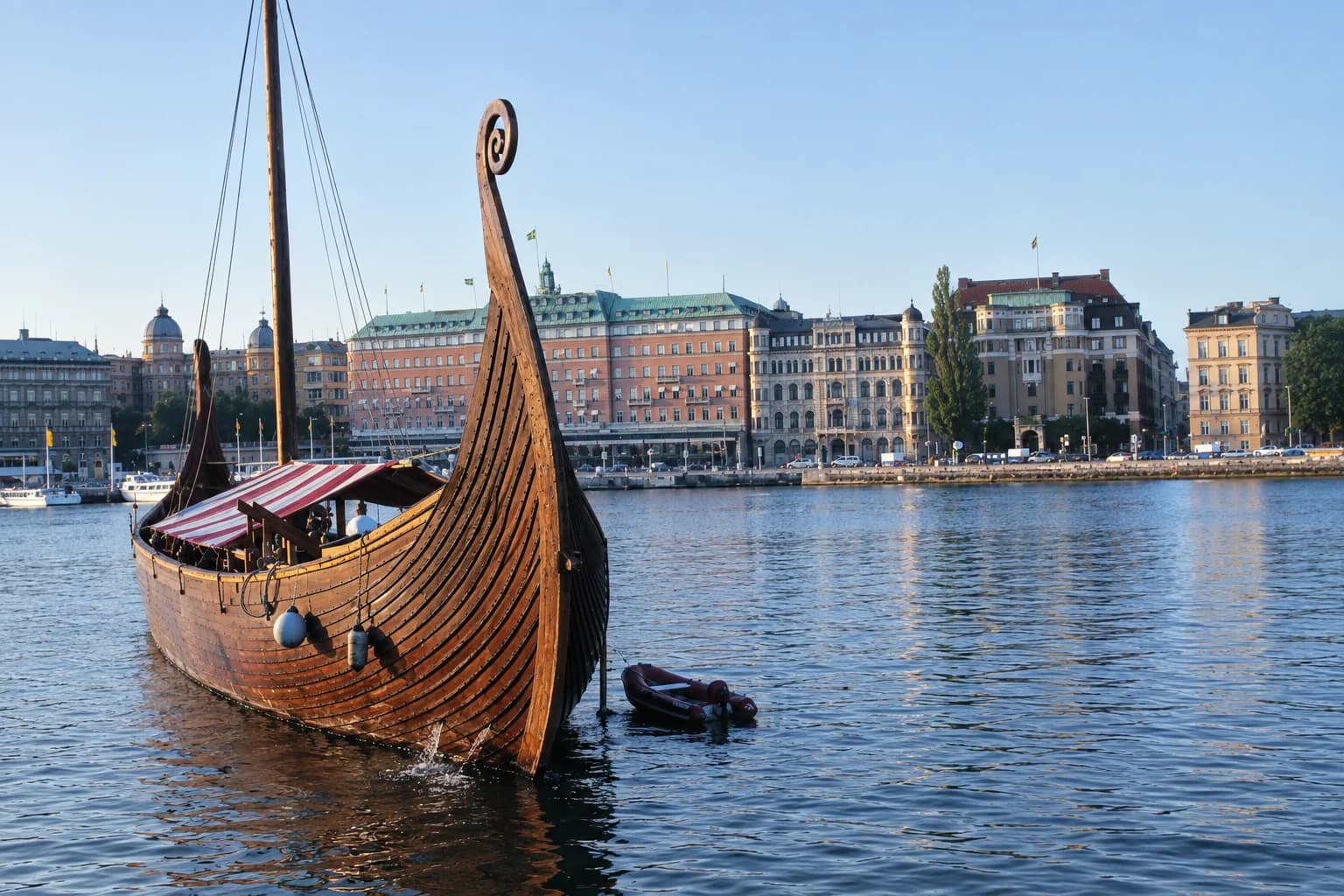
Birka was a trading town on the island of Björkö in Lake Mälaren. It was founded in the late 700s and abandoned around the 970s, after a little more than two hundred years, and it left more than 3,000 graves. UNESCO inscribed it in 1993 together with Hovgården, the royal estate on the neighbouring island of Adelsö. Today it is grass and the faint lines of the town, a reconstructed quarter of houses, and a museum.
The boats from Stockholm take about two hours each way. Strömma's 2026 season runs from 7 May to 25 October, at weekends only from late September, and the full day is just under eight hours, with three or so on the island. Two smaller operators also sail. The 2027 timetable is not yet published.
For a quieter Birka, stay the night. Five tents on the island open from 1 June to 30 August 2027, with dinner, breakfast, museum entry and a guided walk of the burial grounds, from SEK 3,980 for two. The boat is booked separately. When the last day boat leaves, the island empties.
Hovgården is the other half, and few people go. A free car ferry crosses from Munsö to Adelsö in about six minutes. There are the royal mounds, a medieval church, and a runestone from about 1075 to 1085 that names King Håkon and his steward Tolir. Nothing is built for visitors, which is the point, and also the reason to go with a guide.
Uppsala: the mounds and the helmets
Gamla Uppsala, on the northern edge of Uppsala and under an hour from Stockholm by train, is remembered as a centre of royal power and of the old religion. The three great mounds are the landmark, and they are older than the Viking Age: Upplandsmuseet dates them to the Vendel period, 550 to 800. The museum beside them is open daily from 11 to 17 between May and September and from Wednesday to Sunday the rest of the year. Adults pay SEK 150, under-20s nothing, and groups can book it outside opening hours.
Then go into town. Gustavianum, Uppsala University's museum, shows the finds from the boat graves at Valsgärde in an exhibition called The Dawn of the Viking Age: helmets, weapons and bridle fittings from men buried in their boats. Most of the graves are from the Vendel period too, which is what the title means. Private tours run for about an hour, for up to 30 people, from SEK 1,000.
The runestones
Sweden has about 2,500 runestones, the most of any country, and Uppland alone has more than 1,300. Most of Uppland's were raised in the 1000s, many by newly Christian families, to record a death, a bridge, a journey or a claim on land.
Two places near Stockholm make sense of them. At Jarlabanke's bridge in Täby, on the Runriket trail around Vallentunasjön, a local magnate had stones raised around 1050 to say that he built the causeway, and that he alone owned all of Täby. Sigtuna, founded around 970 and calling itself Sweden's oldest preserved town, has just over 30 known runestones; a walk through the town takes in fifteen of them.
Most runestones are not about raids. They are about family, land, and who inherited it.
Further afield, the Rök stone in Östergötland carries the longest runic inscription known, more than 760 characters cut in the 800s. One reading, published in 2020, argues that it is about the fear of a climate catastrophe. At the other end of the country, the Frösö stone outside Östersund is Sweden's northernmost, and records the man who had Jämtland made Christian.
Stockholm, indoors
Historiska museet has The Viking World, about 1,000 square metres and 2,500 objects, and the Gold Room. Adult tickets are SEK 180 and under-19s go free. It is the best single place in Sweden to see the period's objects, and it is busy in summer: a private tour early in the day is the way to do it.
The Viking Museum on Djurgården is a different thing: costumed guides and a ride through a saga, built for families and fun on those terms. Aifur, a tavern on Västerlånggatan in Gamla stan, serves mead and roast meat to live music most evenings. Both are theatre rather than history. Gamla stan itself is not a Viking town: Stockholm is first mentioned in 1252, long after the Viking Age ended.
Gotland: silver and picture stones
Gotland, out in the Baltic, was rich in the Viking Age, and it shows. Gotlands Museum in Visby records more than 700 Viking Age silver finds from the island. Its treasury holds the Spillings hoard, found in 1999 and weighing 67 kilograms, the largest preserved Viking Age silver hoard in the world. The picture-stone hall in the same building shows the carved stones that are Gotland's own: ships, riders and scenes from myth.
Outside Visby, Stavgard at Burs is a recreated settlement run by a local association, with crafts and archery in summer and group visits by arrangement. Gotland's best-known summer week is something else: Medieval Week in Visby celebrates the town's medieval past, not the Vikings, and the island books up around it. Gotland is a ferry crossing from Nynäshamn or a short flight from Stockholm.
Skåne and the west
In the far south, Ales stenar at Kåseberga in Österlen is a ship setting of 59 stones, about 67 metres long, on a headland above the sea. Statens fastighetsverk, which looks after it, dates it to between about 600 and 1000, so it may be Viking and may be older; what it was for is still debated.
Skåne was Danish in the Viking Age, and its sites look that way. Trelleborgen, in Trelleborg, is a ring fortress found in 1988 and a quarter rebuilt, linked to Harald Bluetooth in the later 900s, though its oldest phases are earlier. Foteviken, south of Malmö, is a reconstructed village of the late Viking Age, open on selected days, so check before you go.
On the west coast, Göteborgs stadsmuseum shows the Äskekärr ship, found in 1933 and built around 900 to 920: Sweden's only archaeologically excavated Viking ship on display. On Lake Vänern, the replica ship Sigrid Storråda takes private groups of 10 to 45 out to row, from about SEK 450 a head.
When to go, and getting around
The outdoor sites can be seen at any time of year, but the season that makes them work runs from late spring to early autumn: the Birka boats, the Gotland summer, Foteviken's open days. Historiska museet, Gustavianum and Gamla Uppsala's museum are open all year, so a winter trip can still be built around them. Midsummer falls on 25 June in 2027, and much closes that weekend, so plan around it. Our guide to the best time to visit Sweden has the months in full.
For Mälaren and Uppsala you do not need a car for the main sites: Birka is reached by boat, and Uppsala and Sigtuna by train and bus. Hovgården, Runriket and Anundshög, Sweden's largest burial mound, near Västerås, are far easier with a car or a driver.
The sites, honestly rated
What is genuine, what is rebuilt, and what is theatre. The last row is worth knowing about, not worth building a trip around.
- Birka · HovgårdenOur pickThe World Heritage Site on Lake Mälaren. Boats from Stockholm late spring to autumn; five tents on the island, 1 June – 30 August 2027.
- Gamla UppsalaThe moundsRoyal mounds of the 500s and 600s, a museum open all year, and the Valsgärde helmets at Gustavianum in town.
- Historiska museetThe findsThe Viking World and the Gold Room, in Stockholm. Open all year; SEK 180 for adults.
- Runriket · SigtunaThe stonesJarlabanke's bridge and Sigtuna's thirty-odd runestones. Free, outdoors, best with someone who reads runes.
- GotlandThe silverThe Spillings hoard and the picture stones at Gotlands Museum, Visby. A ferry or a flight away.
- Rök · AnundshögFurther outThe longest runic inscription known, in Östergötland, and Sweden's largest burial mound, near Västerås.
- Ales stenar · TrelleborgenSkåne59 stones above the sea, dated 600–1000, and a ring fortress a quarter rebuilt. Skåne was Danish then.
- Viking Museum · AifurTheatreBuilt for visitors in Stockholm, and fun on those terms. Not history.
Opening times, prices and dates are from each site's own published pages, checked in October 2026. 2027 dates are given only where they are already published.
Four places, and
one to know about
Stockholm for Mälaren and Uppsala, Visby for Gotland, Österlen and Falsterbo for the south, and one place people often mistake for Viking country.
- Our first choice
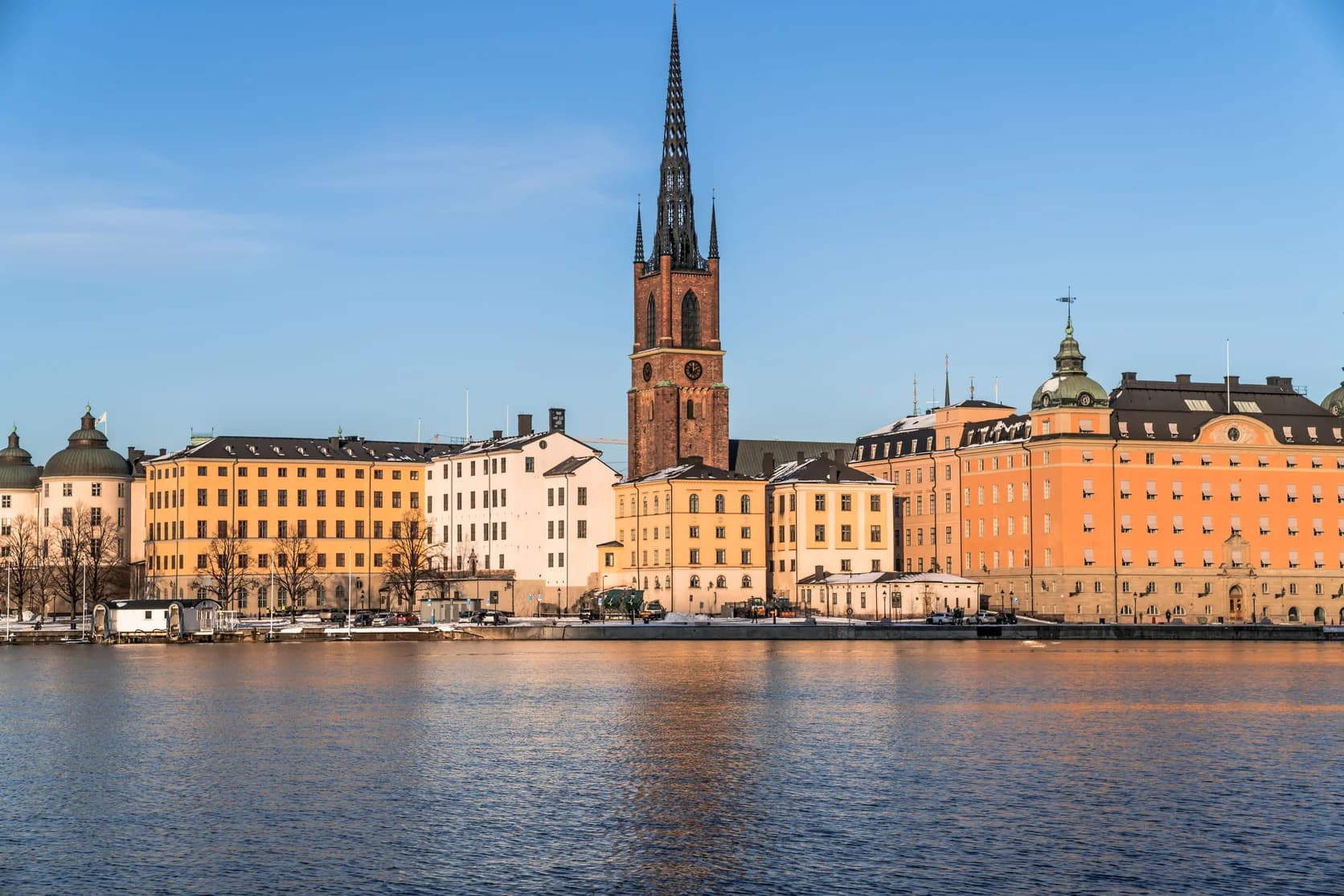
Stockholm
Historiska museet in town, Birka two hours away by boat, and Uppsala and Sigtuna by train.
The place - The silver
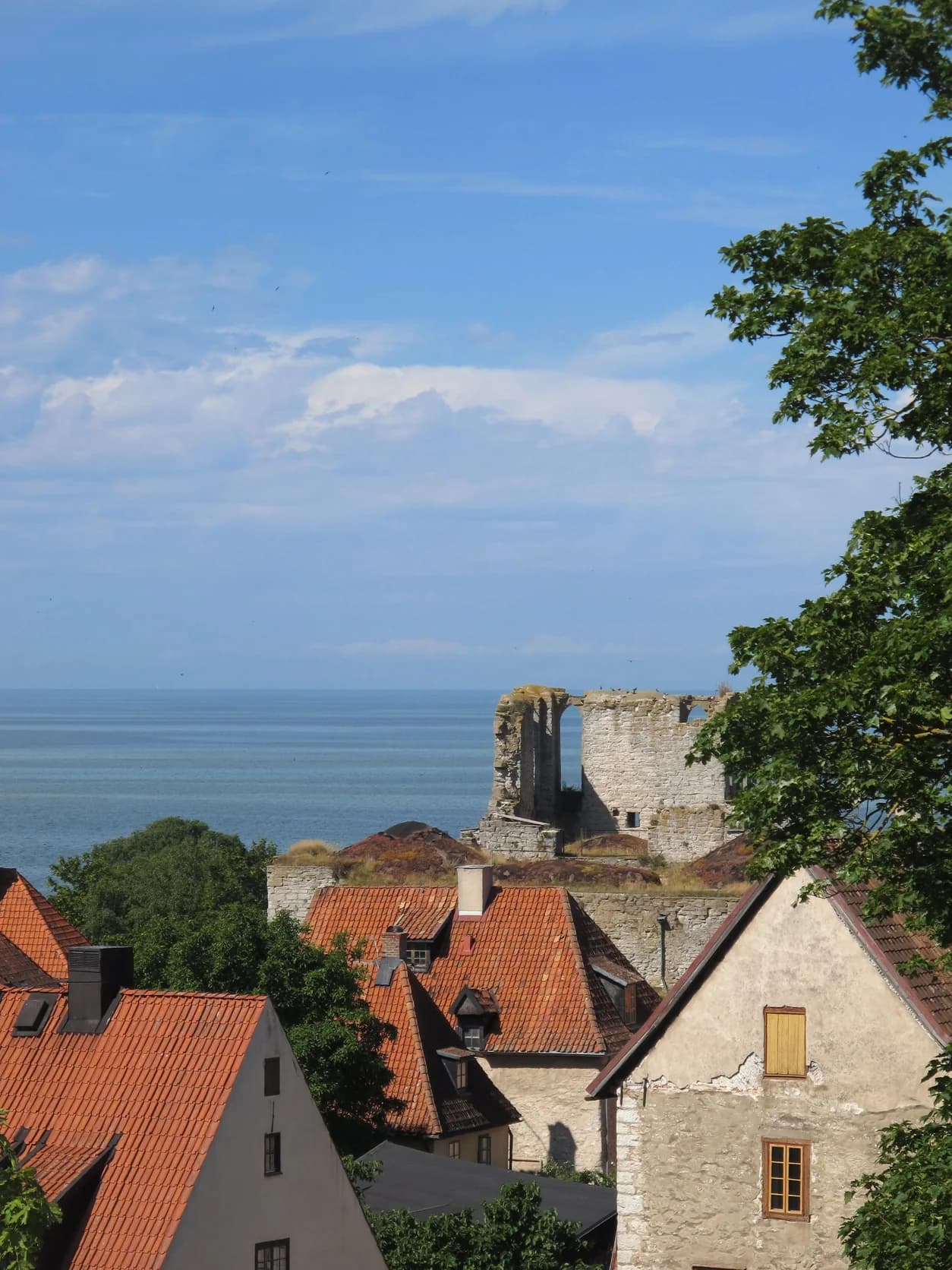
Visby
Gotlands Museum, the picture stones, and Viking Age sites all over the island.
The place - Ales stenar
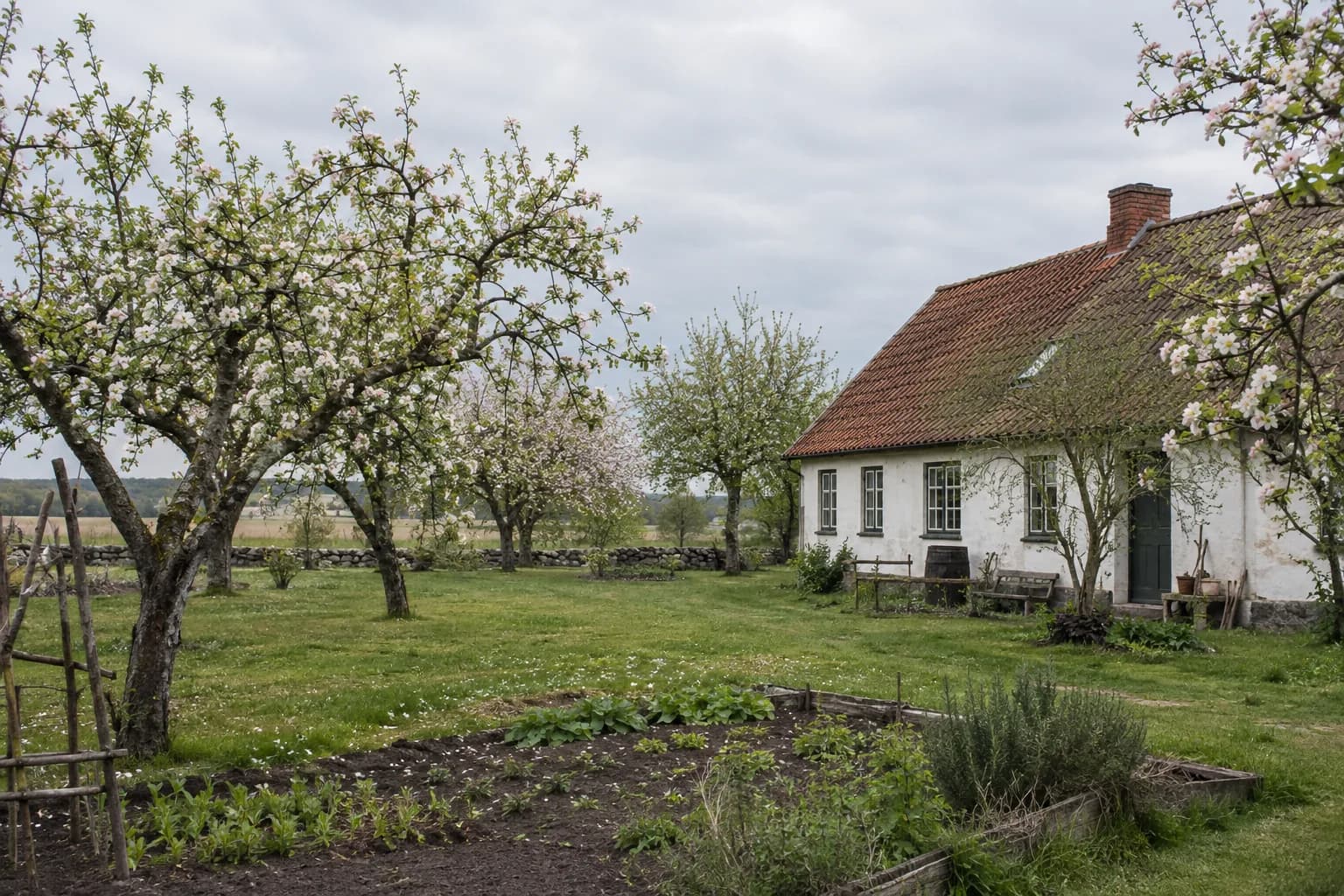
Österlen
The great ship setting above the sea at Kåseberga, with Trelleborgen within reach.
The place - Foteviken
Falsterbo
The Falsterbo peninsula, with the reconstructed Viking village at Foteviken on its way in. Check its open days.
The place - Not the Viking route
Stockholm archipelago
Beautiful, and often confused with it. Birka is inland, on Lake Mälaren, west of the city, not out among the skerries.
The place
How many days
to give it
Fivedays, around Lake Mälaren
Each of the great sites wants most of a day, and most of them are a boat, a train or a drive apart. Five days covers them without rushing.
- One or twoStockholm only: Historiska museet one day, Birka by boat the next.
- FiveBirka and Hovgården, Uppsala, the runestones and Sigtuna, with a night on Birka in summer.
- Eight or moreAdd three days on Gotland, or the drive south to Skåne.
Worth knowing
Six things people get wrong about the Vikings in Sweden
- “Vikings wore horned helmets.”No horned helmet has ever been found from the Viking Age. The horns come from costumes designed for Wagner's Ring cycle at Bayreuth in 1876.
- “The Vikings were a people.”Going viking was an activity: raiding or trading by sea. Most Scandinavians were farmers, and most never went.
- “The mounds at Gamla Uppsala are Viking graves.”They are older. Upplandsmuseet dates them to the Vendel period, 550 to 800.
- “Gamla stan is a Viking town.”Stockholm is first mentioned in 1252, long after the Viking Age. Birka, two hours west by boat, is the Viking town.
- “Medieval Week in Visby is a Viking festival.”It celebrates Visby's medieval past. Gotland's Viking Age is in Gotlands Museum and out in the fields.
- “Ales stenar is a Viking monument.”It may be. It is dated to between about 600 and 1000, so it may equally be older.
What to bring
- Comfortable walking shoes for grass, gravel and uneven ground
- A rain jacket: the open sites have little shelter
- A warm layer for the boat back from Birka in the evening
- Sun cream and a hat for long summer days outdoors
- A wide lens: mounds and ship settings are long and low
- An offline map: Runriket and Hovgården are spread out
- A card rather than cash: Sweden runs almost entirely on cards
- Respect for the graves: keep to the paths unless signs say otherwise
Questions
Where is the best place to see the Viking Age in Sweden?
Lake Mälaren, near Stockholm. Birka and Hovgården are the World Heritage Site, Historiska museet in Stockholm holds the finds, and Uppsala has the royal mounds and the Valsgärde helmets. Gotland is the best second region, for its silver and picture stones.
Can I visit Birka as a day trip from Stockholm?
Yes. The boat takes about two hours each way and the day is just under eight hours, with around three on the island. In 2026 the boats run from 7 May to 25 October, at weekends only from late September. The 2027 timetable is not yet published.
Can I stay overnight on Birka?
In summer, yes. Five tents on the island open from 1 June to 30 August 2027, from SEK 3,980 for two, with dinner, breakfast, museum entry and a guided walk. The boat is booked separately.
Is Historiska museet free?
No. Adult tickets are SEK 180; visitors under 19 go free. The Viking World and the Gold Room are both included.
How many runestones are there in Sweden?
About 2,500, more than any other country, and more than 1,300 of them in Uppland. The easiest to see from Stockholm are on the Runriket trail in Täby and Vallentuna, and in Sigtuna.
Are the royal mounds at Gamla Uppsala from the Viking Age?
No. Upplandsmuseet dates them to the Vendel period, 550 to 800, before the Viking Age. Gamla Uppsala stayed important through the Viking Age, which is why the two are so often confused.
Did Vikings really wear horned helmets?
No. No horned helmet has been found from the Viking Age. The image comes from 19th-century opera costumes, designed for Wagner's Ring cycle in 1876.
When is the best time to go?
Late spring to early autumn, when the Birka boats run and the outdoor sites are at their best. Historiska museet, Gustavianum and Gamla Uppsala's museum are open all year, so a winter trip can still work around them.
Is Aifur worth it?
As a fun evening, yes: mead, roast meat and live music in a cellar in Gamla stan. Treat it as theatre, not history.
Runsten: Swedish for a runestone. Sweden has about 2,500 of them, more than any other country.
Sources for this guide
- UNESCO — Birka and Hovgården
- Historiska museet — Birka chronology
- Historiska museet — Who were the Vikings?
- Historiska museet — The Viking World
- Historiska museet — Admission
- Strömma — Birka timetable 2026
- Strömma — Glamping at Birka
- Birka — How to get here
- Trafikverket — Adelsöleden ferry
- Runkartan — Hovgårdsstenen (U 11)
- Upplandsmuseet — Gamla Uppsala museum
- Upplandsmuseet — Group bookings
- Gustavianum — The dawn of the Viking Age
- Gustavianum — Guided tours
- Riksantikvarieämbetet — Runestones in Uppland
- Riksantikvarieämbetet — Runestones, a fragile heritage
- Vallentuna — Jarlabanke's bridge
- Destination Sigtuna — The history of Sigtuna
- Sigtuna — Runornas Sigtuna (runestone walk)
- Riksantikvarieämbetet — The Rök stone
- Forskning.se — The Rök stone and climate fear (2020)
- Riksantikvarieämbetet — The Frösö stone
- Gotlands Museum — The treasury
- Gotlands Museum — The picture-stone hall
- Stavgard
- Statens fastighetsverk — Ales stenar
- Statens fastighetsverk — Anundshög
- Västerås stad — Further looting at Anundshög (2026)
- Trelleborgs museer — Trelleborgen at 30
- Foteviken Viking village
- Göteborgs stadsmuseum — The Äskekärr ship
- Sigrid Storråda — Booking
- Museum of Cultural History, Oslo — The Gjermundbu helmet
- Aifur Krog & Bar
Plan a Viking Age trip.
Tell us when you can travel, and we will put the sites in the right order, with the boats, the opening days and someone who can read the stones.