



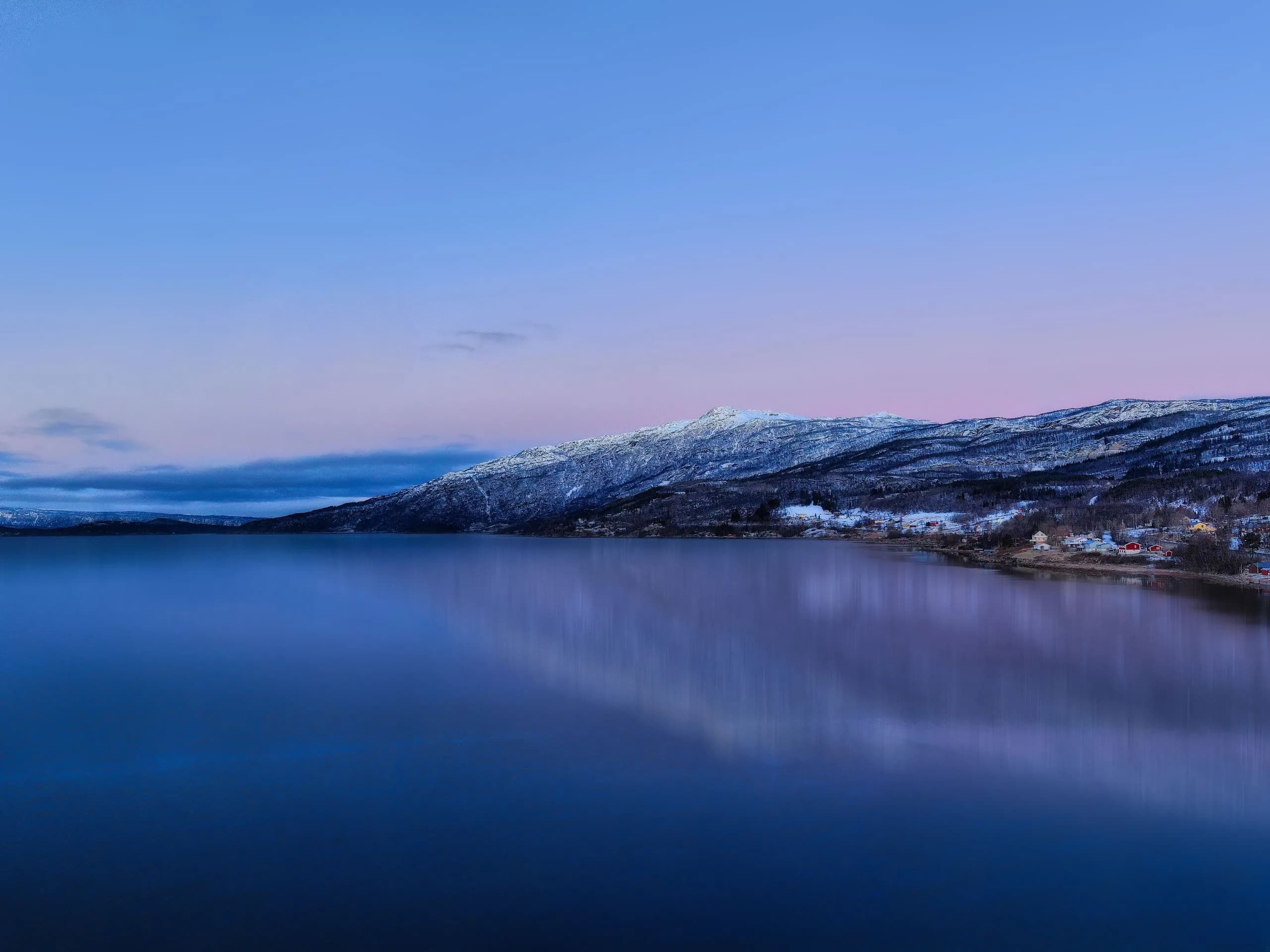
A CalenVoy guide
Polar Night
in SwedenWhere the sun does not rise, and for how long
Where in Sweden the sun stops rising, the 2026–27 dates place by place, what the light is actually like, and how to plan a December around it.
Polar night does not begin at the Arctic Circle. The sun still rises over Gällivare and Pajala, both well north of it.

Updated · 12 min read
The short answer
Abisko,
6 December to
6 January
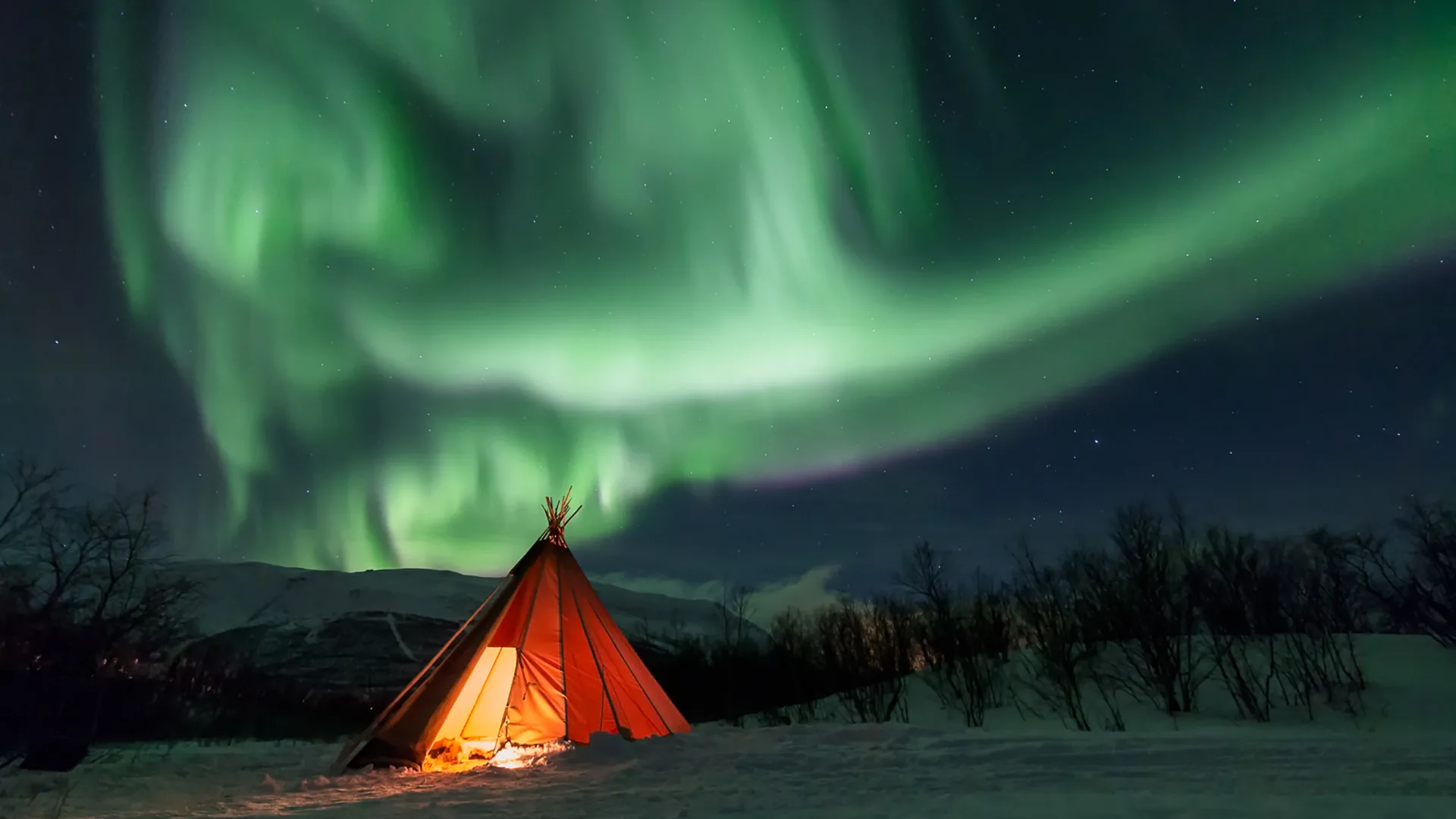
Polar night is the stretch of days when the sun does not rise at all. In winter 2026–27 that is 32 days at Abisko, from 6 December to 6 January, and 22 days at Kiruna and Jukkasjärvi, from 11 December to 1 January. It is not 24 hours of darkness: on the solstice Kiruna still has more than five hours of twilight, blue and violet over the snow. South of a line a little north of Gällivare and Pajala the sun keeps rising, for about an hour there, two at Jokkmokk and six in Stockholm. For the full effect, go to Abisko in mid-December, give it four nights, and spend the long evenings watching the sky.
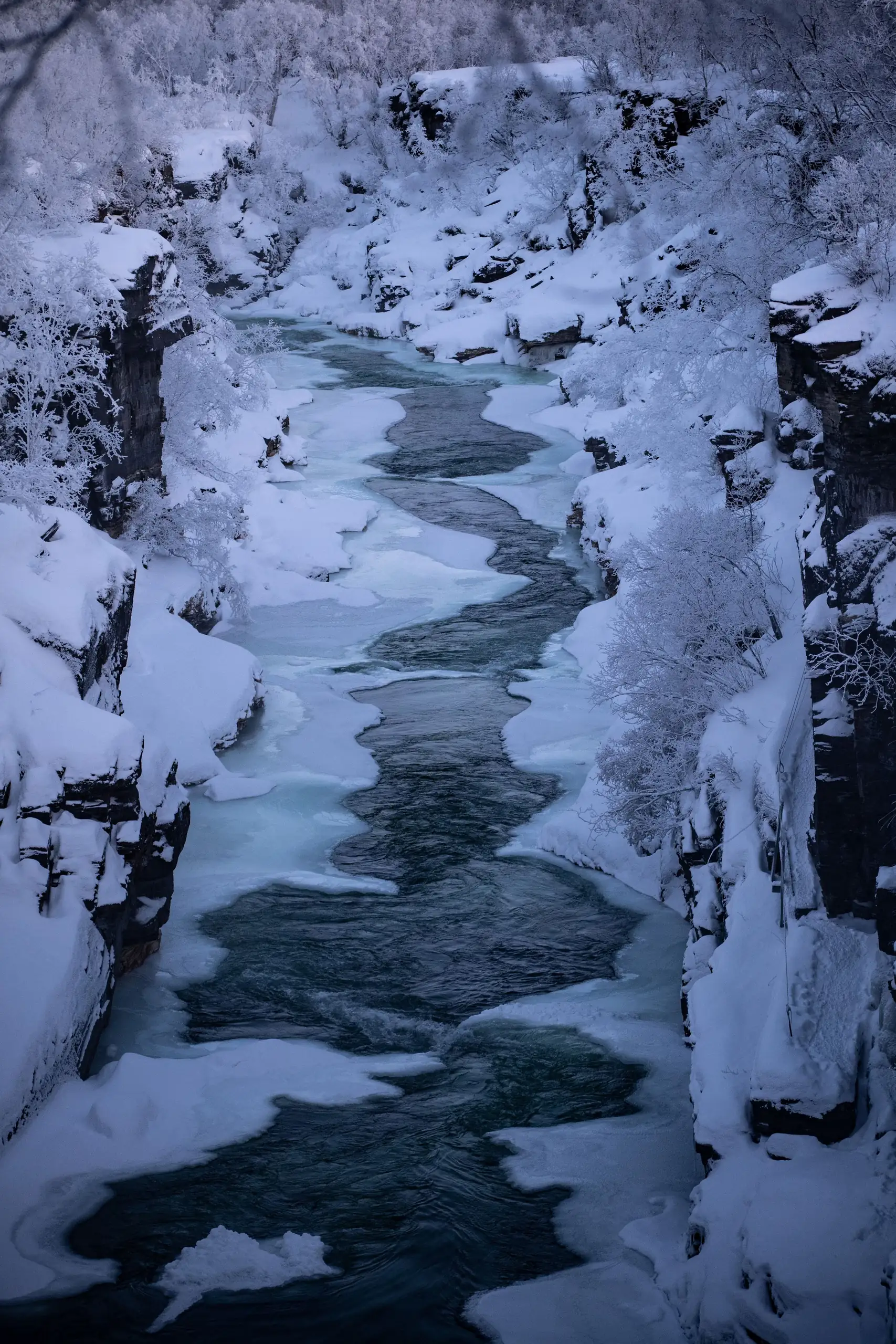
At Kiruna on 21 December 2026, civil twilight, the brightest stage before sunrise, runs from 08:56 to 14:18. Abisko has it from 09:08 to 14:16.
Twilight,
not darkness
Northern Sámi has a word for this time of year, skábma: the period of blue dusk.
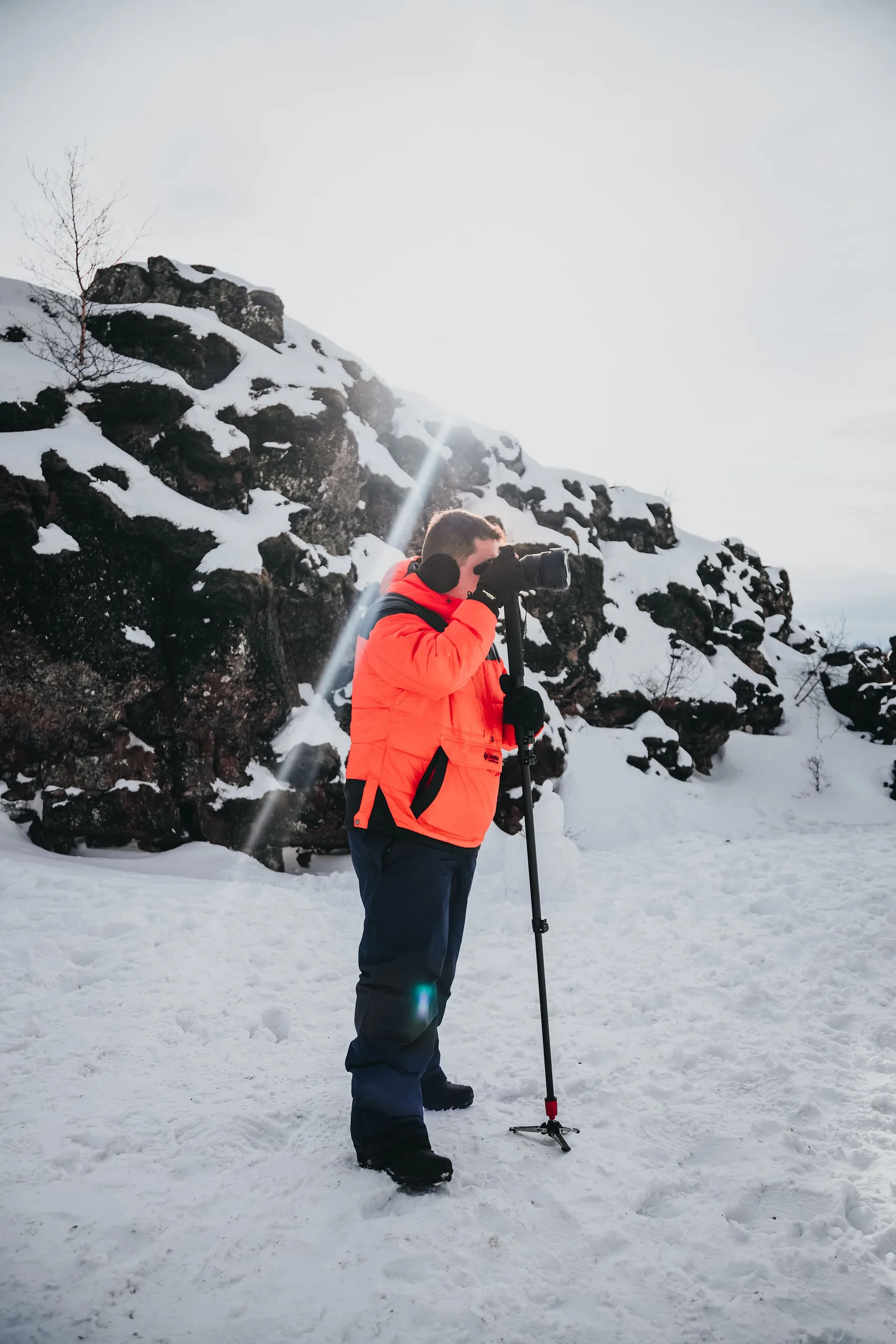
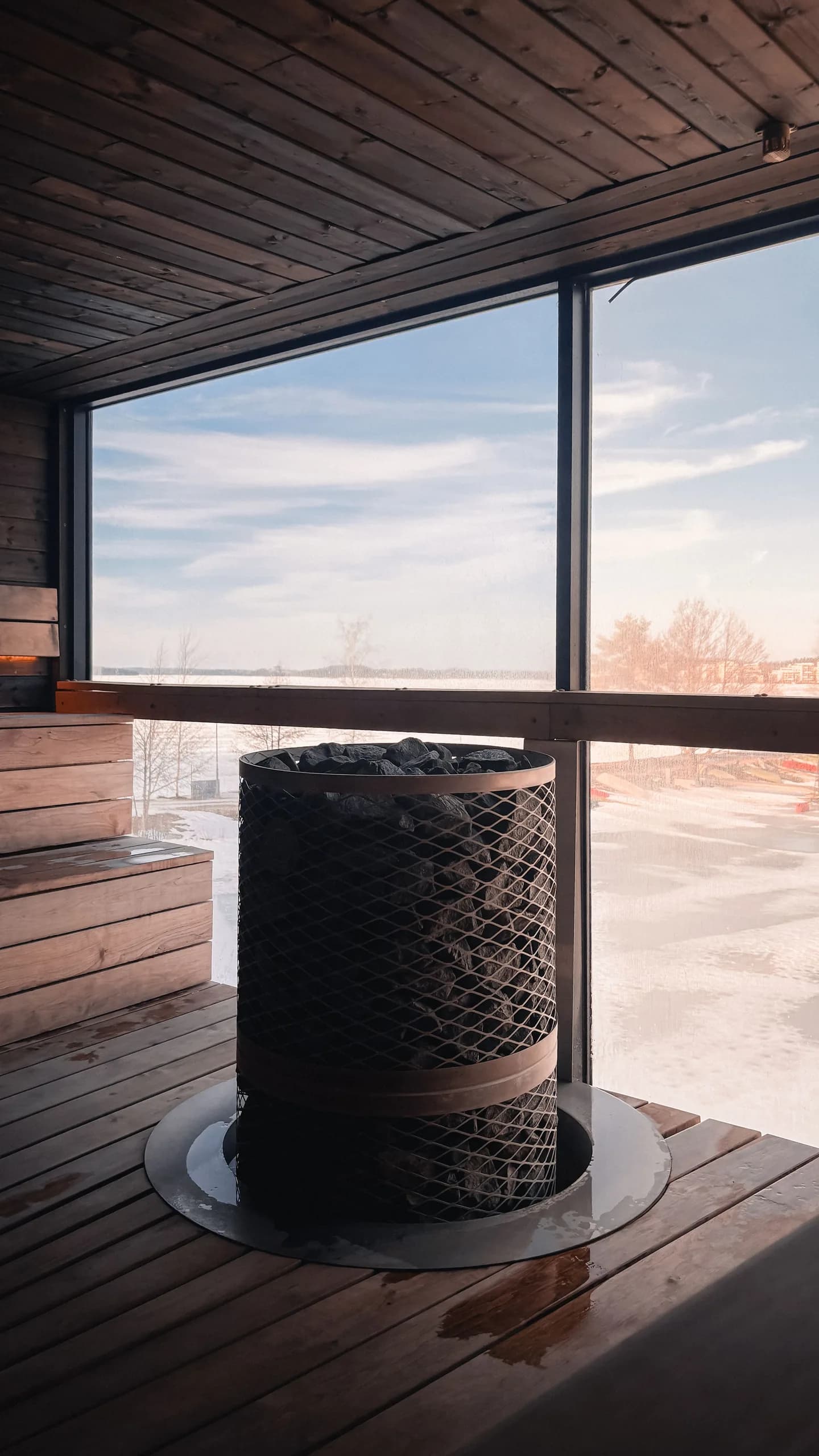
Snow, cloud and the moon decide how bright it feels. Fresh snow under a clear sky is brighter than you expect; the weeks before the snow comes are darker.
The winter solstice falls at 21:50 on 21 December 2026. After it, every day is a little brighter than the one before.
What counts as polar night
SMHI, the Swedish weather service, defines polarnatt simply: a day on which the sun never rises above the horizon. That is a statement about the sun, not about darkness. On those days the sun passes close beneath the horizon at midday, and the sky above it is lit for hours.
Exactly when a sunrise counts depends on a convention, and this is why the dates online do not agree. Sunrise is when the upper edge of the sun appears, not its centre, and the air bends the light so that the sun can be seen while it is still geometrically below the horizon. Svenska Almanackan, the Swedish almanac, counted from the sun's centre until 2013 and from its upper edge since 2014. Older figures, such as the 27 days that SMHI quotes for Kiruna from the 2013 almanac, were counted the old way and come out longer.
All of these dates assume a flat, open horizon. In a valley or under a mountain the sun disappears earlier and comes back later than the table says, and on a hilltop the reverse. Treat the dates below as the astronomer's answer, not a promise about the view from your cabin window.
Where in Sweden, and for how long
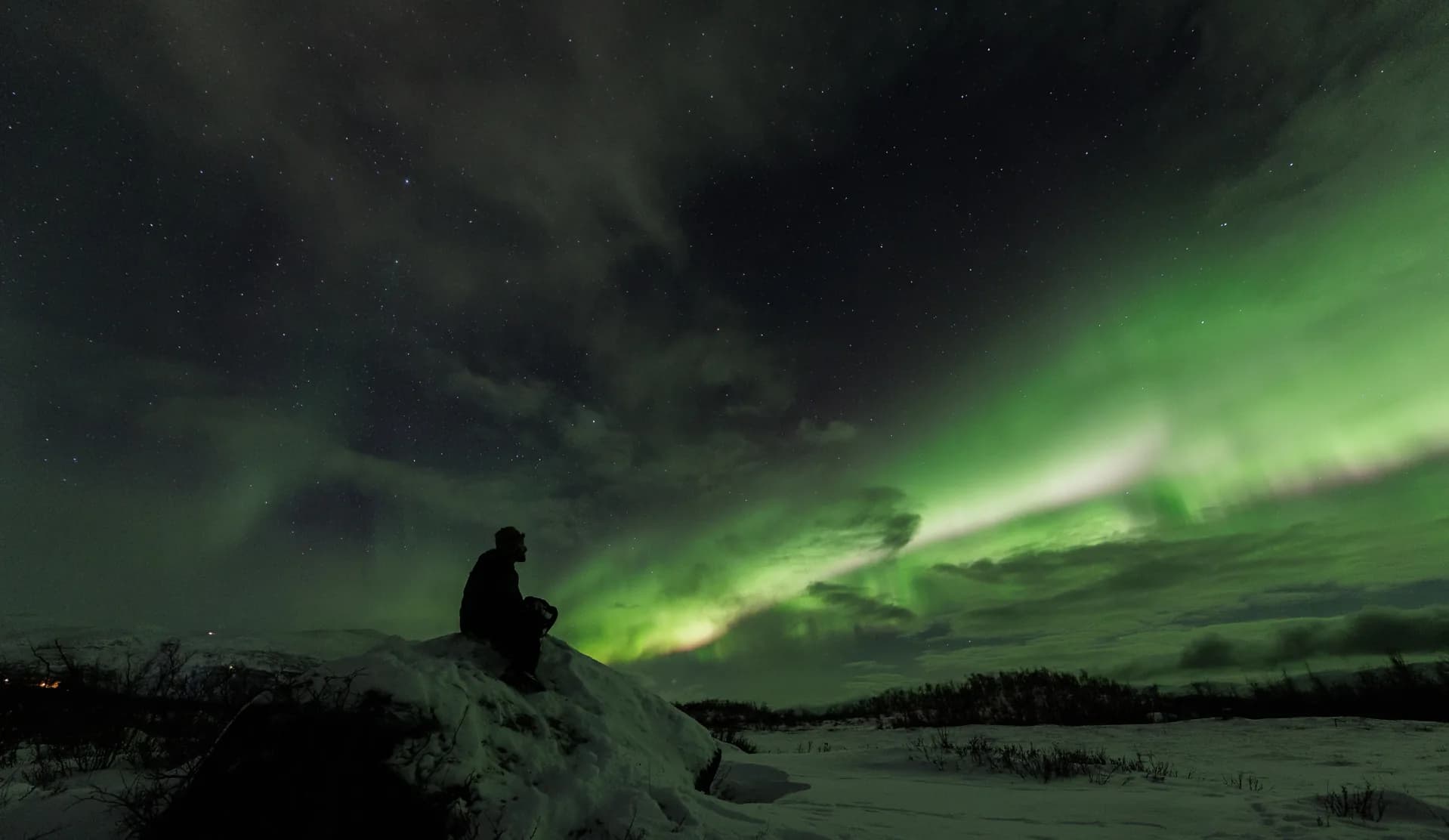
The further north, the longer it lasts. At Abisko, Björkliden and Riksgränsen, along the railway to Norway, the sun last sets on 5 December 2026 and does not rise again until 7 January 2027: 32 days without a sunrise, from 6 December to 6 January. At Kiruna and Jukkasjärvi the last sunset is on 10 December and the first sunrise on 2 January: 22 days, from 11 December to 1 January. At the far north-western tip, where Sweden, Norway and Finland meet, it is about six weeks.
The Arctic Circle is not the line. Because of the way sunrise is counted, SMHI puts the southern edge of polar night some tens of kilometres north of a line through Pajala and Gällivare. Both are north of the Arctic Circle, and both still see the sun on the shortest day: at Gällivare it rises at 10:58 and sets at 12:12 on 21 December 2026, and at Pajala it is up for about an hour.
Further south the days are short but real. On the solstice the sun is up for about two hours at Jokkmokk and three at Luleå and at Harads, six in Stockholm and seven in Malmö. The dates shift very little from year to year: in 2027–28 Abisko and Kiruna have the same 32 and 22 days, on the same dates.
What the days are like
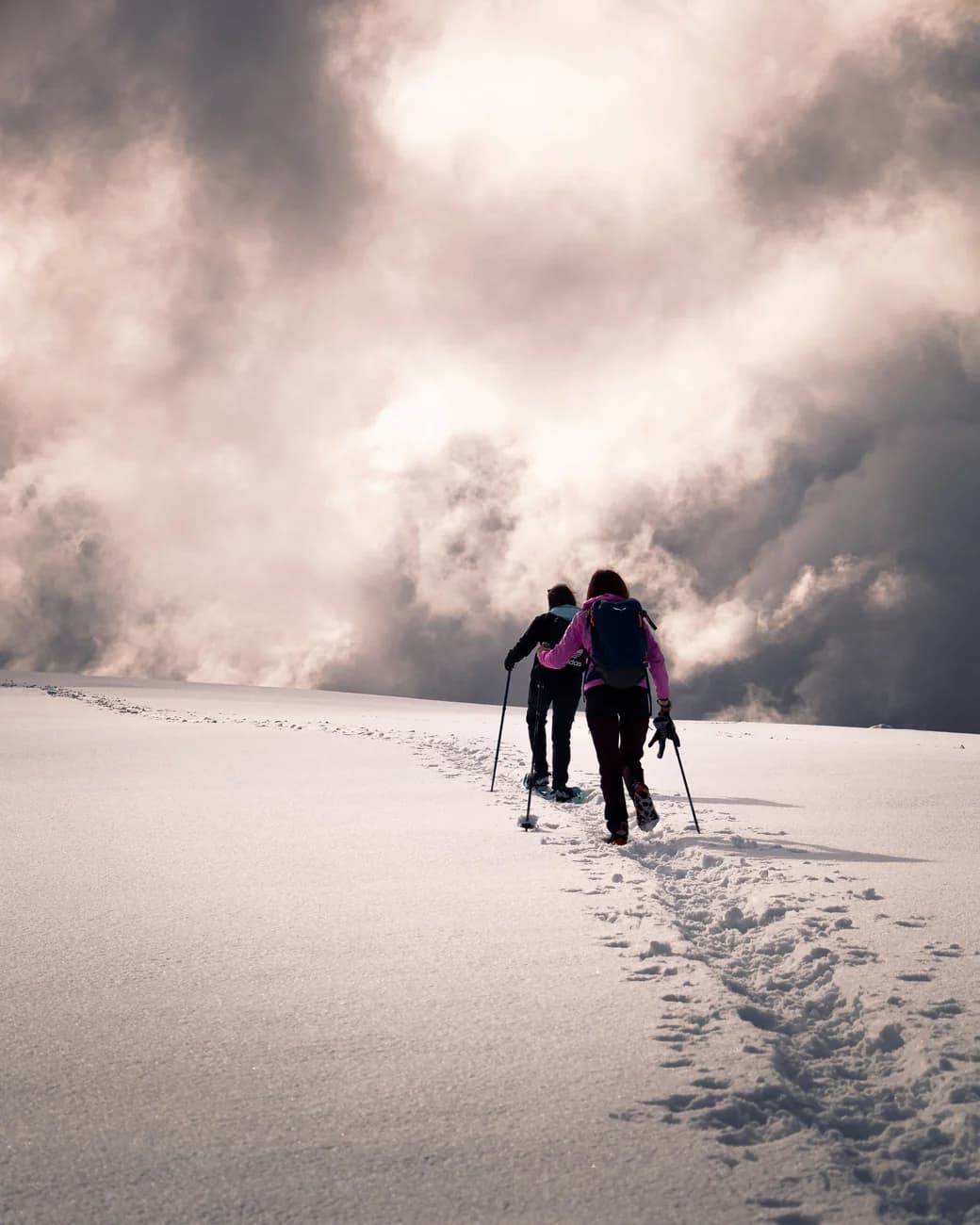
The middle of the day is twilight. On the solstice Kiruna has civil twilight from 08:56 to 14:18, and nautical twilight, dimmer, either side of it from about half past seven to a quarter to four. Abisko is much the same. In those hours you can walk, ski and see the mountains; the light never turns white, and stays in the blues and violets, with a band of orange along the southern sky where the sun is hiding.
How bright it feels depends on three things the almanac cannot tell you. Snow throws the light back up and makes everything brighter. Cloud flattens it. A moon, especially near full, can light the whole valley at night. The Sámi information centre at samer.se describes how the weeks before the snow can feel the darkest of the year, and how the first snow lightens the landscape.
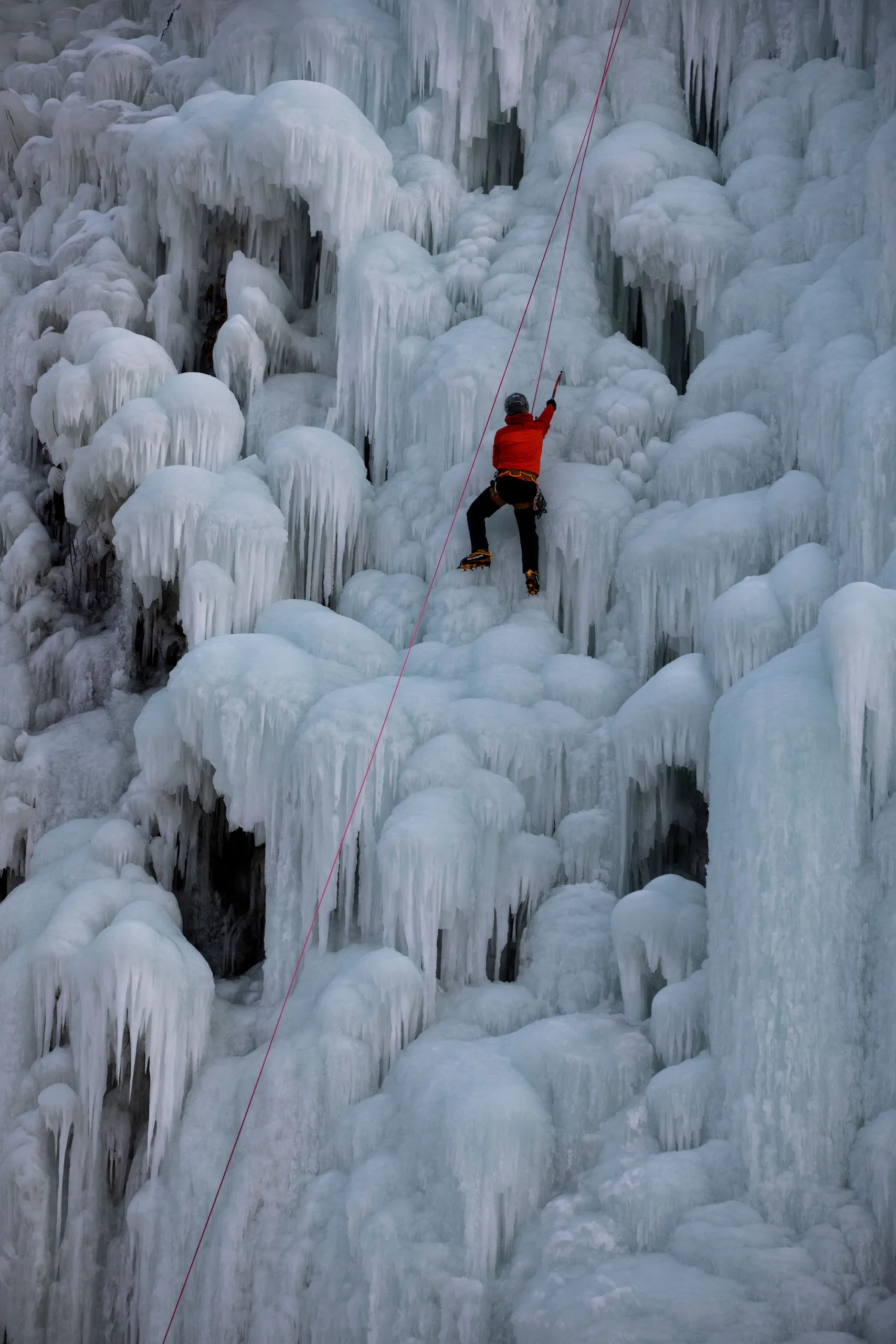
Plan the day around the middle of it. Outdoor things go between about ten and two; the afternoon is for a sauna, a meal and a book; the evening, from dark onwards, is for the sky. Four hours outside in this light is a full day.
The northern lights in the dark weeks
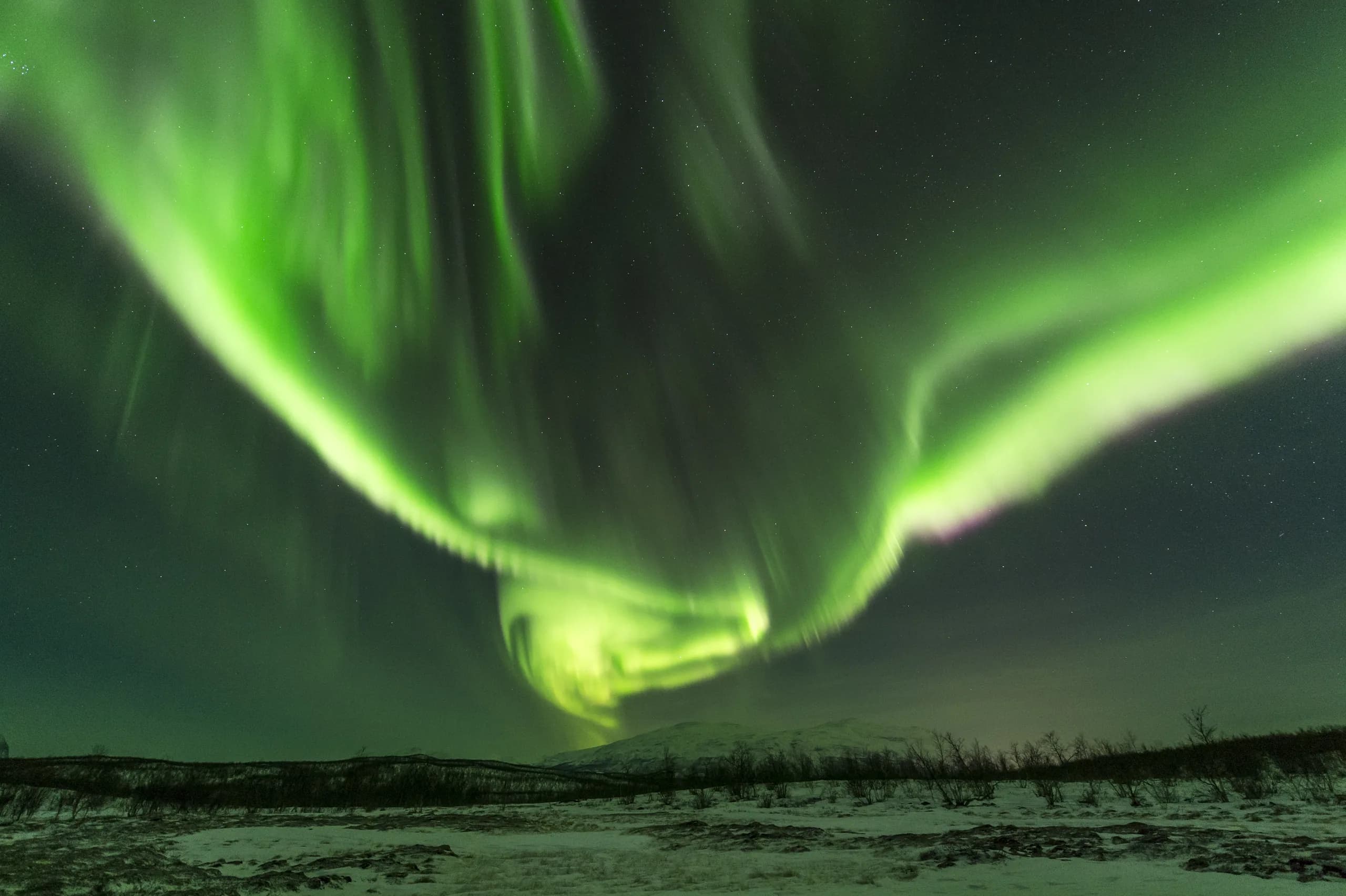
Polar night does not cause the aurora, and it does not make one more likely. The aurora happens in summer too; it is simply invisible in daylight. What December gives you is long dark evenings to look in. NOAA's rule of thumb for the best hours is about 22:00 to 02:00 local time, and IRF, the Swedish Institute of Space Physics in Kiruna, notes that in Scandinavia the most active displays often come before midnight.
December is not, by the science, the best month. NOAA describes a statistical tendency for stronger geomagnetic activity around the equinoxes, in March and September. Cloud matters more than either. Abisko sits in a rain shadow, which SMHI explains: air coming over the mountains from Norway drops its moisture on the far side, and cloud tends to break up as it comes down. That is a better chance, not a clear sky.
The Aurora Sky Station above Abisko runs its night visits from 19 October 2026 to 27 March 2027: you meet at STF Abisko at 20:30 and the chairlift runs from 21:00 to 01:00, from SEK 1,295 for an adult, warm overalls and boots included. In severe weather it switches to an alternative programme, and nobody guarantees the lights. Our private aurora night follows the cloud forecast instead. The rest is in our northern lights guide.
The cold
SMHI's 1991–2020 normals put December at Abisko at an average of minus 6.8, with nights averaging minus 10.5. Kiruna airport is colder, at minus 9.4 and minus 13.9, and Karesuando, inland in the far north-east, colder still, at minus 11.3 and minus 16.4. Those are averages: clear nights go far below them.
The darkest weeks are not the coldest. At all three stations January averages colder than December, and at Abisko February is colder than January. Dress as 1177, the national health service, advises: loose layers, nothing cotton next to the skin, a windproof outer layer, a hat, and spare socks and mittens.
What is open in December
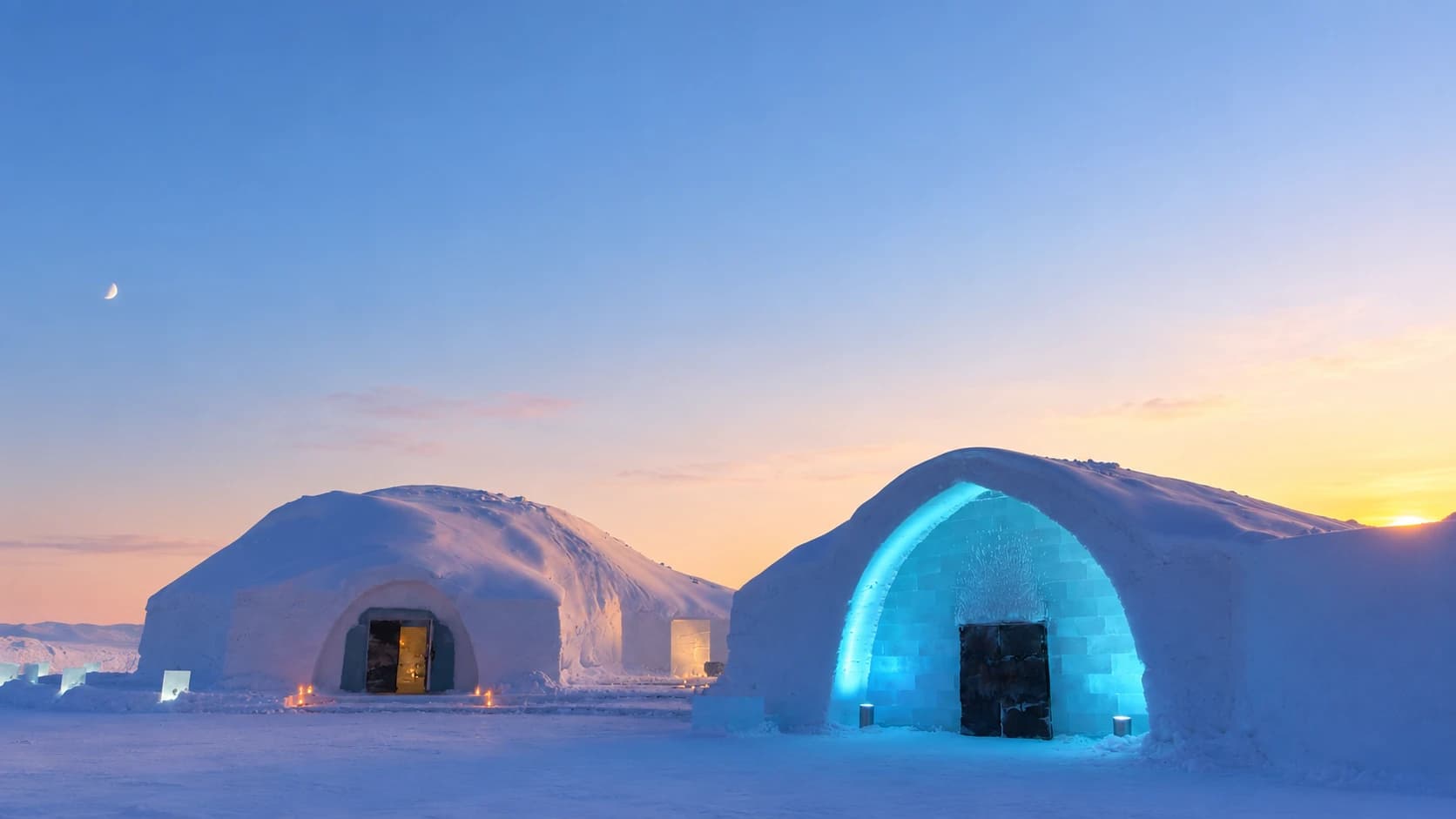
ICEHOTEL 37 opens on 11 December 2026, with its opening ceremony at 18:00, the day after Kiruna's last sunset. ICEHOTEL 365, the permanent building kept at about minus five, is open all year. Our Icehotel guide has the detail.
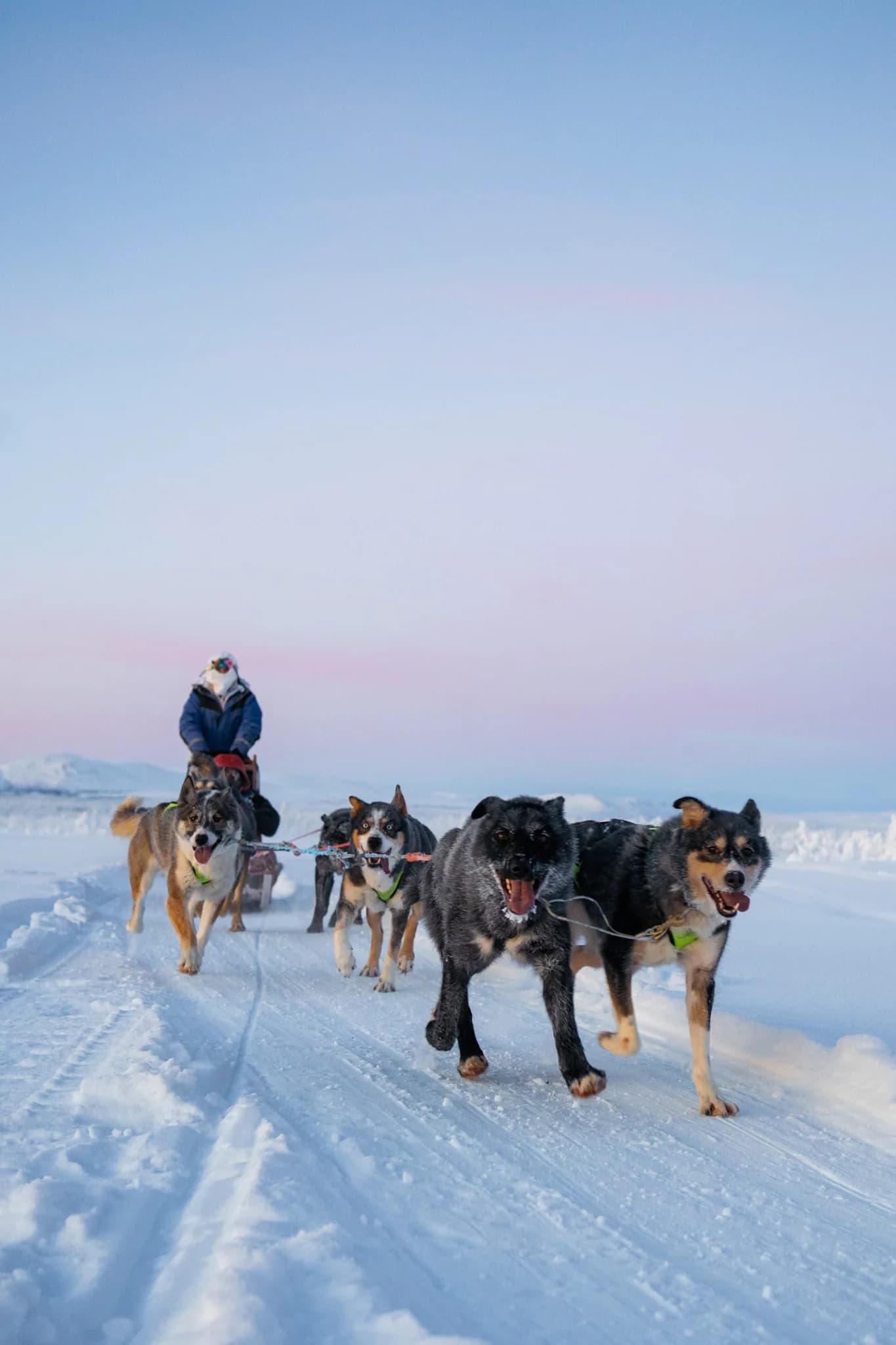
Dog sledding around Kiruna normally runs from December to April, earlier if there is snow in November, and every snow activity in early December depends on how much has fallen. Kiruna's cross-country trails are normally skiable from late October. In Abisko, STF's mountain station is open all year; its daytime chairlift does not run until 13 February 2027, so in December the mountain is seen at night, on the aurora visits.
Christmas and New Year are the busiest weeks of the winter. The public holidays are 25 and 26 December, 1 January and 6 January, Epiphany. Christmas Eve and New Year's Eve are not public holidays in law, but they are the days Swedes celebrate: check each place's hours. In Kiruna itself, the new town centre opened in 2022 as the old town makes way for the mine; building work continues, with a city park planned for 2027.
Getting there
Fly to Kiruna. SAS and Norwegian fly from Stockholm all year, in about an hour and a half, and SAS adds a direct flight from Copenhagen three times a week from 17 December 2026 to 7 March 2027. Abisko is a little over an hour from Kiruna airport by road.
Or take the night train. From December 2026 SJ runs the northern night trains, with through carriages from Stockholm to Kiruna, Abisko and Narvik and no change at Boden. SJ releases tickets in batches; winter tickets were on sale to 4 April 2027 when we checked.
If you drive, it is the E10. Winter tyres are compulsory from 1 December to 31 March in winter conditions, which here means all of it. Reindeer are on the roads all year, and Trafikverket asks for extra care at dawn and dusk. In polar night, dusk lasts most of the day. If you hit one, call 112 and mark the place.
Living with the dark
For most visitors a week of polar night is a novelty, not a hardship, but it suits some people more than others. 1177 describes seasonal depression, most common in the dark part of the year, as something that affects some people, not everyone, and its general advice is to get outdoors around midday, when it is brightest, and keep regular hours. Livsmedelsverket, the food agency, notes that the body stores vitamin D made in summer for part of the winter.
If you know you flag without daylight, come in February instead: the same snow and the same aurora season, with the sun back. If you want to feel the dark rather than visit it, come in mid-December.
The Sámi year does not divide at the solstice at all. It is counted in eight seasons that follow the land and the reindeer rather than the calendar. In Northern Sámi, early winter is čakčadálvi, autumn-winter, and winter is dálvi. The dark time inside them is skábma, and November is skábmamánnu, the dark-season month.
Polar night, place by place, 2026–27
The full days without a sunrise. Calculated for a flat horizon; mountains and valleys shift them.
- TreriksrösetLongestAbout six weeks, from 1 December to 11 January, at the far north-western tip of Sweden.
- Abisko · Björkliden · RiksgränsenOur pick32 days, 6 December to 6 January. Twilight from about 09:00 to 14:15 on the solstice.
- KaresuandoFar north-eastAbout a month, from early December to 6 January, and colder on average than Abisko or Kiruna.
- Kiruna · JukkasjärviICEHOTEL22 days, 11 December to 1 January. ICEHOTEL 37 opens on 11 December.
- Gällivare · PajalaJust outsideNo polar night. About an hour of sun on 21 December.
- JokkmokkArctic CircleNo polar night. The sun is up for about two hours on the solstice.
- Luleå · HaradsThe coastAbout three hours of sun on the shortest day.
- StockholmFor comparisonSunrise 08:43, sunset 14:48 on 21 December 2026.
Sunrise and sunset from timeanddate's 2026–27 tables, checked against our own calculation; the convention is SMHI's (upper edge of the sun, with refraction). October 2026.
Inside the polar night,
and just outside it
Two places where the sun does not rise, and three where it does, briefly, for anyone who wants the dark without all of it.
- Our first choice
Abisko
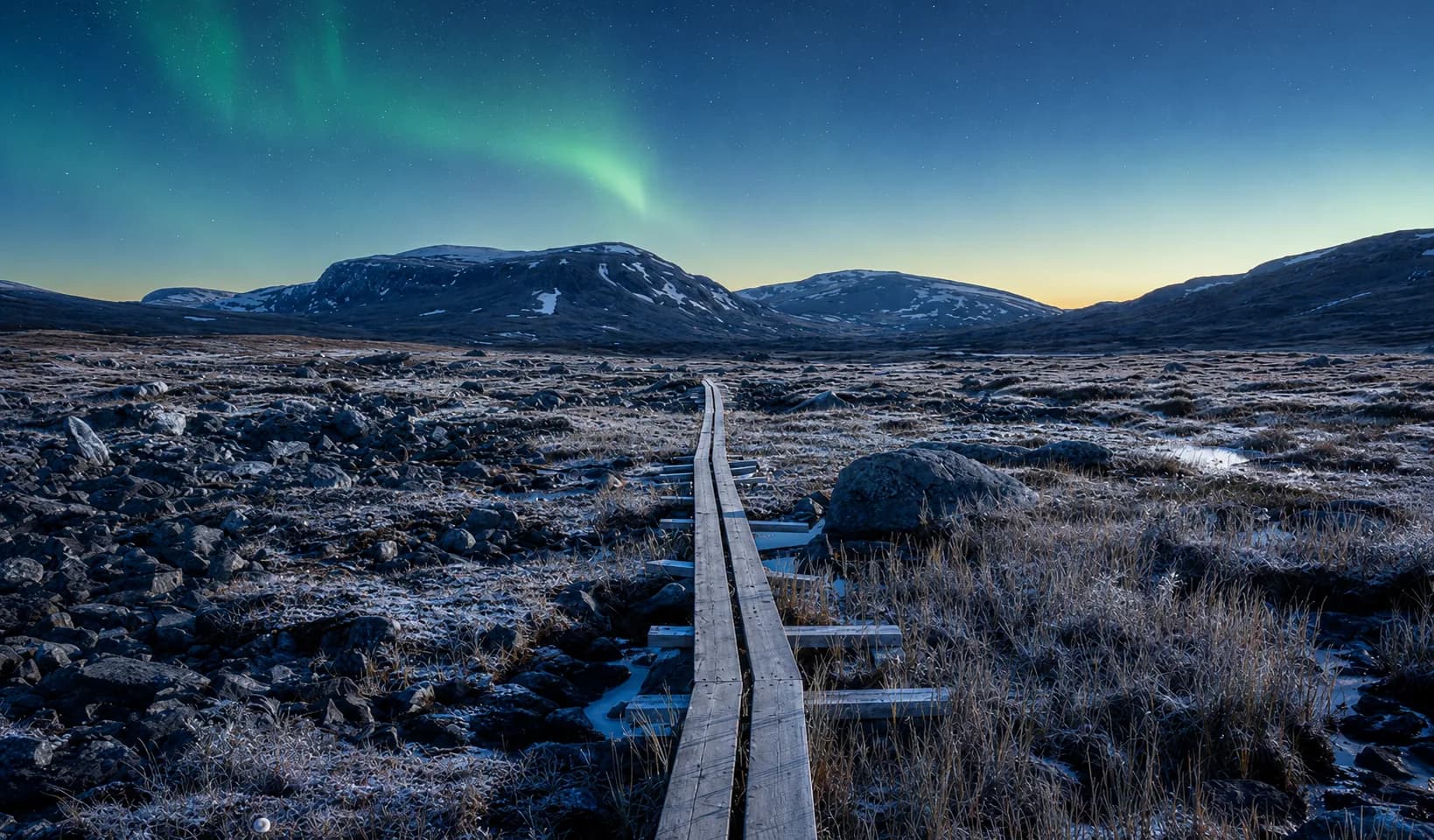
32 days without a sunrise, a rain shadow that improves the odds of a clear sky, and the train stops in the village.
The place - The ice
Jukkasjärvi
22 days without a sunrise, and ICEHOTEL opening on the first of them.
The place - The Arctic Circle
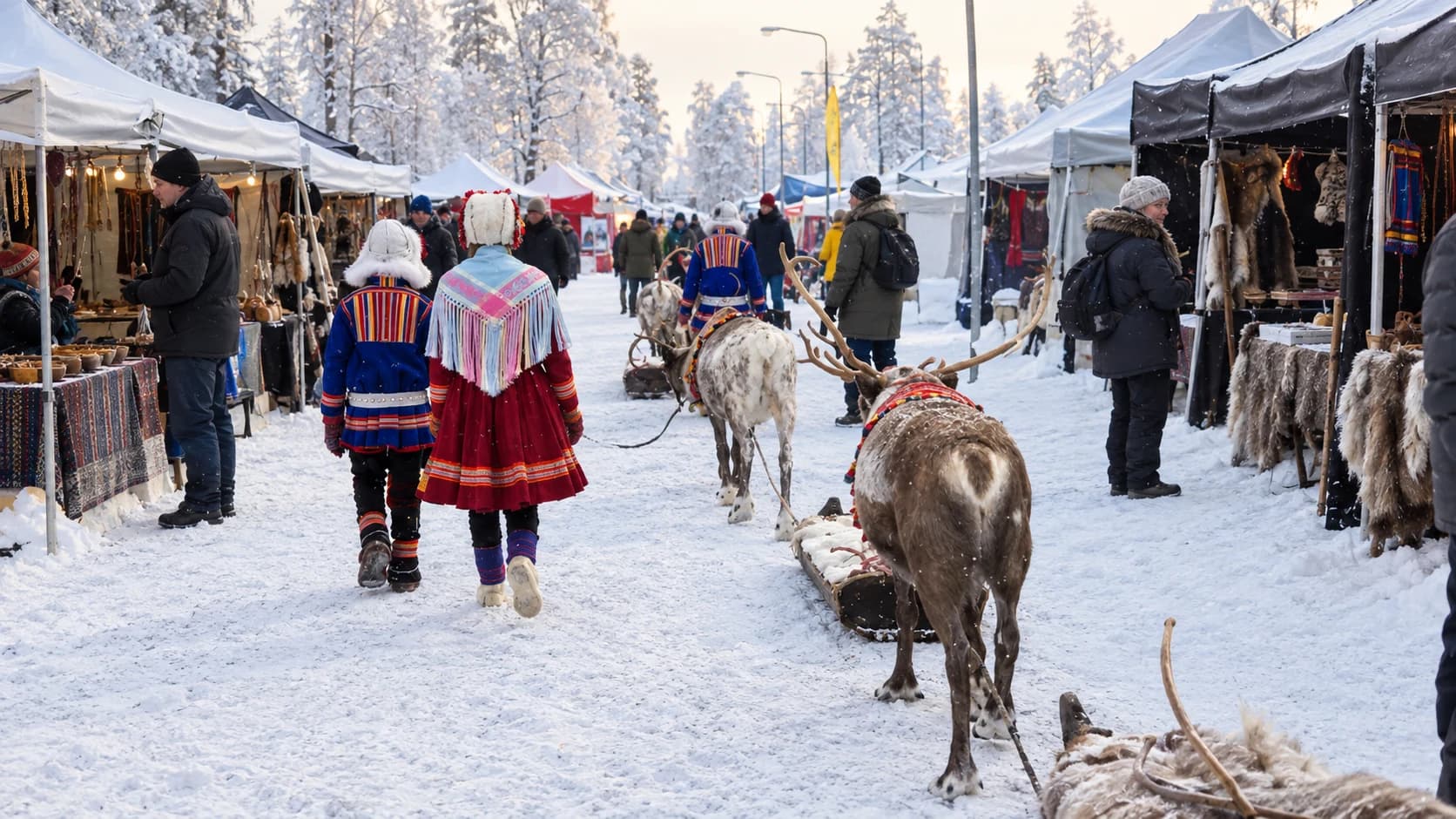
Jokkmokk
Two hours of sun at midwinter, and the Sámi museum Ájtte.
The place - The Treehotel
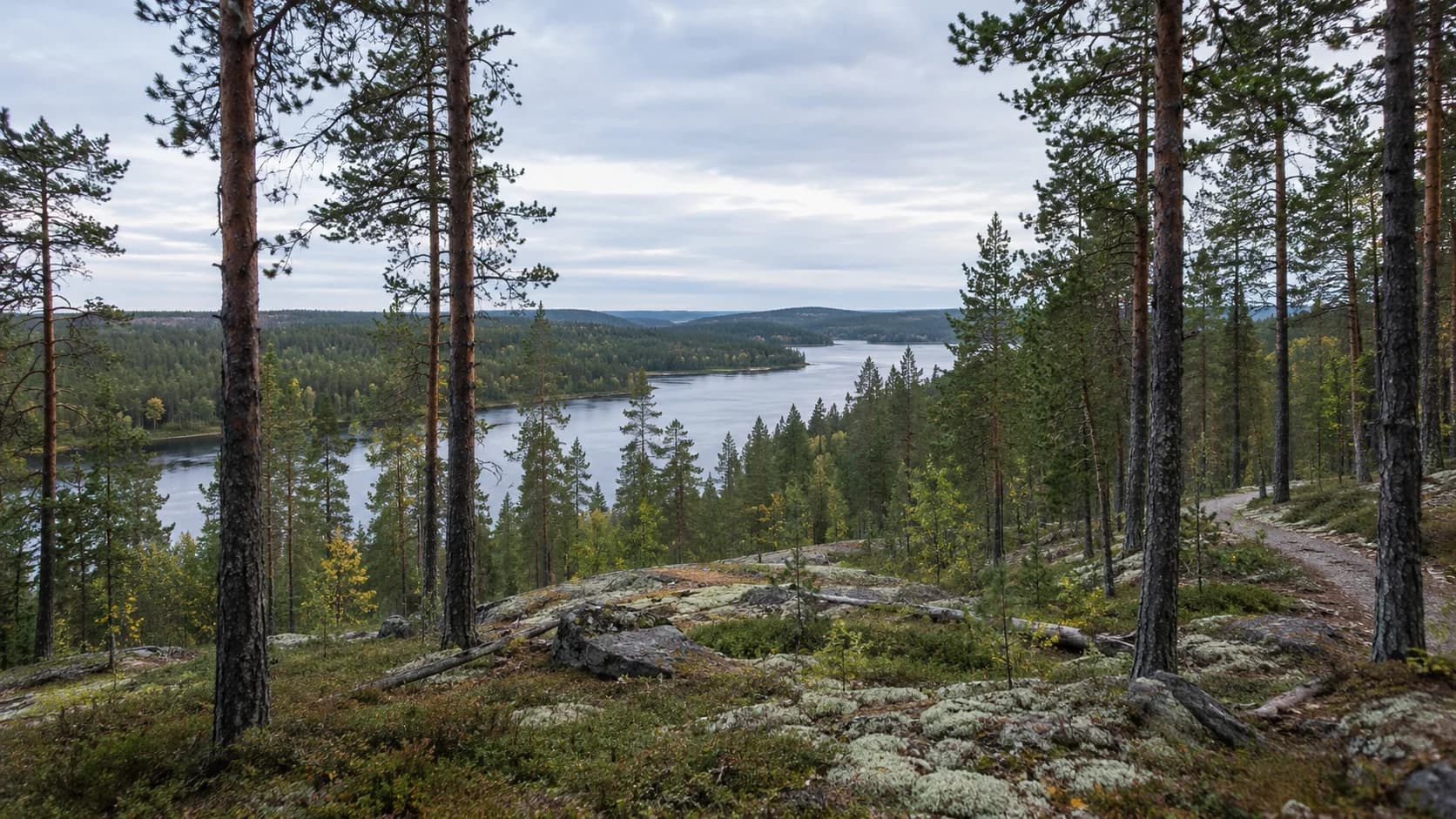
Harads
About three hours of sun on the shortest day, in the forest above the Lule river.
The place - The frozen sea
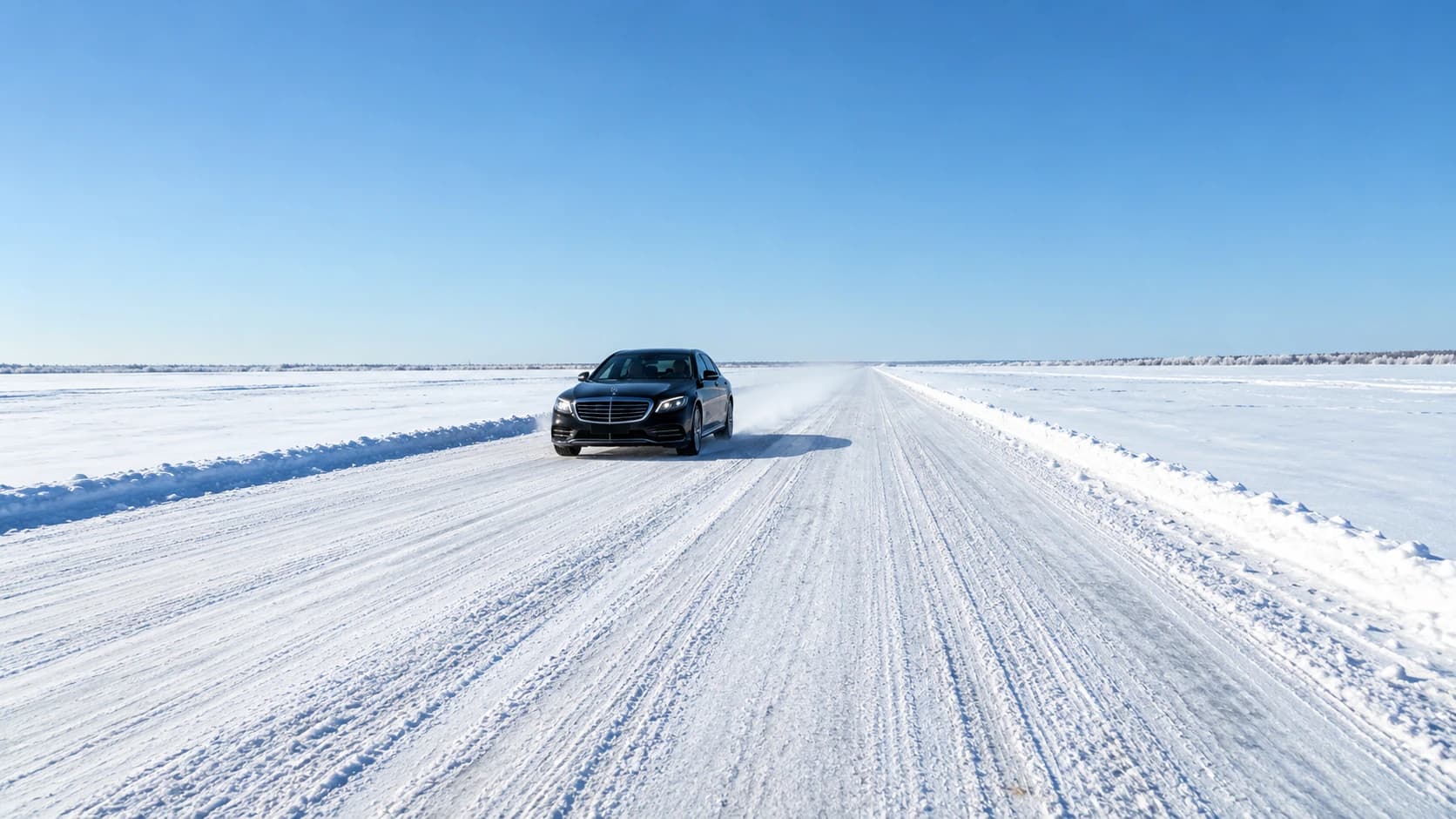
Luleå archipelago
The coast, the most daylight in the north, and sea ice later in the winter.
The place
How many nights
to give it
Fournights, in mid-December
Long enough for the light to stop being strange and start being beautiful, and for three or four evenings watching the sky.
- Two nightsEnough to see a day without a sunrise. Not enough to count on a clear evening.
- Four nightsAbisko in mid-December: the middle of the dark, and several nights for the sky.
- Five or moreAdd ICEHOTEL at Jukkasjärvi, or follow our five-night journey, The Month With No Sunrise.
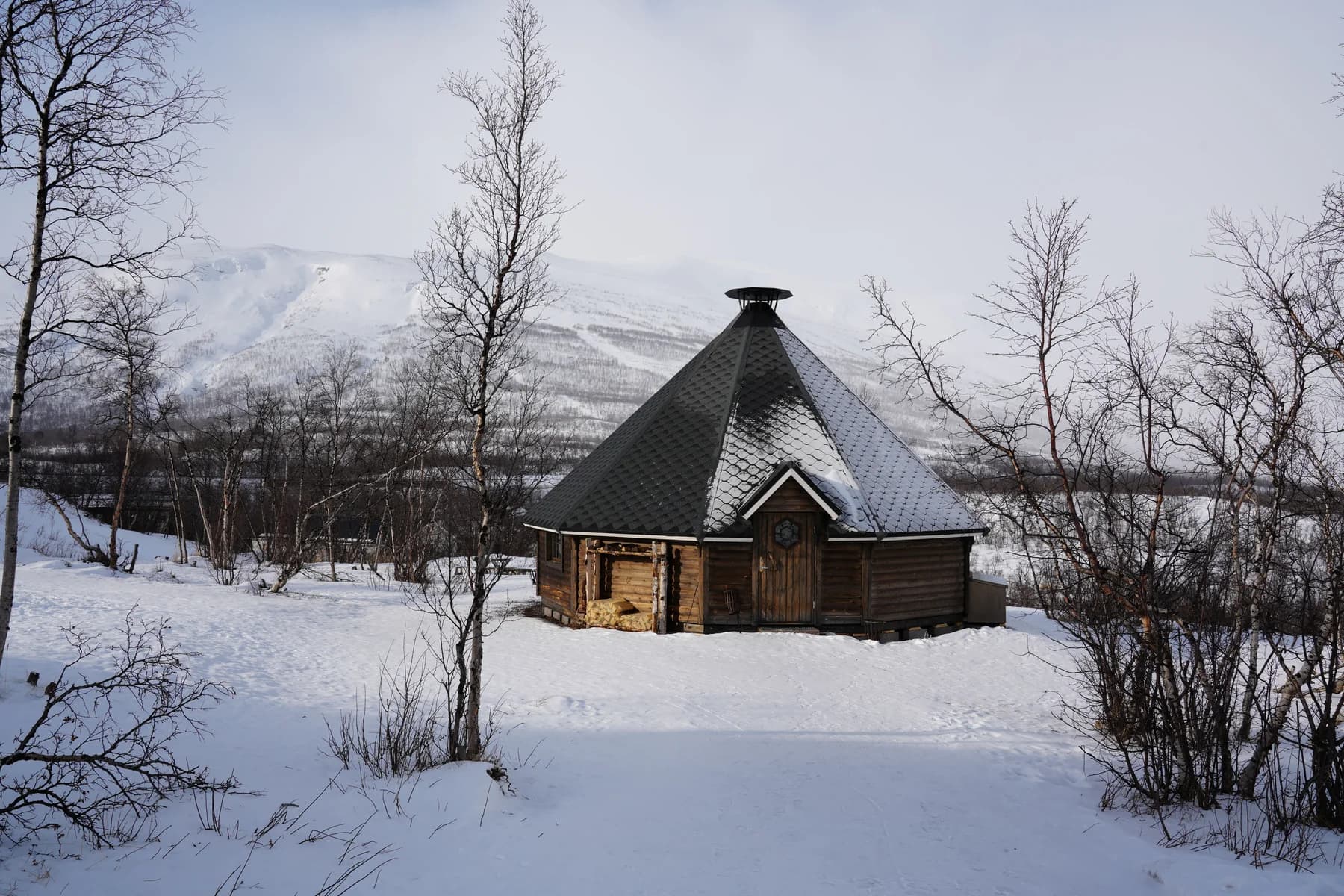
Worth knowing
Six things other guides get wrong
- “It is dark 24 hours a day.”No sunrise is not no light. Kiruna has more than five hours of twilight on the solstice.
- “Polar night starts at the Arctic Circle.”Not in Sweden. The sun still rises over Gällivare and Pajala, both north of it.
- “All of Swedish Lapland has polar night.”Jokkmokk, Gällivare, Pajala and Luleå all see the sun on the shortest day.
- “Kiruna has 28 days without the sun.”22 in 2026–27, from 11 December to 1 January. Longer figures use an older way of counting, or none.
- “It is the coldest time of year.”January is colder on average, and at Abisko February is colder still.
- “Polar night is the best time for the aurora.”It gives the longest evenings to look. Activity tends to peak around the equinoxes, and cloud decides most nights.
What to bring
- A headlamp, and spare batteries kept warm in an inner pocket
- Boots rated well below minus 20
- Mittens over thin gloves, and a spare pair
- Wool or synthetic layers, nothing cotton next to the skin
- A windproof outer layer and a hat over the ears
- Reflective strips or a vest for walking by the road
- Grips for your boots: paths are icy
- Something to read: the afternoons are long
Questions
Does Sweden have polar night?
Yes, in the far north. In 2026–27 the sun does not rise at Abisko from 6 December to 6 January, or at Kiruna from 11 December to 1 January. Most of Sweden, including Stockholm, has short winter days but no polar night.
When is the polar night in Kiruna?
From 11 December 2026 to 1 January 2027: 22 days without a sunrise. The sun last sets on 10 December, a little before noon, and rises again on 2 January.
When is the polar night in Abisko?
From 6 December 2026 to 6 January 2027: 32 days. It is longer than in Kiruna because Abisko is further north. Our polar night in Abisko page describes the weeks themselves.
Is it dark all day during polar night?
No. The sun stays just below the horizon, and the middle of the day is twilight: on the solstice Kiruna has civil twilight from 08:56 to 14:18. Snow makes it brighter, cloud darker.
Where does polar night start in Sweden?
A little north of a line through Gällivare and Pajala, according to SMHI, not at the Arctic Circle. Both towns, and Jokkmokk on the Arctic Circle itself, still see the sun on the shortest day.
Does Stockholm have polar night?
No. On 21 December 2026 the sun rises at 08:43 and sets at 14:48 in Stockholm, about six hours of daylight.
Does Sweden have six months of darkness?
No. Even at the far northern tip the polar night lasts about six weeks. At Kiruna it is three.
Is December a good time to see the northern lights in Sweden?
It has the longest dark evenings, which helps, but no month guarantees them. Clear sky matters most, and Abisko's rain shadow improves the odds. Give it several nights. Our northern lights guide has more.
How cold is it during polar night?
SMHI's December averages are minus 6.8 at Abisko and minus 9.4 at Kiruna airport, with nights around minus 10 to minus 14. January is colder. Clear nights can go far lower.
Is the polar night hard to cope with?
For a short visit, rarely. Seasonal low mood affects some people, not everyone. Get outdoors around midday and keep regular hours, as 1177 advises; if you know you struggle without daylight, February is the better month.
Skábma: Northern Sámi for the dark time around midwinter: the period of blue dusk.
Sources for this guide
- SMHI — Midnight sun and polar night
- SMHI — Sunrise and sunset
- SMHI — Sunrise and refraction
- SMHI — Summer and winter solstice
- USNO — Rise, set and twilight definitions
- timeanddate — Kiruna, December 2026
- timeanddate — Kiruna, January 2027
- timeanddate — Abisko, December 2026
- timeanddate — Abisko, January 2027
- timeanddate — Gällivare, December 2026
- timeanddate — Stockholm, December 2026
- SMHI — Temperature normals 1991–2020
- SMHI — Rain shadow
- IRF — Northern lights
- NOAA — Tips on viewing the aurora
- NOAA — Aurora
- Aurora Sky Station — Night visit
- STF — Aurora Sky Station night visit
- STF — Abisko opening hours
- ICEHOTEL — Opening of ICEHOTEL 37
- ICEHOTEL — ICEHOTEL 365
- Kiruna Lapland — About dog sledding
- Kiruna Lapland — Cross-country skiing
- Kiruna Lapland — Direct flights to Kiruna
- Kiruna Municipality — Current projects
- Riksdagen — Public Holidays Act (SFS 1989:253)
- SAS — More departures to Kiruna (2026)
- Trafikverket — Night trains to Upper Norrland, 2026–2028
- SJ — Night trains to Upper Norrland (press release)
- SJ — Ticket releases
- Transportstyrelsen — Winter tyres
- Trafikverket — Wildlife on the roads
- 1177 — Depression
- 1177 — Cold injuries
- Livsmedelsverket — Vitamin D
- Samer.se — November, the dark time
- Samer.se — The reindeer-herding year
- Sámi Museum Siida — The eight seasons
- Sámi Museum Siida — Early winter
Plan a December without a sunrise.
Tell us when you can travel and who is coming, and we will find you somewhere inside the polar night, shape the days around the light, and tell you which train or flight to take.