



The Light6 Dec – 6 Jan
Polar Night
The weeks around the solstice when the sun never rises over Abisko, and the sky stays blue, violet and pink all day.
A month with no sunrise
For a month either side of the solstice, the sun does not clear the horizon at all this far north. In Abisko that runs from the sixth of December to the sixth of January.
It is not dark. That is the thing nobody believes until they stand in it. The sun sits just below the edge of the world and throws light up into the sky for hours, and because it never climbs, that light never turns white — it stays in the blues and the violets and the low pinks, all day, with a long orange band along the south.
Swedes have a word for the specific blue of it. The hour that photographers elsewhere chase and lose in ten minutes lasts most of the working day here, and it lands on snow, which throws it back up at you.
What you actually do in it
What you actually do in it is quieter than a list. You walk, you look, you are back indoors before you expected. Four hours outdoors in this light is a long day, and nobody manages more.
It suits some people enormously and a few not at all, and we would rather say so now. If you are someone who flags without daylight, this is the wrong month and February is the right one — same landscape, same snow, six hours of sun.
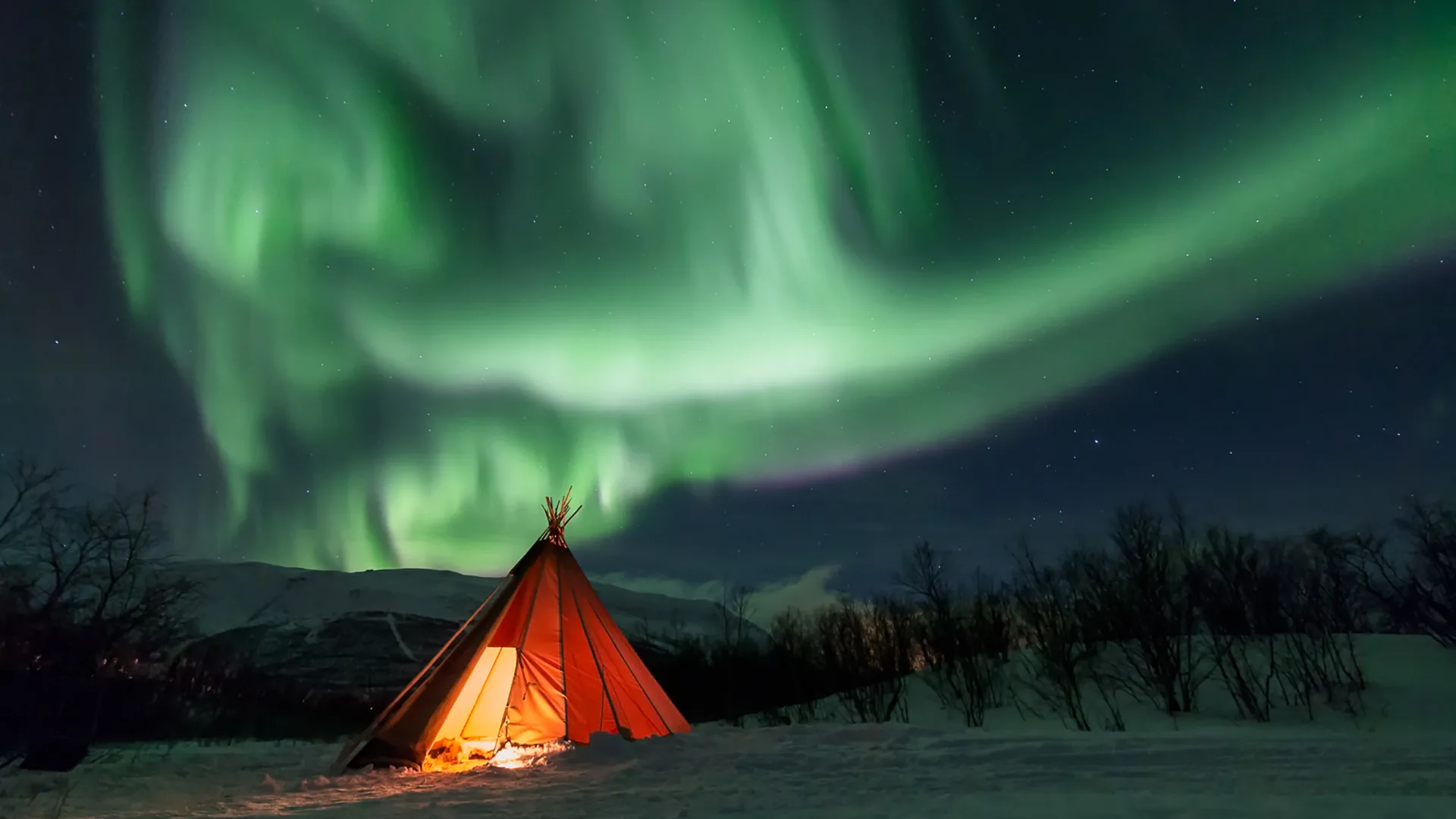
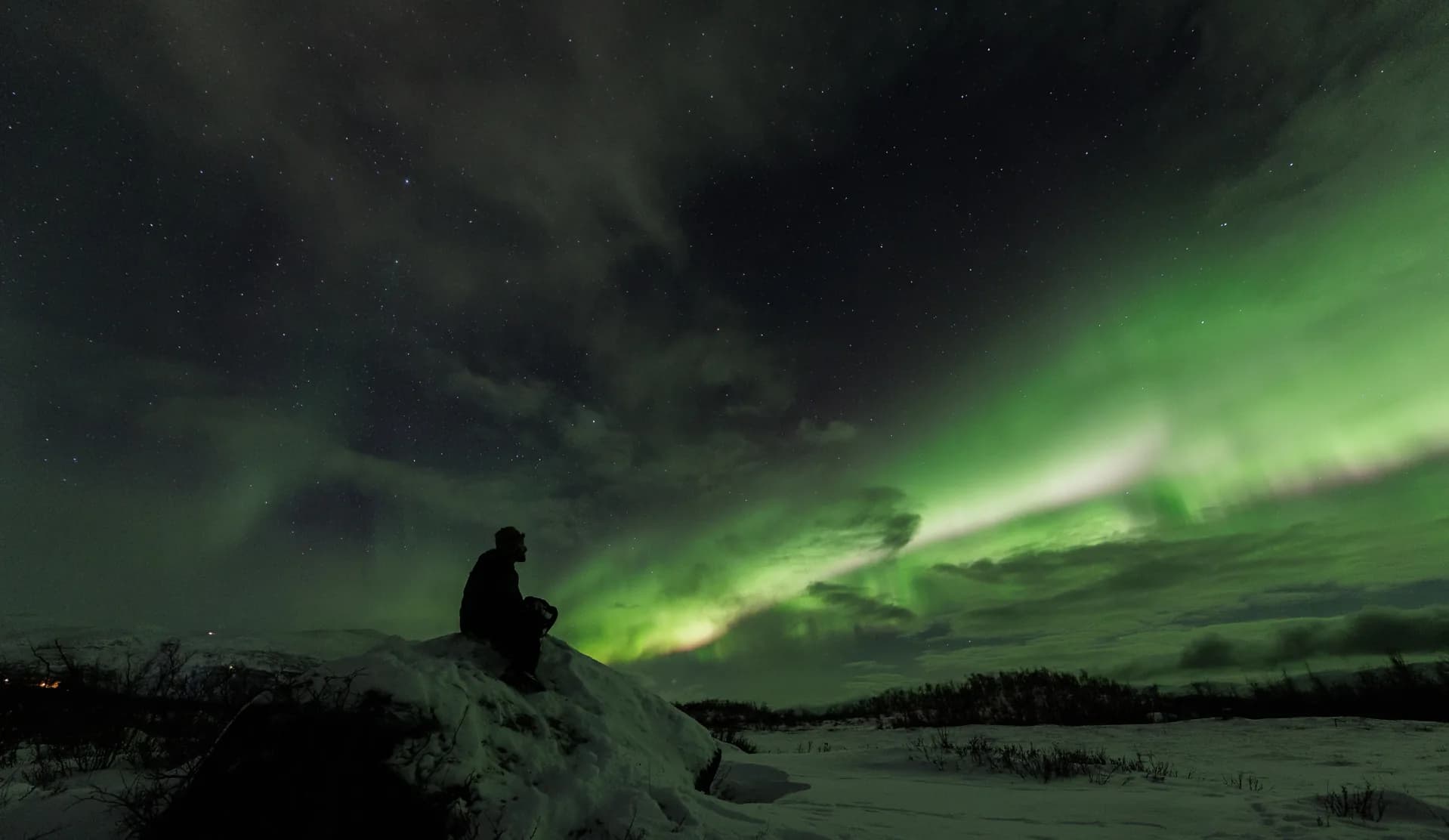
For everyone else it is the strangest light in Europe and it is free, and the aurora season sits directly on top of it. There is no competing daylight to wash the sky out, which gives you some of the longest evenings of the year to watch it.
Before you ask
Polar Night: common questions
Anything not answered here, ask us directly — we'd rather you did.
When is the polar night in Abisko?
From the sixth of December to the sixth of January in 2026–27: 32 days in which the sun does not clear the horizon at all. Our polar night guide has the dates for the rest of Sweden.
Is it completely dark during the polar night?
No. The sun sits just below the horizon and throws light up into the sky for hours. Because it never climbs, the light stays in the blues, violets and low pinks all day, with a long orange band along the south.
Is the polar night a good time to see the northern lights?
The aurora season sits directly on top of it, and with no competing daylight, these are some of the longest viewing evenings of the year. Clear sky still decides it. Our northern lights guide covers the rest of the season.
Is the polar night hard to cope with?
It suits some people enormously and a few not at all. If you flag without daylight, February is the better month: same landscape, same snow, six hours of sun. Either way, four hours outdoors in this light is a long day.