The length of the country
Ahead of the Spring
Spring crosses Sweden from February to May. Travel north fast enough in late April and you overtake it.
What you'll remember
- Orchards in flower in a corner of the country where spring landed back in February
- Twenty thousand cranes on one lake, and the noise of them from a kilometre away
- A night in a hide waiting for a bird that only four species in the north can imitate
- Deep snow under seventeen hours of daylight, three weeks before spring gets there
The story
You leave the orchards in blossom on a Tuesday and stand on a frozen lake on the following Wednesday, in broad daylight, at nine in the evening.
In Sweden spring is not a date. It is a line, and it moves. The meteorological definition is exact — spring has arrived at a place when the daily mean temperature is rising and has stayed above zero for seven days running, and the first of those seven is the arrival day. The national weather service tracks it and publishes maps of where the line has reached.
It lands first in south-west Skåne and along the Götaland coast, usually in early or mid-February. It reaches southern Svealand in the second half of March. By mid-April it is in the lower parts of southern Norrland. It does not arrive in the far north until the beginning of May, and even then winter holds on in the mountains. Roughly three months to cross one country.
Which means that if you travel north fast enough, you can overtake it. This journey does exactly that, in the last week of April. It begins where spring has been settled for two months and ends where it has not arrived at all — and the last night is the strange one, because you are standing in deep winter with the sun still up at nine in the evening. Same country, same week.
This is a curated journey we can arrange. Book it as designed, tailor it around your dates, your pace and who is coming, or use it as the starting point for something new.
The route
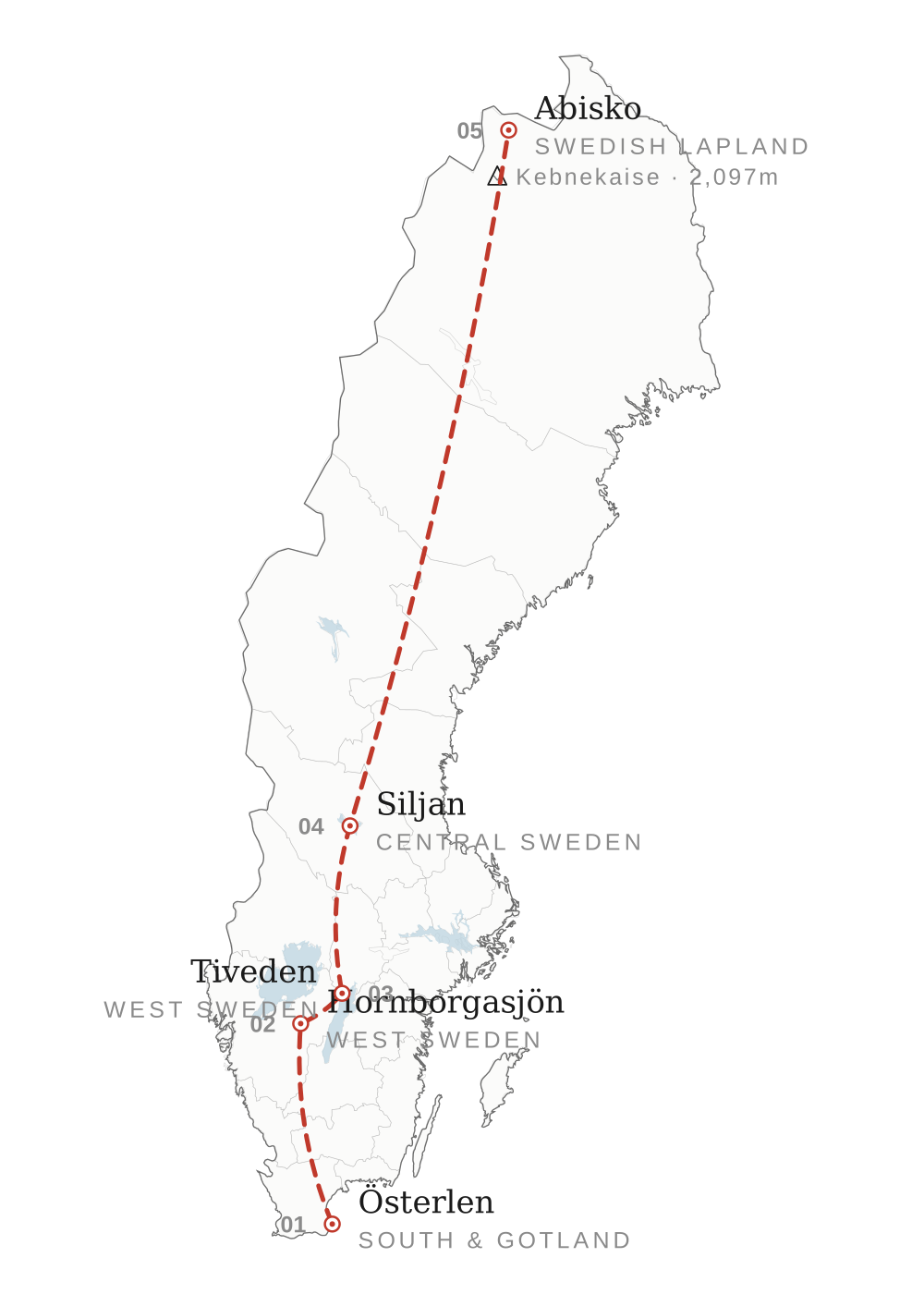
8 nights, 5 places, and a long way between them. The order is the order you would travel it.
- ÖsterlenSouth & Gotland
- HornborgasjönWest Sweden
- TivedenWest Sweden
- SiljanCentral Sweden
- AbiskoSwedish Lapland
Österlen
Where it landed first
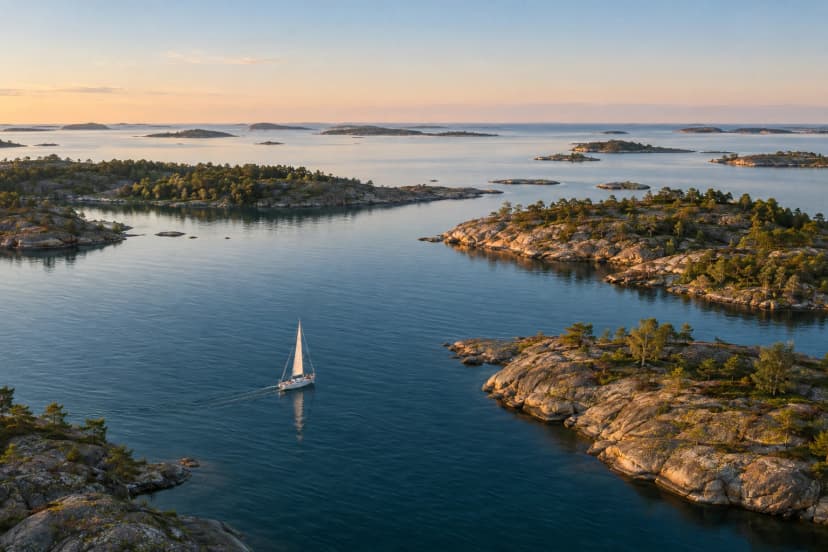
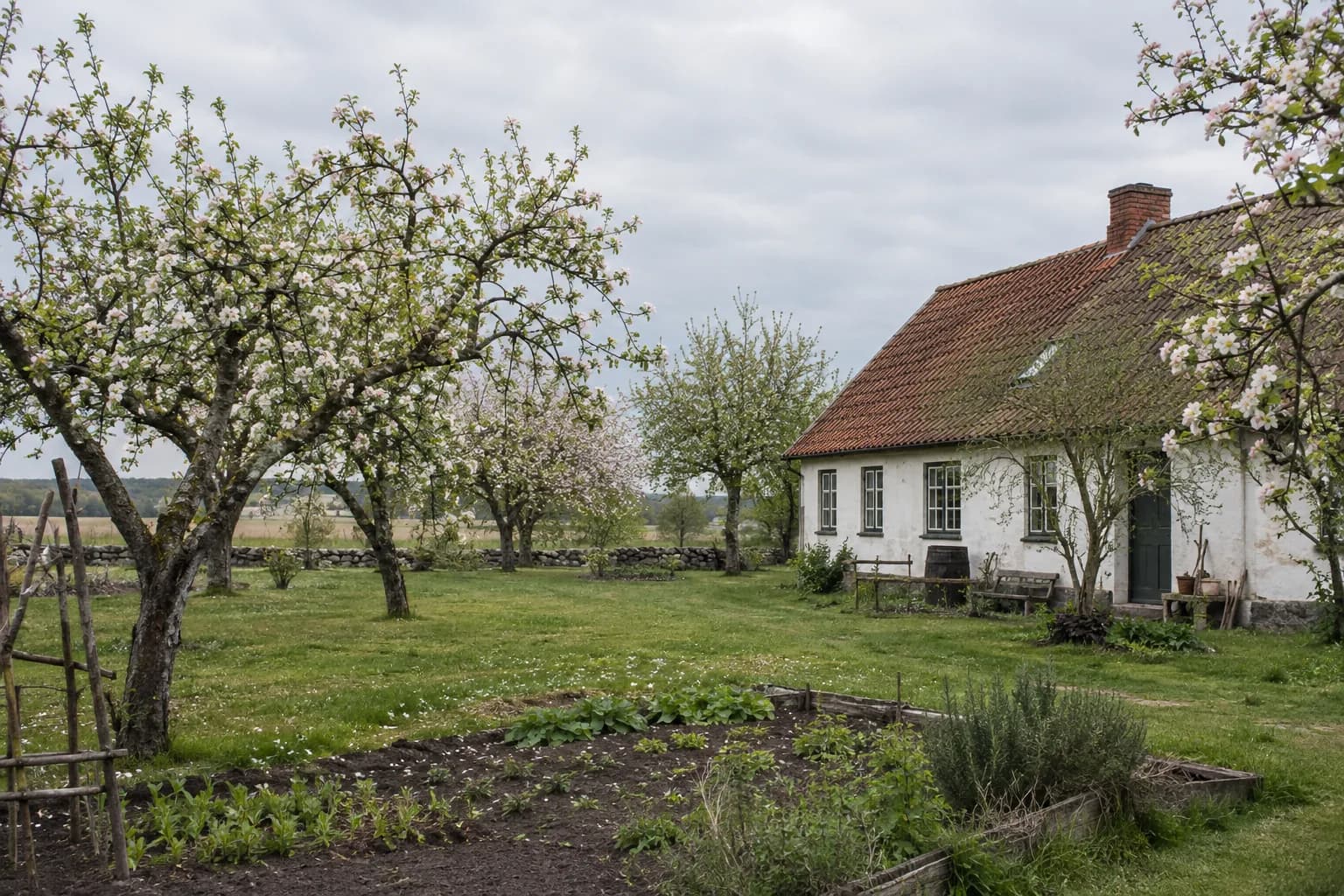
The south-east corner of Skåne, and the head start. Spring reached this coast in February while the rest of the country was still frozen, so by late April the orchards around Kivik are in flower and everything is green in a way it will not be anywhere else on this trip.
Two slow days, on purpose. Blossom, the farm kitchens starting their season, studios reopening along the coast. It is a pleasant few days in its own right, and it is also a control — you need to know what a proper spring looks and smells like before you spend a week driving away from one.
Hornborgasjön
For Swedes, this is the day spring starts
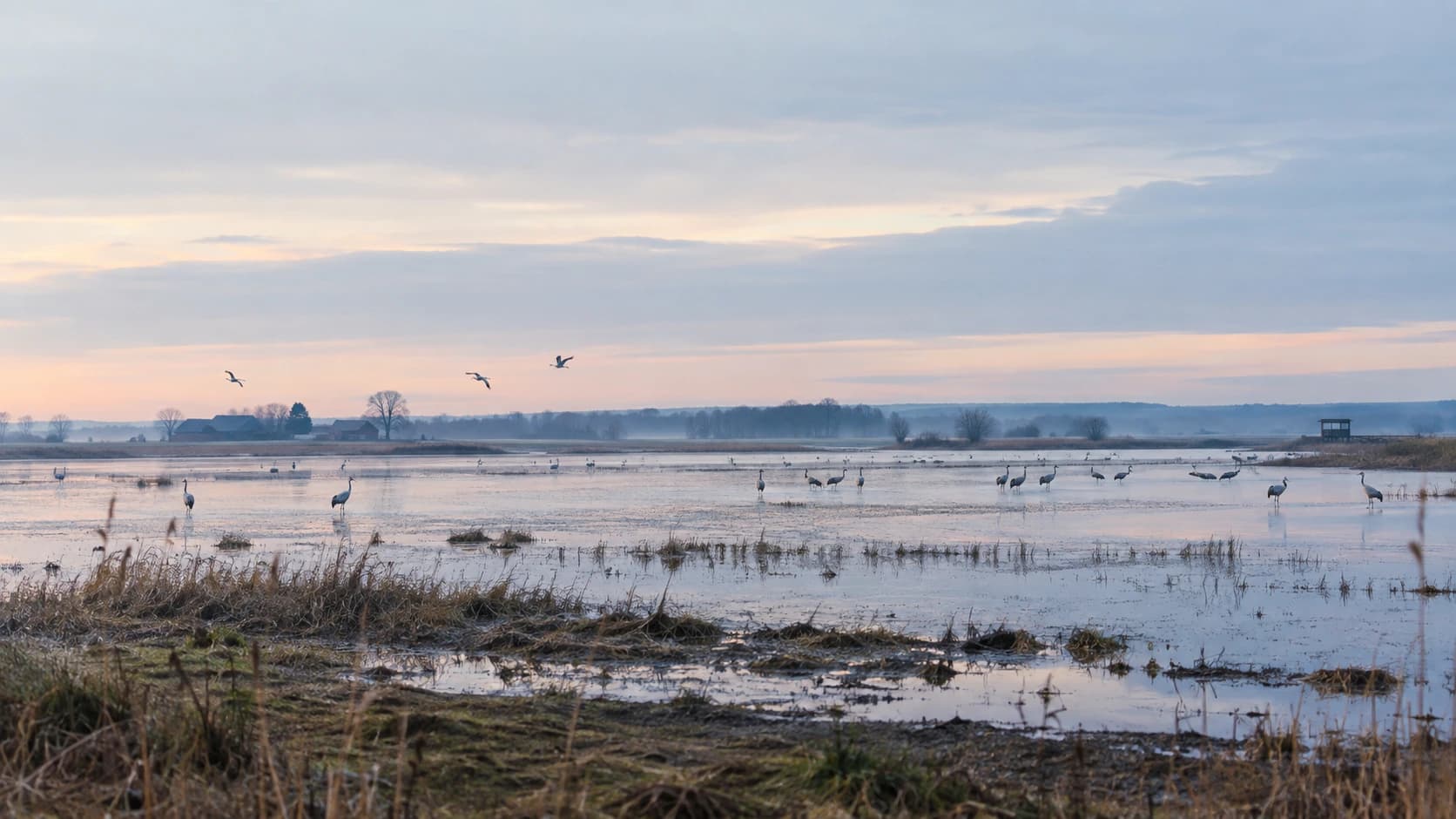
North-west into inland Västergötland, to a shallow lake that holds one of the great bird gatherings in Europe for about six weeks a year. Cranes come up from Spain from the middle of March. At the peak in early April there are around twenty thousand of them on the water, and volunteers count them every evening as they fly in to roost and report the number to the county board. The record is 27,300, on the third of April 2019.
The display is a courtship one: bowing with the wings up, flapping, hopping with the wings spread, and a trumpeting call with the head thrown right back. Pairs stay together for life and dance to keep the bond. Thousands doing it at once is loud in a way no photograph prepares you for.
We will not send you in the peak week, and this is the part worth saying plainly. That week has the biggest counts and it also has most of the hundred thousand people who come across the season. The second week of April still holds well over ten thousand birds with a fraction of the crowd, and the lake edge at dawn is the same lake edge. You go early, twice, and you have the mornings largely to yourselves.
Tiveden
A night out in the old forest
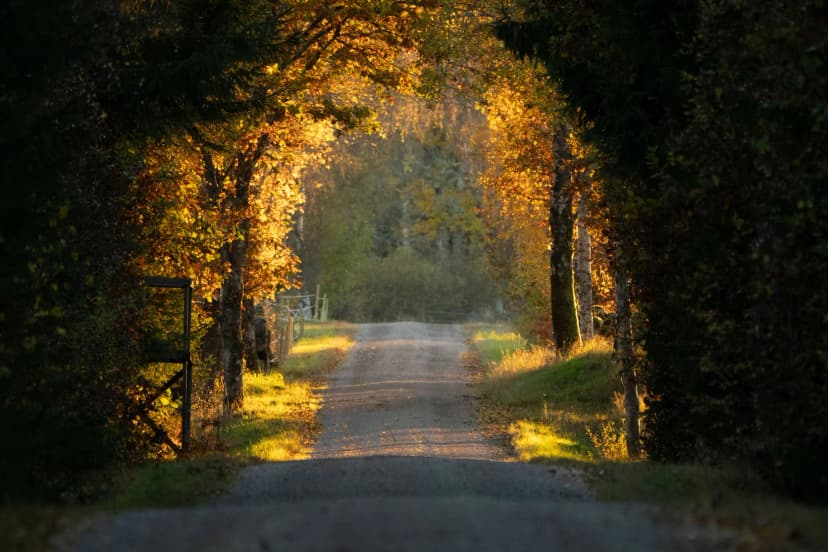
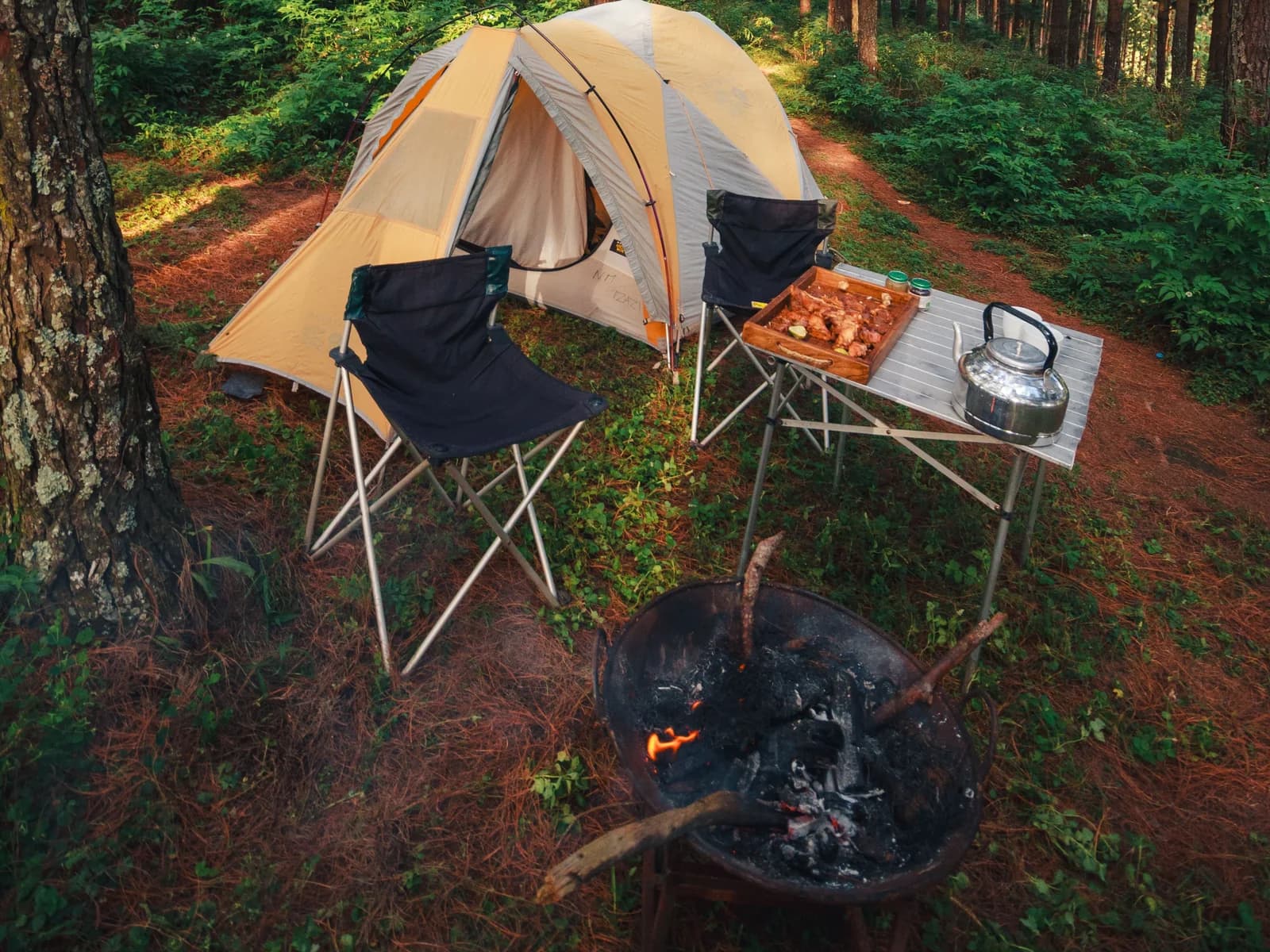
East into the forest between Vänern and Vättern. Tiveden was for centuries the barrier between the south of the country and everything above it — the forest you had to get through, and the one most people preferred to go around. A good deal of it was never cleared, so what stands there now is old pine over granite the ice left where it stopped, some of the boulders the size of small buildings.
The night is spent outside. The camp goes up before you arrive — a fire, somewhere to sit, supper cooked where you are rather than carried to you — and then you are left to it. Allemansrätten, the right of public access, is why a night in the woods is an ordinary Swedish thing rather than an arranged novelty, though the ground itself is a permitted site and someone has already thought about where the wind comes from.
It is here for contrast as much as anything. Three nights ago you were standing in an orchard in flower; in three more you will be standing on ice. A night on the ground between the two puts the distance somewhere other than a map. And if you want the reason birdwatchers come to this forest in April, there is a black grouse lek on open marsh nearby, reached before first light from the camp — short, very strange, and over by breakfast.
Siljan
Arriving, this week
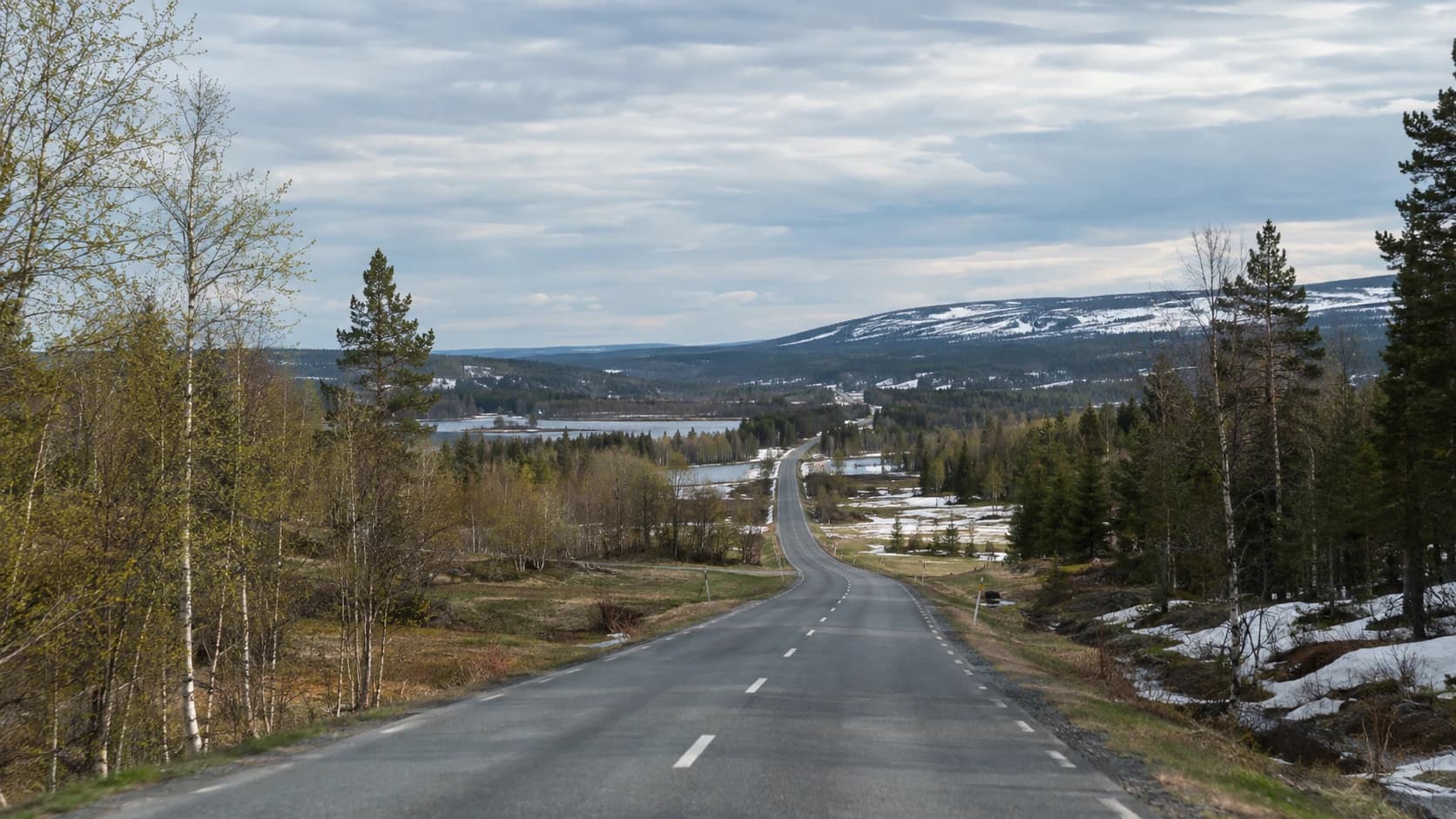
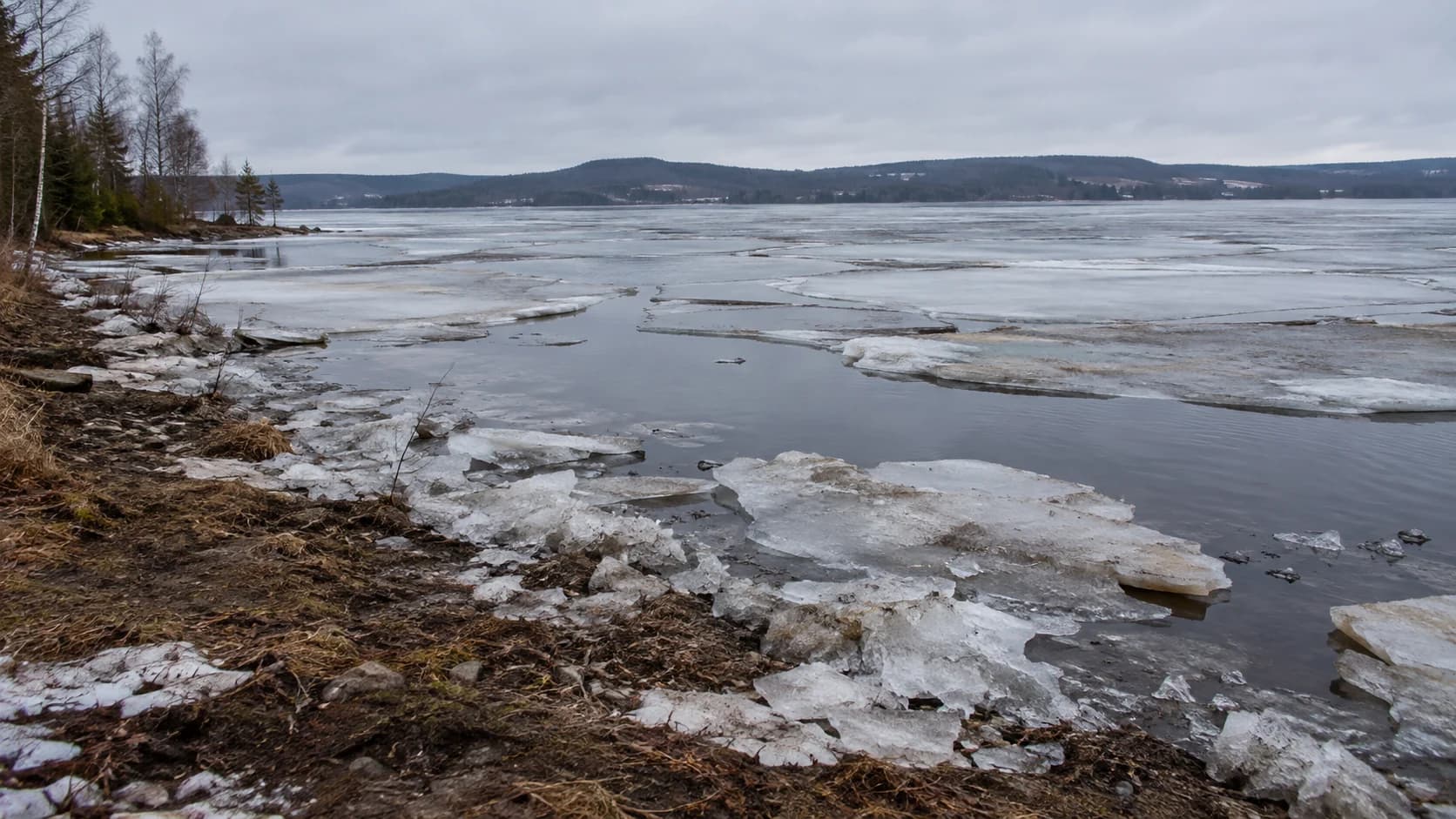
North again into Dalarna, and here the timing is the point: this is roughly where the line has got to. Spring is arriving in the days you are there rather than months ago or weeks hence.
What that looks like is ice going off the lake in sheets, meltwater loud in the rivers, and the villages doing the things they do when the year turns. It is the least photogenic stage of spring and the most convincing one — the whole landscape is visibly in the middle of changing its mind.
The lake itself is worth knowing about while you are on it. Siljan sits inside the largest impact structure in Europe, about fifty-two kilometres across, made three hundred and seventy-seven million years ago. The rim is the line of hills on the far shore.
Abisko
You have outrun it
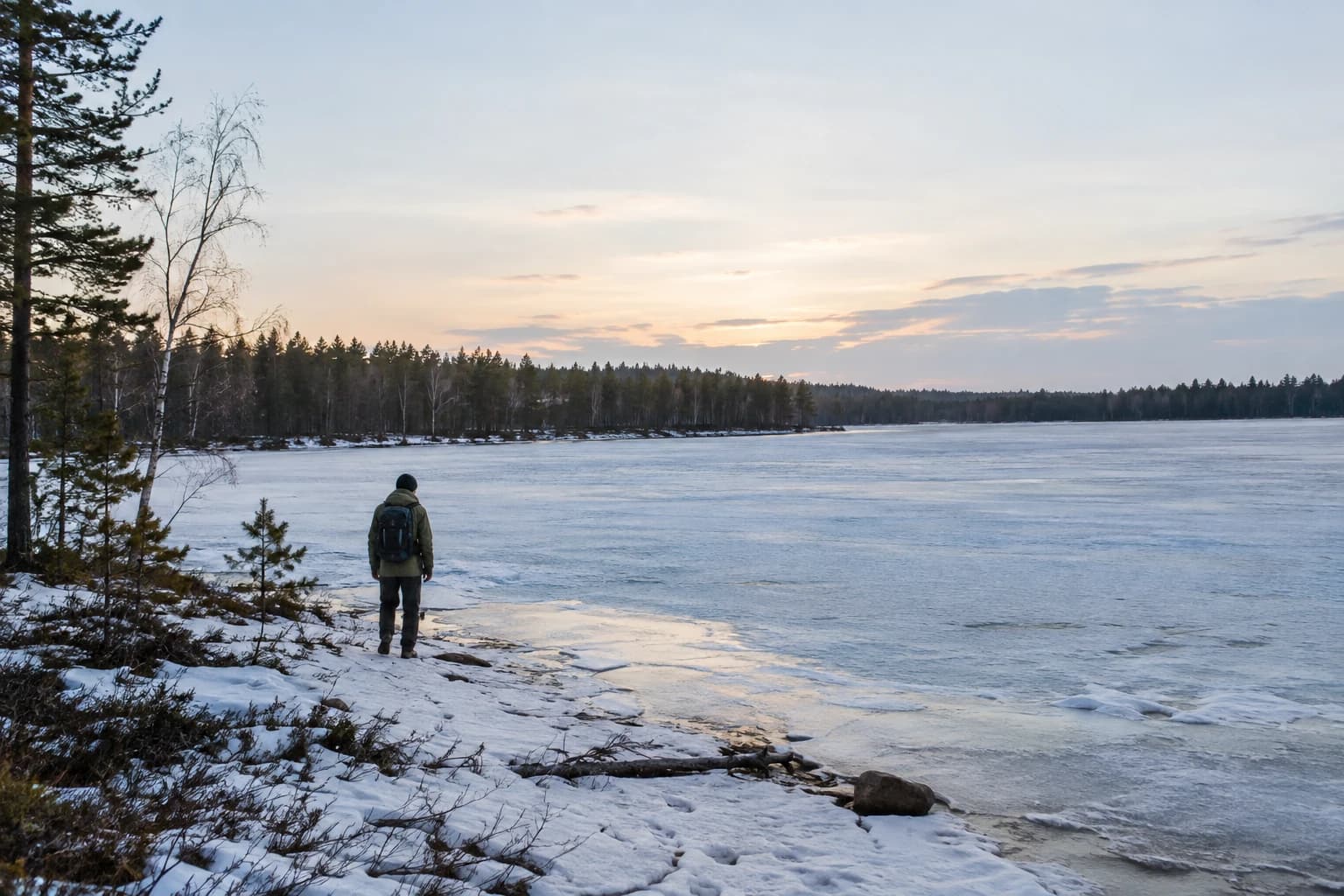
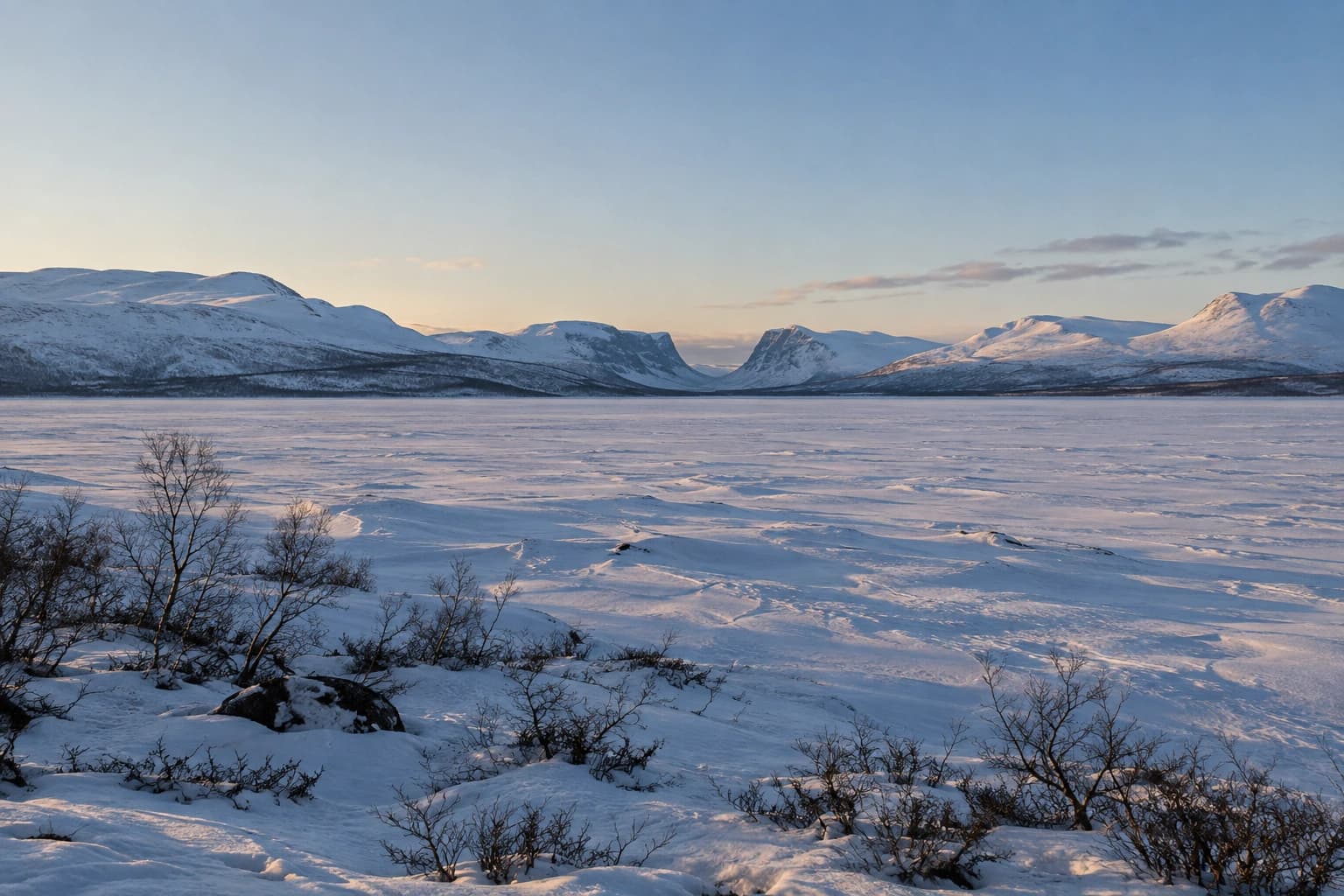
Fly north, and arrive back in winter. Spring will not reach this far for another week or two, and the mountains will hold on to it longer still. The lake is frozen, the snow is deep, and the light does not go.
That is the whole trip, standing in one place. Seventeen hours of daylight over a landscape that is unambiguously still winter, roughly fourteen hundred kilometres and eight days from orchards in flower. Snowshoes if the surface is right, and an evening outside at nine o'clock in full sun because you will not quite believe it otherwise.
People come to Abisko in this month for spring skiing and long light and largely miss what makes it odd. It is not that the north is behind. It is that you have moved faster than a season.
Before you ask
Anything not answered here, ask us directly — we'd rather you did.
Why late April and not May?
Because the whole journey depends on staying in front of the line. Go in May and spring has reached the far north, the cranes have gone to breed, the lek is finishing, and the trip is just a long drive through four nice places. Late April is the narrow window where the south is in blossom, the cranes are still down, the leks are at their peak and the north is still frozen. It is a genuinely tight window and we would rather move your dates than sell you the same route in the wrong fortnight.
Is this a birdwatching trip?
Two of the eight days are, and the rest is not. You do not need to know one bird from another — the cranes work on volume and noise rather than identification, and the lek is closer to theatre than to birding. If you are a birder you will have a very good week. If you are not, the birds are two chapters in a journey about a country changing season along its length.
How uncomfortable is the hide night, really?
Genuinely uncomfortable. A small tent or box, a mattress, no toilet, no talking, and you are in it from the evening until several hours after sunrise. It is cold. It is also the thing people talk about afterwards. We would rather you knew before booking than found out at four in the morning, and there is a gentler alternative on open marsh that we are happy to swap in without any sense that you have missed the point.
Can it be done in reverse, north to south?
It can, and it does not work nearly as well. Going north you are overtaking the season and each stop is further back in the year than the last, which is the idea the whole week is built on. Going south you are simply travelling into spring, which is what everyone does anyway and which no longer needs a journey to explain it.
What if the weather does something unusual?
Then the line moves, and we move with it. Spring is a process rather than a date, and some years it runs a fortnight early or late — SMHI does not begin counting before the middle of February for exactly that reason. We watch it in the weeks beforehand and adjust which nights sit where. That flexibility is the reason to have someone arranging this rather than booking it yourself in January.
Ready when you are
Make it yours
Tell us roughly when you'd like to travel and who's coming, and we'll shape this into something built around you. One conversation is all it takes to start.