West Sweden
Hornborgasjön
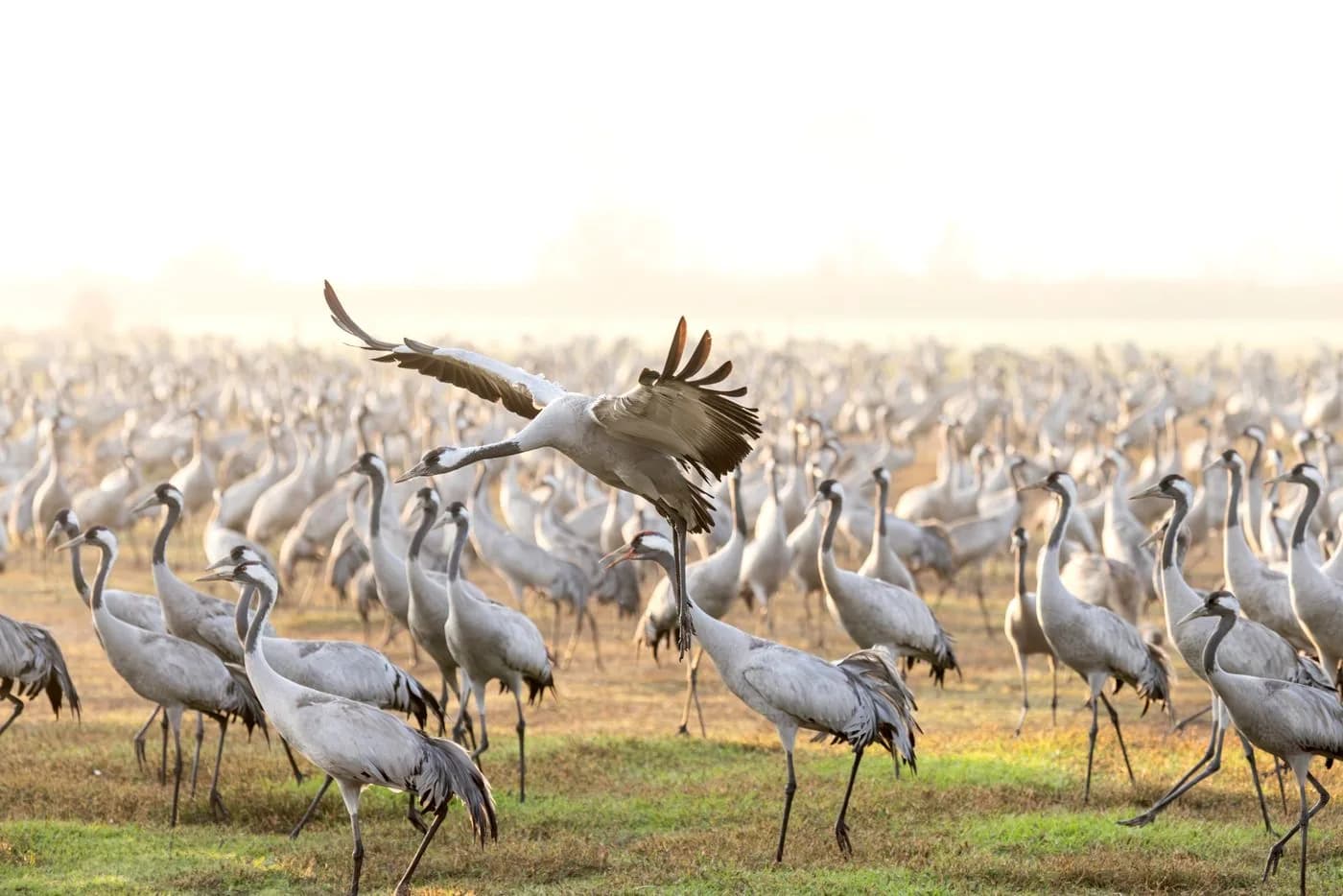
Twenty thousand cranes, and the sound carries a long way.
Region
West Sweden
Best season
Mar – Apr
Best for
Anyone who wants a season to arrive in front of them
About Hornborgasjön
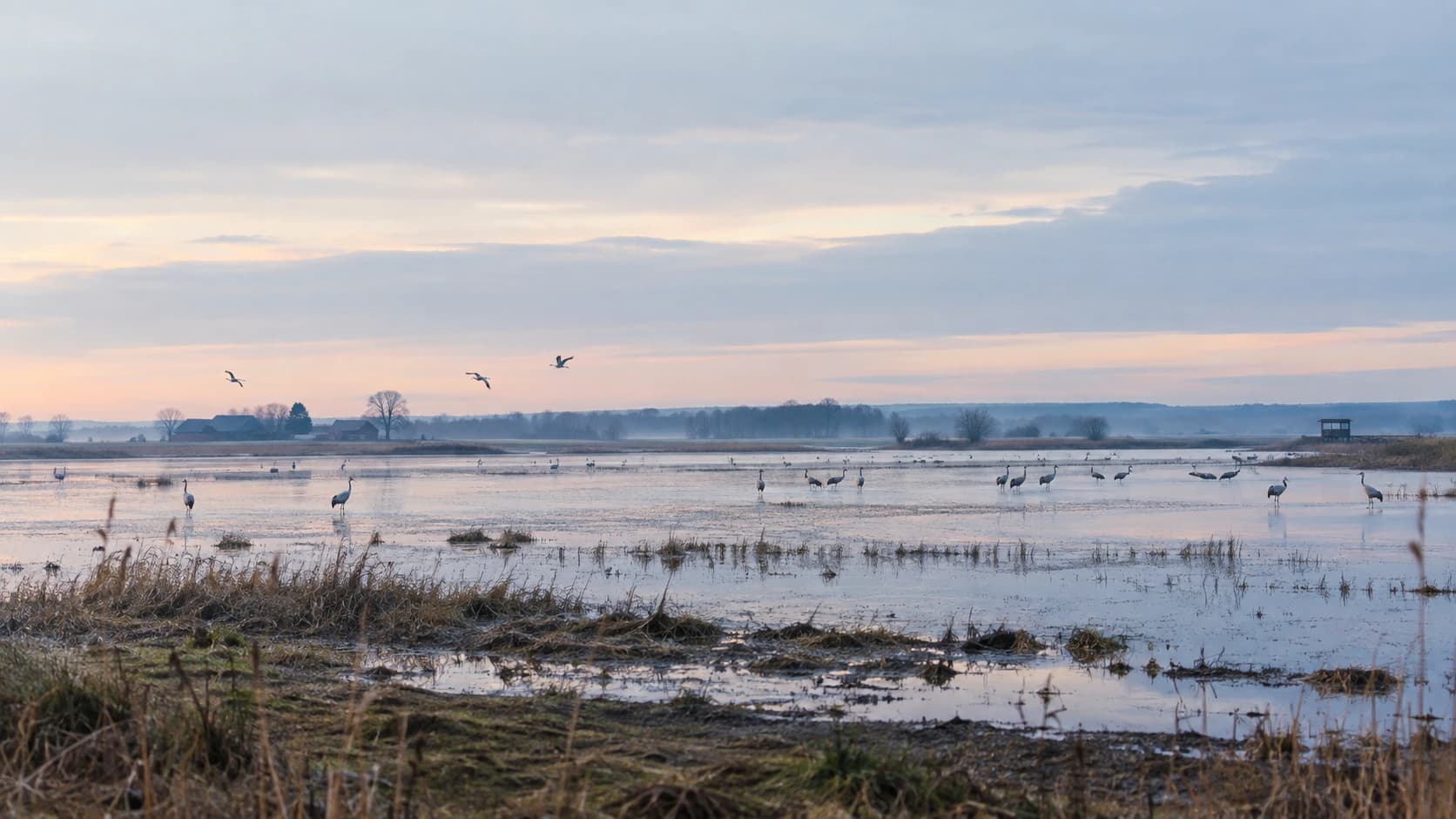
A shallow lake in inland Västergötland that, for six weeks every spring, holds one of the great bird gatherings in Europe. Around twenty thousand cranes stop here on the way north, and for most Swedes their arrival is not a sign of spring but the thing itself.
Getting there
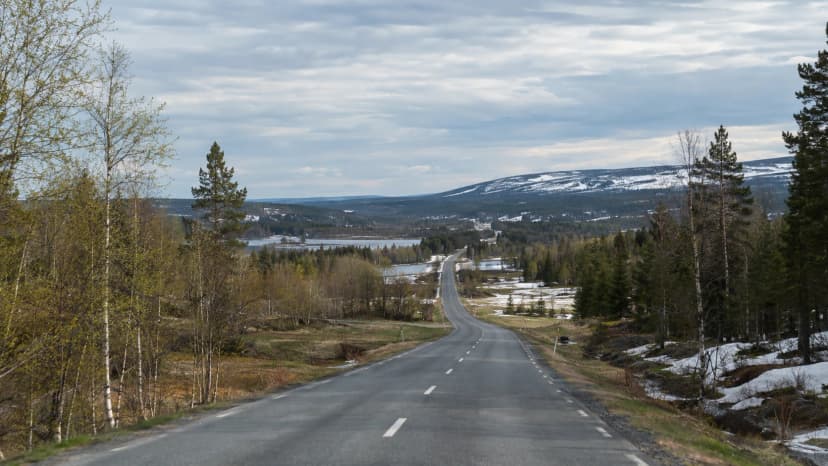
Roughly two hours by road from Gothenburg and about four from Stockholm. The nearest town of any size is Falköping, fifteen minutes to the south. A car is essential — the viewing points are spread around the lake.
What to see and do in Hornborgasjön
The dance
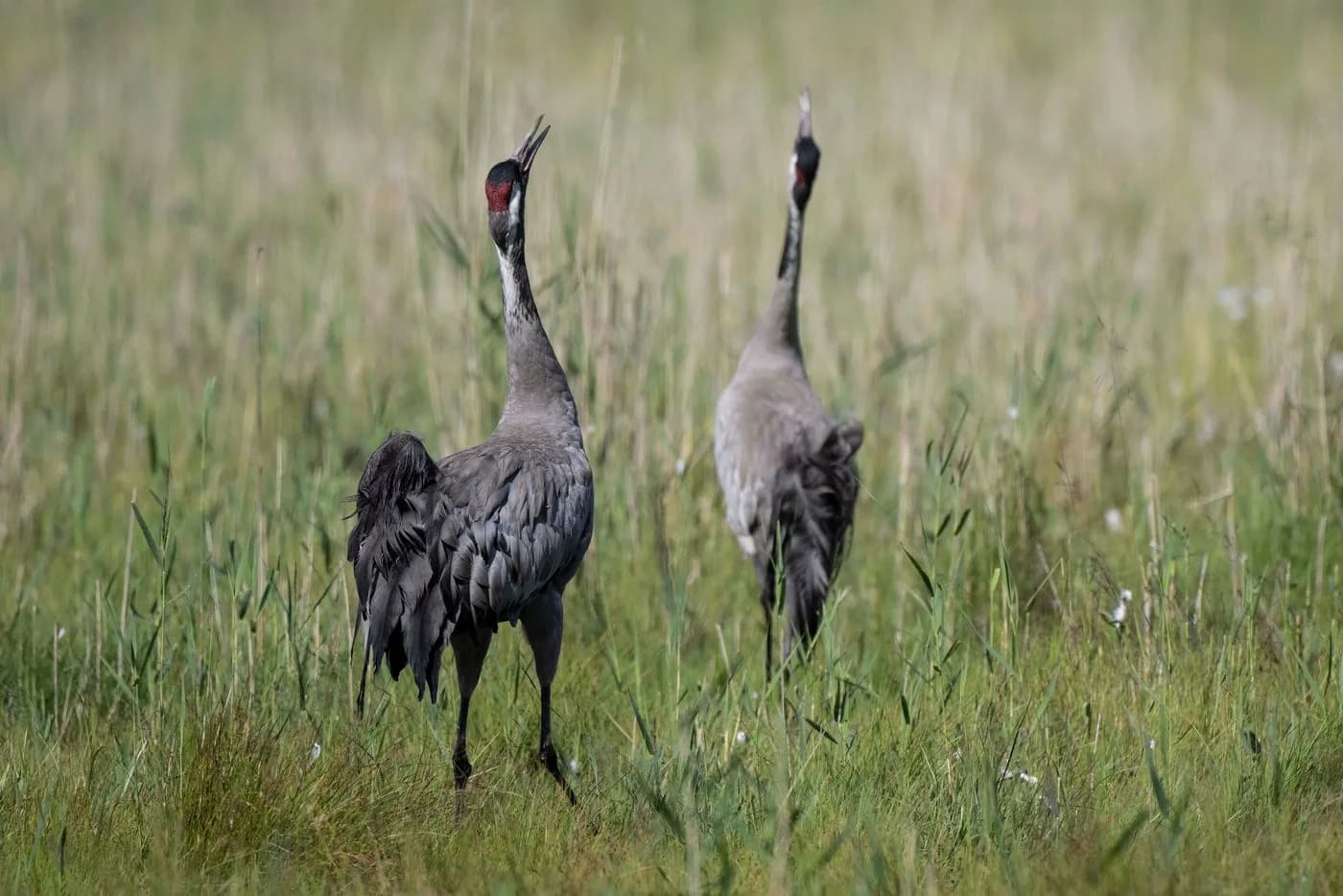
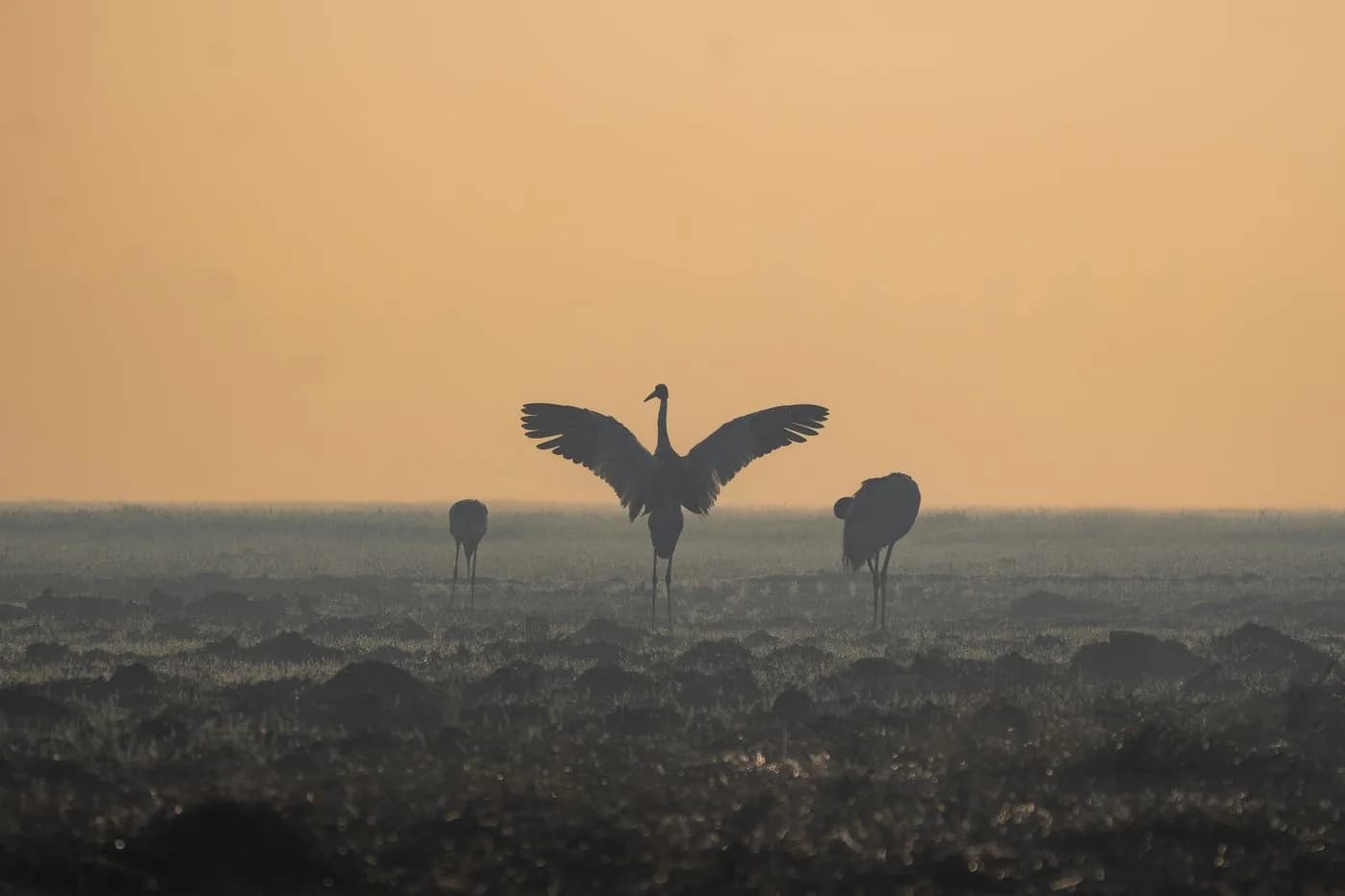
It is a courtship display: bowing with lifted wings, wing-flapping, hopping with the wings spread, and a trumpeting call with the head thrown back. Pairs stay together for life and dance to hold the bond. Thousands do it at once, and the noise is the part nobody warns you about.
Counted every evening
Volunteers count the birds each evening as they fly in to roost and report the figure to the county board. The record is 27,300, set on 3 April 2019. You can look up the number before you travel, which is unusual for a wildlife spectacle.
Morning, not afternoon
The dancing is a dawn business, when the birds wake and pair up. By mid-morning, once the air has warmed, they lift off to feed. Coming at midday is the commonest mistake made here.
Arrange My Trip
When to go to Hornborgasjön
First arrivals
Mid-March
The first flocks come in from Spain. Numbers build quickly, the lake is quiet, and the light is still winter light.
Peak
Early April
Around twenty thousand birds, and around a hundred thousand people across the season. The biggest count and the busiest week are the same week.
The better fortnight
Late March & mid-April
Still over ten thousand birds and a fraction of the visitors. This is the window we would send you in. By the end of April they have gone north to breed.
Hornborgasjön: common questions
Anything not answered here, ask us directly — we'd rather you did.
When exactly should we come?
Not in the first week of April, which is the answer most people are surprised by. That week has the highest counts — around twenty thousand birds — and it also has the crowds, because the season draws over a hundred thousand visitors and they all target the peak. The last week of March or the second week of April still holds well over ten thousand cranes, and the experience at the lake edge is the same one with a fraction of the people in it. We would rather send you to the quieter fortnight and tell you why.
Will we definitely see them dance?
You will see cranes, in numbers, and you will hear them from a long way off. The dance itself cannot be timed — it happens at some point on almost any day, most reliably around dawn, and nobody can promise you the hour. That is why we build in more than one morning. Anyone offering a guaranteed spectacle is selling something they do not control.
Is it worth coming outside the crane season?
Honestly, not as a destination in itself. The cranes stop again in September on the way south, but they are warier then, keep their distance and travel with nearly grown young, so it is a quieter and less generous thing to watch. Outside those two windows this is a pleasant lake with good birdlife and no particular reason to travel for it.
Ready when you are
Travel to Hornborgasjön
Every journey we design starts with one conversation. Tell us roughly when you'd like to travel and who's coming, and we'll take it from there.