Coast, art & migration
The Other Sweden
Six weeks in the south when the birds leave, the apples come in and the beech turns.
What you'll remember
- Dawn at Nabben with the counters, on a morning the finches are moving in tens of thousands
- The walk north from Stenshuvud across sand steppe found almost nowhere else in Sweden
- Eighty sculptures in forty hectares of beech forest, with the leaves turning
- A scramble down a cliff into a driftwood tower in a country that does not officially exist
The story
It is not yet seven, the wind has gone round to the south-west overnight, and the first birds are already coming over the point.
Almost everyone who travels to Sweden goes north. They go for the aurora, the ice, the reindeer, the long dark — and they are right to, because it is extraordinary. But it means the south of the country is largely left to the Swedes, and there is a particular six-week window in which that is their considerable good fortune.
From the middle of September the whole of Skåne turns at once. The migration builds on the south-western tip until the sky over a single sand spit carries hundreds of thousands of birds heading for Africa. The orchards on the east coast come into harvest. The beech woods inland go from green to copper in a fortnight. The light drops low and stays there all day, which is the light this landscape was always meant to be seen in.
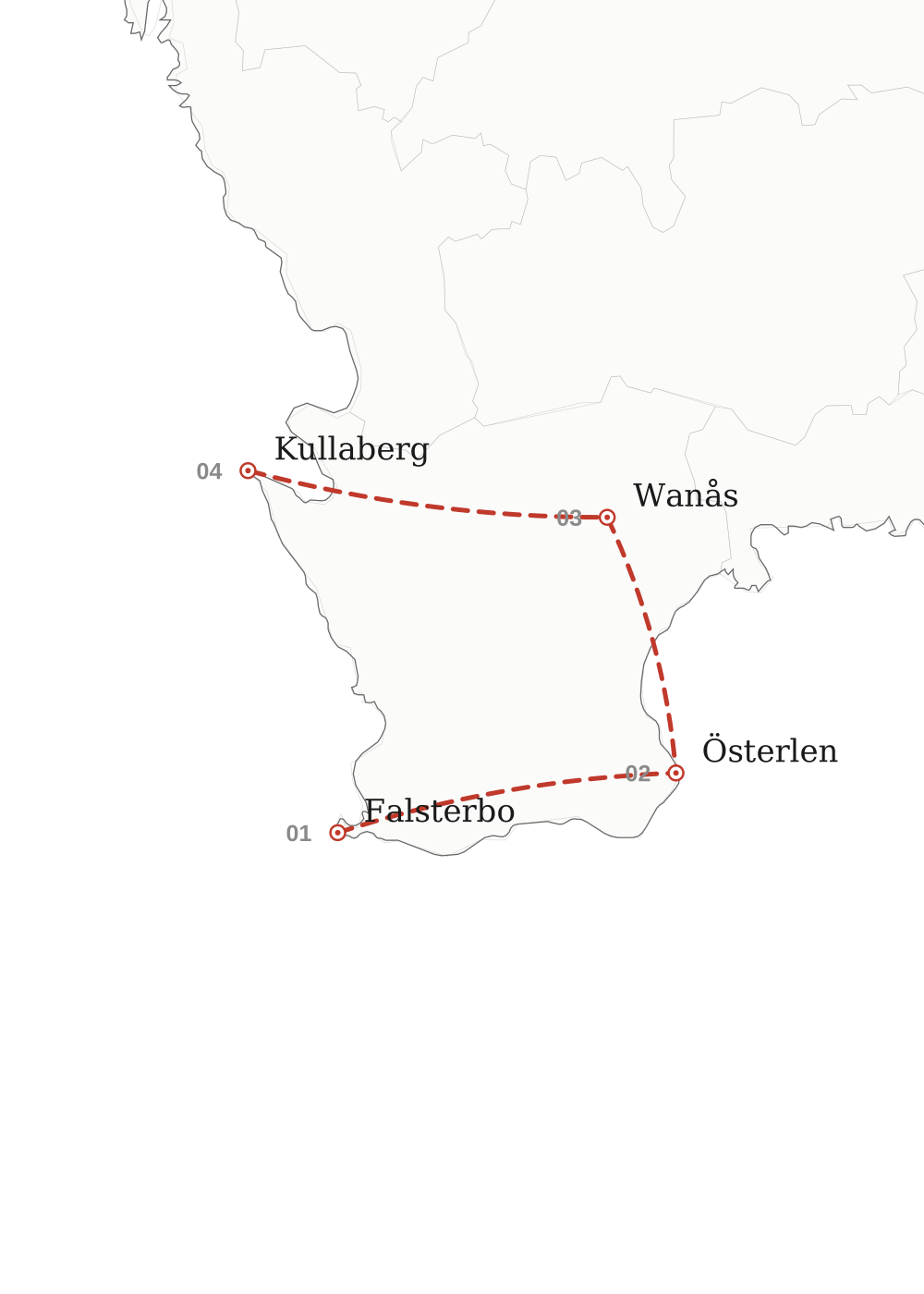
This journey runs the width of the province to catch all three, and it ends somewhere genuinely strange. We have built it around places rather than properties, and we have been careful to say what each day actually asks of you — because two of them ask more than a gentle walk.
This is a curated journey we can arrange. Book it as designed, tailor it around your dates, your pace and who is coming, or use it as the starting point for something new.
Falsterbo
The last land before the crossing
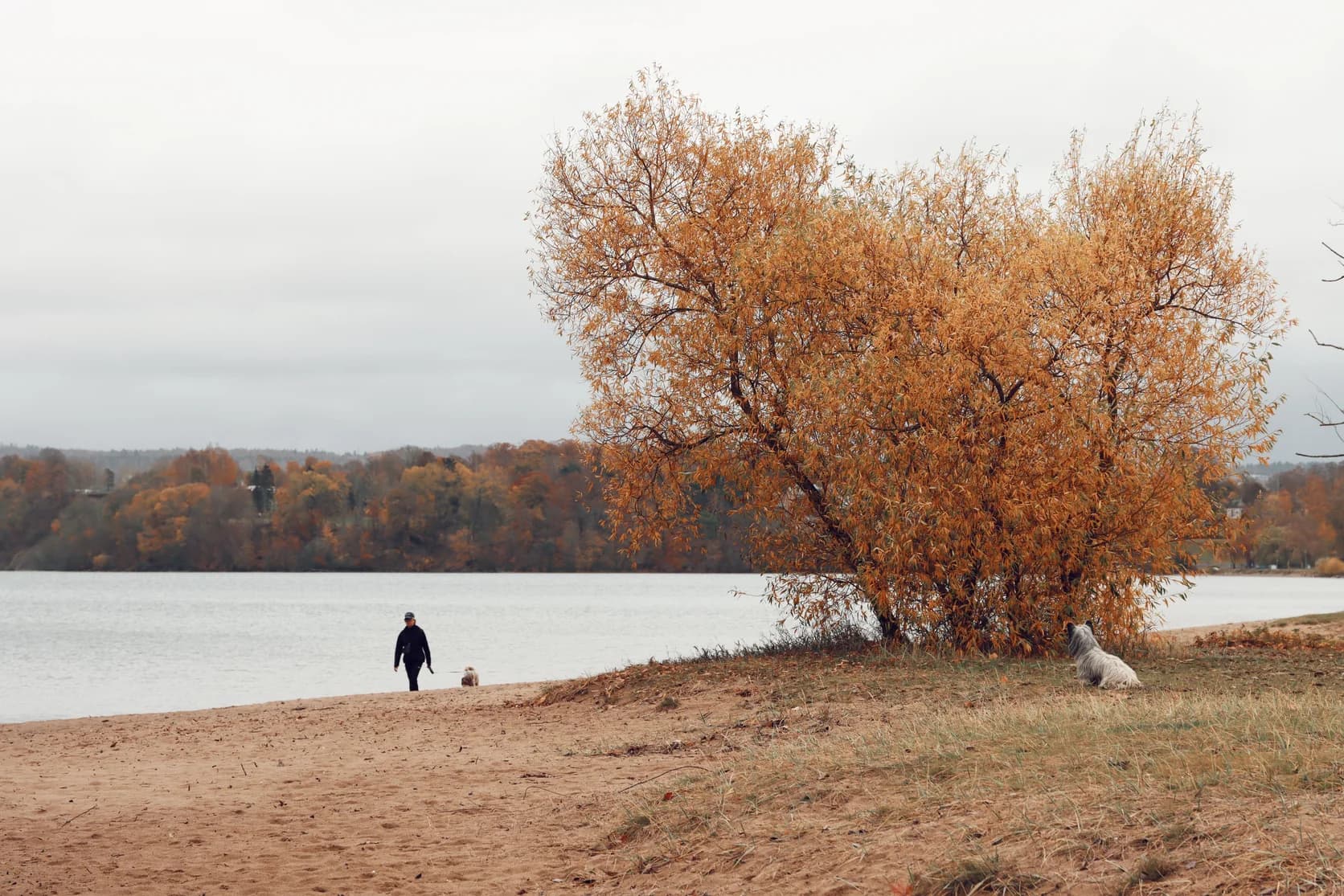
The peninsula at the extreme south-west corner of Sweden narrows to a point called Nabben, and the geography does the rest: birds moving south down the Swedish coast are funnelled into the shortest sea crossing available to them, and they stack up here waiting for the wind. Standardised counts have been made from this spot every autumn morning since 1973, starting half an hour before sunrise whatever the weather is doing.
You will be out there for both of them. More than twenty species of raptor pass in a normal season, and on the strongest days it is not the rarity that stays with you but the volume — sparrowhawks and honey buzzards in continuous procession, or on an October morning, chaffinches and bramblings overhead in a stream that does not stop for hours.
Mornings are early and the afternoons are yours. A guide comes with you on both, because the difference between watching a great many birds and understanding what is happening in front of you is entirely a matter of who is standing next to you.
Ystad & Kåseberga
Fifty-nine stones on a headland
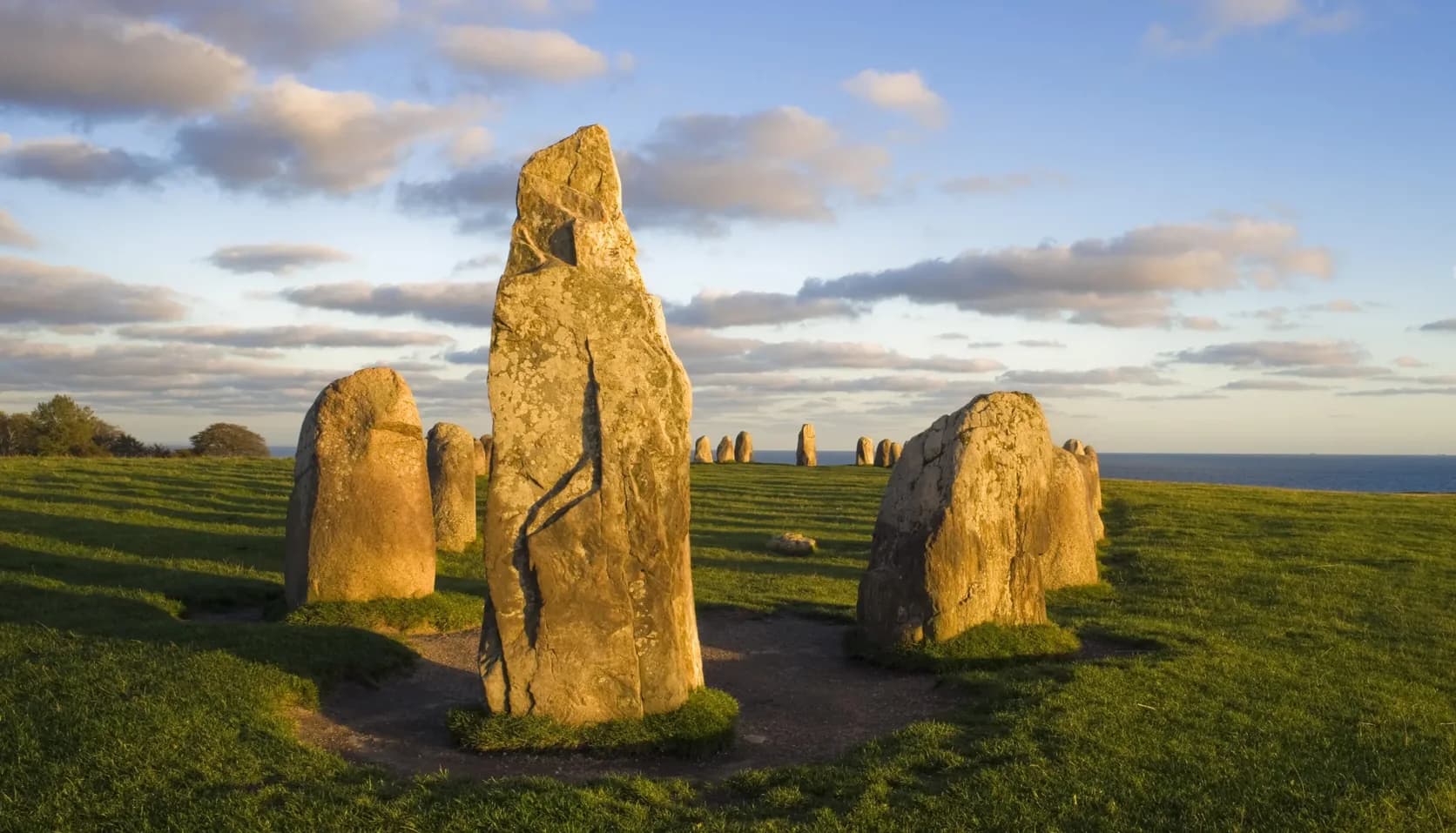
East along the coast to a town of timber-framed streets that has changed very little, and out to the headland at Kåseberga in the late afternoon. Ales stenar is a ship outlined in fifty-nine boulders on the cliff above the sea, roughly fourteen centuries old, and nobody is certain what it was for. It is better at dusk, when the day visitors have gone and the shape of it reads properly against the water.
A short day on purpose. The two before it started before sunrise.
Österlen
Harvest, and a coast that behaves like nowhere else here
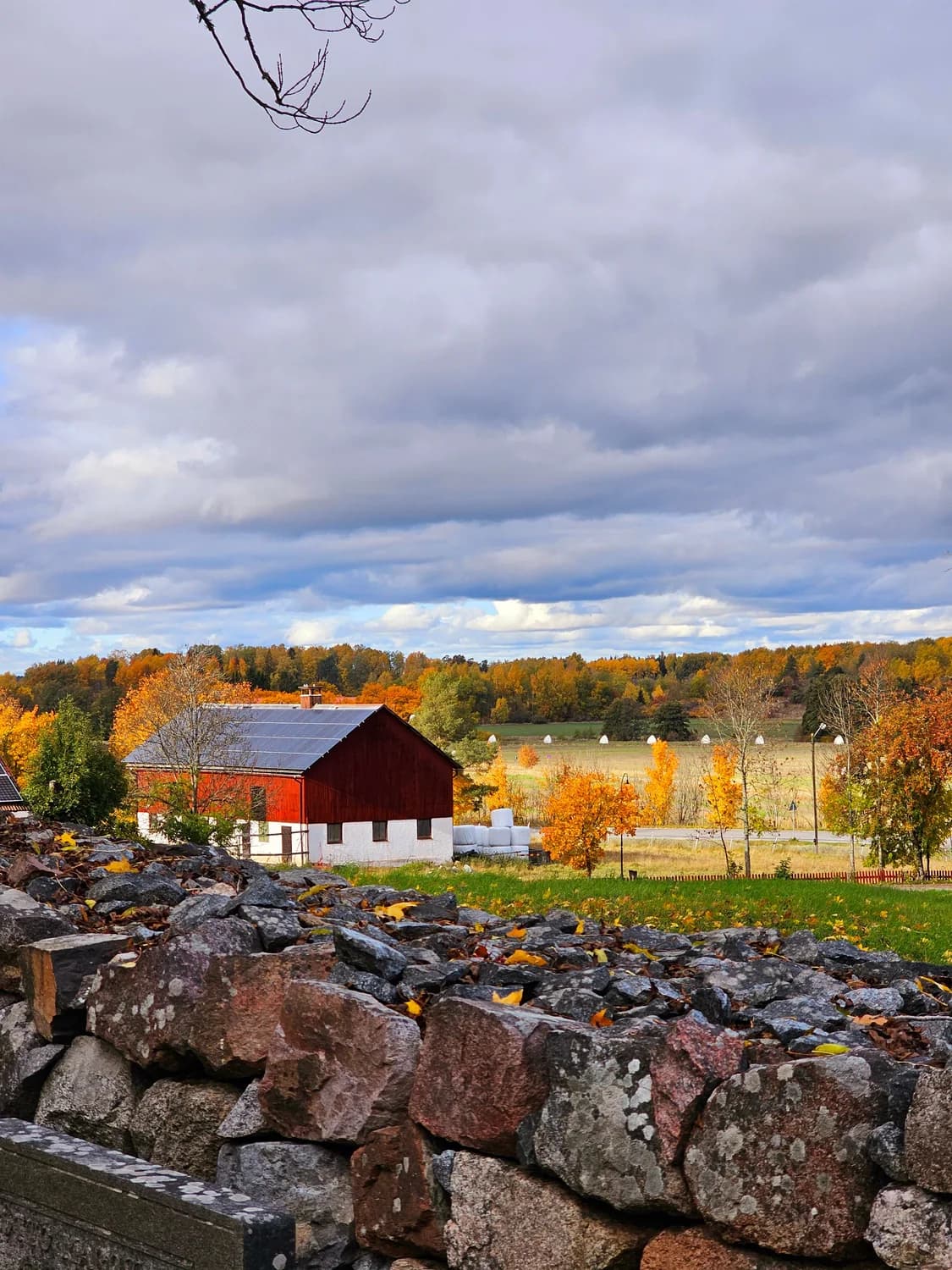
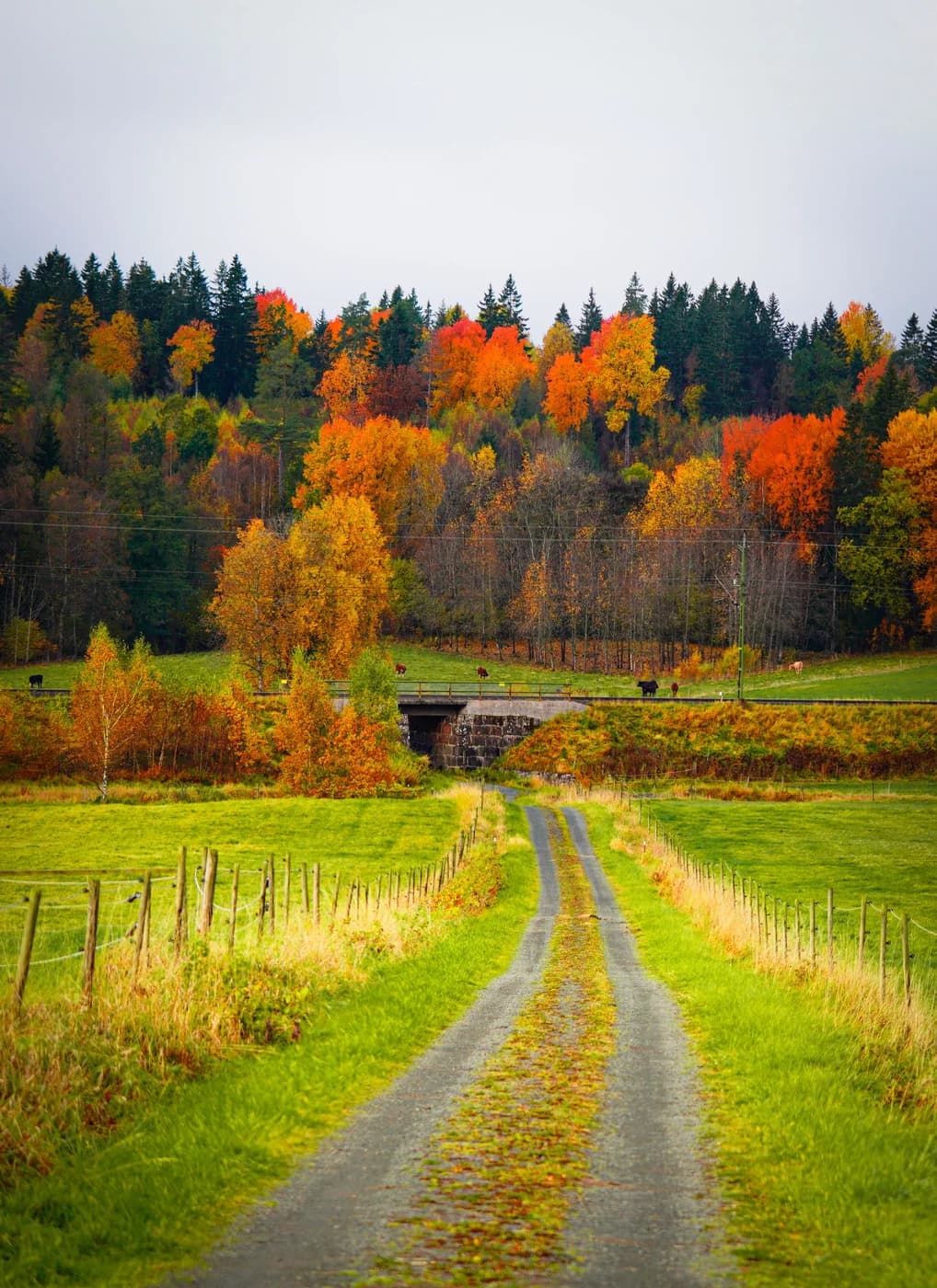
Österlen in late September is the argument for coming to Skåne in autumn rather than summer. The orchards around Kivik are being picked, the farm kitchens are cooking what came in that week, and the studios that fill this coast are still open but no longer busy.
The walk is the centre of it. North from Stenshuvud along the shore to Haväng, where the ground turns to something Sweden has almost nowhere else: a true sand steppe, calcareous glacial deposits rather than drifting dune sand, dry and warm enough to carry a flora closer to the Hungarian plains than the Baltic. A storm in 1843 stripped the sand off a stone-age tomb up on the ridge that nobody had known was there. It is still there, looking north up the coast.
From Haväng the route turns inland along the Verkeån into deep broadleaf woods and comes out on the rolling hills at Brösarp. Around fifteen kilometres, rated easy, five to six hours at the pace it deserves. There is no food or water after Kivik, which is the sort of detail that decides how a day goes.
Wanås
Eighty sculptures, and the beech turning
Inland and north to an estate where, since 1987, artists have been invited to make work directly into the beech forest around a medieval castle. Close to eighty permanent pieces now stand across forty hectares of woodland and eighteenth-century farm buildings. Yoko Ono, Jenny Holzer, Ann Hamilton, William Forsythe. More than three hundred artists have shown here, and there is no announcement of any of it at the gate.
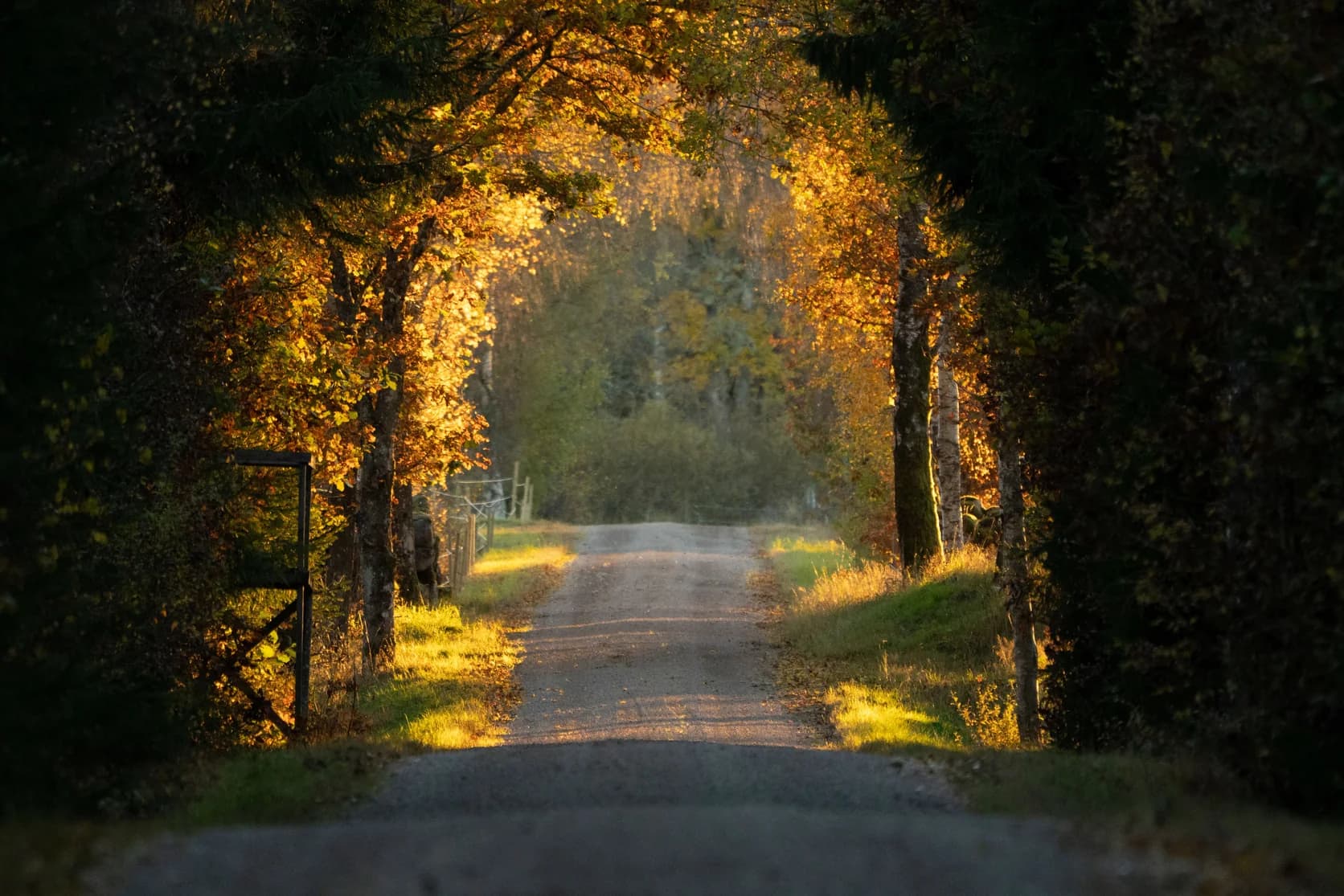
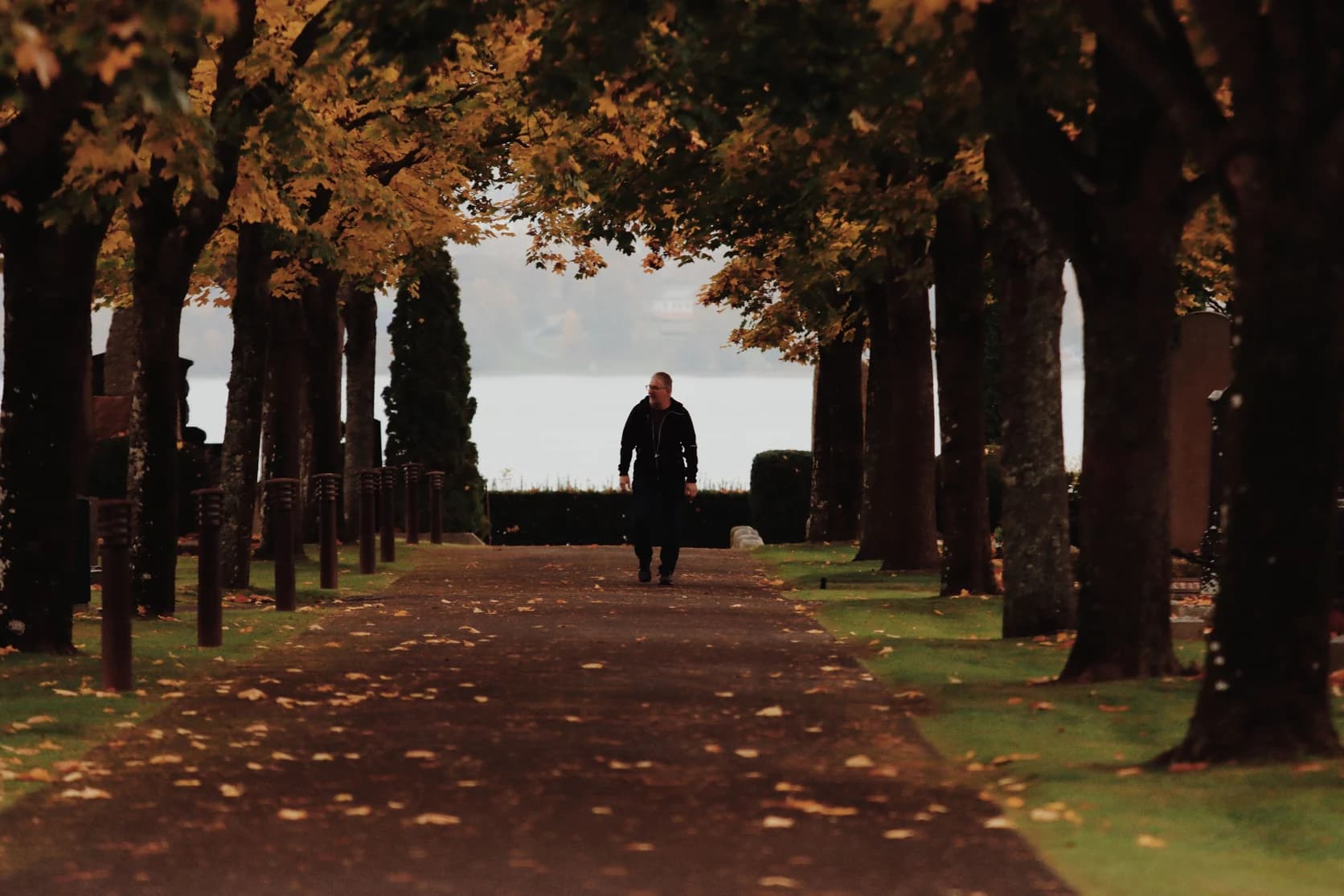
Nothing was made elsewhere and brought in — the artists come, look at the wood, and build into it, which is why the collection reads as part of the forest rather than an exhibition placed inside one. In the first fortnight of October the canopy goes copper and the low sun comes sideways through it onto work that was made in that light.
Staying on the estate is the point. The park opens to everyone at ten; you will have had two hours in it before that.
Kullaberg
A country that isn't one
West to the blunt gneiss headland at the top corner of Skåne, and the strangest ending we could give you. In 1980 the artist Lars Vilks started nailing driftwood together at the foot of these cliffs. The authorities did not notice for two years, then ruled the thing an illegal building inside a nature reserve and ordered it destroyed. He appealed, and lost, and appealed, and lost. In 1996 he declared the square kilometre around it the sovereign nation of Ladonia.
Seventy-five tonnes of driftwood towers are still standing. The state never carried out the demolition it won. It appears on no map and there are no signs, because Sweden does not recognise it — the way in is a worn path marked with yellow letter Ns painted on trees and fence posts, then a steep half-hour scramble down the rock to the shore.
We will be plain about this one. The descent is not for anyone unsteady on their feet, and it is not to be attempted after rain. The sculpture is unmaintained; how far into it you climb is your own call. If the weather is wrong we will take you along the clifftop to the lighthouse instead, and it will still be a good last day.
Before you ask
Anything not answered here, ask us directly — we'd rather you did.
Why September and October rather than summer?
Because all three of the things this journey is built around only happen then. The migration peaks from late September into October. The apple harvest is September. The beech at Wanås turns in the first fortnight of October. In July you would have warm beaches and a great many Swedes, which is pleasant and is not this trip. The window is genuinely narrow, and we would rather move your dates than sell you the same route in August.
How much walking is there really?
Two demanding days and five easy ones. The Haväng stage is around fifteen kilometres over five to six hours on flat to gently rolling ground — long, but not technical. The descent to Nimis at Kullaberg is short and genuinely steep, thirty to forty-five minutes of scrambling over rock and roots, and it is the one element of this journey we would tell you to skip if you have any doubt about your footing. Everything else is a stroll. If the two big days do not suit, say so and we will build around them.
Will we definitely see the migration?
You will see birds. Whether you get one of the great mornings depends on the wind, and no one can promise that — south-westerlies produce the best days, and a still clear morning after a night of them is what the counters wait for. This is exactly why we have built in two mornings rather than one, and why we would push you towards the peak weeks rather than the shoulders. Anyone who guarantees you a spectacle is selling you something they do not control.
Can this be combined with Copenhagen?
Easily, and it is the sensible way to arrive. Copenhagen airport is around forty-five minutes from Falsterbo across the Öresund bridge, which makes this the most straightforward part of Sweden to reach from anywhere in Europe. A few days of Danish city either side of this journey works very well, and we will arrange it.
Is this suitable for children?
For teenagers who walk, yes, and the Ladonia story tends to land well at that age. For younger children we would say no as it stands — the early starts at the counting station and the scramble at Kullaberg are the two hardest parts of the trip and neither is much fun below about twelve. Tell us their ages and we will rework it rather than talk you out of the region.
Ready when you are
Make it yours
Tell us roughly when you'd like to travel and who's coming, and we'll shape this into something built around you. One conversation is all it takes to start.