For most travellers, a safari is something watched. You sit in a raised vehicle, the country slides past the open sides, the guide stops when there is something to see, and the experience arrives through a frame, the windscreen, the camera, the roof hatch. It is how the great famous parks of East and southern Africa are almost always experienced, and at its best it is superb. But it is, finally, a thing observed from inside a machine, with the engine running and the door closed.
Zambia is where someone first decided that was the wrong way round. In the South Luangwa Valley in the 1950s, a former game ranger named Norman Carr, one of the founding figures of African conservation, set up the continent's first photographic safari company and pioneered something nobody had offered tourists before: the walking safari. Out of the vehicle, on foot, in the company of an armed guide and a tracker, meeting the wild not through glass but on its own ground, at its own pace, with the wind and the sound and the smell of it intact. The idea spread across the continent in the decades that followed. But it was born here, it is taken more seriously here than anywhere else, and Zambia remains the one country where the walk is not an add-on to the drive but the reason to come.
And the country it happens in is, by wide agreement among people who have seen most of the continent, Africa's best-kept secret: a vast, thinly visited country of unfenced wilderness and great rivers, with some of the densest leopard populations on earth, some of the finest guiding, and a fraction of the crowds of its famous neighbours. The famous safari is watched. The Zambian one is walked.
This is where this begins.
What the famous safari is.
It is worth being fair to the vehicle, because the game drive is a genuinely great way to see wildlife and Zambia does it as well as anywhere. The country runs day and night drives, and its night drives, banned in many national parks elsewhere, are among the best in Africa, turning up the leopard, the porcupine, the genet, and the whole secret cast of the African dark. For a first encounter with the continent's wildlife, the drive is hard to better, and a Zambian one comes with guiding of a very high order and almost none of the vehicle traffic that crowds the famous reserves.
But the drive is the same essential experience the whole continent offers, refined. What Zambia alone made, and alone has at the centre of its identity, is the other thing, and to understand the country you have to step down out of the vehicle.
What the valley actually is.
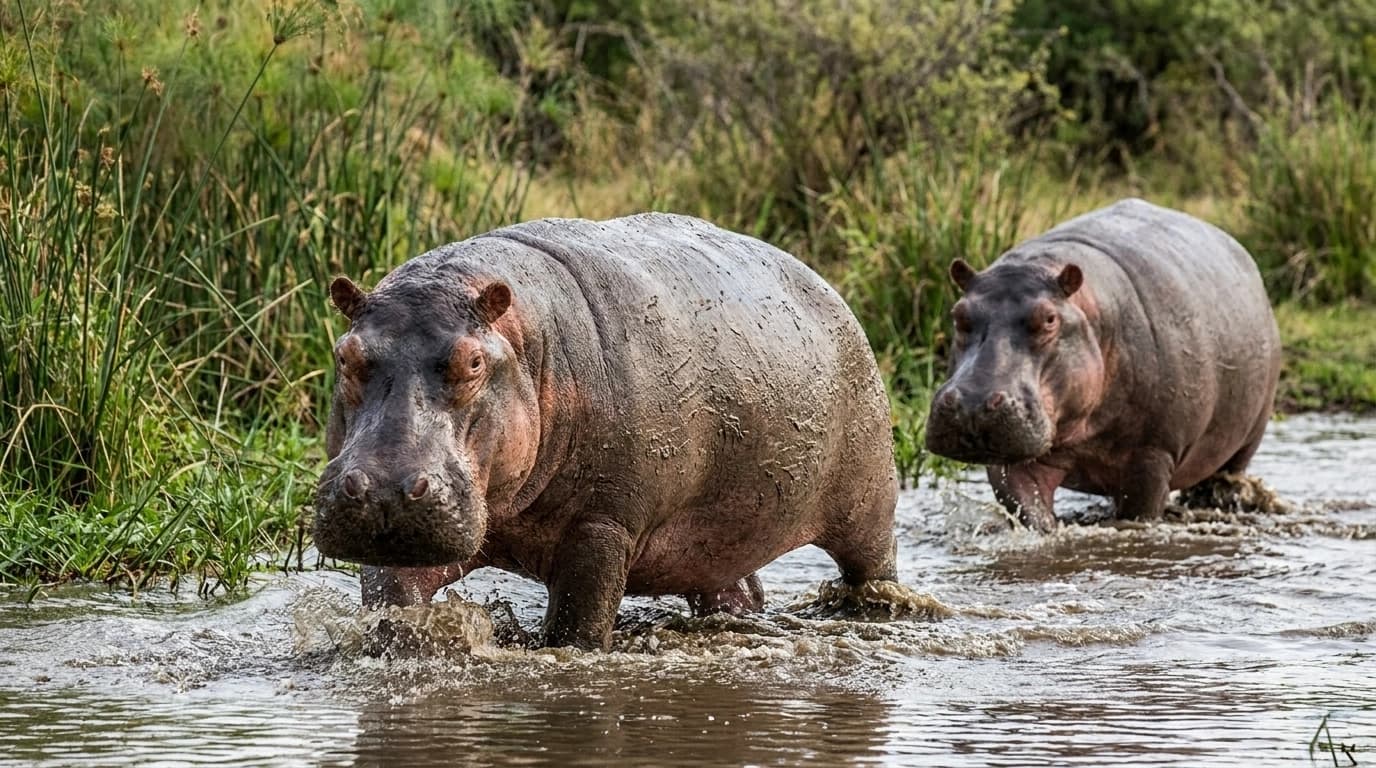
The South Luangwa is the jewel, a long, broad valley in the country's east, the southern end of the Great Rift, through which the Luangwa River winds in great looping meanders, changing its course year by year and leaving behind a chain of oxbow lagoons that draw the wildlife in extraordinary density. It is known, with reason, as the Valley of the Leopard: the riverine forest and the deep shade hold one of the highest densities of the cat anywhere on earth, and a few nights here, on drives and on foot, will very often deliver the leopard sightings that years elsewhere do not. The valley also carries large herds of elephant and buffalo, the country's own subspecies of giraffe and zebra found nowhere else, hippo in the river in their hundreds, and lion across the open ground, all of it in an unfenced wilderness rich in well over four hundred species of bird, and all of it walkable.
The Lower Zambezi, in the country's south, is the other great landscape, a national park on the north bank of the Zambezi, where the river runs wide and island-strung below a high escarpment, and where the safari takes to the water. Here the defining experience is the canoe: a slow drift down a channel of the Zambezi at the pace of the current, eye-level with the bank, passing elephant feeding at the water's edge and pods of hippo that must be read and respected, in a silence no engine breaks. There is game driving and walking too, and the river holds the tigerfish that draw anglers from across the world for catch-and-release, but it is the canoe that defines the place, the same river that, a long way downstream, becomes the falls, met here in its quiet middle reaches.
Beyond these two, the country holds more than most visitors ever reach: Kafue, one of the largest national parks in Africa, with the seasonally flooded Busanga Plains and their lion; the Liuwa Plain in the far west, where the second-largest wildebeest migration on the continent gathers each year, almost unwatched; and, on the country's southern border, the Zambian side of Victoria Falls at Livingstone, where in the low-water months the brave can swim to the very lip of the chasm at the Devil's Pool. But the heart of a Zambian safari is the two great river valleys, and the thing they share is that they are meant to be travelled on foot and on the water.
“The country where the walking safari was invented. The Valley of the Leopard. A canoe drifting past elephant on the Zambezi. The famous safari is watched; this one is walked.
What the walk gives.
A walking safari is a different thing from a game drive in a way that is difficult to convey until you have done one. The pace drops to a human one. The guide and the tracker read the ground, the print, the broken grass, the alarm call of a bird, the freshness of dung, and the country becomes a text rather than a view. The small things that the vehicle drives past become the subject: the medicinal use of a tree, the architecture of a termite mound, the dung beetle at its work, the way a particular bird betrays a particular predator. And then, sometimes, the large things: a herd of elephant met on foot and at a respectful distance, a buffalo watched from cover, the heart-rate of the whole thing transformed by the absence of the vehicle's metal shell. It is, done with a great guide, among the most absorbing and humbling experiences in travel, and Zambia's guides, trained in the tradition Norman Carr began, are among the very best at it.
Behind the wildlife is a conservation story of unusual depth. The walking safari was, from the beginning, bound up with conservation, Carr's insight was that wildlife had to pay its way to survive, and that local communities had to benefit if it was to be protected. That principle still runs through the best of Zambian safari, where the small camps support the surrounding communities through schooling, healthcare, and employment, and where the wilderness has stayed wild in part because the people who live at its edge have a reason to keep it so. It is the same argument the rest of the continent has slowly come to, made here first.
How it feels to be there.
The day begins in the cold and the dark, with coffee at the fire and the night sounds still going. The morning may be a drive or, better, a walk, out across the valley as the sun comes up, the guide ahead reading the ground, the country waking around you. The heat of the middle of the day is for the shade of camp, the river sliding past below the deck, the hippo grunting, the long lunch and the longer rest. The late afternoon brings the second outing, a walk, a drive, or on the Zambezi a canoe drifting down a channel into the sunset, and then, as the dark comes down, the night drive turns up the animals the day never shows. Evenings are around the fire, under a sky as dark as any in Africa, with the lion calling somewhere out in the unfenced dark and nothing between the camp and the wild but a thin line of lamplight.
The camps themselves run small. Zambia's wilderness is protected in part by keeping the footprint light, and the best camps hold only a handful of guests, some of them seasonal bush camps, open only in the dry months, reached on foot or by light aircraft, stripped back to the essentials and all the better for it. The intimacy is the point. There is no convoy of vehicles at a sighting, no queue at a waterhole. Very often it is your party, your guide, and the country, and nobody else for a long way in any direction.
What we look for when we plan a stay here.
Zambia rewards a trip built around the walk and the water rather than the drive alone, and around the small camps rather than the large ones. The right week, though the best Zambia trips run longer, and combine well with the falls and with neighbouring Botswana or Zimbabwe, pairs the South Luangwa, for the leopard and the walking, with the Lower Zambezi, for the canoe and the river, at a pace that lets the country be read on foot. The difference between an ordinary Zambian safari and an extraordinary one is, more than anywhere, the guide and the size of the camp.
What we look for here: small, well-sited camps on the rivers and lagoons where the wildlife concentrates, including the seasonal bush camps that open only in the dry months and that deliver the walking experience at its purest, rather than the larger lodges. Guiding in the Carr tradition, with the full walking and the night-drive experience the country is built on. The canoe and the river properly used in the Lower Zambezi, not treated as an afterthought. And the whole arc handled as one, the arrival, the bush flights between the valleys, and any onward leg to the falls, with the timing and the guiding weighed above all.
Through our network we have access to camps across the South Luangwa, the Lower Zambezi, and the wider country that sit within this standard, including the small seasonal bush camps that are the heart of the walking tradition. Each is arranged personally, matched to the group and the season, and handled from the arrival to the last airstrip onward.
Who Zambia is right for.
Not those for whom the safari means a checklist of sightings collected at speed from a vehicle, with a lodge of fifty rooms and a swimming pool at the end of it. That trip exists elsewhere, and there is no reason to come this far for it.
This is for travellers who have understood that the most rewarding way to meet the wild is rarely the most comfortable or the most crowded one, and who would rather walk into the country than be driven through it. For those who have done a first safari, through the windscreen, and want the version that happens on foot. For couples and small groups who want the wilderness intimate, the camps tiny, and the country largely to themselves. For families with children old enough for the walking, who will be changed by an Africa met at ground level. And for anyone drawn to the place where it all began, the valley where someone first thought to switch off the engine, open the door, and step down.
The Luangwa has been changing its course through the valley for far longer than there have been people to watch it, leaving its lagoons behind like a signature. Norman Carr opened the country to the photographic safari in the 1950s, within the memory of people still living. The walk he invented is now done all over the continent, but it is still done best here. And the wilderness it crosses has stayed wild largely because the people at its edge were given a reason to keep it so. The argument for going is the argument for meeting Africa the way this country first taught the world to meet it, slowly, on foot, with the engine off.
When to visit Zambia
Zambia has a single wet season and a long dry one, and the dry is the great safari season, particularly for the walking, which the bush and the water levels make possible. The dry runs roughly from May through October, the bush thinning and the wildlife concentrating along the rivers and lagoons as the season advances; the late dry months of August through October are the peak, when the game gathers at the shrinking water and the leopard viewing in the Luangwa is at its best, and when the small seasonal bush camps, the heart of the walking experience, are open. It is also the busiest time, with the best camps booked many months ahead. The green or emerald season, roughly November through March, transforms the country, the bush lush, the migratory birds arrived, the newborn animals everywhere, the photography spectacular, and the prices and crowds at their lowest, but many of the bush camps close, some roads become impassable, and the game is harder to find in the thick growth; it is a connoisseur's season, and a beautiful one. April and May are the green-to-dry transition, when the country is still lush but drying and opening. On the Zambezi, the canoeing is at its best in the dry months when the water is lower and the channels are clear.
How to get to Zambia
Kenneth Kaunda International (LUN) at Lusaka, the capital, is the principal gateway, with connections from Johannesburg, Addis Ababa, Nairobi, the Gulf, and a growing number of other hubs, and easy onward links from Europe. From Lusaka, the safari country is reached by air: scheduled and private light aircraft run east to Mfuwe (MFU), the gateway to the South Luangwa, and down to the airstrips of the Lower Zambezi, in flights of around an hour over wild country. Harry Mwanga Nkumbula International (LVI) at Livingstone serves the Zambian side of Victoria Falls and connects easily to the safari areas and across the river to Zimbabwe and Botswana, which is why so many trips combine them. Private jets route into Lusaka and Livingstone and onward to the bush strips. We coordinate the international arrival, the bush flights between the valleys, the ground handling, and the timing of the whole route, along with any falls or cross-border leg, ourselves.
Where to stay in Zambia
A serious Zambia itinerary works around its two great river valleys, and the best trips use both. The South Luangwa is the heart, the Valley of the Leopard, the home of the walking safari, where the choice runs from a comfortable year-round camp on the river to the stripped-back seasonal bush camps that deliver the walking experience at its purest, often linked on foot one to the next. The Lower Zambezi is the river counterpoint, the canoeing country, where the safari takes to the water beneath the escarpment. The Zambian side of Victoria Falls at Livingstone makes a natural beginning or end, and the whole country combines easily with Zimbabwe and Botswana across the rivers. A week takes in the two valleys; a longer trip adds the falls, or the wilder country of Kafue and the Liuwa Plain.
We do not publish a property list. The camps we arrange across the valleys are matched once the brief is clear, the river camp for comfort and the year-round game, the seasonal bush camp for the walking at its purest, the Lower Zambezi camp for the canoe and the water. What we will say is that the right Zambia trip is almost never the one with the largest lodge. It is the one with the smallest camp, the best guide, and the willingness to step down out of the vehicle.