The measured north
One Hundred Winters
Six nights in the one valley where the northern winter has been written down, without a gap, since 1913.
What you'll remember
- A mire ten kilometres from the village where the permafrost is visibly giving way
- Lake ice whose thickness and freeze date have been logged every winter for over a century
- Learning why this valley's sky stays open — as a fact about mountains, not a promise about the aurora
- A wood-fired sauna at the end of a snowmobile track, glass on three sides, nobody else booked
The story
The ice you are standing on has had its thickness recorded every winter since before the First World War, and the person beside you can tell you what this year's figure means.
A research station was built at Katterjåkk, west of here, in 1903. It burned down in 1910. A better one was put up in Abisko, and from 1913 the observations began: air pressure, temperature, humidity, wind, precipitation, snow depth, and the thickness and duration of the ice on Torneträsk. The water-level measurements on the lake are older still, started in 1904 further along the shore and moved to Abisko in 1917.
None of it has stopped since. Several of the series now run longer than a hundred years, which is rare enough that the World Meteorological Organization designated the observatory a Centennial Observing Station in 2021 and gave it a Centennial Award in 2024. Around two hundred scientists a year come to work here. The record shows a century of warming with two peaks — one in the late 1930s, one in the past two decades.
So this is not simply a good place to look at the sky. It is the place where the northern winter has been written down, continuously, for longer than almost anywhere in the Arctic. This journey is six nights in a valley that is also an instrument: you walk on ground that is being measured, stand on ice that has a file, and learn why the weather here behaves as it does. The aurora happens on top of that rather than instead of it — which is the whole point, because it means a cloudy week is a quieter trip and not a wasted one.
This is a curated journey we can arrange. Book it as designed, tailor it around your dates, your pace and who is coming, or use it as the starting point for something new.
Where you'll be
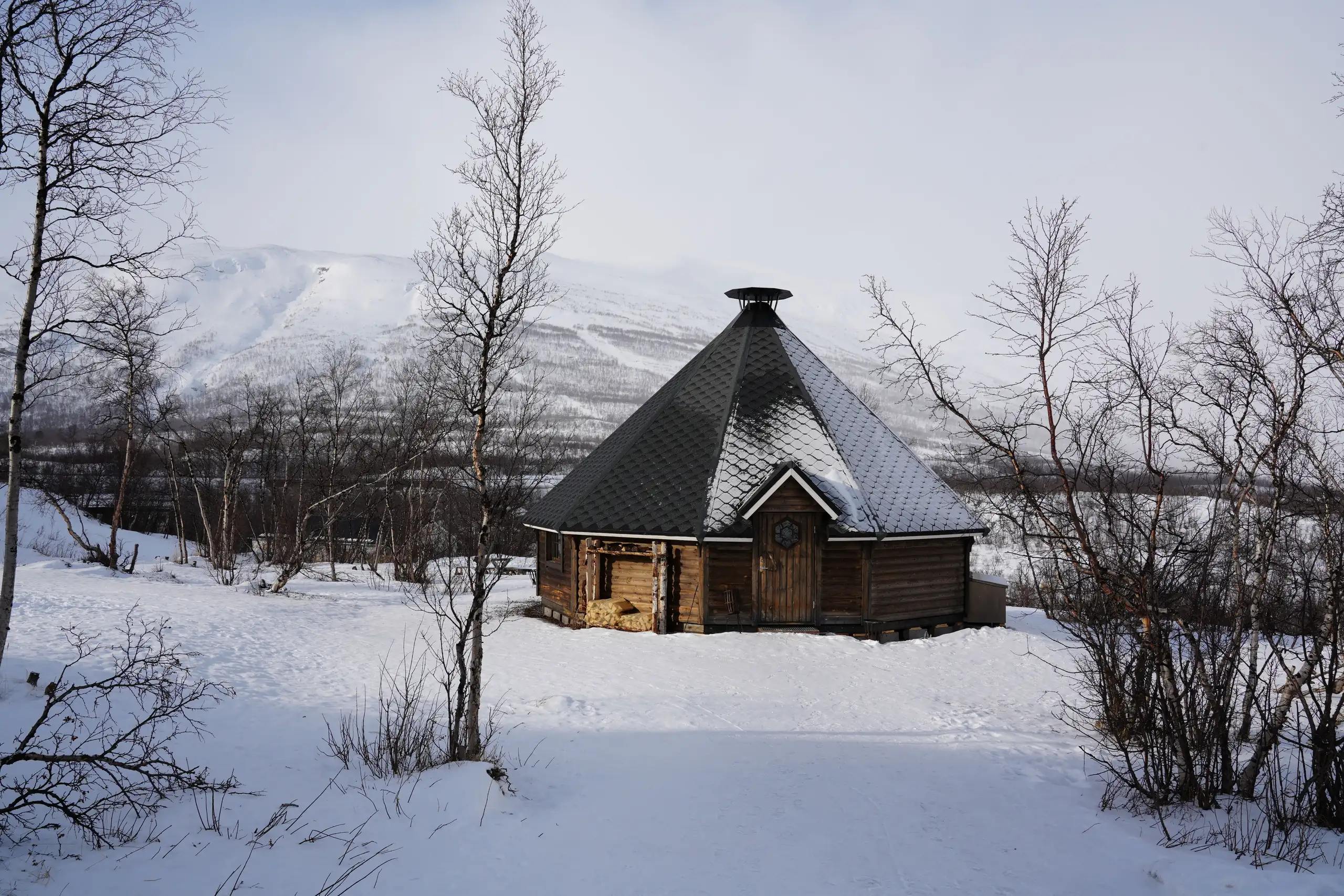
6 nights in one place, and no packing up in between. Everything on this journey happens within reach of it.
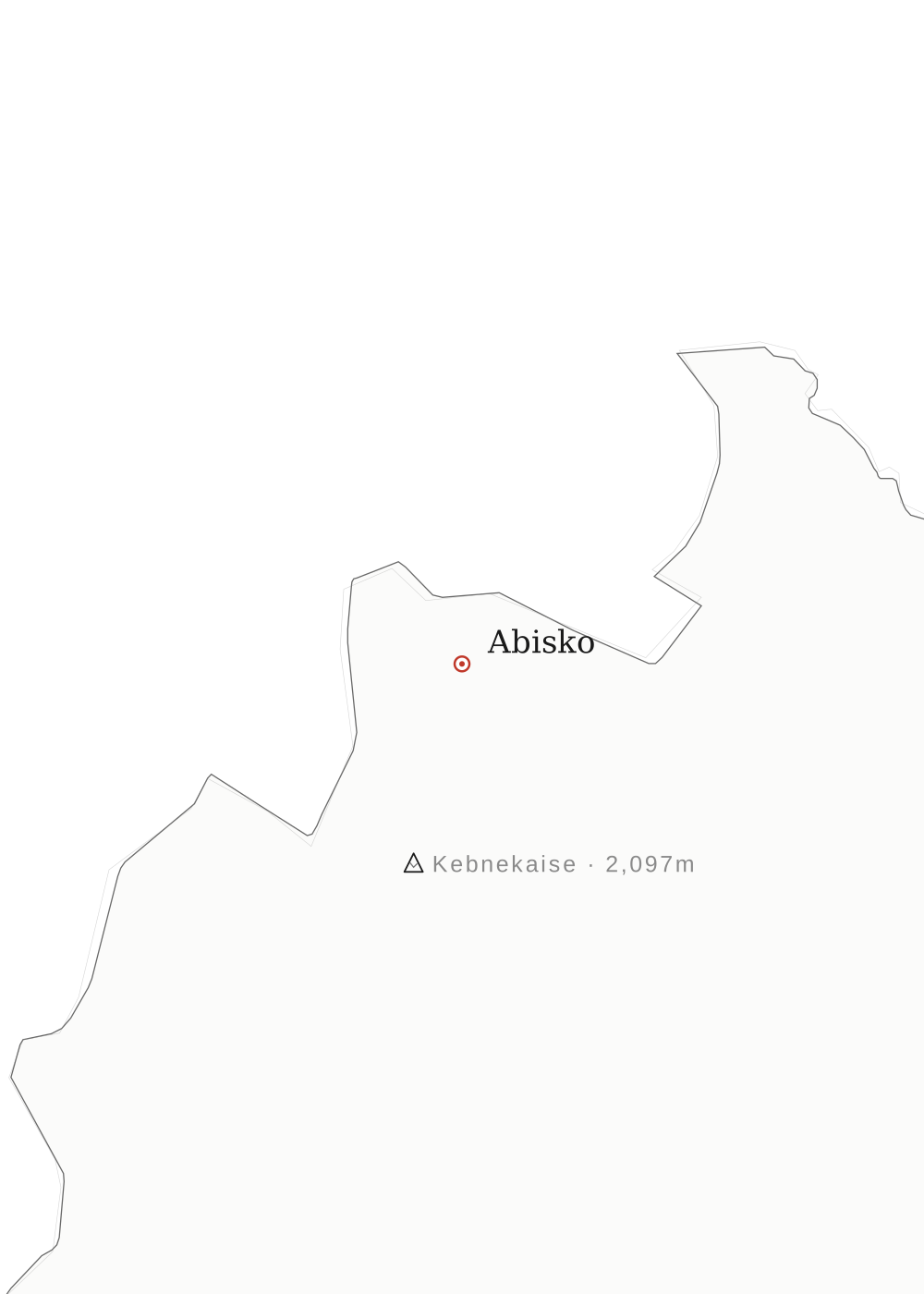
- AbiskoSwedish Lapland
Abisko
Why the sky here is open
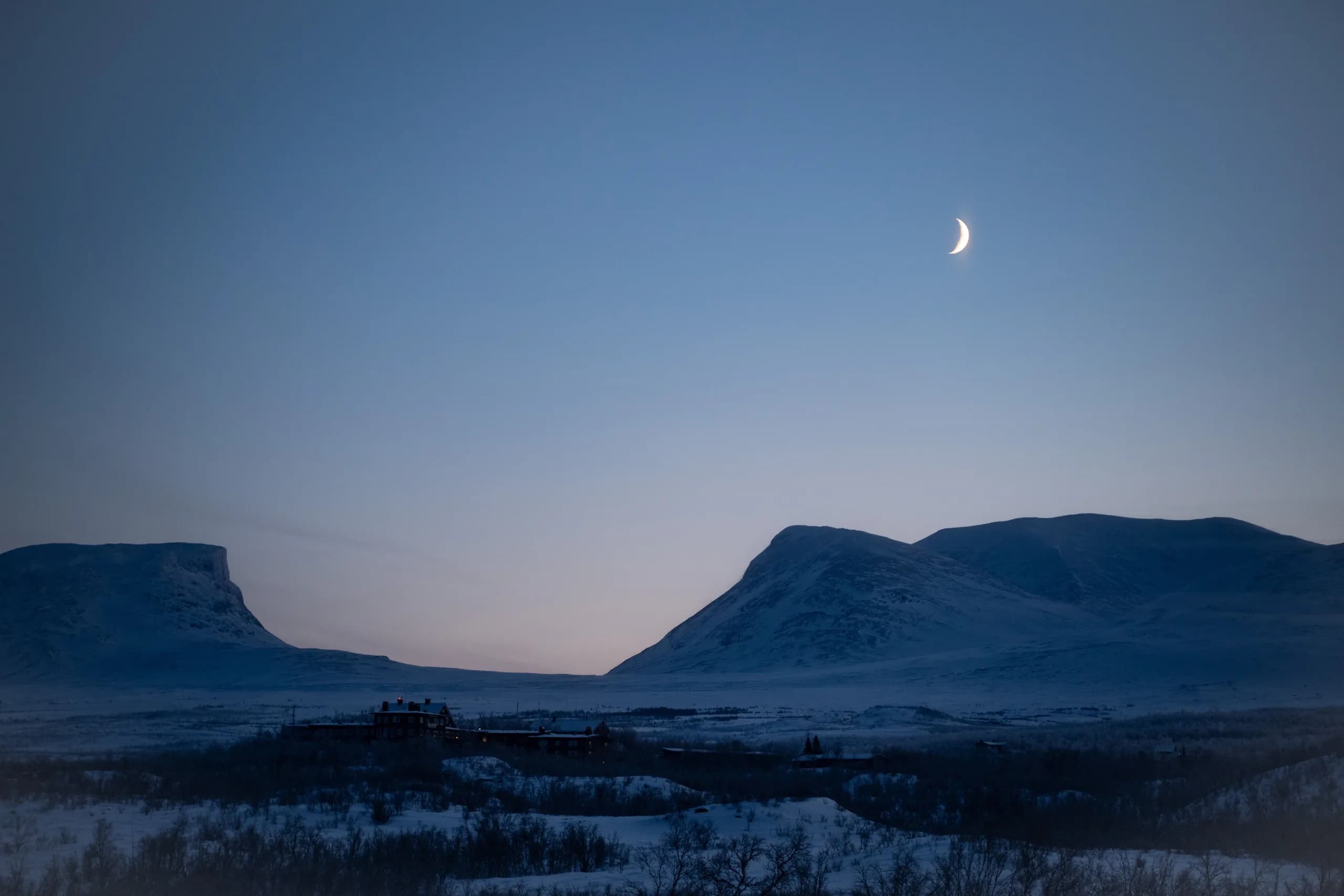
The valley runs east to west between mountains, with a lake seventy kilometres long at one end and the Norwegian border at the other, and the first two days are about understanding that shape — because everything else follows from it.
Weather arriving from the Norwegian Sea has to climb the border peaks to get in here, and it drops most of its water doing it. What reaches the valley is thin, dry air and a patch of sky that stays open on nights when the coast and the country to the east are shut in. That is the honest version of the claim every operator in this region makes, and it is worth hearing properly, because it also tells you what it does not buy: the aurora is no more frequent here than anywhere else at this latitude. The particles have no idea where the mountains are. What you are buying is a better chance of seeing something that was going to happen anyway.
Two evenings out, in a vehicle carrying your party and nobody else's, with the route decided each afternoon off the cloud map rather than the aurora forecast. Some nights that means ninety kilometres of driving to reach a gap. Some nights it means four minutes up the road, and stop.
Stordalen
Ground that is losing its cold
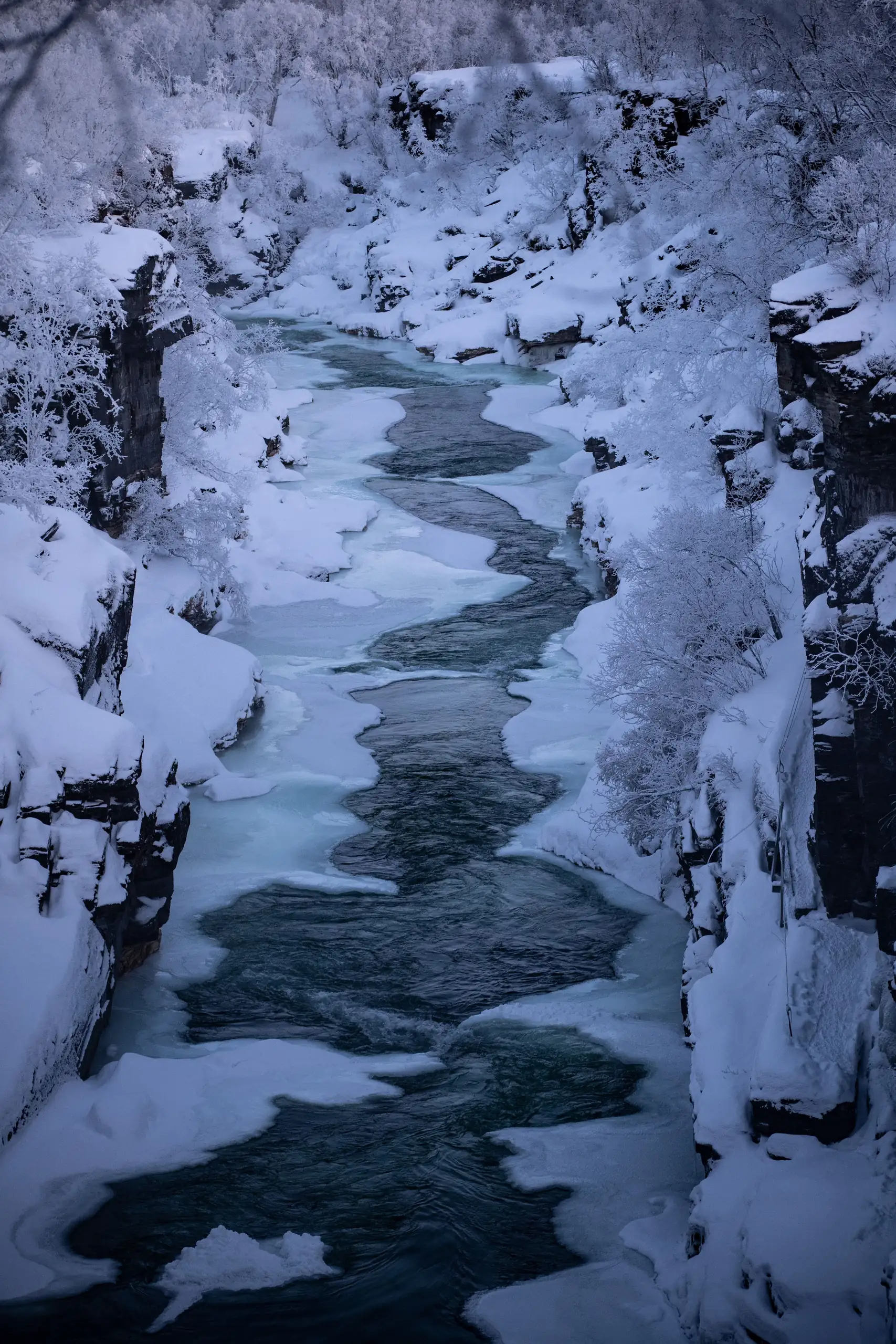
Ten kilometres east of the village there is a mire that has become one of the most closely watched pieces of ground in the Arctic. It is a mosaic of palsas — mounds held up by cores of permafrost — along with bog, fen and small lakes, and it is monitored continuously under the European and Swedish ecosystem programmes.
What makes it worth a day of your week is that the permafrost is going, and you can see it going. Palsas that held their shape for centuries are collapsing into wet hollows; the vegetation changes as they do, from dry heath to sedge and open water. Instruments sit out there recording what comes off it. You walk across it on snow with someone who can tell you which mound was intact in the photographs from thirty years ago.
This is the least spectacular day of the journey and the one people tend to bring up afterwards. It is a landscape in the middle of an argument with itself, and it is fifteen minutes from the road.
Torneträsk
A hundred and thirteen winters of ice
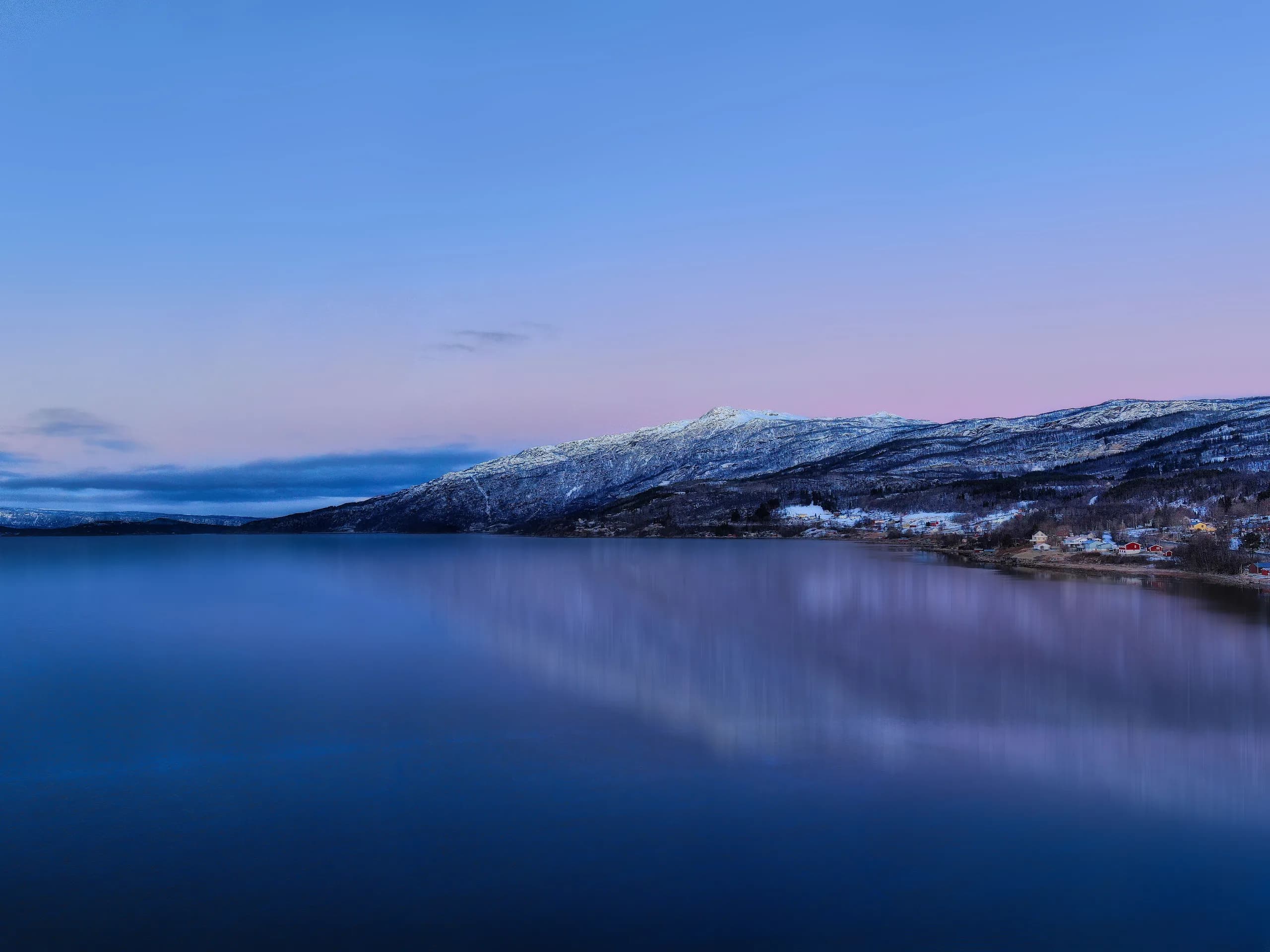
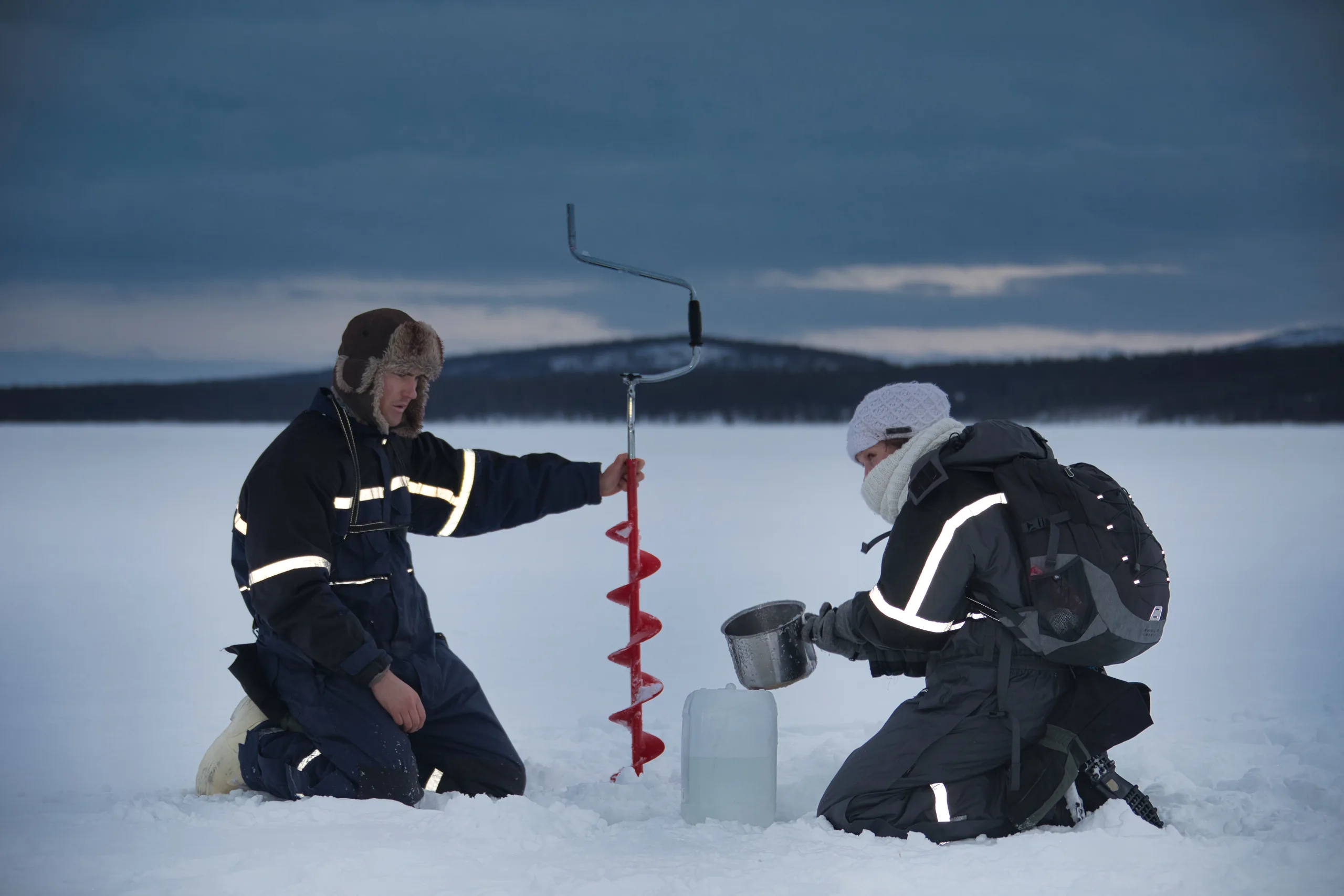
The lake is the longest-running entry in the file. Freeze date, break-up date, thickness — measured every winter since 1913, and the water level for a decade before that. It is a metre or more of ice by midwinter, hard enough to drive on, and it is one of the few places you can stand on a surface and be told, with a straight face, what it was doing on this date in 1937.
So the last two days are on it. Holes drilled and lines dropped for Arctic char, which is a slow business and better for it. Snowshoes or skins for the open fell above the treeline if the snow is right, with a guide carrying avalanche training rather than a clipboard.
There is also a case for doing nothing at all until the light goes, and we would not argue with you.
Above the lake
The last night has nothing on it
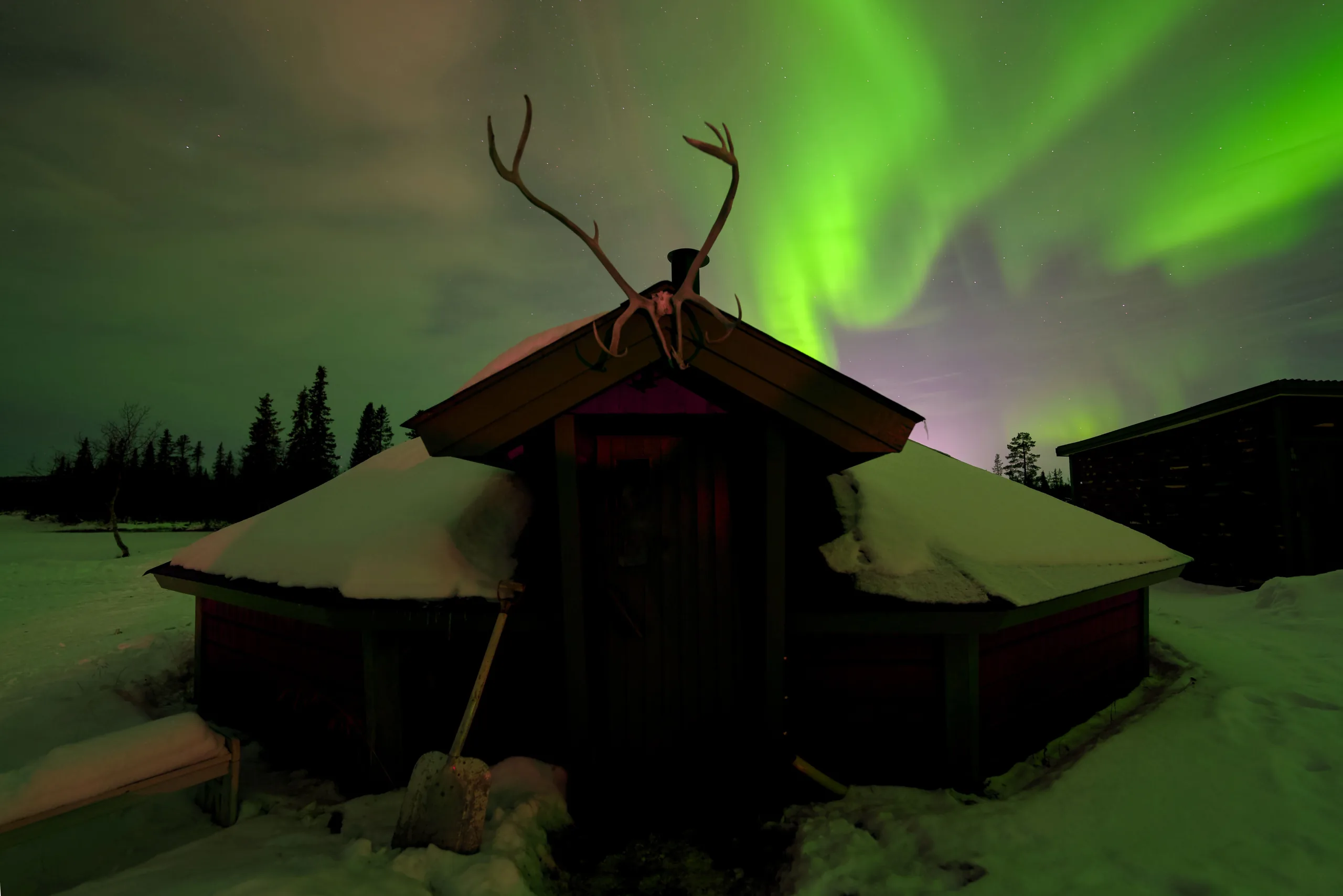
One evening is different. A snowmobile takes you out of the valley after dark to a wood-heated sauna with glass on three sides and nothing behind it for a long way, above the ice. Nobody else is booked and the guide who brought you does not come in. What you do with three hours in a hot room with the sky in the window is your own business, though the usual answer involves going outside at intervals to stand in the snow and check.
The last night has nothing planned at all. A thermos, something to sit on, and however long the sky decides to keep going. Most people come in later than they meant to.
Before you ask
Anything not answered here, ask us directly — we'd rather you did.
Do we go inside the research station?
No, and we want to be completely straight about that, because a lot of pages in this region imply access they do not have. It is a working facility of the national polar secretariat with beds for visiting scientists and an application process for researchers, not a visitor attraction. We have no arrangement with it and we are not going to pretend otherwise. What this journey gives you is the landscape the measurements are taken from, and a guide who knows the measurements — the mire, the lake ice, the treeline, the rain shadow. The building is not the interesting part.
Is this a science trip? I am not a scientist.
Almost nobody who comes is. You will walk, snowshoe, fish through ice and sit in a sauna, which is the same list as any good winter week up here. The difference is that someone can tell you why the valley is dry, why the mound you are standing on is sinking, and what the ice was doing a century ago — and that turns a week of activities into a week about one place. If you would rather just be outside and not be told anything, say so and the guide will read the room. He is good at that.
How likely are we actually to see the northern lights?
Nobody can promise it, and we would be careful with anyone who does — it is weather, not a scheduled event. What can be done is to put you in the valley with the most reliably open sky in the country, give it two guided nights plus every unguided evening you are here, and send you out with someone whose job that night is to find the hole in the cloud rather than to reach a viewpoint by half past nine. On that basis it would be unlucky to go home having seen nothing. The more useful point is that this is the one winter journey we sell where nothing else depends on the sky.
How cold does it get, and what should we bring?
Minus ten to minus fifteen through most of this window, and past minus twenty on the clear nights — which are, inconveniently, the nights you want to be outside. Outer layers and boots are provided rather than bought. Bring thermal base layers, wool in the middle, a hat that covers your ears, and gloves you can work a camera dial in. Standing still is the activity out there, and standing still is what the cold charges you for.
Is it suitable for children?
From about ten, yes, and the collapsing permafrost tends to land better with children than with adults because it is visibly happening rather than abstract. Below that, the cold on the aurora evenings is the limiting factor rather than the walking — an hour of standing still at minus eighteen is a lot to ask of a small person. Tell us their ages and we will shorten the evenings and lengthen the days rather than tell you the valley is not for you.
What happens if the guide is unavailable?
A fair question, and the honest answer is that the person who makes this particular journey what it is runs a very small operation. We plan it a long way ahead for that reason. If he cannot take your week, we will tell you before you commit and offer you either different dates with him or a different journey with us — what we will not do is quietly substitute a general aurora guide and sell you the same page, because the guiding is not a component of this trip, it is the trip.
Ready when you are
Make it yours
Tell us roughly when you'd like to travel and who's coming, and we'll shape this into something built around you. One conversation is all it takes to start.