Ireland has, by now, a very well-marked route. A day or two in Dublin for the pubs and the literature, and then the road west: the Cliffs of Moher, the Ring of Kerry, Connemara, the long coastal drive that the tourist board has branded and signposted into a single continuous journey along the Atlantic edge. It is genuinely beautiful, it is what most people come for, and it is also, increasingly, a queue, a procession of coaches and hire cars following the same arrows to the same viewpoints, photographing the same stretch of cliff before driving on to the next.
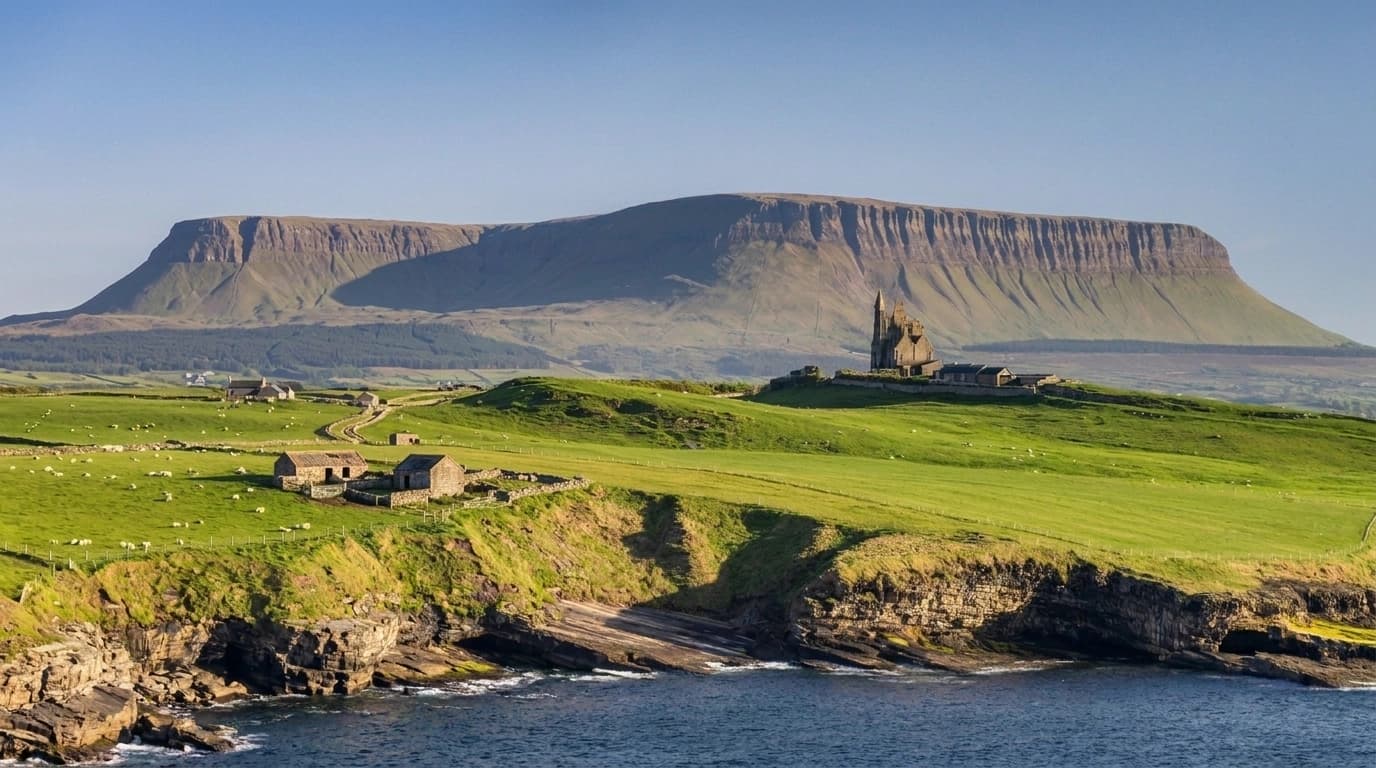
The coast is the part of Ireland that points outward, at the visitor. The part that points inward, at itself, is the green interior the coast road drives straight past, and it is where the country keeps its quietest and most particular pleasures. This is the Ireland of the great houses: the Georgian and Regency demesnes set in their own parkland, behind their own stone walls, with their lakes and their ancient woods and their walled gardens, in the soft inland counties that have no famous cliff and so attract almost no one. It is a country of horses and rivers and slow grey light, of the monastic ruins where Europe's learning was kept alive through the dark ages, and of a history far longer and stranger than the coast road ever suggests.
It is also, increasingly, where the most rewarding stays in the country are. The great house, taken privately or close to it, is a particular kind of Irish experience, not a hotel pretending to be a home, but a home that opens to a handful of guests at a time, with the parkland and the field sports and the table that goes with it. The coast is where Ireland performs. The houses are where it lives.
This is where this begins.
What the famous Ireland is.
It is worth being fair to the coast, because it is magnificent and because understanding it is the fastest way to understand what the interior is not. The Atlantic edge of Ireland is one of the great coastlines of Europe, the cliffs, the peninsulas, the islands, the surf, the light moving across the bog and the water, and Dublin is a genuinely great small capital, dense with literature and music and a particular conversational warmth. For a first trip, the coast road delivers exactly the Ireland of the imagination. Its only drawback is that everyone has had the same idea, and that following the signposted route means seeing the country at the pace and through the windows of a great many other people doing precisely the same thing.
What the interior actually is.
Inland, the country softens and empties. The midlands and the inland counties are a landscape of rolling pasture, slow rivers, lakes, raised bog, and the wooded estates that the landed families laid out across the eighteenth and nineteenth centuries, the demesnes, with their parkland designed to be looked at, their follies and their walled kitchen gardens, their long avenues and their lakes. A great many were lost, to fire in the revolutionary years, to neglect, to the simple economics of keeping such places up, but the finest survivors have become something rare: country houses run with the comfort of a great hotel and the feeling of a private home, set in hundreds of acres that a handful of guests have largely to themselves. Around them is the country the houses were built into: the rivers full of fish, the fields for the horses, the woods for the shooting and the walking, the quiet roads that lead nowhere a coach would go.
And beneath all of it is a history that makes the great houses look recent. Ireland was the island of saints and scholars, the place where, through the centuries Europe calls dark, the monasteries kept Latin learning alive and sent it back out across the continent. The monastic cities of the interior, with their round towers and high crosses, still stand by the rivers and in the valleys. Older still are the great passage tombs of the Boyne valley, raised five thousand years ago, older than the pyramids and older than Stonehenge, aligned so precisely that on a single morning in midwinter the rising sun runs the length of an inner chamber. The famous coast is dramatic. The quiet interior is deep.
“A Regency house and its parkland, largely to yourself. Monasteries that kept Europe's learning alive. A tomb older than the pyramids. None of it on the coast road.
What the houses carry.
The great houses carry a complicated history, and the better of them now hold it openly. They were, for the most part, the seats of the Anglo-Irish ascendancy, the Protestant landed class that ruled the country under British power for centuries, and the parkland that makes them so beautiful was laid out on land worked by tenants who owned none of it. The same period produced the Famine, the emigration, and eventually the revolution that ended the old order, in which a great many of these houses were burned. To stay in one of the survivors is to stay inside that history rather than away from it, and the more one understands of it, the more interesting, and the less simply pretty, the parkland becomes. Modern Ireland, confident, prosperous, independent for a century, has made its peace with these houses by turning the best of them into something the whole country can now enjoy.
How it feels to be there.
The pleasure of the interior is the pleasure of a great house and the land around it, taken at the pace the place sets. Mornings are slow, breakfast looking out over the parkland, the mist still on the lake. The days are the estate and the country beyond it: a walk through the ancient woods, a morning's fishing on the river, a stand at the clay or the rough shooting in season, a horse out across the fields, a falconry hour, a drive to a monastic ruin or an ancient tomb with no one else there. The weather is part of it, the soft rain, the grey light, the green it produces, and so is the table, built on what the walled garden and the surrounding country provide. Evenings are by the fire in rooms that have held fires for two centuries. It is the opposite of the coast-road dash, and it is the Ireland that those who know the country best tend to keep for themselves.
What we look for when we plan a stay here.
Ireland rewards a trip built around the house and the interior rather than the signposted coast, using a great house as the base, and the quiet country, the monastic and ancient sites, and the field sports as the days. The country is small enough that the coast remains within reach for those who want a day of it; the difference is in making the house and the inland country the centre rather than a stop.
What we look for here: a great house taken privately, or close to it, a Regency or Georgian demesne with its parkland, its lake, and its land, run with the comfort of a fine hotel and the feeling of a home. Real access to what the house is built for: the fishing, the shooting, the riding, the falconry, the walled garden, the table. The deep interior, the monastic cities, the ancient tombs, the quiet rivers, properly woven in. And, for those who want it, a measured day on the famous coast rather than a week chasing it.
Through our network we have access to great houses and country estates across the Irish interior, including properties taken on an exclusive-use basis. Each is arranged personally, matched to the group and the season, and handled end-to-end, the arrival, the house, the field sports, and any onward leg to the coast.
Who Ireland is right for.
Not those for whom Ireland means only the signposted coastal drive, ticked off from a hire car. That trip is widely available, very beautiful, and there is no need for us to improve on it if the coast road is all the country is being asked to be.
This is for travellers who would rather have a great house and its parkland largely to themselves than share a clifftop with a car park. For families and groups who want the whole of a demesne, the lake, the woods, the shooting, the horses, taken privately. For couples who want the soft, slow interior and the comfort of a home rather than the bustle of the tourist route. For the field sportsman and -woman, for whom the country is among the finest in Europe. And for the traveller drawn to the deep Ireland, the monastic past, the ancient tombs, the long memory the coast road never mentions.
The tombs of the Boyne were raised five thousand years ago by people who could align a chamber to the midwinter sun. The monasteries kept the light of learning through the centuries Europe went dark. The great houses were built and lost and rebuilt across the last three hundred years of a difficult history the country has only lately made its peace with. These timescales sit on top of each other across a soft green interior that almost no visitor ever turns inland to find, and the argument for going is the argument for leaving the coast road, and letting the houses show you the country they were built into.
When to visit Ireland
Ireland's weather is famously changeable in every season, and the green that defines the country is the gift of all that rain, so the question is less about avoiding weather than about what each season offers. Late spring and summer, roughly May through September, are the warmest, longest-lit, and greenest months, with the gardens at their best and the long northern evenings stretching well into the night; this is the prime window for the parkland, the walking, and the fishing, and the busiest on the coast. Autumn, roughly September through November, brings the turning woods, the field-sport season coming into its own, and a softer light, with fewer visitors. Winter is short-lit, cool, and atmospheric, the season of the fire in the great house, the bare parkland, and the country at its quietest, and the midwinter solstice at the Boyne tombs is one of the most extraordinary moments in the Irish year. The famous game-fishing and the shooting follow their own calendars, which shape the timing of a sporting trip. As a general rule, the interior rewards the long days of late spring and summer, while the house itself is at its most seductive in the cooler, quieter months.
How to get to Ireland
Dublin (DUB) is the principal gateway, exceptionally well connected to Britain, Europe, and North America, and the natural arrival for the eastern interior and the midlands, most of the great houses lie within one to two hours of it by road. Shannon (SNN) in the west is the better gateway for the western interior and the Atlantic coast. The houses are reached by private road transfer through the quiet inland country, and many can arrange a helicopter transfer for those who would rather arrive over the parkland than along the avenue. Private jets route into Dublin and Shannon, and into a number of smaller fields near the estates. We coordinate the arrival, the transfers, the field sports, and the timing of the whole trip ourselves.
Where to stay in Ireland
A considered Irish trip works around a great house in the interior, with the rest of the country arranged around it. The midlands and the inland counties are the heart of the country-house country, the Regency and Georgian demesnes in their parkland, the natural base for the fishing, the shooting, the riding, and the quiet. The deep interior, the monastic cities, the ancient tombs, the lakes and rivers, is the country to explore from the house. Dublin is the arrival, worth a night or two for its literature and its life. And the famous coast remains within reach for a measured day or two for those who want it. A week is built around one house and its country; a longer trip might pair an inland house with a few days on the Atlantic edge.
We do not publish a property list. The houses and estates we arrange across the country are matched once the brief is clear, the demesne for the field sports and the privacy, the right country around it, the balance between the interior and a measured taste of the coast. What we will say is that the right Irish trip is almost never the one that only follows the signposted coast road. It is the one that turns inland, to the houses and the country they keep.