The beaches are crowded, the sangria is cold, and the resort delivers precisely what the brochure promised. It is reliable, familiar, and almost entirely without surprise.
Then there is Cadaqués.
Tucked into the northeastern corner of the Costa Brava, pressed between the Cap de Creus natural park and the Mediterranean, Cadaqués is the kind of place that feels almost deliberately difficult to reach. The road in is winding and slow. There is no train. The village has no interest in making itself convenient, and that is precisely what has kept it extraordinary.
Why it stayed this way.
Salvador Dalí spent most of his life here. His house at Port Lligat, a cluster of white fishermen's cottages he spent forty years slowly expanding into something entirely his own, still sits at the edge of the bay. The artistic community that gathered around him never quite left. Painters, writers, architects. People who had found somewhere genuine and weren't interested in telling too many others about it.
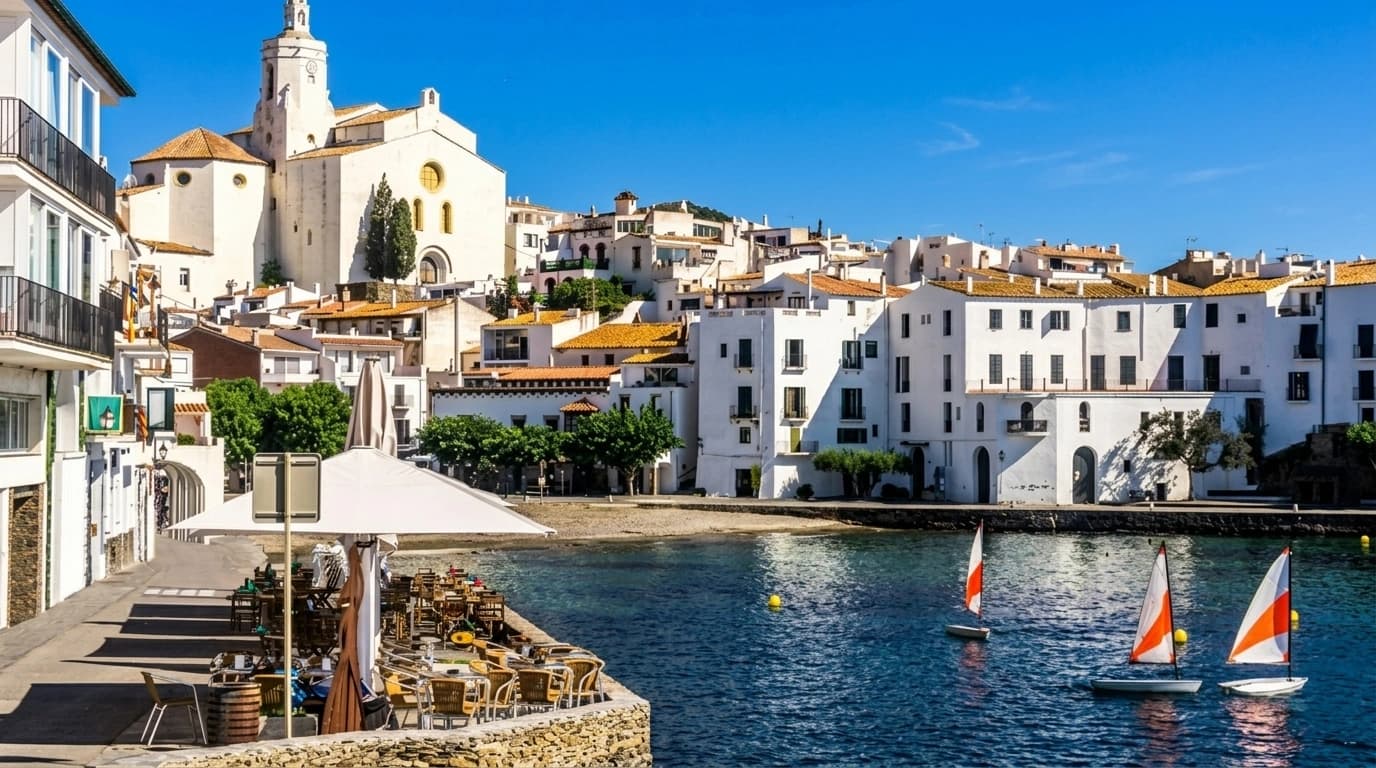
That culture of quiet guardianship is still felt today. The whitewashed houses climb the hillside in the same configuration they have for centuries. There are no large hotels. No chain restaurants. The village has a strict preservation order and the locals intend to keep it.
“The village has no interest in making itself convenient, and that is precisely what has kept it extraordinary.
How it feels to be there.
The pace is unhurried in a way that is almost unfamiliar. Mornings begin slowly, coffee, the sound of boats, light that arrives at a particular angle off the water that painters have been trying to capture for decades. Afternoons are for the water. Evenings pull everyone gradually toward the small harbour, where dinner happens late and without urgency.
The sea here is part of the Cap de Creus marine reserve. The water is clear in a way that feels almost impolite to describe. There is direct access to coves that take effort to reach by land but become entirely yours once you are there.
What we look for when we plan a stay here.
Cadaqués rewards privacy. The best experiences here are not the organised ones, they are the unscheduled ones that happen when the setting is right and the pressure is off. That means the property matters more than almost anywhere else we work with.
What we look for: direct or very close sea access. Outdoor space that works in the heat of the day. Interiors that feel considered rather than just expensive. And the right kind of calm, not isolation, but separation from the noise.
Through our network we have access to private villas here that sit within that standard. Each is arranged personally, with the same brief we bring to every stay, the right fit for the right client, handled quietly from start to finish.
Who Cadaqués is right for.
Not everyone. It requires an appreciation for stillness. For a place that offers very little in the way of organised entertainment and everything in the way of quality of life. Families who want space and water without the chaos of a resort coast. Couples who want somewhere that feels genuinely European rather than manufactured for tourism. Executives who travel often and have learned that the most restorative trips are the ones that ask nothing of them.
If that is how you travel, or how you want to travel, this is a destination worth considering seriously.
When to visit Cadaqués
May and June are the most rewarding moments of the year. The almond and olive trees are in flower, the water has begun to warm, and the village remains largely Spanish, the foreign crowd of high summer has yet to arrive. September is the other answer, particularly the second half: the heat has softened, the sea is still warm, and the light at the end of the day is exactly the angle that drew the painters here. July and August are busier, though Cadaqués is always quieter than the rest of the Costa Brava, and a well-arranged stay still works. Winter is austere, the tramontana wind from the Pyrenees can be sharp for days at a time, and many of the smaller restaurants close. February and March, when the light Dalí pursued is at its strangest, are for the curious rather than the casual.
How to get to Cadaqués
Girona (GRO) is the closest international airport, about ninety minutes by road, with seasonal direct flights from across Europe. Barcelona (BCN) is the larger hub, two and a half hours south, with year-round connections from most major cities. Perpignan (PGF), on the French side of the Pyrenees, is a smaller but useful alternative for routes from Paris and London. The nearest mainline rail station is Figueres, served by both the high-speed AVE from Madrid and the TGV from Paris via Perpignan; from there, the final stretch is by road. Private jets typically route into Girona; we coordinate the ground handling and the transfer over the coastal pass to the village ourselves.
Where to stay in Cadaqués
Cadaqués is not a large place, and its geography sets the choice clearly. The village itself, the whitewashed houses climbing from the harbour, sits at the heart of everything: the restaurants, the slow evening walk along the waterfront, the boats coming in. Port Lligat, the next cove around, is quieter and more enclosed, with the same water and a different rhythm; this is where Dalí chose to spend his life, and the reasons are still obvious. Beyond, the headlands of Cap de Creus thin out into vineyards, pine, and the small bays the road only loosely connects, the most secluded option, and the one that suits guests prepared for the final stretch by foot or boat.
We do not publish a property list. Each stay is matched once the brief is clear. What we will say is that the right house in Cadaqués is the one where the village is close enough to walk to and the noise of it is somewhere else entirely.