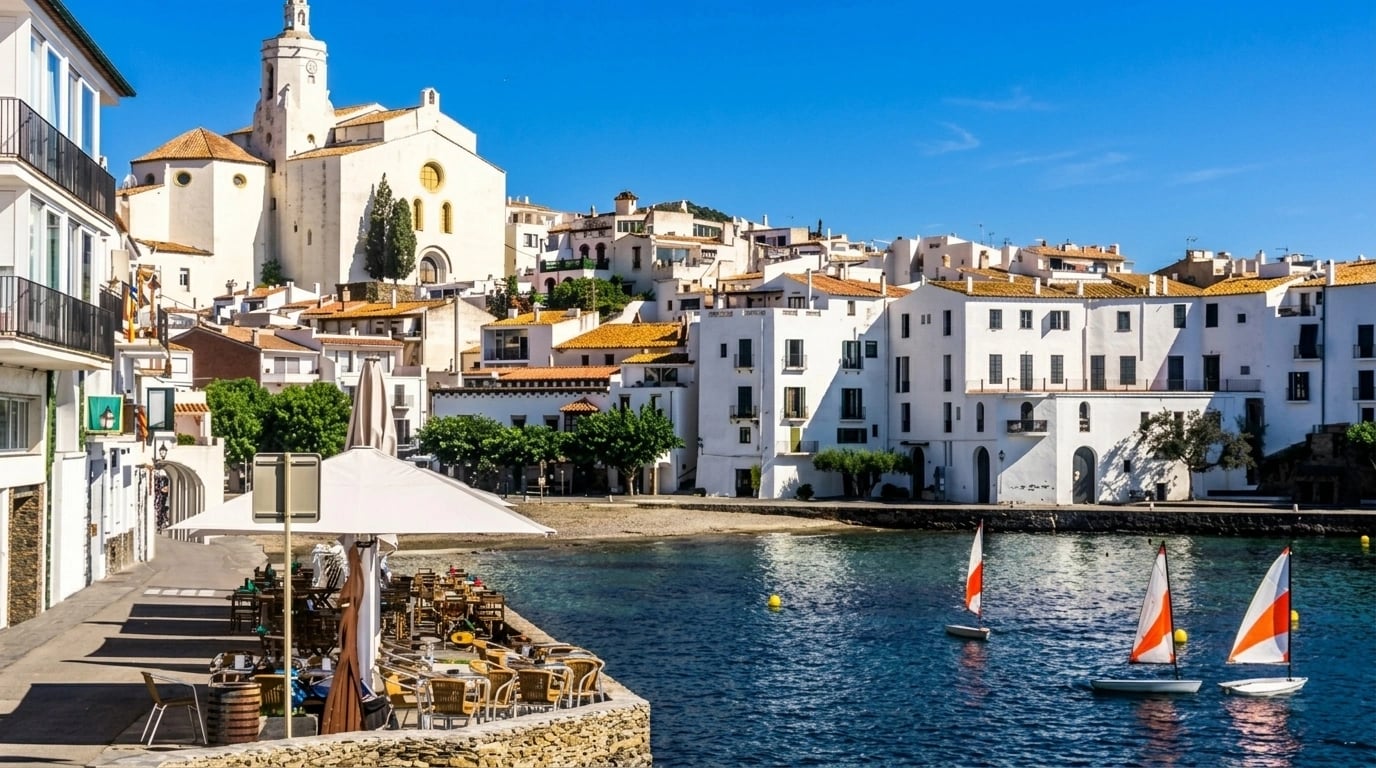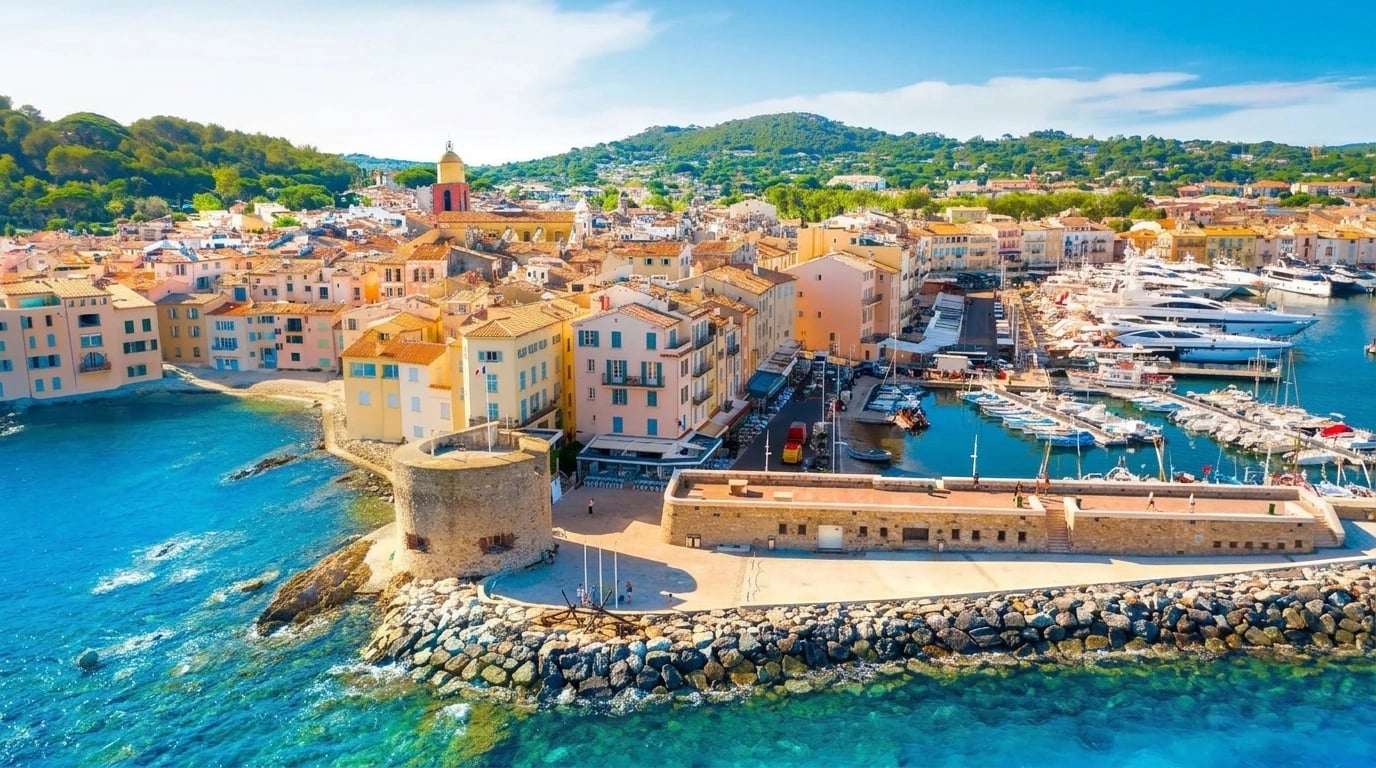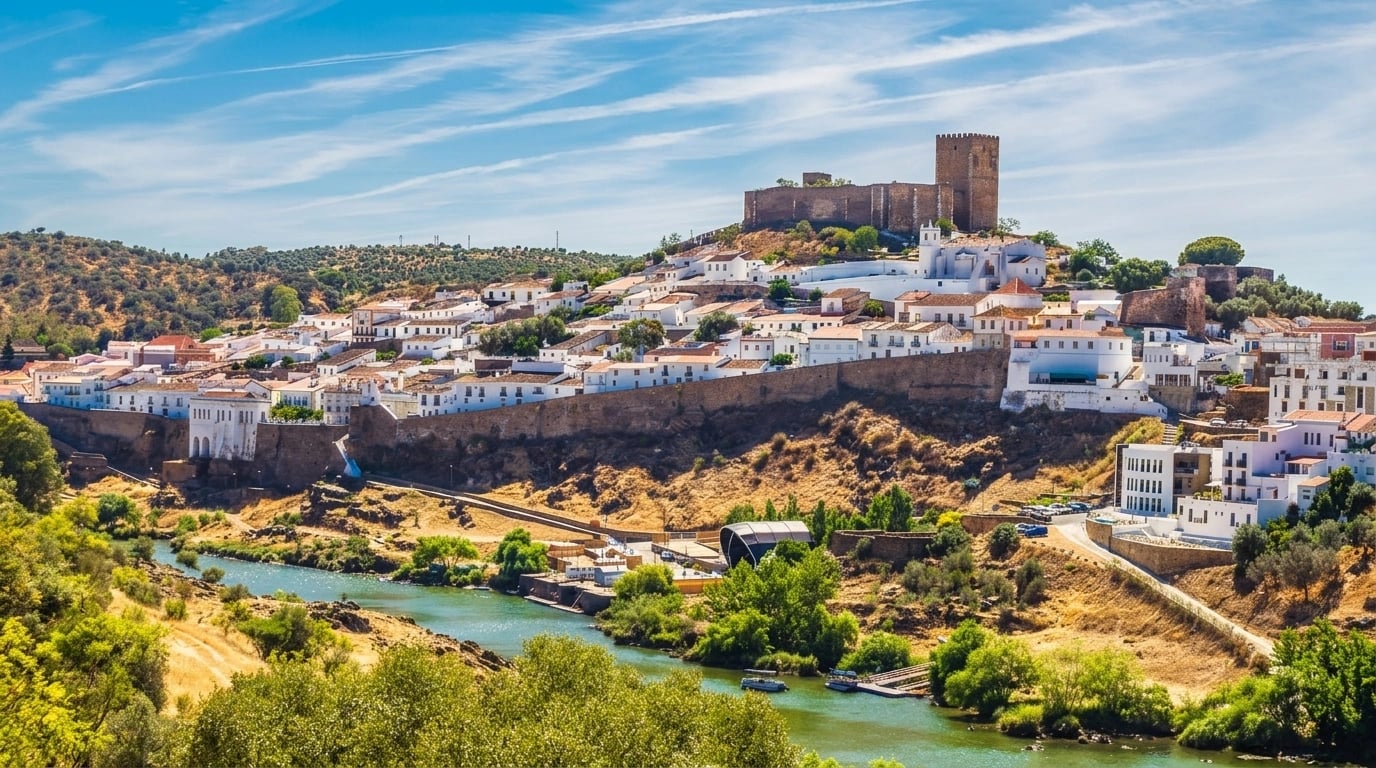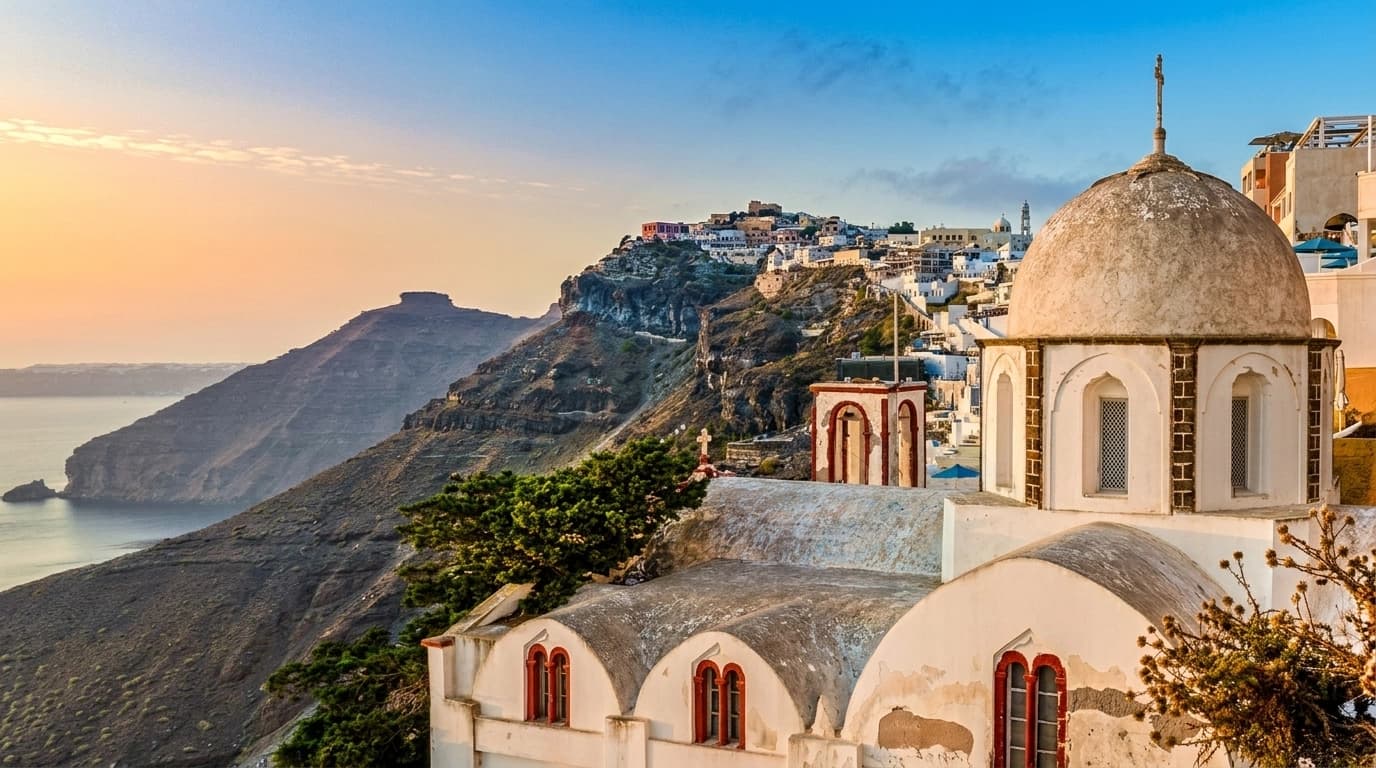
Everyone arrives with the photograph already loaded. The white walls. The blue domes. The sunset over the caldera, replicated so many times across so many screens that it has become less a place than a shared assumption. People book Santorini the way they book a memory they have already decided to have.
What the photograph cannot show is the scale. What it cannot show is what you are actually looking at.
You are not looking at the caldera from the outside. You are standing inside it, on the rim of a crater that measures twelve kilometres across, drops four hundred metres below the surface of the sea, and was formed by one of the most violent volcanic eruptions in recorded human history. Around 1600 BC, the island of Strogili, a single, circular island where a sophisticated civilisation had lived for centuries, ceased to exist in a matter of hours. The eruption sent ash across the eastern Mediterranean, triggered tsunamis that reached the shores of Crete, and may have contributed to the collapse of the Minoan world. Some historians believe it is the event behind Plato's story of Atlantis: a prosperous island swallowed in a single catastrophe, leaving nothing but water and myth.
What remained on the rim is what we call Santorini today.
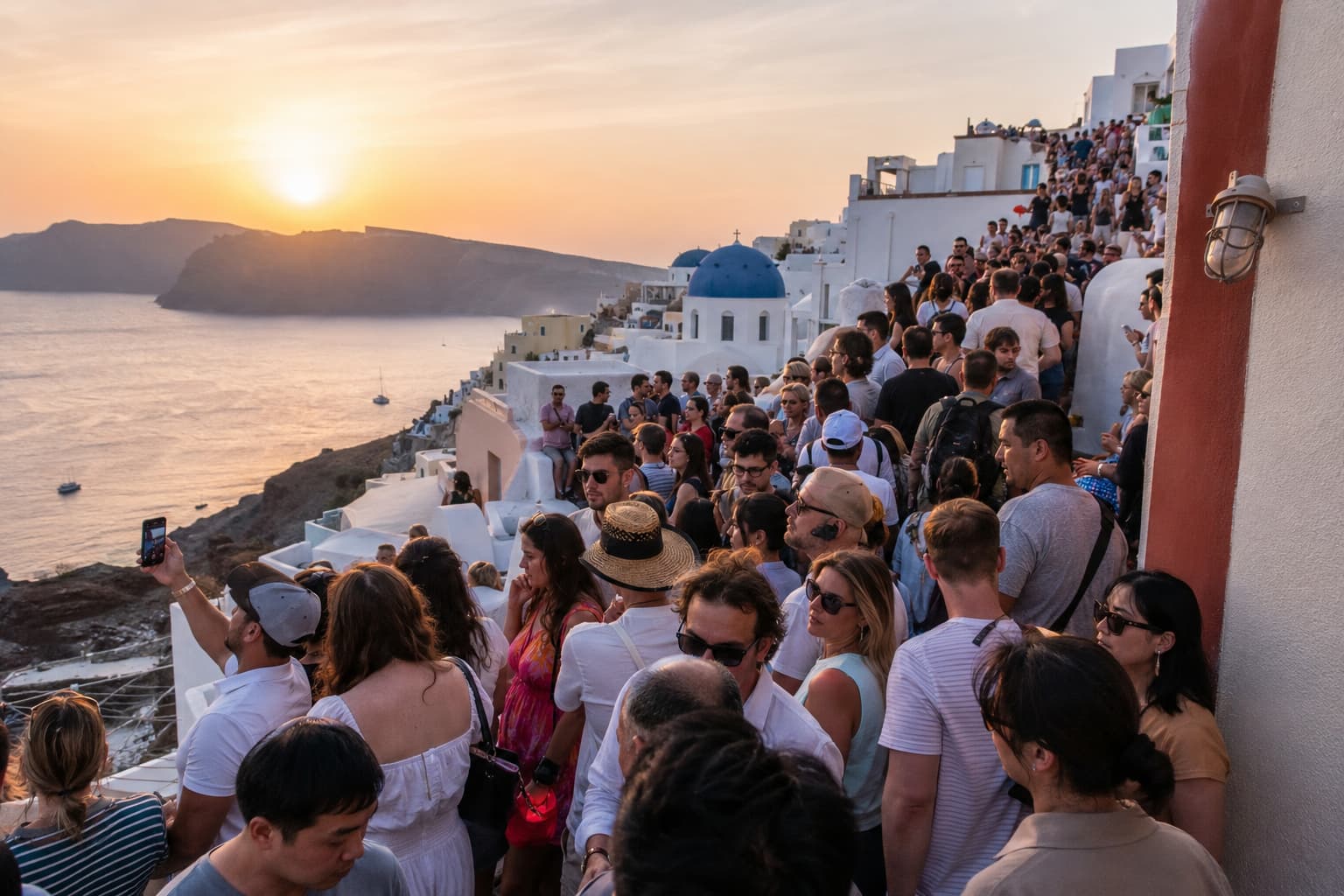
What the crowds are standing on.
Three and a half million tourists visit the island each year. On peak days, seventeen thousand cruise passengers come ashore in a matter of hours. They move through Oia and Fira in the narrow streets between the white walls, they find their angle for the photograph, they wait in their dozens for the sunset. The island absorbs all of it, the noise, the density, the spectacle, and remains, from a distance, exactly as beautiful as the image promised.
But the ground beneath them is not passive. In January 2025, the island recorded over twenty-eight thousand earthquakes in the space of a few weeks. Schools closed. Ferries paused. Residents left. The volcano, dormant, not extinct, shifted in its sleep, and the beauty of the island was entirely undisturbed. The caldera looked the same from Oia. The photographs continued.
Most people who visit Santorini never feel the weight of what they are standing on. The noise of the island prevents it. The performance of it prevents it.
What altitude changes.
There is a different Santorini available to those who know where to look. Away from the circuit of Oia and Fira, set back from the tourist road, at the kind of elevation where the caldera stops being a backdrop and becomes a presence. At a thousand feet above the sea, the true scale of it, the twelve-kilometre arc, the depth, the ancient violence that made it, becomes legible in a way it never is from a crowded terrace.
This is the essential difference between looking at Santorini and being inside it.
The private villas we work with on Santorini are designed around privacy first, with everything else arranged around that. Exclusive-use estates that give a small group the whole of a space, unhurried, unperformed. Interiors that work with the island rather than against it: whitewashed stone, dark textures, materials that feel as though they were always here. A private chef who works daily around guests' preferences, using the island's produce, its wines, its ingredients. There is no menu to perform against. There is only the place and what it offers.
“You do not look at the caldera. You stand inside it.
How it feels to be there.
Mornings begin before the day has decided what it wants to be. The caldera holds the early light in a particular way, the water below the rim takes on colour slowly, and the two volcanic islands at the centre of the bay sit in the middle of it all, still, as they have for two thousand years of smaller eruptions and returns.
Evenings are not the sunset performance. They are something quieter, dinner on the cliff as the light crosses the caldera, the sky changing in its own time, no crowd, no queue, no one competing for the angle. The kind of service that is never visible until it is needed, and then exact.
What we look for when we plan a stay here.
Santorini rewards a particular kind of attention. Not the itinerary kind, the kind that requires nothing but the willingness to stay still long enough for the place to reveal itself. That means the property is everything. A wrong one puts you back inside the noise.
What we look for here: real separation from the tourist circuit. Outdoor space where the caldera is not a feature but a constant. Interiors that have been considered rather than just dressed. And the right kind of service, present, quiet, and entirely without performance.
Through our network we have access to private villas here that sit within that standard. Each is arranged personally, with the same brief we bring to every stay, the right fit for the right client, handled quietly from start to finish.
Who Santorini is right for.
Not travelers who arrive with a checklist. The island has plenty of those, and it will accommodate them efficiently and forget them immediately.
This is for guests who understand that the most powerful experiences are rarely the loudest ones. For families who want space, water, and a setting that will mean something once they have left. For couples who want the island that everyone talks about, and the version of it that almost no one actually finds. For executives who have been to many beautiful places and have learned that beauty without stillness is just scenery.
The caldera has been here for three and a half thousand years. It will be here long after the Instagram queue has moved on. The question is only whether you experience it as a view, or as something closer to the truth of what it is.
When to visit Santorini
The island is most considered between late April and mid-June, and again from mid-September through October. The light is soft, the sea is warm enough to swim, and the cruise-ship density that defines July and August has yet to arrive, or has just left. High summer is what most people associate with Santorini, and it is unavoidably busy. Winter is quiet to the point of austerity; most of the caldera shuts. The first weeks of October may be the most overlooked moment of the year, warm, clear, and almost empty.
How to get to Santorini
Santorini's airport (JTR) receives direct seasonal flights from most major European hubs between May and October, London, Paris, Zurich, Milan, Rome, Athens. Outside that window, most arrivals route through Athens on a short domestic flight. For guests already in the Cyclades, a high-speed ferry from Mykonos takes a little under three hours, or we can arrange a private yacht charter between the islands. Private jet charter into the island is straightforward year-round; we arrange the routing, the ground handling, and any onward transfer ourselves.
Where to stay in Santorini
The island has three quite different characters. The caldera rim, Oia, Firostefani, Fira, is where the photograph happens, and where most visitors stay. It is also where the noise is. The southern coast is flatter, hotter, and feels almost like a different island; it tends to suit a longer family stay over a short romantic one. The inland villages, where the locals actually live, are set back from the cliff entirely and stay quieter all summer.
We do not publish a property list. Each stay is matched once the brief is clear. What we will say is that the right one is almost always set back from the tourist road, and rarely the most photographed.