Croatia, in the last decade or so, has become a victim of how good it is. Dubrovnik, the walled city on the Adriatic, the old maritime republic in honey-coloured stone, one of the most beautiful small cities in Europe, became first a cruise-ship staple and then a global screen location, and the consequence is a city that in high season can hold more visitors inside its walls than it was ever built for: a slow shuffle along the ramparts, a queue for the cable car, the same photograph taken ten thousand times a day. The famous islands followed, some of them turning into summer party destinations of a particular and very crowded kind.
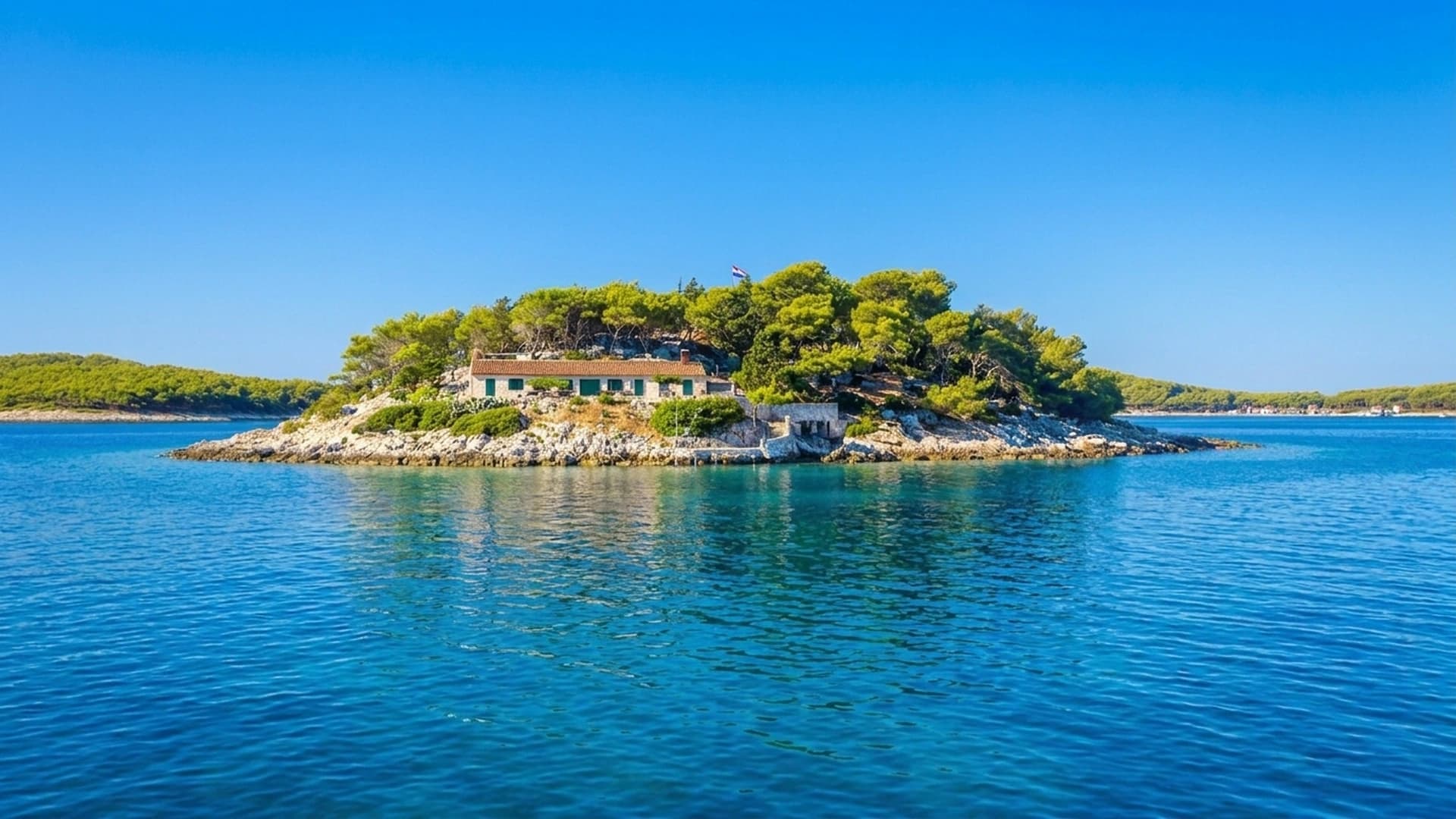
None of which has touched the Croatia that sits, quite literally, a short boat ride away. Off the coast at Dubrovnik lie the Elaphiti Islands, a little archipelago of green, car-free islands, reached in well under an hour by boat, where there is no traffic, no crowd, and no hurry, and where the Adriatic is exactly as clear and the stone villages exactly as old as in the city, but without the city's crush. They are not undiscovered, exactly. They are simply overlooked, by a tide of visitors that arrives at the famous walls and never thinks to cross the short stretch of water to the quiet just beyond them.
And the Elaphiti are only the nearest example of a principle that runs the length of the country. The crowds concentrate in a handful of famous places. The rest of Croatia, the quieter islands, the inland of Istria, the national parks, the stretches of coast the cruise itineraries skip, is among the most rewarding and least crowded corners of the Mediterranean, for anyone willing to make the short move off the obvious route.
This is where this begins.
What the famous Croatia is.
It is worth being fair to Dubrovnik, because it deserves its fame. The walled city was the capital of the Republic of Ragusa, a small, shrewd maritime state that held its own against Venice for centuries through trade and diplomacy, and it is a near-perfect survival, the walls, the limestone streets polished to a shine, the cloisters and palaces, the whole thing a UNESCO World Heritage Site. Seen at the right hour, very early, or out of season, it is unforgettable. Its problem is purely one of arithmetic: it is small, and a very large number of people now want to be inside it at the same time, particularly when the cruise ships are in. The city is best treated as a jewel to be visited carefully, early and out of the crush, rather than as a place to stay in the thick of the season.
What the quiet Croatia actually is.
The Elaphiti are the immediate answer. The islands, chief among them the car-free ones reached quickly from Dubrovnik, are a different pace entirely: stone harbours, pine and olive, a handful of villages, sand and pebble coves, the clear water, and almost no one. On the largest of them, a restored medieval monastery looks out over the channel; the lanes are walked rather than driven; the day is the sea and the stone and the light. To base here, with the city a short private boat ride away to be visited on your own terms, is to have the best of both: the masterpiece when you want it, and the quiet when you do not.
Beyond the Elaphiti, the country opens out. The Dalmatian coast and its larger islands, Hvar, Korčula, Vis, Mljet, half of it a forested national park, run north up the Adriatic, each with its own character, the quieter of them still genuinely quiet. Split, further up, is built inside the walls of a Roman emperor's retirement palace, a UNESCO site that is also a living city. The Kornati islands are a national park of bare, beautiful rock and empty water, best seen under sail. Inland, the terraced lakes and waterfalls of the great national parks are among the most beautiful freshwater landscapes in Europe. And in the far northwest, the Istrian peninsula is a country of its own, Venetian-influenced hill towns, truffle forests, olive groves, and serious wine, so like the country across the water that it is often called the new Tuscany. The famous Croatia is a single walled city. The rest is an entire, varied, and far emptier country.
“A car-free island under an hour from the crowds. A Roman palace a city still lives inside. A truffle-and-wine country that calls itself the new Tuscany. All a short move off the obvious route.
What the coast carries.
The Croatian coast is, beneath the holiday surface, one of the oldest settled shores in Europe, and the layers are everywhere. The Greeks planted colonies on these islands; the Romans built the palace at Split and the amphitheatre at Pula; the Venetians ruled much of the coast for centuries and left their architecture, their cuisine, and, in Istria, their language echoing still in the dialect. The little republic at Dubrovnik kept its independence by sheer cleverness between far larger powers. The food shifts as you move, the Italianate north, the fish and olive oil of the islands, the lamb and the heavier inland cooking, and so does the feel of the stone. To travel the coast is to read a frontier between the Latin and the Slavic worlds that has been busy for three thousand years.
How it feels to be there.
On the quiet islands the rhythm is the oldest Mediterranean one. Mornings are the clear water, a swim off the rocks before the day warms, a boat out to an empty cove. The middle of the day is the shade, the long lunch of fish and island wine, the heat sitting on the stone. The late afternoons soften, and the evenings are slow on a terrace above the harbour as the light goes and the boats come in. A private boat changes everything: the famous city visited early and left before the crowds, an empty island for lunch, a cove no road reaches, the crossing itself a pleasure. The contrast with the shuffle along the city walls could not be sharper, and it is available to anyone willing to cross the short stretch of water that almost no one crosses.
What we look for when we plan a stay here.
Croatia rewards a trip that bases away from the crowds and treats the famous sites as careful, well-timed excursions rather than places to stay in the thick of it, and that uses a private boat to turn the coast and the islands from a crowded shore into a private sea. The country is at its best for those who make the short move off the obvious route.
What we look for here: a base on a quiet island, the car-free Elaphiti, or one of the calmer Dalmatian islands, within easy private-boat reach of the famous city, so the masterpiece can be had early and the quiet kept the rest of the time. A private boat as the heart of the trip: the empty coves, the island lunches, the crossings, Dubrovnik on your own terms. The inland of Istria for those who want the truffles, the wine, and the hill towns. And the great national parks and the Roman cities woven in for depth.
Through our network we have access to arrangements across the Elaphiti, the Dalmatian islands, and Istria that sit within this standard, including island properties taken on an exclusive-use basis. Each is arranged personally, matched to the season and the trip, and handled end-to-end, the arrival, the private boat, the timing of the famous sites, and the quiet around them.
Who Croatia is right for.
Not those who want to be in the thick of the famous city and the party islands at the height of the season. That Croatia is widely available, and there is no need for us to improve on a shuffle along a crowded wall.
This is for travellers who would rather have a clear cove to themselves than a clifftop with a queue, and who understand that in Croatia the quiet is only ever a short boat ride from the crowd. For couples and families who want the sea, the stone, and the islands without the crush. For those drawn to a private boat and the freedom it brings on a coast made for it. For the curious, who want the truffles and wine of Istria and the Roman cities as well as the beach. And for the seasoned Mediterranean traveller who has seen the famous walls and wants the country just out of sight of them.
The Greeks settled these islands three thousand years ago; the Romans built a palace a city still lives inside; the little republic at Dubrovnik kept its freedom by wit for five centuries. The crowds that now fill the famous walls are barely a generation old, and they have never learned to cross the short stretch of water to the quiet beyond. These timescales sit on top of each other along one of the oldest coasts in Europe, and the argument for going is the argument for the short move offshore that almost no one makes.
When to visit Croatia
The Croatian coast has a classic Mediterranean climate and a clear best season either side of the summer peak. The shoulder months, roughly May to June and September to early October, are the finest: warm, sunny, with the sea warm enough to swim, the islands quiet, and the famous sites bearable; September in particular, with the sea at its warmest after the long summer and the crowds thinning, is many people's ideal. High summer, July and August, is hot, dry, and at its busiest, with the famous city and the party islands at their most crowded, best spent on a quiet island and a private boat, with the city taken very early. Spring brings the green inland and the wildflowers; autumn brings the Istrian truffle and grape harvest and the turning of the season. Winter is mild but quiet, with many island places closed and the coast at its most local. As a general rule, late spring and early autumn give the best balance of warm sea, fine weather, and space.
How to get to Croatia
Dubrovnik (DBV) is the gateway for the south, the Elaphiti, and the lower Dalmatian coast, with direct connections across Europe in season and easy onward links from the major hubs; it is a short drive and a short boat ride from the quiet islands offshore. Split (SPU) serves the central Dalmatian coast and islands. For Istria in the northwest, Pula (PUY) and the airports of nearby Italy and Slovenia are the better gateways. The islands are reached by boat, and the right way to travel this coast is by private boat or charter, which turns the transfers themselves into the trip. Private jets route into Dubrovnik, Split, and Pula. We coordinate the arrival, the private boat, the island transfers, and the timing of the whole route ourselves.
Where to stay in Croatia
A considered Croatian trip works from a quiet base with a private boat or crewed yacht charter, rather than from the thick of the famous city. The Elaphiti and the calmer Dalmatian islands are the natural choice for the south, car-free, clear-watered, a short crossing from Dubrovnik, which is then visited early and on your own terms. Split and the central islands are the option for the middle of the coast and the Roman city. Istria, inland and in the northwest, is the choice for those who want the truffles, the wine, and the hill towns rather than the islands. And a sailing leg, a private charter through the Kornati or the southern islands, is the way to see the coast at its emptiest. A week is built around a quiet island and the boat; a longer trip might add Istria or a stretch under sail.
We do not publish a property list. The island places, coastal houses, and inland stays we arrange across the country are matched once the brief is clear, the quiet island within reach of the city, the private boat that makes the coast your own, the Istrian base for the truffles and wine. What we will say is that the right Croatian trip is almost never the one in the middle of the crowd. It is the one a short boat ride away from it.