



The Sámi NorthFebruary
Jokkmokk Winter Market
The Sámi winter market that has filled Jokkmokk every February since 1605, with reindeer in the streets and racing on the lake ice.
Every February since 1605
Jokkmokk has held a market in the first week of February since 1605. The Crown wanted a hold on the north: somewhere its own officials could collect the tax, trade could be done in the open, and a priest could be heard a couple of times a year. The dates followed the winter and the church calendar, when families could travel across frozen country, and four hundred years later they have barely moved.
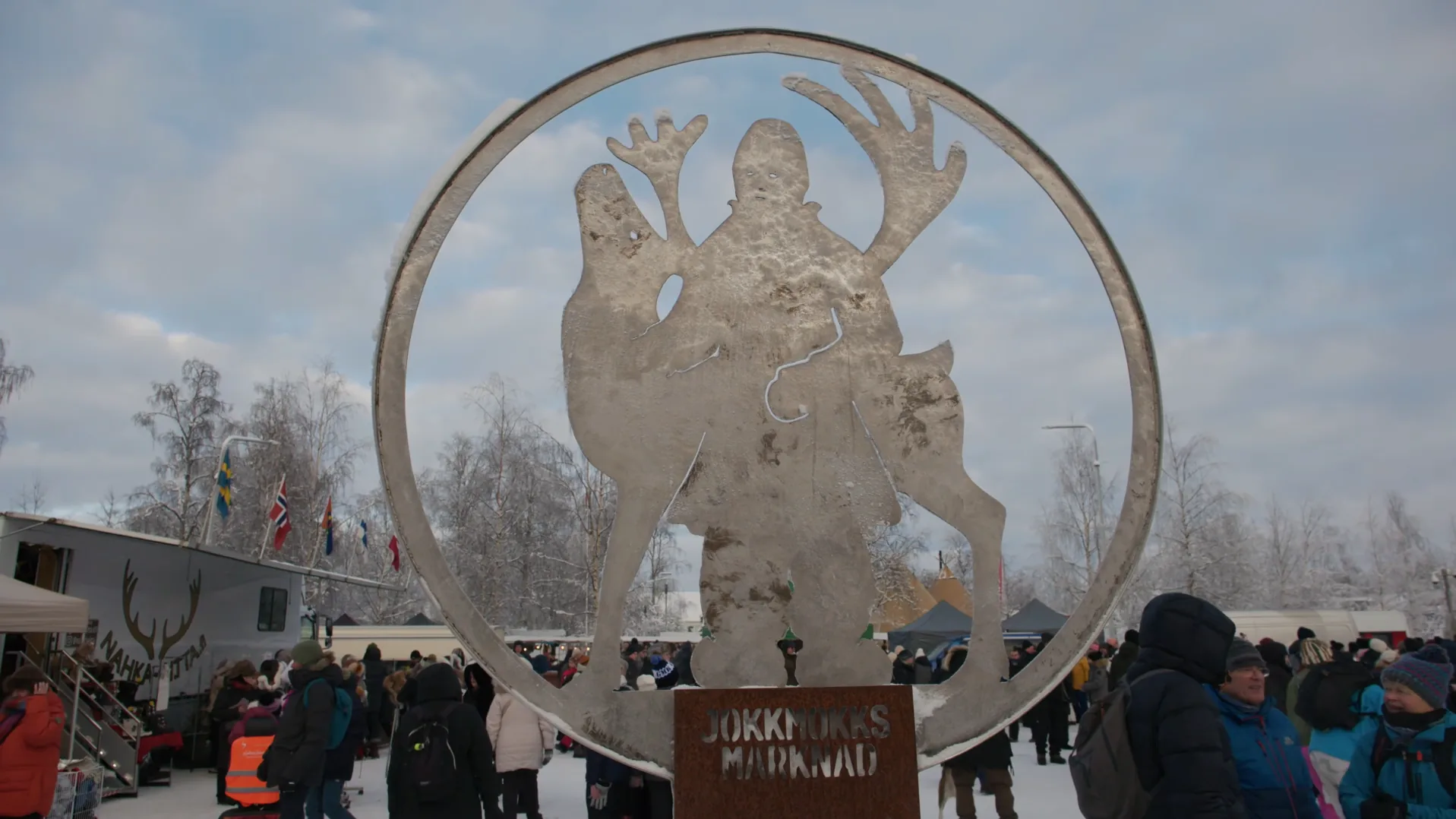
It is first a working Sámi gathering and second a thing visitors may attend, and that order is the whole character of it. Business gets done. People who see each other once a year see each other. A figure and a reindeer cut from steel, ringed and lettered Jokkmokks Marknad, stand over the market square.
The market proper runs from Thursday to Saturday, ten until six; in 2027 that is 4 to 6 February. A historical market, first held in 2005 on the old market site, and a programme of talks, concerts and exhibitions run on into the evenings and across the week.
Reindeer in the streets
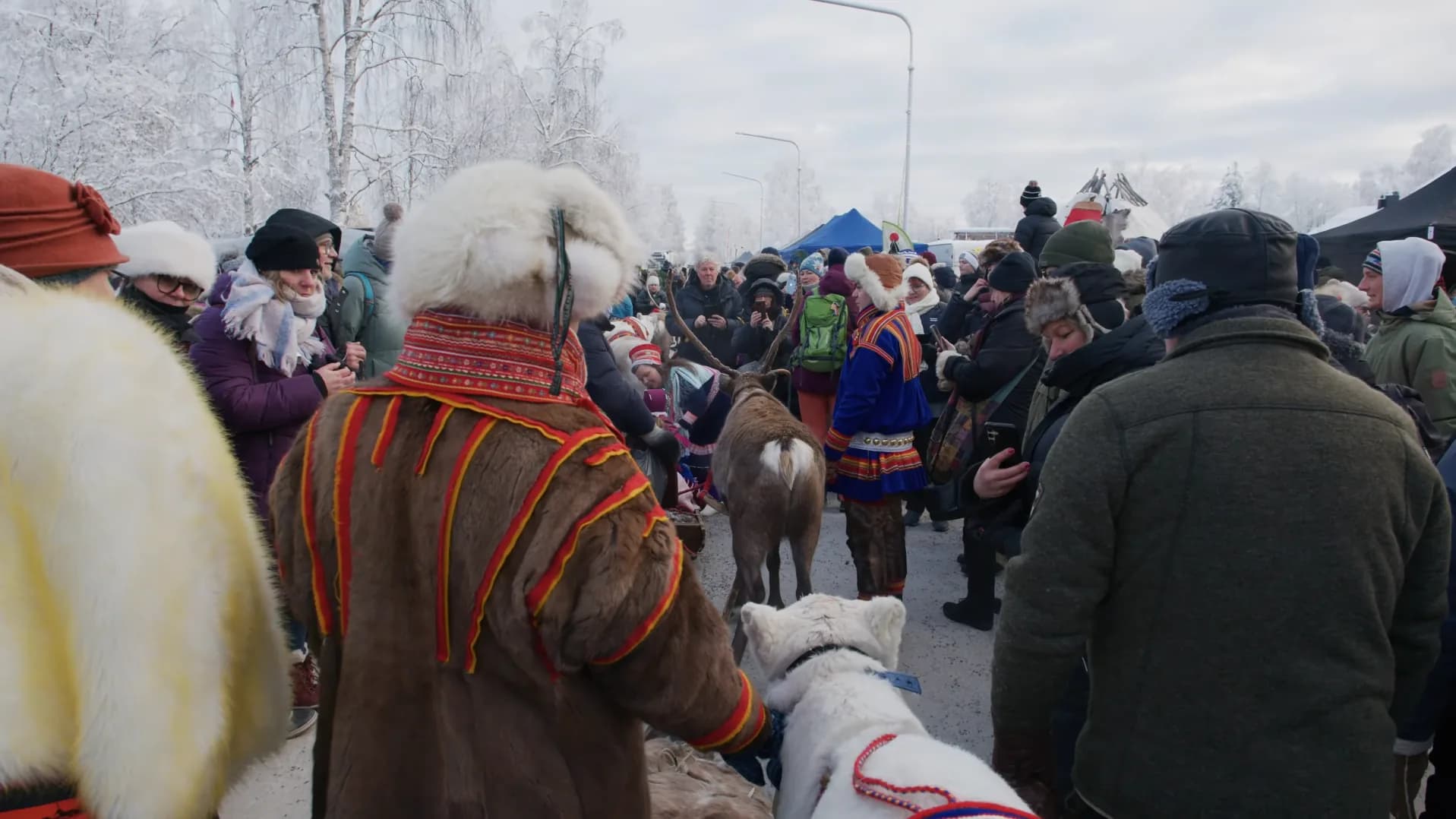
The reindeer are not kept in a pen at the edge of things. They come down the middle of the street on a rope, led by herders in gákti, the Sámi dress, drawing the low, boat-shaped wooden sledges that small children ride in on a reindeer hide. The procession through the town has been part of the market since its anniversary year in 1955, and it is the moment the whole crowd turns round at once.
The race is a different thing altogether: reindeer at full pace, dragging their drivers down a marked track on the frozen lake, Talvatissjön, at the edge of the town. The animals do not always keep to the track, and the people standing along it learn this quickly.
A word on manners. These are working animals and somebody's livelihood, and the people in gákti are not part of the scenery. Ask before you touch a reindeer, and ask before you photograph a person rather than the street.
What is on the tables
Stalls run the length of the streets: hides and antler, knives, silver, birch cups, wool socks, sour sweets by the strip and cheese by the wedge. Some of it is made a few kilometres away by the person selling it. A great deal is not, and the market does not pretend otherwise.
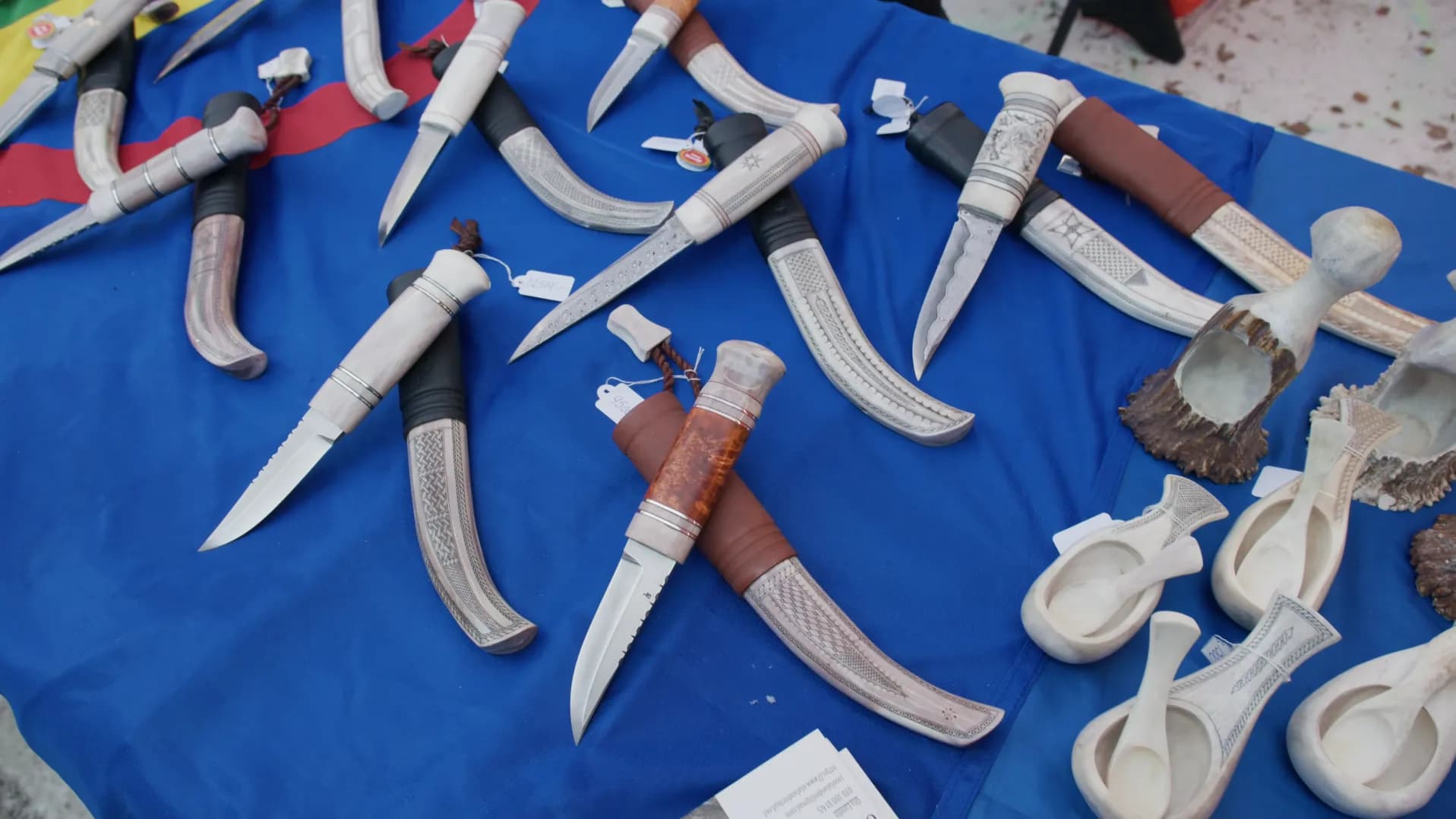
The knives are the thing to look at closely. Handles of reindeer antler and birch burl, sheaths of antler engraved in close lines and plaited patterns, laid out beside small cups and scoops cut from the antler itself. Further along there are whole moose antlers stacked for anyone with room in the car, carved birch cups with their maker's card tied to the handle, and reindeer hides piled on benches round a fire.
Know the difference before you buy. Genuine duodji made by Sámi makers carries the Sámi Duodji mark, and the Sámi handicraft foundation has its shop and exhibitions in the town. The simplest test is to ask the person behind the table who made it. If you would rather make something yourself, the duodji workshop we suggest is a morning with a maker.
Food eaten standing up
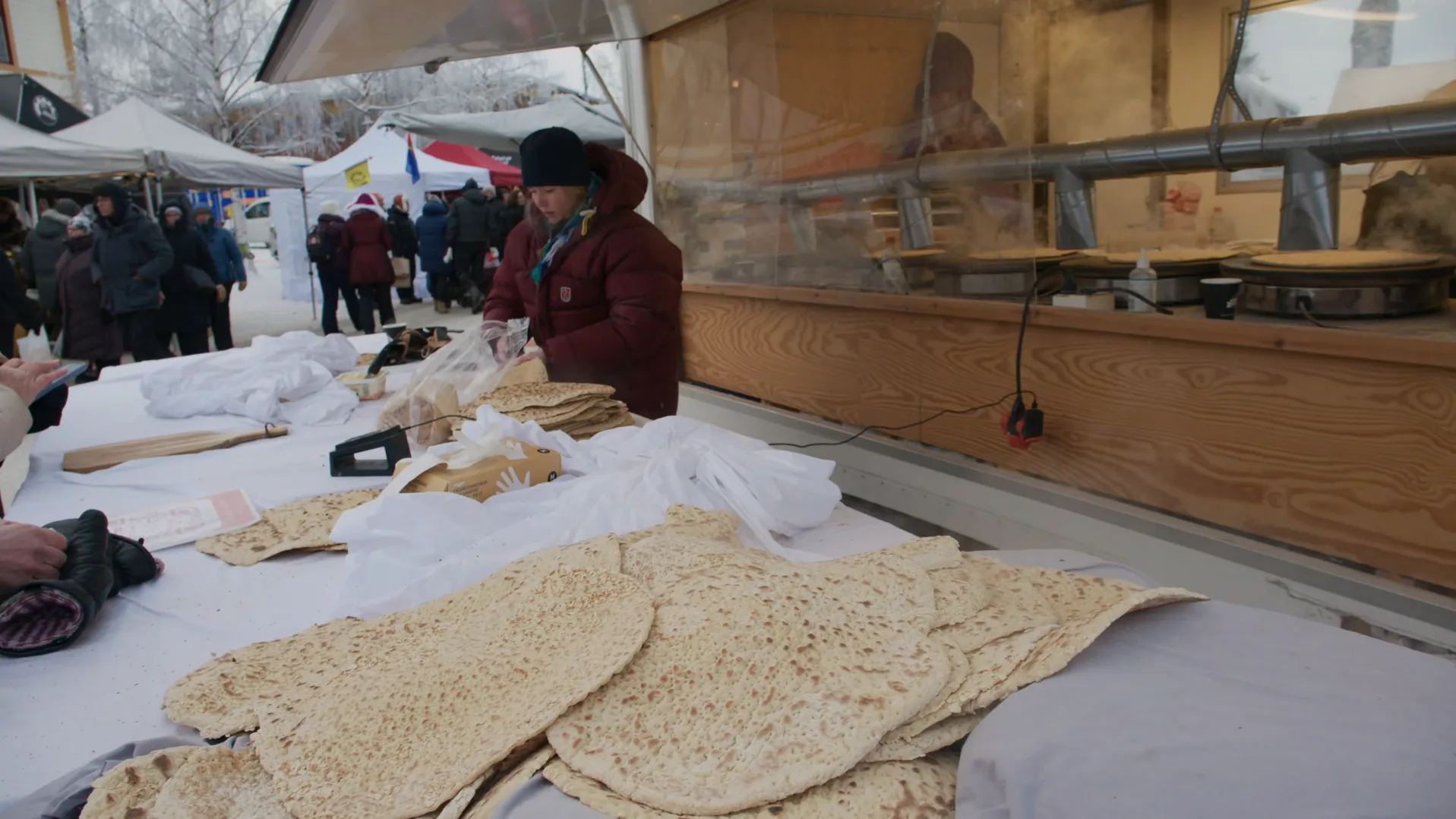
Almost all of the eating is done on your feet. Flatbread is baked on hot plates behind the glass and stacked warm on the table in front of it. Jokkmokk's own sausage-maker and smokehouse sells from a trailer under the municipal offices, and there is reindeer and elk in whatever form each stall has settled on that year.
Look for gáhkku, the soft Sámi bread, which is best eaten warm. When we were there a hot dog was forty kronor and a coffee thirty, and in that cold the coffee was the better buy.
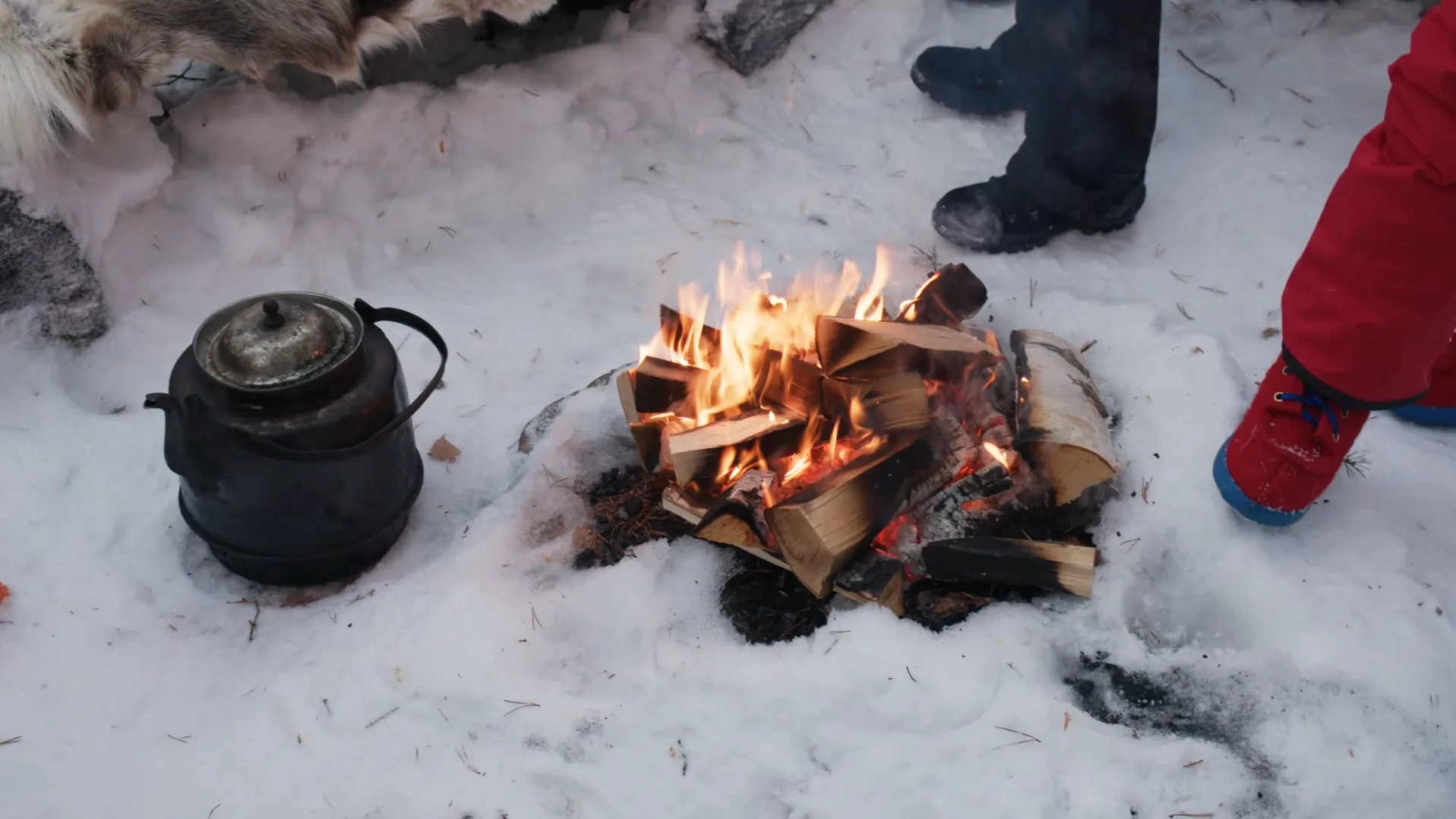
Every so often there is a fire, in a steel bowl or straight on the snow with a blackened kettle beside it, and a ring of people standing round it who have plainly stopped for some other reason.
A church town first
For a long time Jokkmokk was a church, a parsonage, cabins for the people who came to worship and the market booths, and nothing else. The first church here is thought to have been finished in 1607, two years after the first market, and the market and the church have been the same story ever since.
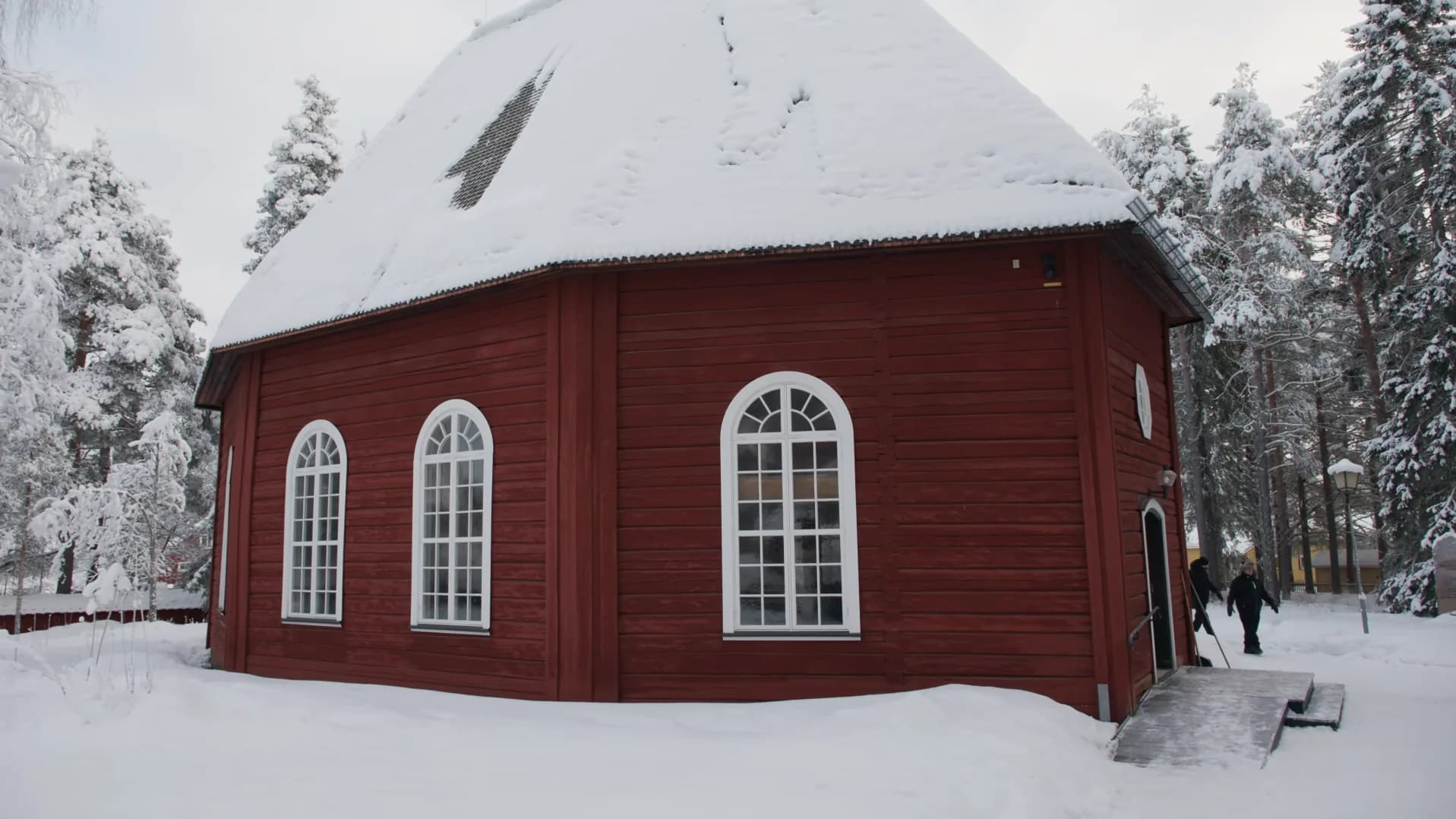
The red, eight-sided timber church is the one called the Old Church. It was built in 1753, when the first church had grown too small, burned in 1972, and was rebuilt on the same spot, outwardly to the original eighteenth-century drawings. What you see is a faithful copy, and in February, under a roof of snow among the frosted pines, it is the quietest place in town.
The larger church in the centre, pale wood with a green spire, opened in 1889, when the town was laid out on a grid as the centre of the parish. Ájtte, the Swedish Mountain and Sámi Museum, is in the town too, and an hour there makes everything outside more legible.
Book a year ahead
Book a year ahead. That is not sales pressure, it is arithmetic: a town of a few thousand takes tens of thousands of visitors in one week, and every bed within a hundred kilometres goes early.
Dress for standing still in serious cold, because that is what a market is. Minus thirty happens, and the difference between an excellent day and a miserable one is entirely boots and mittens.
Go for two days rather than one. The first is overwhelming and the second is when you start noticing that most of the conversations happening around you are not being had for your benefit, which is the best thing about it.
Fly to Luleå and drive inland, around two and a half hours; in February we would rather you were driven than drove yourself on snow roads in the dark. More on the town, and on the rest of its year, is on our Jokkmokk page.
Before you ask
Jokkmokk Winter Market: common questions
Anything not answered here, ask us directly — we'd rather you did.
When is the Jokkmokk winter market?
In the first week of February, as it has been since 1605. In 2027 the main market runs from Thursday 4 to Saturday 6 February, ten in the morning until six, with talks, exhibitions and concerts across the week around it. Our Jokkmokk Winter Market guide has the week day by day.
What is there to see at the Jokkmokk market?
Reindeer led through the middle of the town by herders in gákti, a reindeer race on the frozen lake Talvatissjön, and stalls across the town selling knives, antler, hides, birch cups and a great deal of food. Between them stand the two churches of what began as a church town. It is first a working Sámi gathering, and second a thing visitors may attend.
How can you tell genuine Sámi handicraft at Jokkmokk?
Genuine duodji made by Sámi makers carries the Sámi Duodji mark, and a good deal of what is sold at the market is not Sámi-made. The Sámi handicraft foundation has its shop and exhibitions in the town, and the simplest test is to ask the person behind the table who made it. If you want to make something yourself, the duodji workshop we suggest is a morning with a maker.
How far ahead should you book for Jokkmokk?
As early as you can. A town of about 3,000 people took more than 50,000 visitors over the three market days in 2026, and there is no central booking office. Our Jokkmokk Winter Market guide sets out where to look. More on the town itself is on our Jokkmokk page.
How cold is Jokkmokk in February?
Minus thirty happens, and you are standing still for most of the day. The difference between an excellent day and a miserable one is entirely boots and mittens. Go for two days rather than one: the first is overwhelming, and the second is the better one.