


The Sámi NorthFeb – Mar
Reindeer Herding
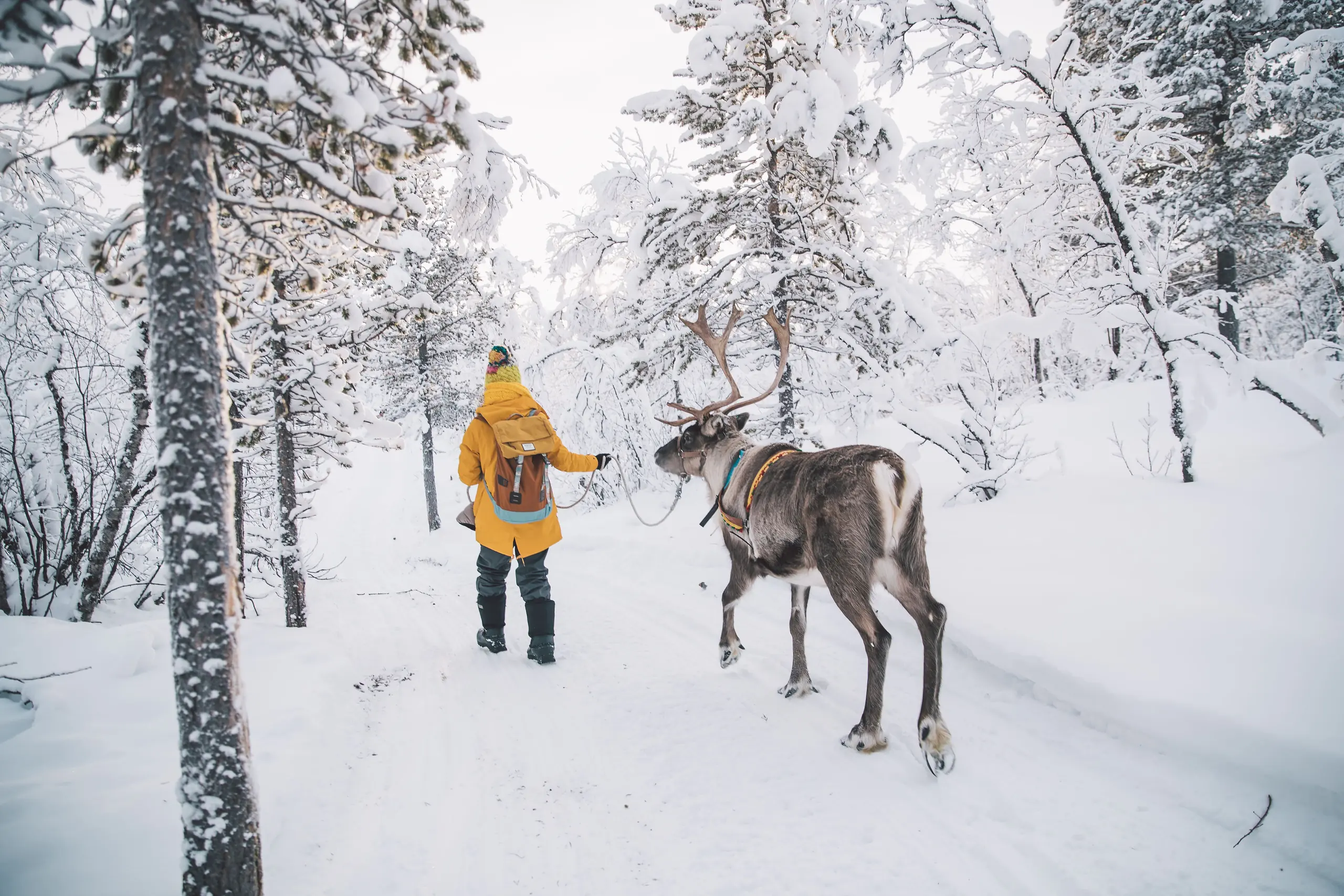
A winter day walking beside a trained reindeer, spent with a Sámi herding family and shaped around their work.
The animal you actually meet
February, and the animal walking beside you is a trained draught reindeer — the one that tolerates a rope and a stranger. The rest of the herd is out in the forest somewhere and you are unlikely to see all of it at once, which is the first honest thing to say about a day like this.
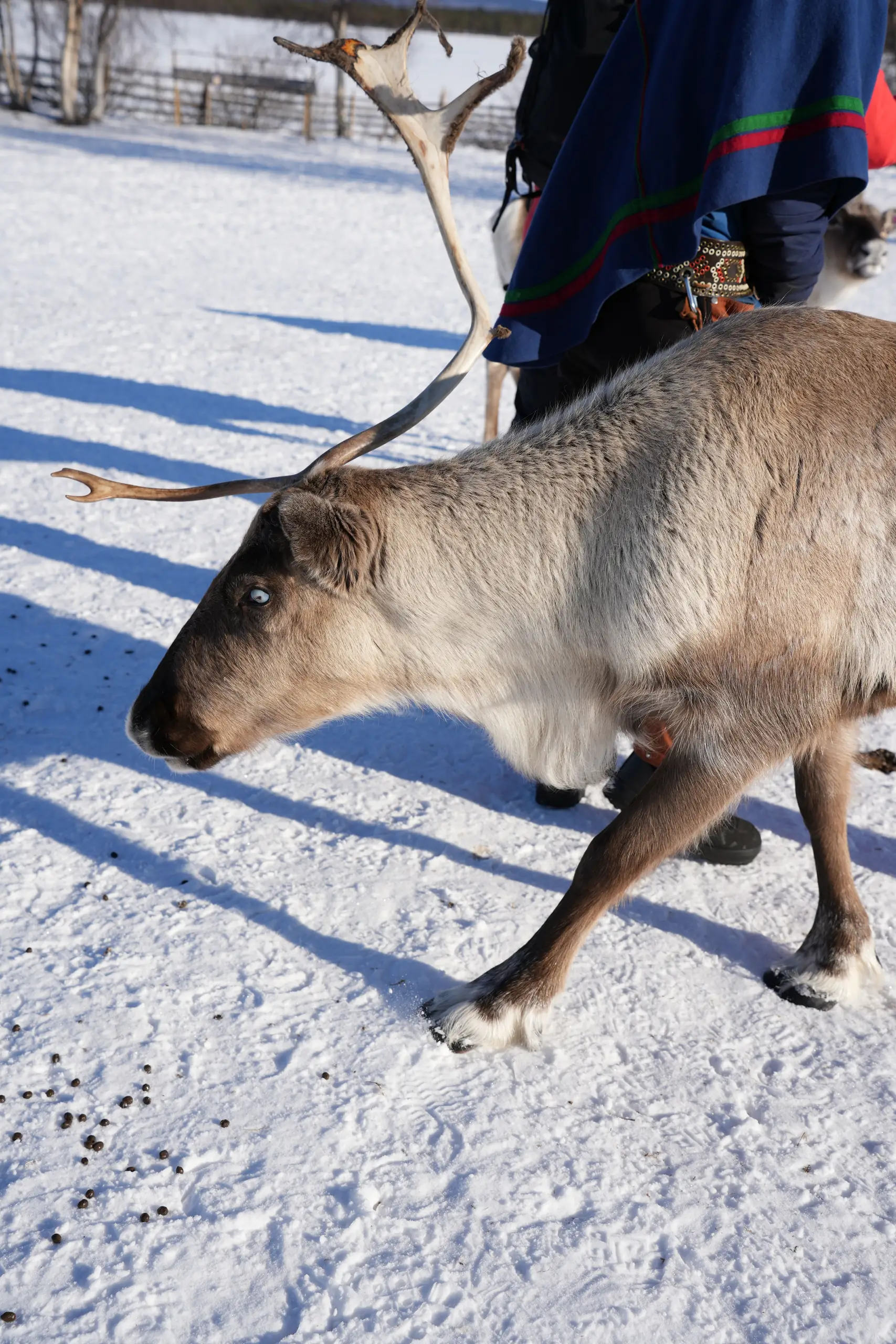
Reindeer are semi-domesticated rather than tame. They are owned, earmarked and known by sight, and they are not handled the way a horse is handled. This one will walk with you for an hour and then want nothing further to do with anybody.
The pace is the whole of it. There is very little to do except walk, and a forest in February supplies almost no noise to fill the gap. Snow comes off a branch. The animal's tendons click as it walks, which is a real reindeer sound and the reason a herd moving in the dark is heard before it is seen.
You will be cold before you are bored.
What is under the snow
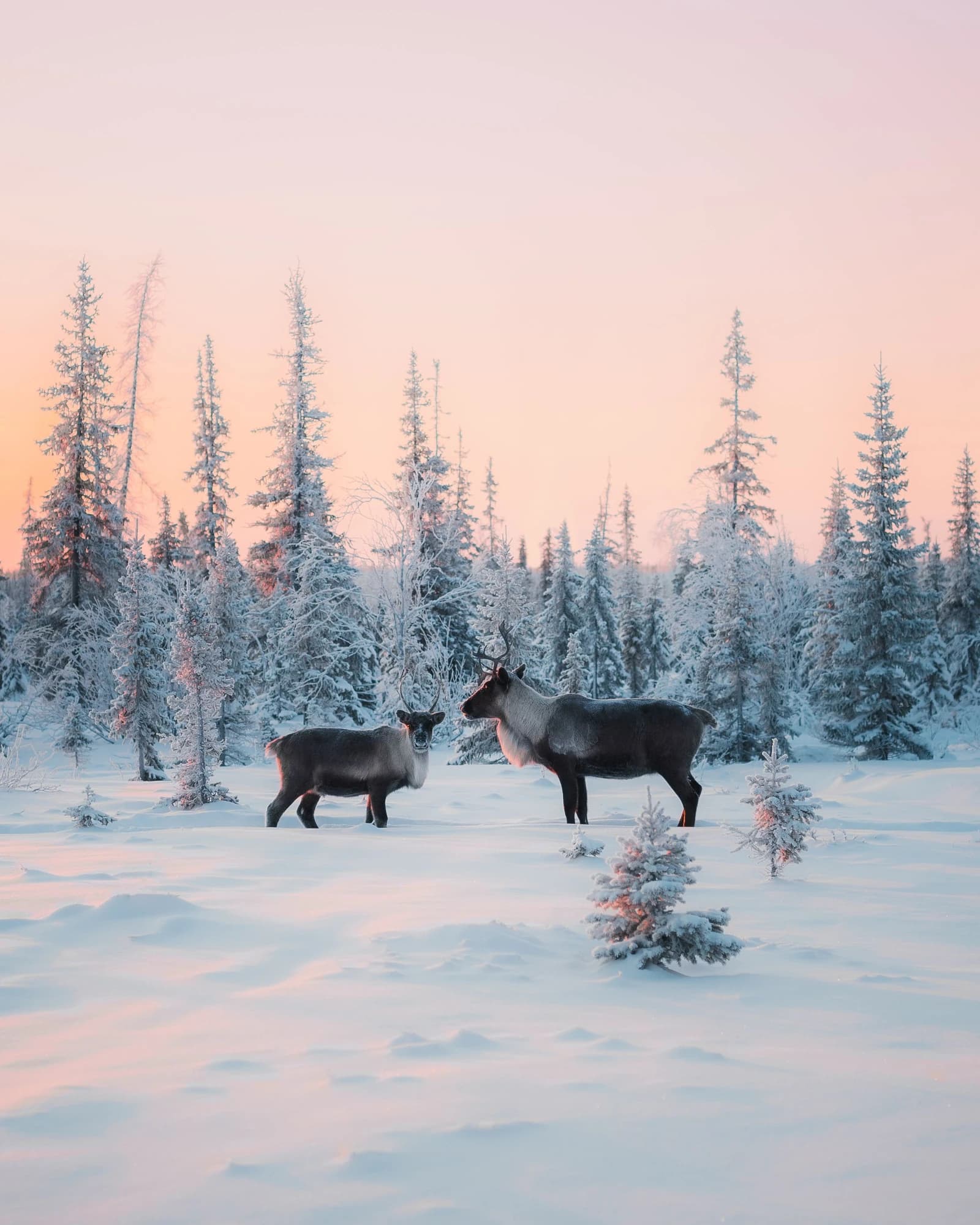
Under the snow is the entire argument. Reindeer winter on ground lichen, which grows a few millimetres a year in old pine forest, and which they find by smell and reach by digging — one crater at a time, with the front hooves, through whatever is on top. Past about thirty centimetres of snow, digging is most of what they do.
That is why the herd moves, and why a herder's winter is spent following it rather than driving it. The other winter job is the edge of the herd, where the lynx and the wolverine are.
What ruins a winter is not cold but rain. Rain onto snow, then a freeze, and the pasture locks under a lid the animals cannot open. Then the herders feed by hand, which costs money nobody budgeted, and it is happening more often than it used to.
Sweden has fifty-one samebyar — thirty-three mountain, ten forest, eight concession — and something over two hundred thousand reindeer between them.
Whose day it is
Only Sámi may own reindeer in Sweden. That is not custom, it is the Reindeer Husbandry Act, and it is why this is spent with a family rather than bought from a company. Around four and a half thousand people here own reindeer; roughly two and a half thousand make a living from it.
So the day bends around the work rather than the other way about. If the herd has moved, you go where it went. If the weather is wrong you do something else, and we would rather plan around that than point you to a version with the work taken out.
February and March are the right months because the herd is on winter ground and reachable. By April the pregnant females are heading for the calving lands and nobody has time for visitors — which is the correct answer, and one we pass on rather than work around.
Before you ask
Reindeer Herding: common questions
Anything not answered here, ask us directly — we'd rather you did.
When is the best time for reindeer herding in Sweden?
February and March, when the herd is on winter ground and reachable. By April the pregnant females are heading for the calving lands and nobody has time for visitors, and we pass that on rather than work around it.
Who can own reindeer in Sweden?
Only Sámi. That is the Reindeer Husbandry Act rather than custom, and it is why this day is spent with a family rather than bought from a company. Around four and a half thousand people own reindeer here; roughly two and a half thousand make a living from it.
Are reindeer tame?
They are semi-domesticated rather than tame: owned, earmarked and known by sight, but not handled the way a horse is. The animal you walk beside is a trained draught reindeer, the one that tolerates a rope and a stranger.
What happens if the herd moves or the weather turns?
The day bends around the work. If the herd has moved, you go where it went; if the weather is wrong, you do something else. We would rather plan around that than point you to a version with the work taken out.