



The Sámi NorthYear round
Sápmi Kitchen
A Sámi family's own food, cooked over an open fire and eaten together, at the pace the fire sets.
What the evening actually is
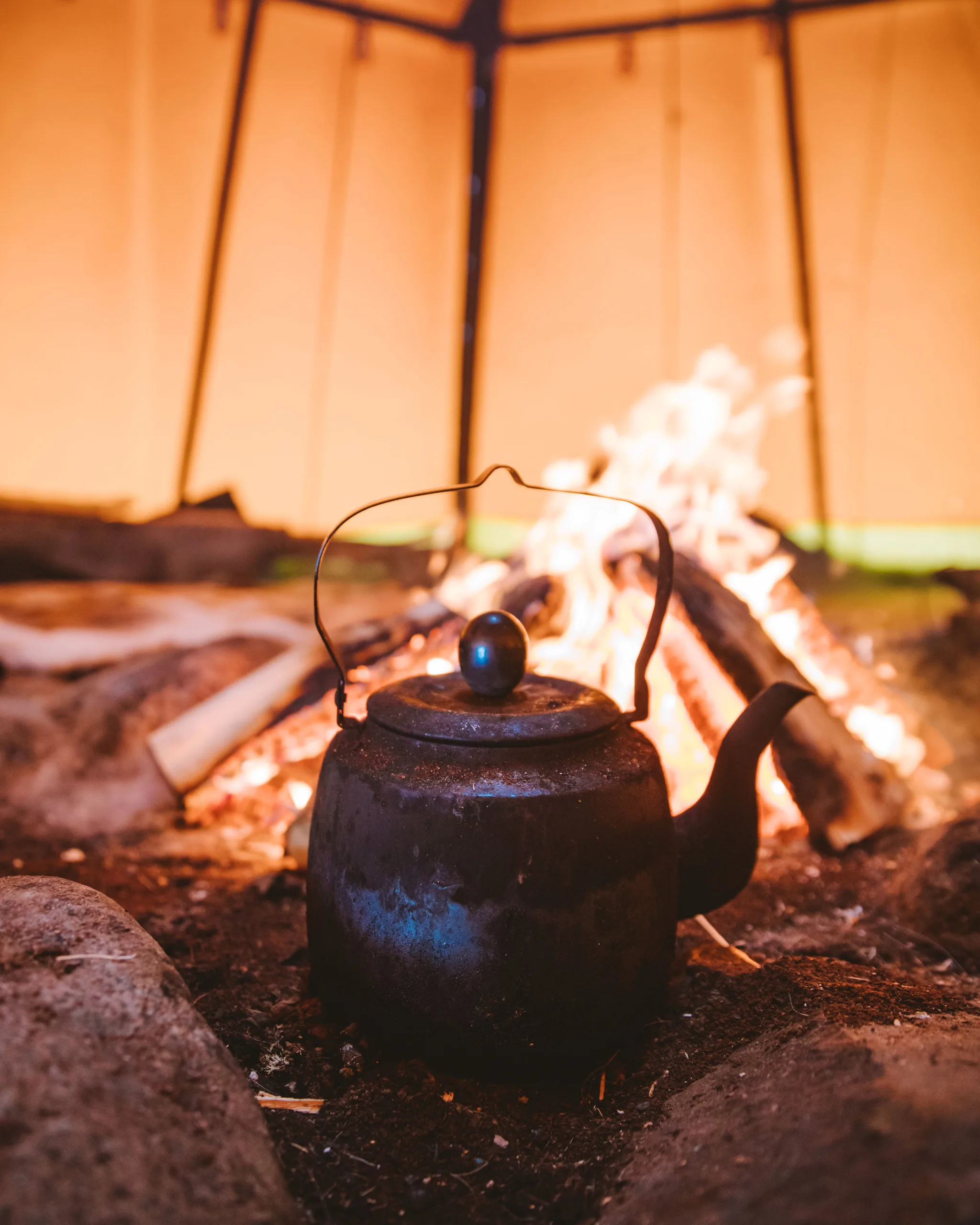
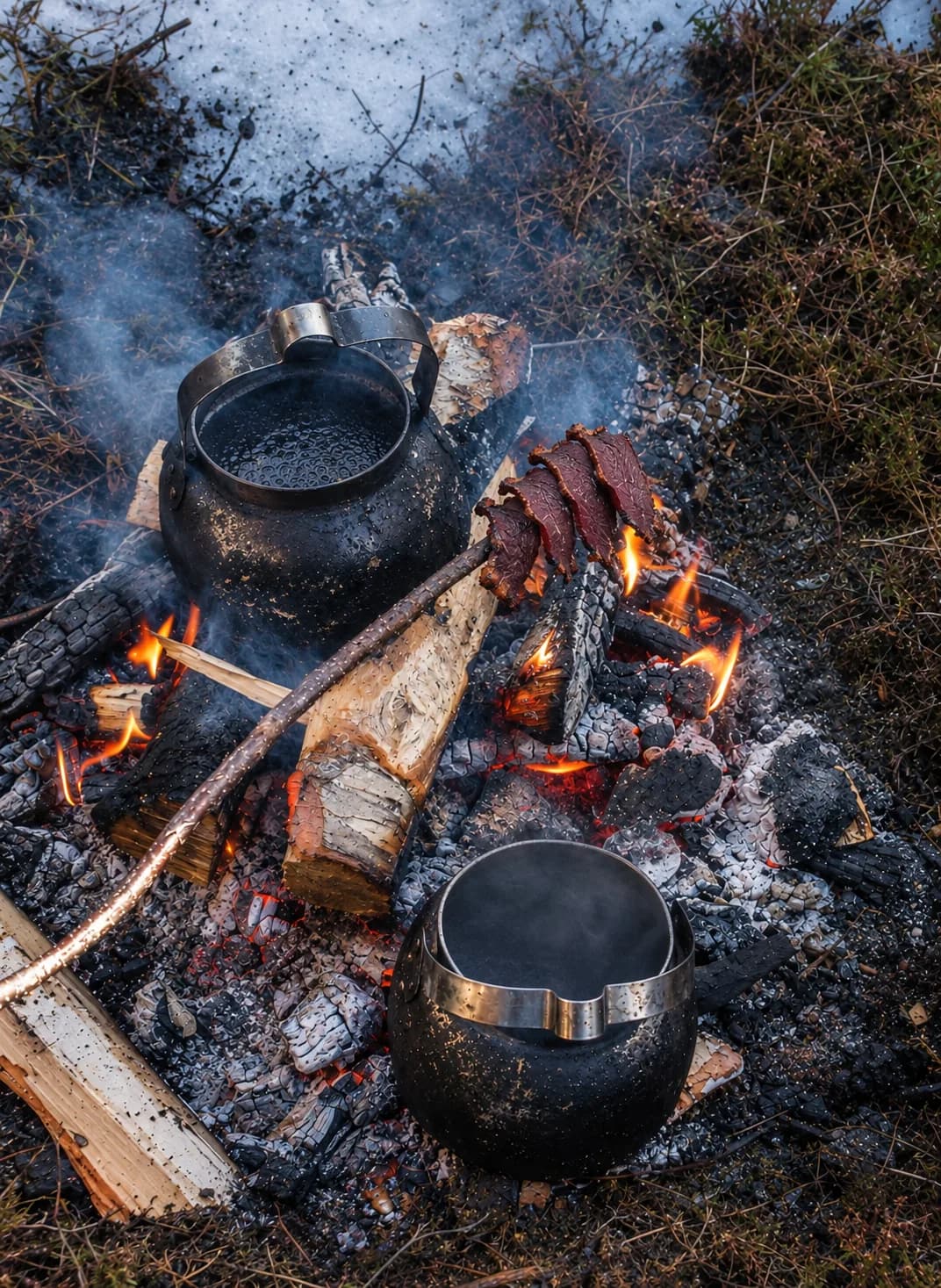
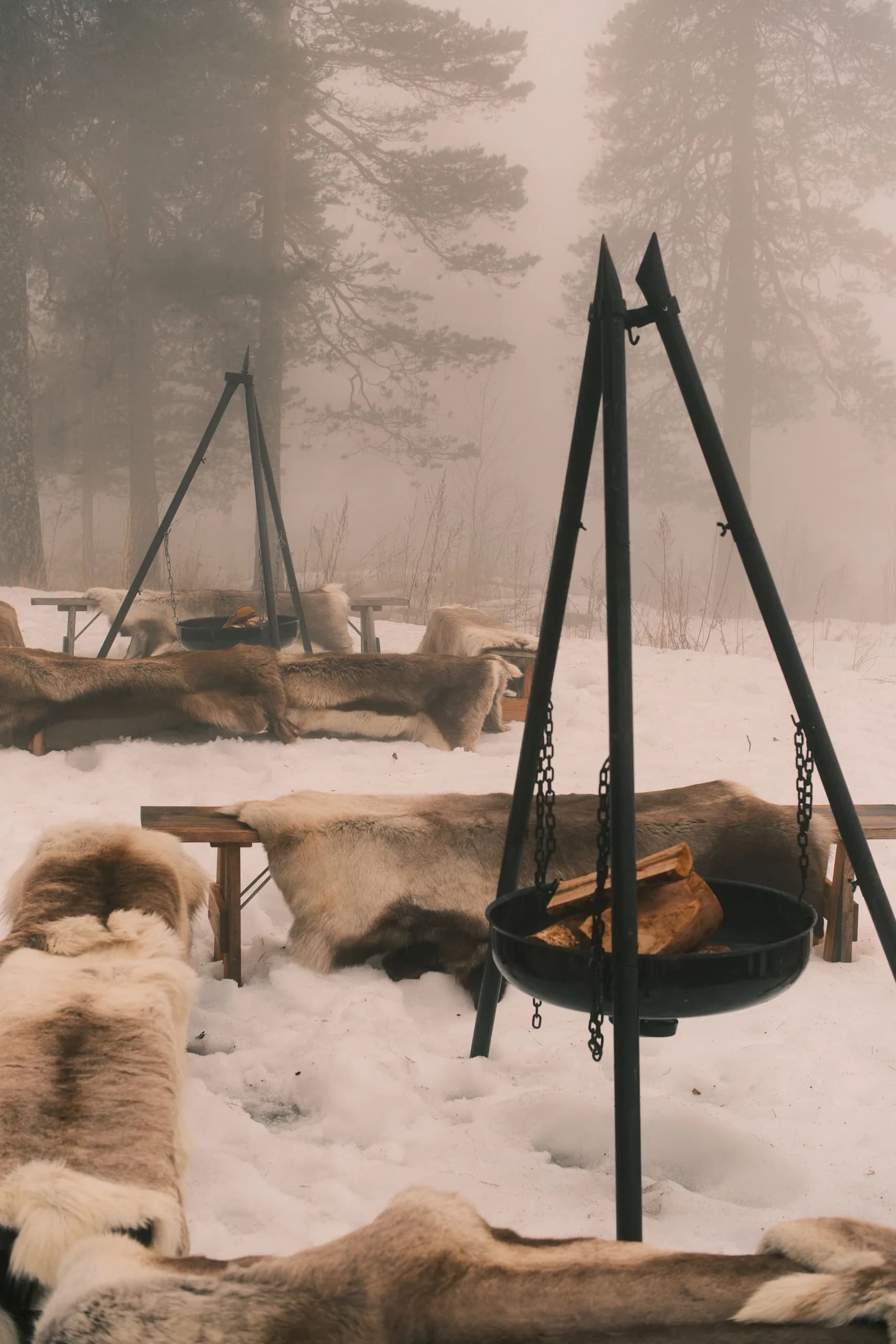
It happens outside, and it happens slowly. A fire is already going when you arrive, and the cooking is done over it — not on it, over it, at whatever height the food and the heat agree on, which is a judgement nobody makes from a recipe.
Your host is Sámi, and this is her own family's food rather than a version of it assembled for visitors. That distinction is the whole evening. There is a version of this sold across the north by people with no connection to any of it: a themed meal, a costume, a few sentences of culture between the courses. This is not that, and we would rather say so here than let you work it out at the table.
Nothing is performed. It is not a talk with food, or a demonstration you watch from a bench. You help if you want to help, you are handed things, and then everybody — hosts included — sits down and eats the same food at the same time. Guests tend to notice that last part first, and it is usually the part they describe afterwards.
Why there is no menu
What is cooked depends on the month, because the food here has always depended on the month.
Reindeer, when it is reindeer, comes smoked and sliced thin, or slow-cooked in a broth made the same way for a very long time. There is flatbread cooked on the fire itself. In late summer there are cloudberries, which grow in open bog and are picked by hand and are the reason people here will talk about a marsh with real affection. In winter there is char from under the ice, and coffee boiled in a pot with a lump of squeaking cheese dropped into it, which is an acquired taste for about a week.
You will not be handed a menu, because there is not one. We ask about allergies and about anything you would rather not eat, and past that the answer to what is for dinner is whatever the season and the day have made available. That is not us being vague. It is the actual system, and it is older than the road in.
What it asks of you
It is not a restaurant and it does not keep a restaurant's pace. Allow an evening rather than two hours, and expect gaps in it — while something cooks, while the fire is worked, while somebody goes to fetch a thing. The gaps are where most of the conversation happens.
Children do well here. There is a fire, there are jobs, and nobody minds a certain amount of running about.
We suggest this only where the invitation is genuinely the host's to give, which is why it is not on every itinerary we write, and why we will sometimes tell you a particular week does not work. Sápmi is a living place with a working year in it, not a venue with availability.
Before you ask
Sápmi Kitchen: common questions
Anything not answered here, ask us directly — we'd rather you did.
What is a Sámi food experience like?
It happens outside and slowly, around a fire that is already going when you arrive. Your host is Sámi and the food is her own family's. Nothing is performed: you help if you want to, and then everybody, hosts included, sits down and eats the same food at the same time.
What food is served at a Sámi dinner?
It depends on the month. When there is reindeer, it comes smoked and sliced thin, or slow-cooked in a broth, with flatbread cooked on the fire itself. Late summer brings cloudberries; winter brings char from under the ice, and coffee boiled with a lump of squeaking cheese dropped into it.
Can you cater for allergies?
We ask about allergies, and about anything you would rather not eat. Past that there is no menu: what is cooked is whatever the season and the day have made available.
Is a Sámi food evening suitable for children?
Children do well here. There is a fire, there are jobs, and nobody minds a certain amount of running about. Allow a whole evening rather than two hours.