One road, west
The Road West
One road, two hundred kilometres, and a sky that gets more likely every night — ending at an ocean that never freezes.
What you'll remember
- Harnessing a team in a working yard, which is louder and far more chaotic than any photograph of it suggests
- A guesthouse thirty kilometres out taken whole, with reindeer in the courtyard and the sky in the living-room window
- First light along the river valley, looking for moose where they actually are rather than where they are kept
- Standing on a fjord that has never iced over, four hours from a lake you could have driven across
The story
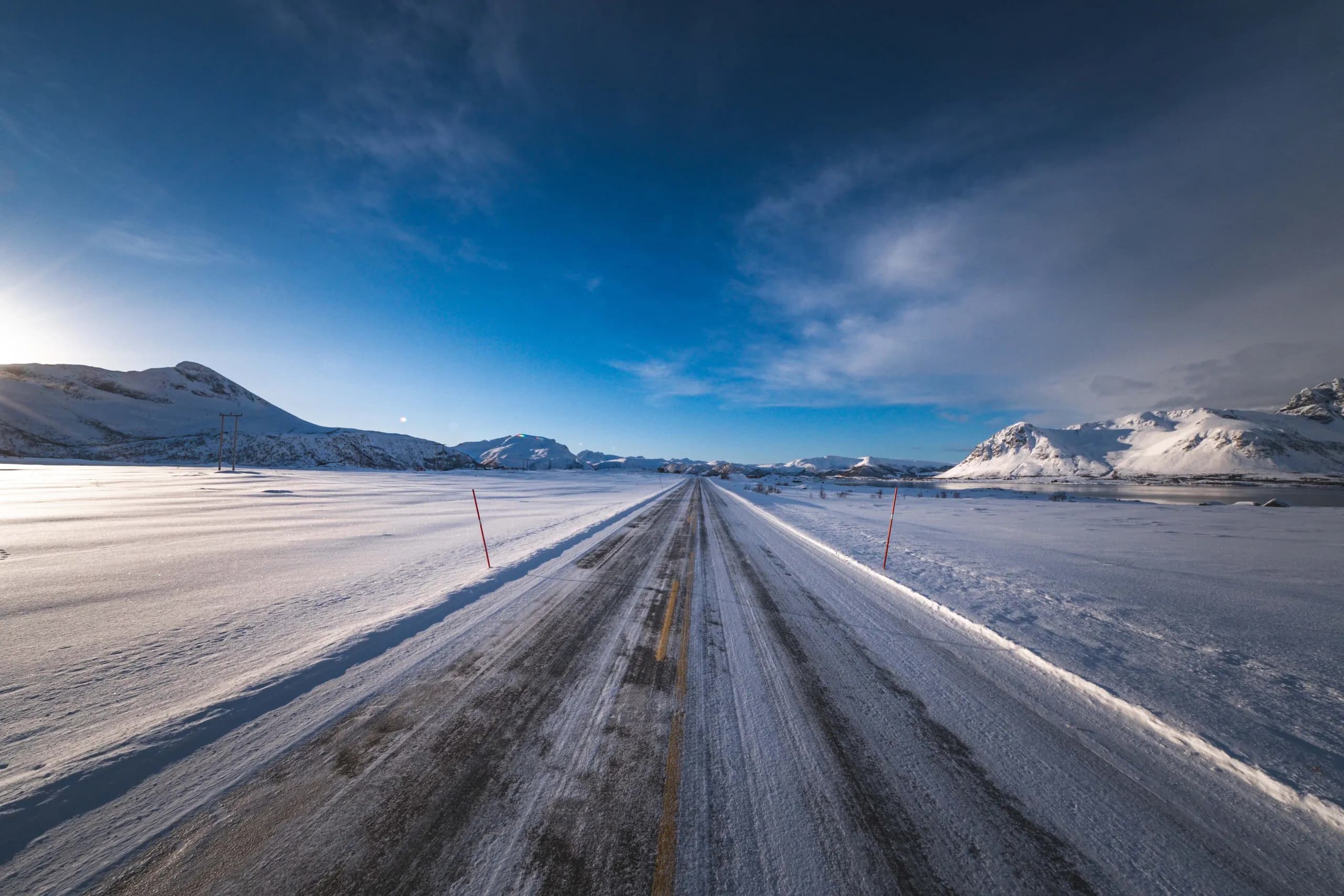
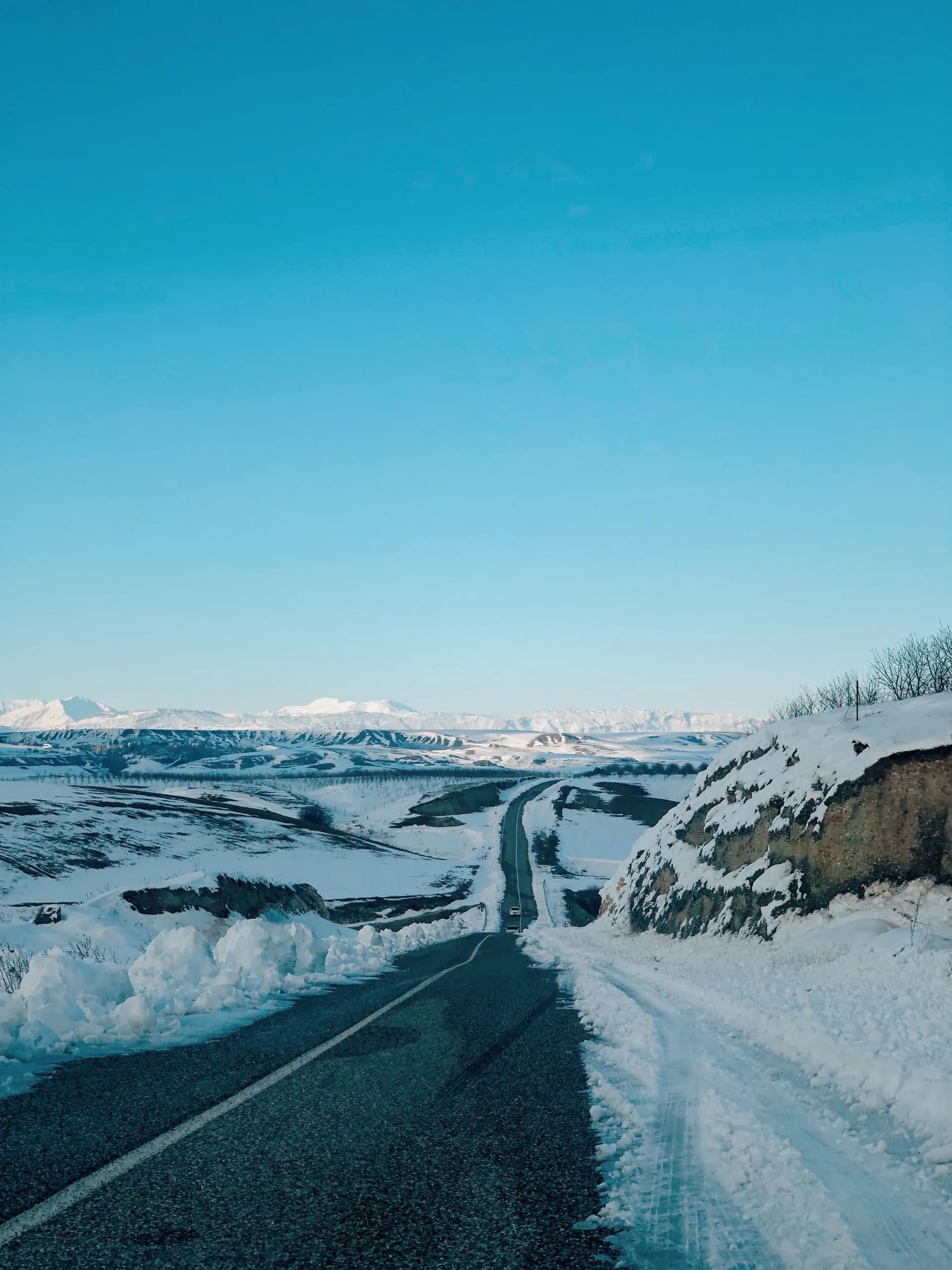
You start the week where the lakes carry a metre of ice and end it beside salt water that has never frozen, and you never leave the same road.
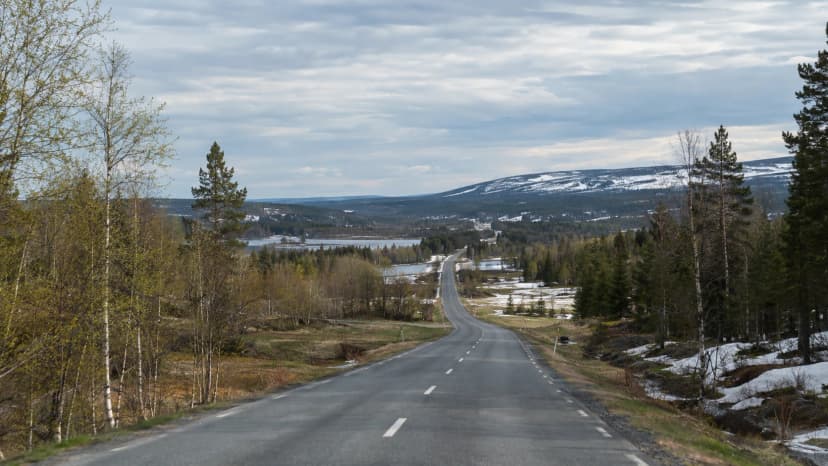
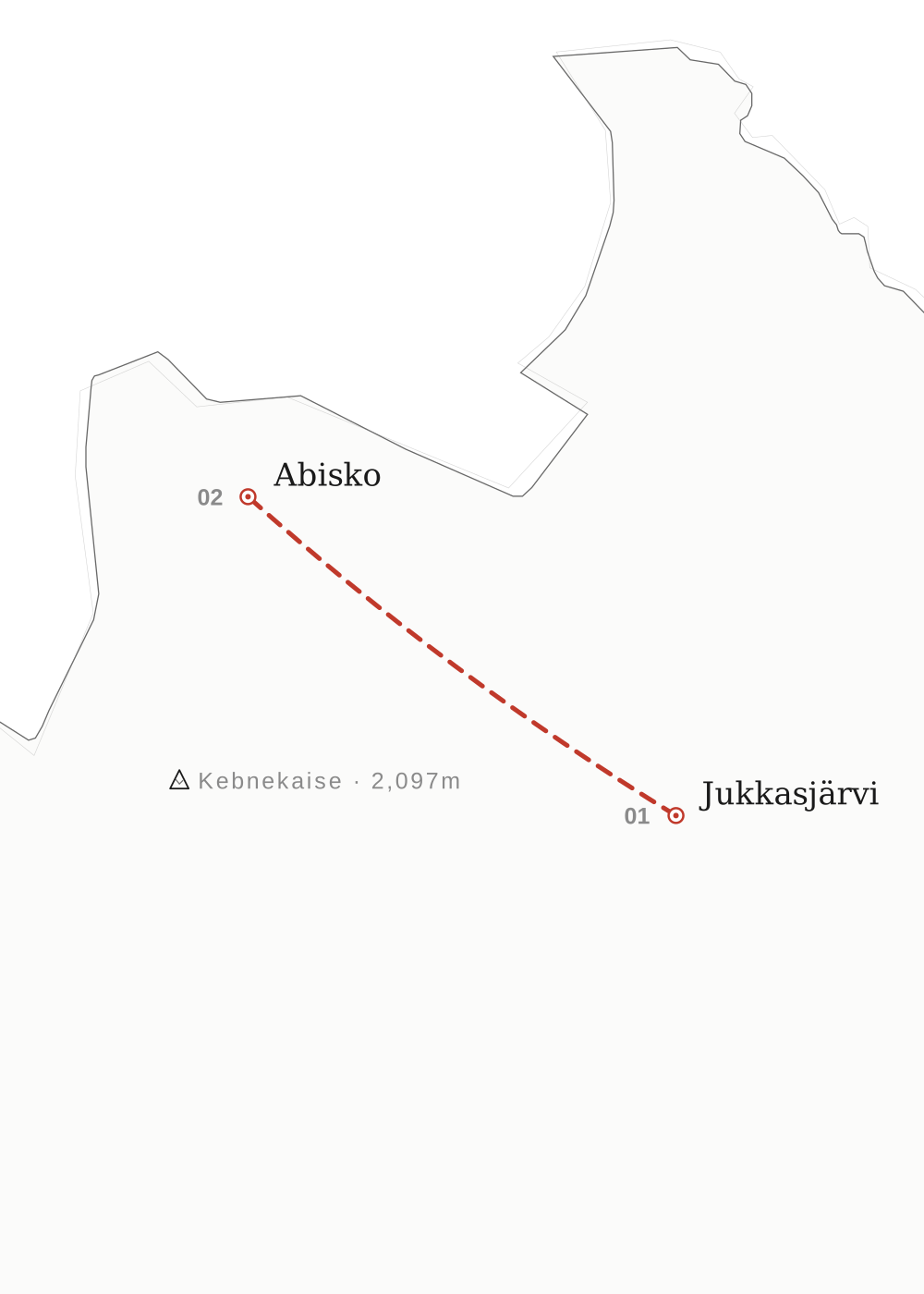
There is one road out here, and everything is on it. It starts at a mining town that is in the process of being physically moved, runs west past a hamlet at thirty kilometres, reaches the driest valley in the country at ninety-five, crosses the border and drops to the Atlantic. Two hundred kilometres, give or take, and a different world at each end.
Travel it west and three things change together. You leave the town's light behind, so the sky gets darker. You climb into the rain shadow of the border mountains, so the air gets drier and the cloud thins. And then you come off the far side of that range to an ocean warm enough that it has never frozen, while the lakes behind you are thick enough to drive on.
So the week has a direction rather than an itinerary. Each night you are further from the lights and deeper into the dry air, which means the odds improve as you go — and then on the last day you drop to salt water and the whole thing inverts. Nothing here is a loop back to the airport.
This is a curated journey we can arrange. Book it as designed, tailor it around your dates, your pace and who is coming, or use it as the starting point for something new.
The route
Seven nights across four bases along a single road, running roughly two hundred kilometres from the mining town to the Norwegian coast. Two of the four are mapped here; the guesthouse at Rensjön and the fjord over the border do not have destination pages yet.
- JukkasjärviSwedish Lapland
- AbiskoSwedish Lapland
Jukkasjärvi, on the Torne river
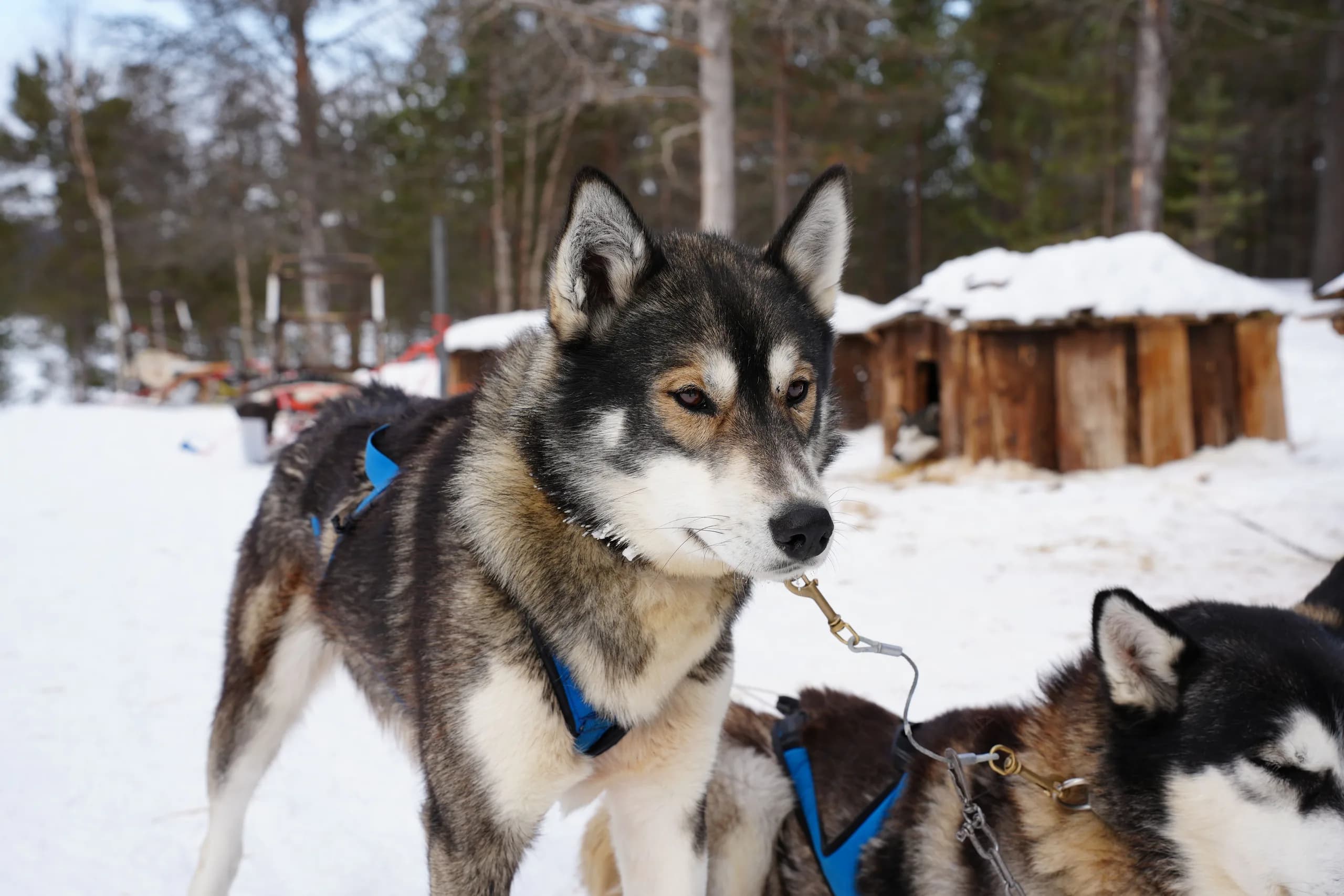
A yard full of noise
Fifteen minutes from the airport, on the river, and the loudest two days of the week. This is a working kennel rather than a visitor centre: you help harness, you find out how much a team wants to leave before it is allowed to, and then you either drive a sled yourself or ride in the basket and let somebody else do the work. Both are legitimate and nobody here will make you feel otherwise about the second.
The village is also where the ice is quarried and built with each winter, and it is worth a couple of hours as a day visit. We will not sell you a night in a room made of ice. Every family we have ever sent to one has told us the same thing afterwards: the first night is the story and the third is a tired child in a cold room. Go and look at it, and then sleep somewhere heated.
Two nights here, close in, because the sky above a mining town is the worst you will have all week and there is no sense spending good nights on it.
Rensjön, thirty kilometres out
A house with nobody else in it
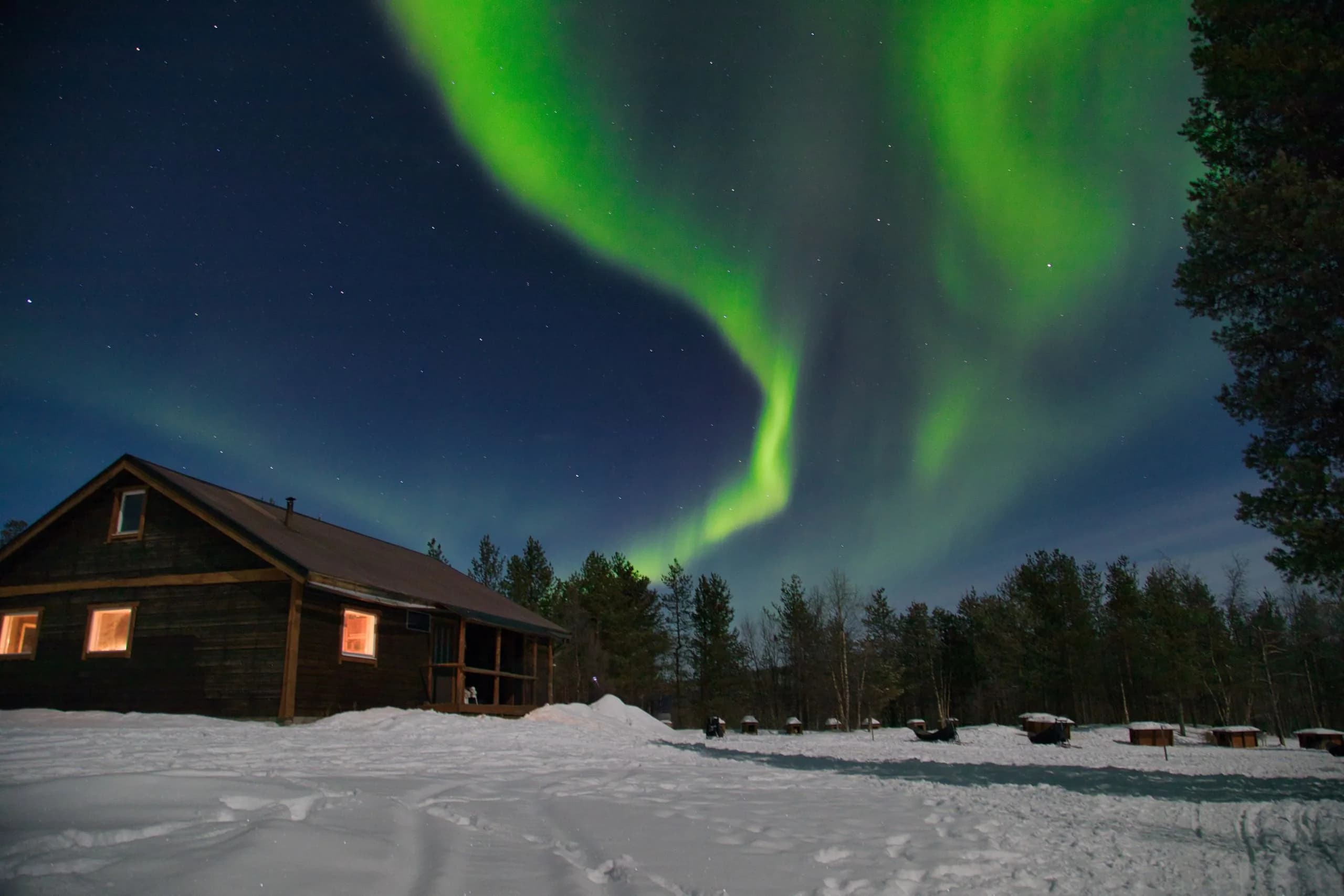
West along the road until the town's light is behind the hill. There is a guesthouse here — six rooms, a kitchen, a living room, reindeer kept in the courtyard — and for these two nights it is yours, the whole building, with nobody else booked into it.
It is not luxurious and we would rather say so now than have you find out. The rooms upstairs share a bathroom. It is self-catering, and the nearest shop is twenty-five minutes back down the road, so we stock it before you arrive. What it is instead is empty, dark and thirty kilometres from anything, with the aurora appearing in the living-room window often enough that people stop going outside for it.
Two things happen from here. The reindeer are fed in the morning, around eight, by whoever is staying — which sounds like a small thing and is the part children remember. And one morning goes out at first light along the river valley toward the high mountains, looking for moose in the winter habitat where they actually are. You may see fifteen. You may see none. The person driving is honest about that in advance, which is why we use him.
Abisko
The valley the cloud keeps missing
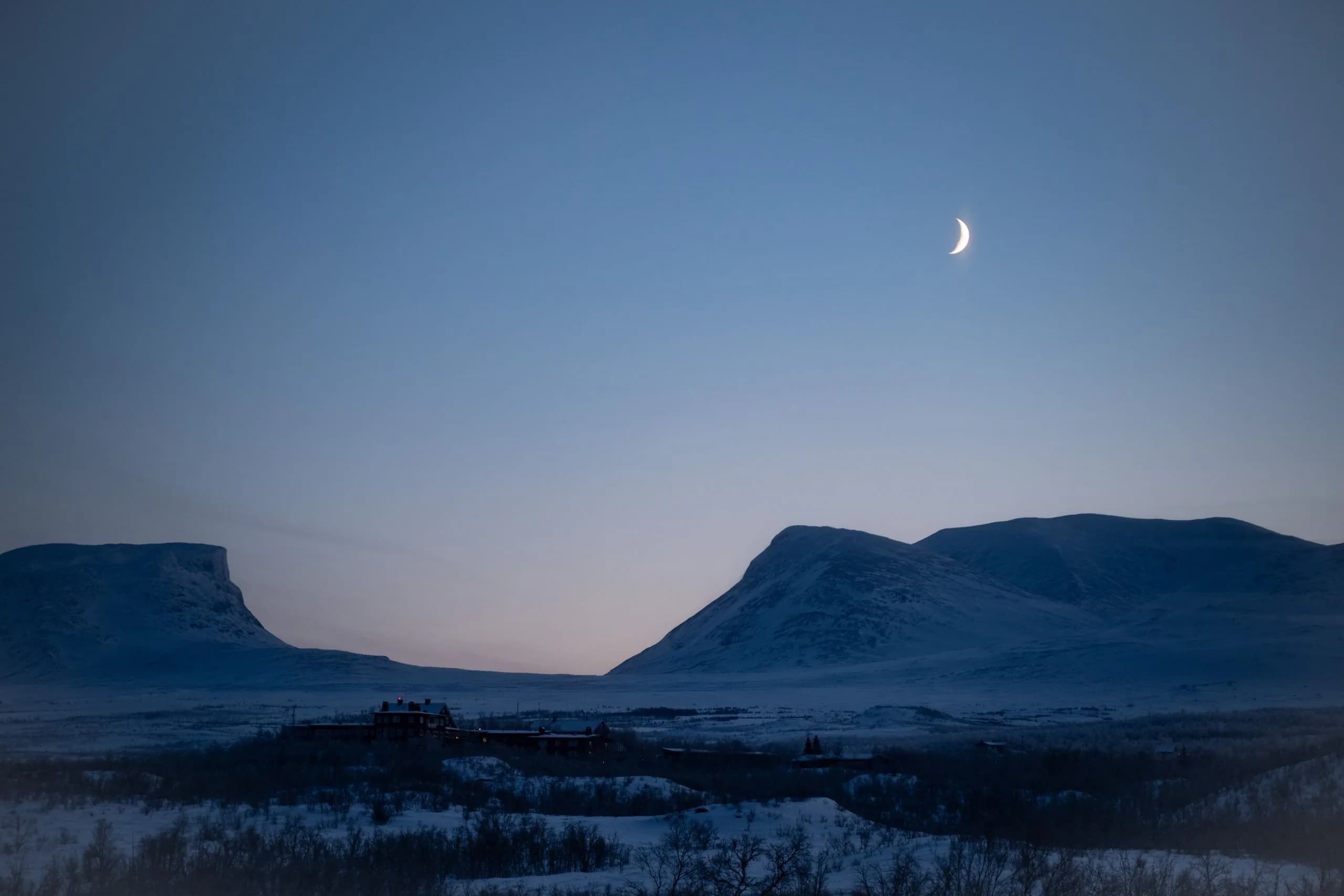
Another sixty kilometres west and you are in the rain shadow. Weather off the Norwegian Sea has to climb the border peaks to get here and drops most of its water doing it, so what arrives is thin dry air and a patch of sky that stays open on nights when everywhere east of here is shut in.
Be clear about what that buys. The aurora is no more frequent at this longitude than any other; the particles have no idea where the mountains are. What you are buying is a better chance of seeing the thing that was going to happen anyway. That is worth a great deal and it is not the same as a guarantee.
Two of the three nights are given to it, in a vehicle carrying your party and nobody else's, routed off the cloud map each afternoon. The days are yours: open fell above the treeline on snowshoes or skins with a guide who carries avalanche training, ice on the lake to fish through, or a strong argument for doing nothing until the light goes. One evening goes to a wood-heated sauna at the end of a snowmobile track, glass on three sides, above the ice, nobody else booked.
Over the border
Water that has never frozen
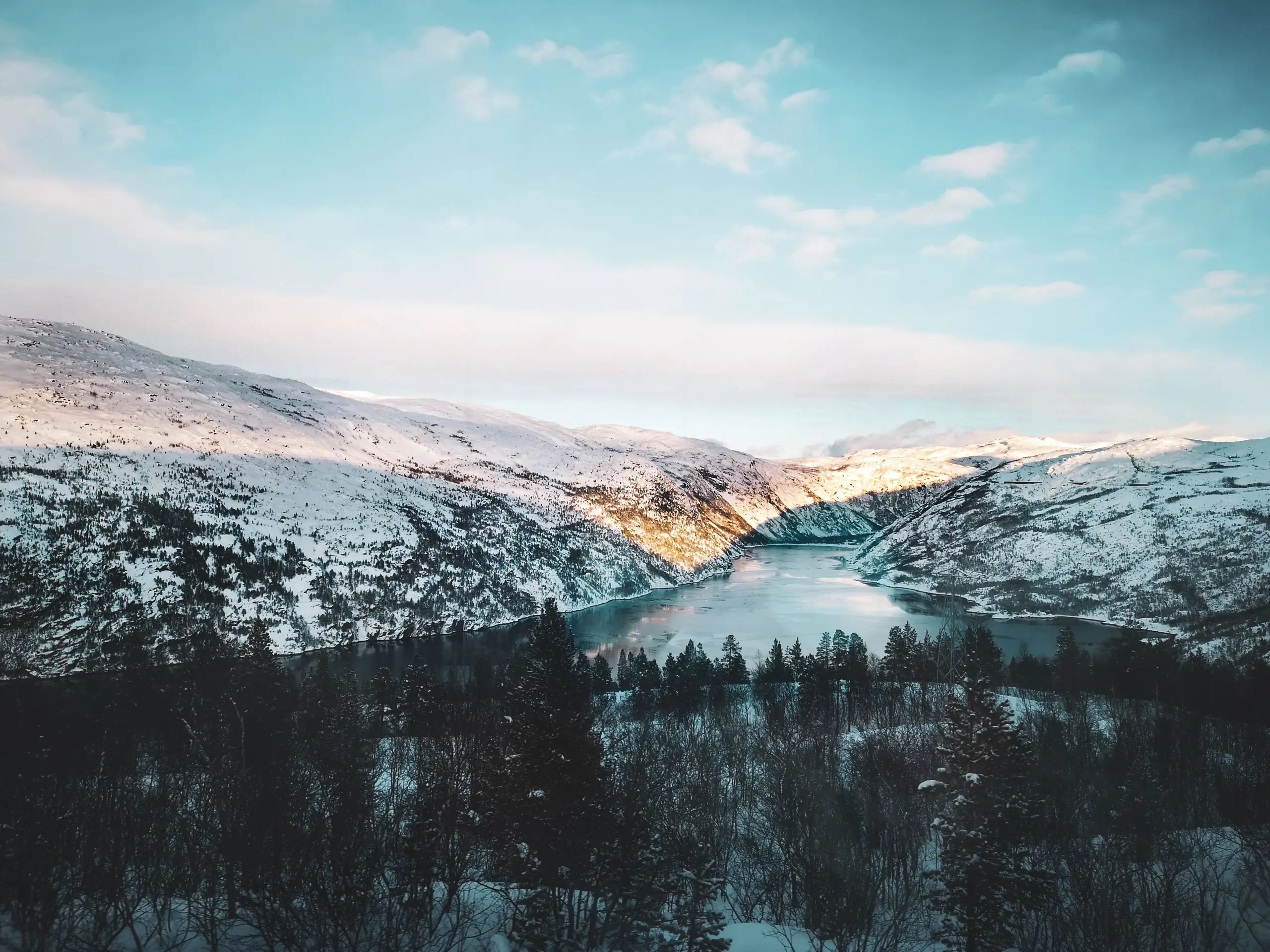
The last day goes over the top and down the other side, about two hours, to stand on an inlet of the Atlantic. It is the end of the road and the end of the argument the week has been making.
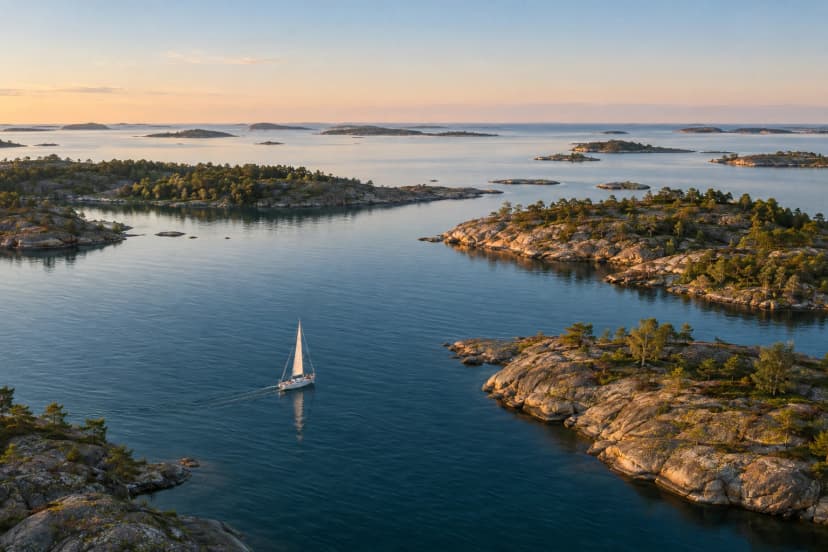
Behind you is a lake with a metre of ice on it. In front of you is salt water that does not freeze and never has, because the current arriving here comes up from the south and is warm enough to prevent it. Same latitude. Two hours apart. It explains most of why the two sides of this border ended up with completely different histories, and it is a better last day than one more night hoping for the sky.
Before you ask
Anything not answered here, ask us directly — we'd rather you did.
Why not stay in one place and drive out to things?
Because you would spend the week in a car, and because it would give away the reason the second half exists. The whole point is that each base is further from the light and deeper into the dry air than the one before, so the odds improve as the week goes on. Doing it from a single hotel means arriving somewhere tired and leaving early, which is exactly the wrong shape for places whose appeal is that nothing is scheduled.
The middle base sounds basic. Is it?
It is, and we have said so on the page rather than in the small print. Shared bathrooms upstairs, self-catering, a shop twenty-five minutes away. We stock the kitchen before you arrive and we would not put you there for the whole week. What you are getting for two nights is an entire house with nobody else in it, thirty kilometres from the nearest streetlight, with reindeer outside the window. If that trade does not appeal, tell us and we will put those two nights in the valley instead — the week still works, it just loses its middle.
Will we definitely see moose?
No. They are wild animals in winter habitat across a large valley, and there are mornings when nobody finds any. One recent guest counted around fifteen and another saw none and still rated the morning highly, which tells you most of what you need to know about how it is run. We will not send you to a fenced enclosure and call it the same thing.
Why is there no night in the ice hotel?
Because we do not think it is a good night's sleep and none of our partners sells one — the ones who work there sell it as a day visit, which is what we do too. An ice room is genuinely extraordinary and genuinely cold, and the pattern is consistent: night one is the story people tell, night two is regret. Go and see it from the village on the second morning, then sleep in a heated cabin. If you want the night anyway, say so and we will arrange it directly, without pretending it was our idea.
How cold does it get, and what should we bring?
Minus ten to minus fifteen through most of this window, past minus twenty on the clear nights, and colder in the open at the eastern end than in the valley. Outer layers and boots are provided rather than bought. Bring thermal base layers, wool in the middle, a hat over your ears, and gloves you can work a camera dial in. The fjord day is the mildest of the week by a wide margin and needs waterproofs more than warmth.
Is it suitable for children?
This is the best of our winter journeys for a family, and the reason is the middle base — a whole house, a kitchen, and reindeer to feed at eight in the morning. The dogs work from about six upwards. The limiting factor is the aurora evenings, where an hour of standing still in the cold is a lot to ask of a small person; we shorten those and lengthen the days. Tell us their ages and we will be specific rather than vague.
Ready when you are
Make it yours
Tell us roughly when you'd like to travel and who's coming, and we'll shape this into something built around you. One conversation is all it takes to start.