Panama is, for almost everyone, a single thing: the canal. The fifty-mile cut across the isthmus that joins two oceans and divides two continents is one of the genuine wonders of engineering, it carries a meaningful fraction of the world's trade, and it is, understandably, the entire idea most of the world has of the country. But it is worth noticing the shape of that idea. The canal is a thing you pass through. The whole point of it is transit, the ship goes in one ocean and comes out the other, and the country in between is something the world has agreed to sail across rather than stop in.
Which is a remarkable thing to have happened to one of the most extraordinary countries in the Americas. Panama is the bridge itself, the narrow neck of land that closed around three million years ago and joined North and South America, in one of the most consequential events in the planet's recent history: it sent the species of two continents flooding across into each other, it redirected the oceans, and it changed the global climate. The legacy of being that bridge is a biodiversity that is almost difficult to credit. This small country holds more species of bird than the United States and Canada combined. Its forests, its highlands, and above all its seas are among the richest on earth.
And the richest part of all is the part almost no visitor reaches. Off the Pacific coast, in the far west, the Gulf of Chiriquí opens into a scatter of forested islands and reefs around Coiba, a marine wilderness so abundant it has been called the Galápagos of Central America, visited twice a year by migrating humpback whales from both hemispheres, and protected as one of the great marine parks of the tropics. It is the Panama the canal traffic never sees, and it is the reason to go.
This is where this begins.
What the country actually is.
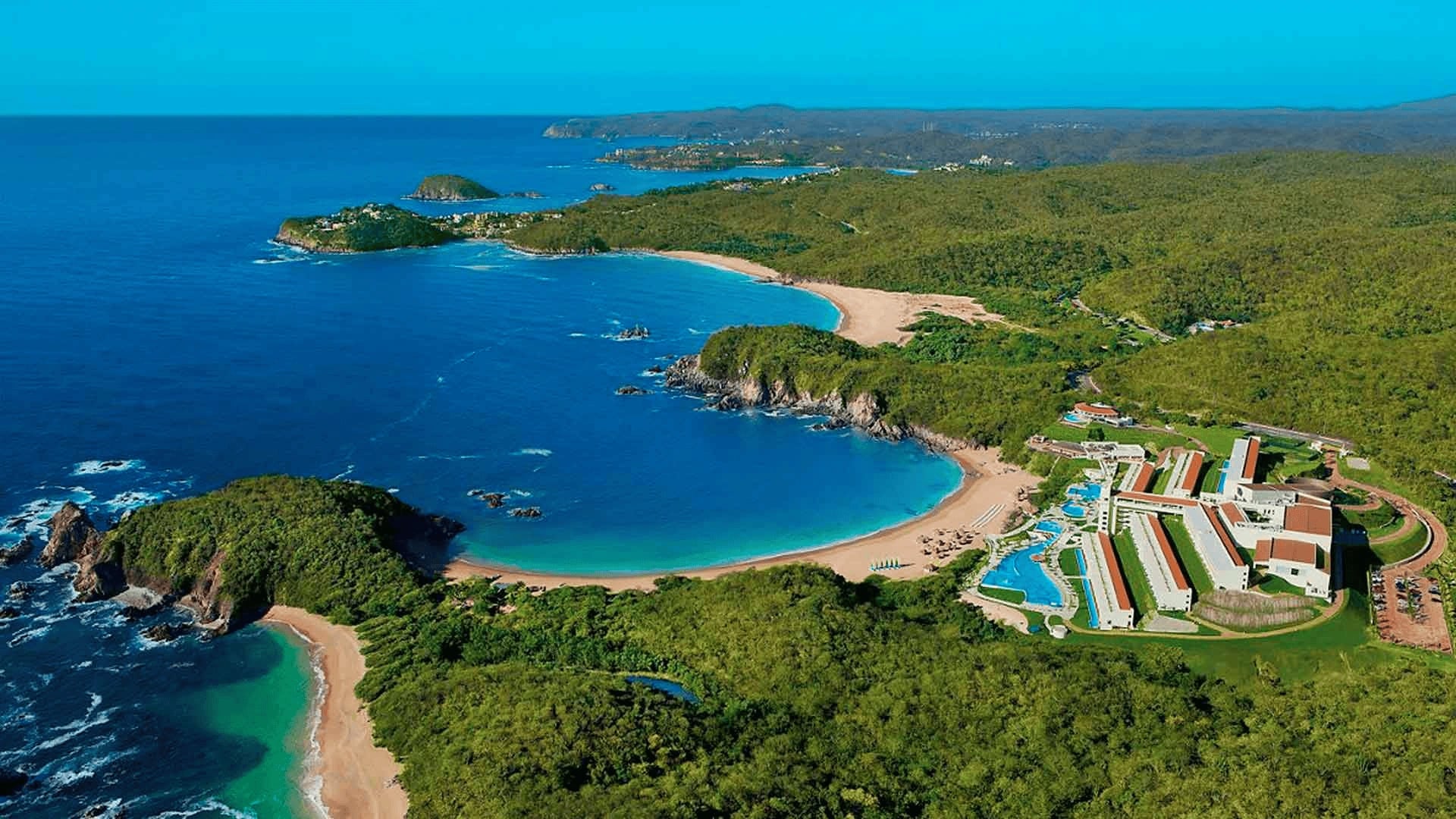
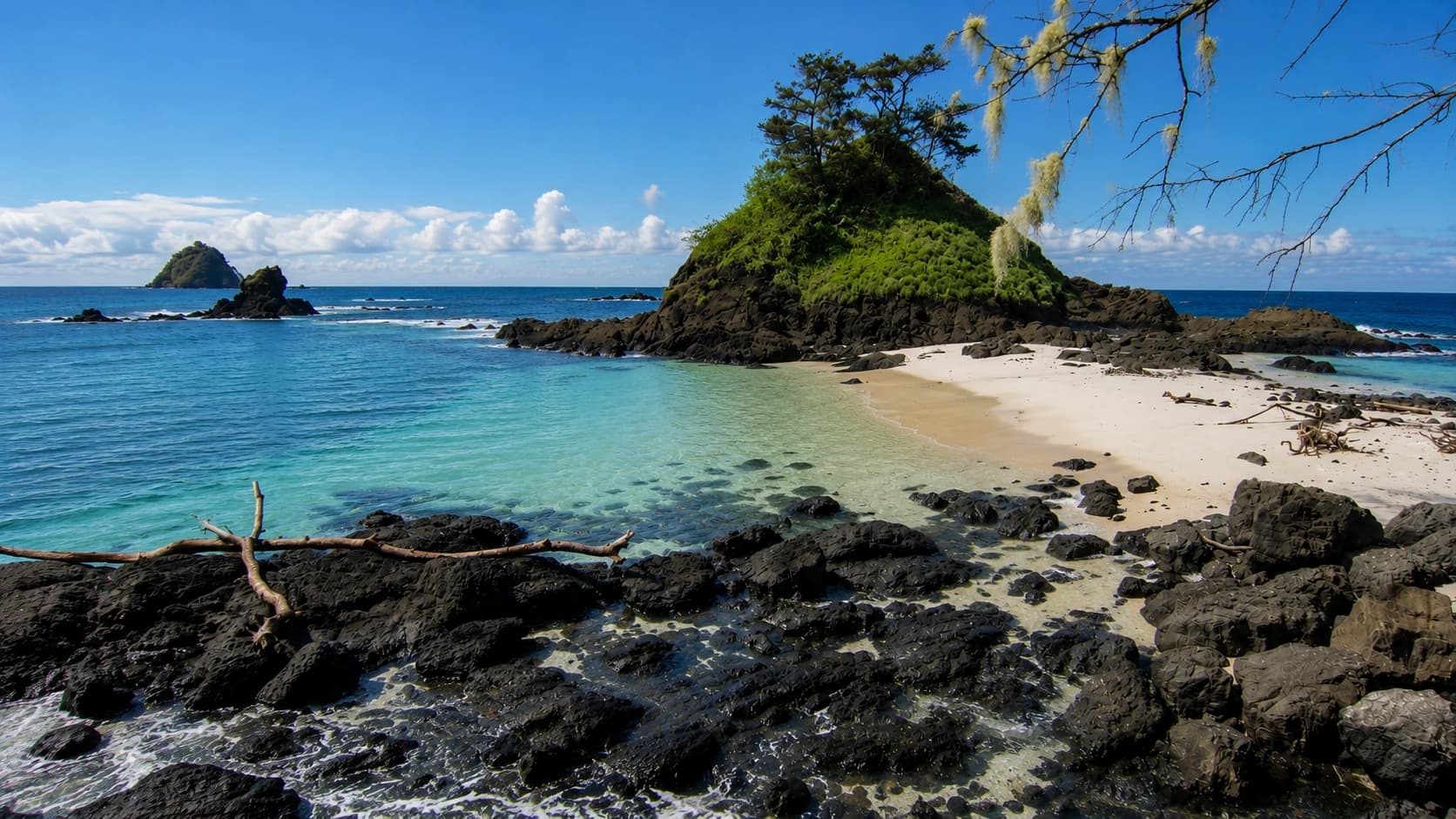
The Gulf of Chiriquí, in the country's Pacific southwest, is a sea of islands, many of them forested, uninhabited, and ringed with reef, lying off a coast once known as Panama's lost coast, the haunt of pirates and smugglers because of how remote and how unwatched it was. At its heart lies Coiba National Park, a UNESCO World Heritage Site built around a large island that served, for most of the twentieth century, as a penal colony, an accident of history that kept it closed to development and left it, when the prison finally emptied, as one of the most intact tropical marine ecosystems left in the eastern Pacific. The waters hold the second-largest coral reef in the eastern tropical Pacific, whale sharks, manta rays, schooling hammerheads, sea turtles, and dolphins, and the fishing grounds offshore, the seamounts and banks where the deep water rises, are among the most storied in the world. From roughly mid-year, the humpback whales arrive to breed, and the gulf becomes one of the great whale-watching seas anywhere.
The rest of the country is, in its way, just as varied. Inland from the Pacific coast, the highlands of Chiriquí rise into cloud forest around Volcán Barú, the country's highest point, from whose summit, on a clear morning, both the Pacific and the Caribbean are visible at once. These are the coffee highlands, and not just any coffee: the region produces the Gesha, the most sought-after and expensive coffee in the world, grown on small farms in the cool of the mountains where the resplendent quetzal also lives. On the Caribbean side, the Guna Yala, the long chain of islands the world still often calls the San Blas, is the autonomous homeland of the Guna people, one of the most self-governing indigenous territories in the Americas, a scatter of small palm islands run on the community's own terms. And in the capital, Casco Viejo, the colonial old town, is a UNESCO-listed quarter of restored Spanish and French buildings looking across the bay at the modern skyline, a short distance from the ruins of the original city sacked by Henry Morgan in the seventeenth century.
“The bridge that joined two continents and divided two oceans. More birds than the United States and Canada combined. A marine wilderness called the Galápagos of Central America. The world only ever sails through.
What the islands hold.
The particular gift of the Gulf of Chiriquí is that its richest waters can be experienced from genuine seclusion. The islands are private and largely undeveloped, vast majorities of them left entirely untouched, so that a base here is not a resort on a busy coast but an island, or a cluster of islands, with the reef, the forest, and the sea largely to itself. The days are spent on the water: diving and snorkelling the reefs of Coiba, watching the whales in season, fishing the legendary banks on a catch-and-release basis, or simply moving between empty beaches by boat. The model, at its best, is low-impact and conservation-minded, solar-powered, lightly built, devoted to protecting the very abundance that is the reason to be there. It is the rare place where genuine luxury and genuine wilderness are the same thing.
How it feels to be there.
On the islands the rhythm is set by the sea and the light. The mornings, when the water is calmest, are for the reef and the open ocean, the dive, the whales, the run out to the fishing grounds. The heat of the middle of the day is for the shade, the hammock, the slow lunch. The late afternoons soften, and the evenings are quiet in a way that only somewhere genuinely remote can be, no town, no traffic, no other lights, the forest noise coming down to the beach and the stars uninterrupted over the Pacific. The contrast with the rest of a Panama trip is the point: the energy of the capital and the canal, the cool and the coffee of the highlands, and then the deep quiet of the islands to end on. The country that the world treats as a place to pass through turns out to be one of the most rewarding in the hemisphere to stop in.
What we look for when we plan a stay here.
Panama rewards a trip that treats the canal as one chapter, worth seeing, genuinely impressive, rather than the whole story, and that gives the islands and the highlands the days they deserve. The right week pairs the Pacific archipelago of the Gulf of Chiriquí, for the marine wilderness and the seclusion, with a leg in the highlands or the capital, depending on the temperament of the trip. The logistics of reaching the islands at the right standard are entirely a matter of the aviation and the people on the ground.
What we look for here: a base in the Gulf of Chiriquí that is private and lightly built, with the reef and the forest largely to itself and the conservation credentials to match the setting. Real access to Coiba and the marine park, the diving, the whales in season, the catch-and-release fishing, guided by people who know the waters. The highlands for the coffee, the cloud forest, and the cool, if the trip wants the contrast. And the whole thing connected by air, so the remoteness is the reward rather than the obstacle.
Through our network we have access to arrangements across the Pacific islands, the highlands, and the capital that sit within this standard, including private-island settings in the Gulf of Chiriquí where the marine wilderness can be had in genuine seclusion. Each is assembled personally, matched to the season and the trip, and handled end-to-end, from the arrival through every flight and boat to the last island.
Who Panama is right for.
Not those who want a polished, conventional beach resort with everything handed to them. Panama is a place for the curious and the active, and its greatest rewards are in the water and the wild rather than on a manicured front.
This is for travellers drawn to the sea, to diving, to whales, to a marine wilderness among the richest left in the tropics, and to genuine remoteness. For families with children old enough to be marked by it: a reef alive with sharks and rays, a whale surfacing off the boat, an island with no one else on it. For couples who want seclusion and nature over a crowded coast. For the naturalist and the angler, for whom the country is among the most rewarding in the Americas. And for the seasoned traveller who has understood that the most interesting place is rarely the one the world has agreed to pass straight through.
The isthmus closed three million years ago and changed the planet, joined two continents, parted two oceans, rerouted the climate of the world. The forests and the seas have been filling with life ever since, into one of the richest biodiversities on earth. The canal that made the country famous is barely a century old, younger than some of the trees on the islands offshore. These scales sit on top of each other across a country the width of which a ship can cross in a day, and the argument for going is the argument for stopping, in the one country the world has only ever sailed across.
When to visit Panama
Panama is tropical and divided into a dry season and a green one. The dry season, roughly mid-December through April, is the prime window for the islands and the coast: sunny, with calmer seas and the clearest water for diving, and the most reliable weather overall. The green season, roughly May through mid-December, brings the rains, usually heavy afternoon showers rather than all-day weather, with the lushest forests, fewer visitors, and lower prices; the diving remains good between fronts. The humpback whales of the Pacific are the great seasonal event, present in the Gulf of Chiriquí from roughly July through October, when both northern and southern populations overlap in these waters, one of the longer whale seasons anywhere. The highlands are cool and spring-like year-round, a relief from the coastal heat. As a general rule, the islands are at their best in the dry months, while the whale season pulls many trips toward the middle of the year.
How to get to Panama
Tocumen International (PTY) at Panama City is the country's gateway and one of the best-connected hubs in the Americas, with direct links across North and South America and to Europe; the capital is where almost every itinerary begins, and the canal and Casco Viejo are worth a day or two in their own right. From the capital, the Pacific islands of the Gulf of Chiriquí are reached by air to the regional gateway at David (DAV) in the west, and then by boat or light aircraft out to the islands; some private island settings are served by their own air link from the capital. The highlands of Boquete lie a short drive from David. The Caribbean islands of Guna Yala are reached by light aircraft or boat from the capital. Private jets route into Tocumen and David and onward to the island strips. We coordinate the international arrival, the internal flights and boat transfers, and the timing of the whole route ourselves.
Where to stay in Panama
A considered Panama itinerary works as a sequence of contrasts, and the best trips use at least two. The Pacific archipelago of the Gulf of Chiriquí is the centrepiece, the private islands, the marine park of Coiba, the whales and the reef, and the natural place to give the most days. The highlands of Chiriquí are the cool counterpoint, the coffee, the cloud forest, the quetzals. The capital, with the canal and the colonial old town, is the arrival and the hub. And the Caribbean islands of Guna Yala are the option for those who want the most remote and indigenous-run corner of the country. A week pairs the islands with one other leg; a longer trip takes in three.
We do not publish a property list. The island settings, lodges, and city stays we arrange across the country are matched once the brief is clear, the private island in the gulf for the marine wilderness, the highland lodge for the coffee and the cool, the right base in the capital for the canal and the old town. What we will say is that the right Panama trip is almost never the one that only sees the canal. It is the one that follows the country past it, out to the islands the world sails by.