



Made by HandYear round
Silversmithing
A day at a silversmith's bench in Swedish Lapland, sawing, filing and soldering a ring or pendant of your own.
A working tradition, not jewellery
Sámi silver is a working tradition rather than a jewellery one. The old pieces are collar brooches, belt fittings and spoons, and much of the silver a family owned was wealth that could be worn, moved and pawned — which is why the forms are heavy and the craftsmanship is in the joins.
The characteristic detail is a hanging fringe of small conical drops that move and chime. They are not decorative in origin: the sound was the point.
There is also pewter thread work, which is silver's poorer and more beautiful relation — pewter drawn into a wire fine enough to be couched onto reindeer leather in patterns, and the single most recognisable Sámi craft.
Sawing, filing, and heat
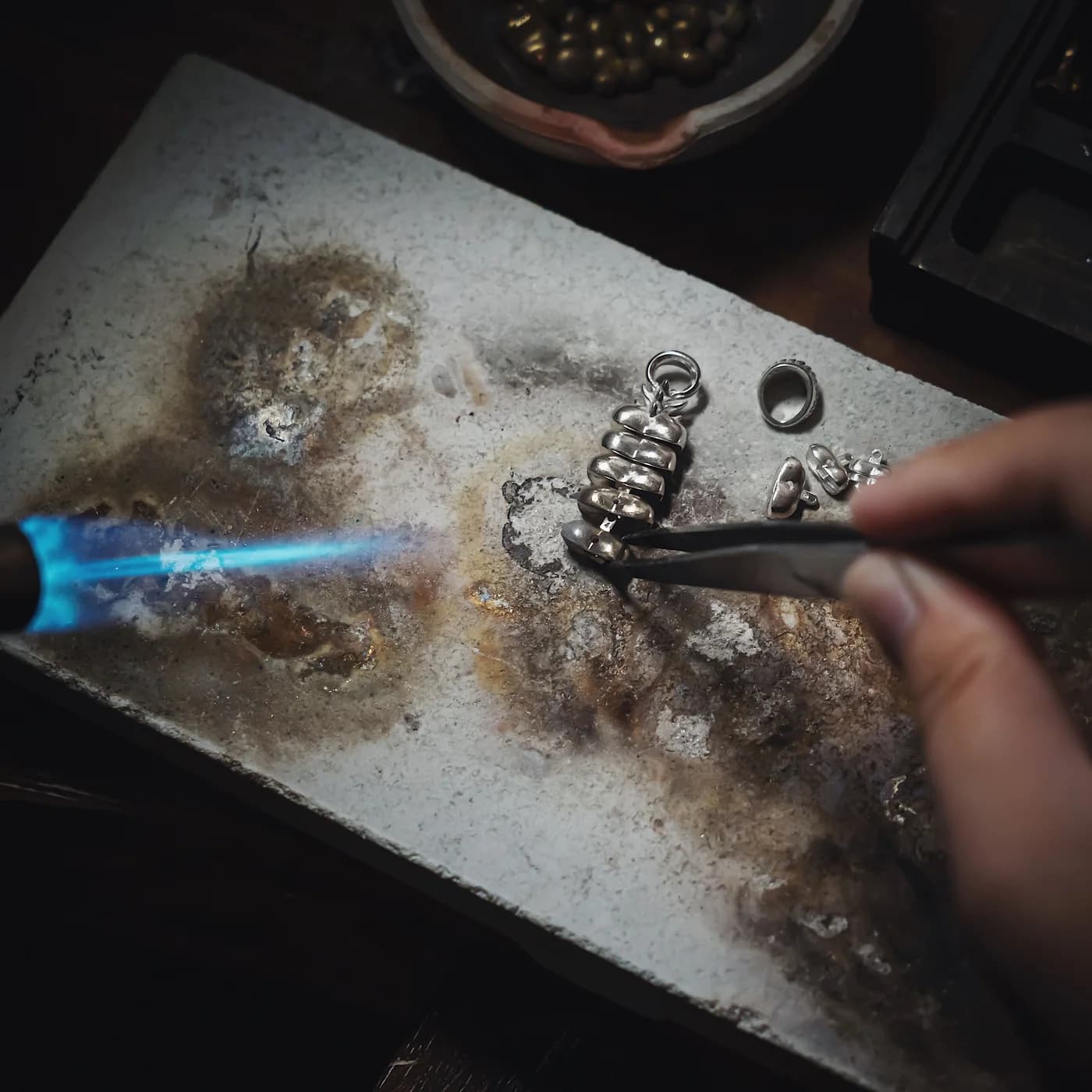
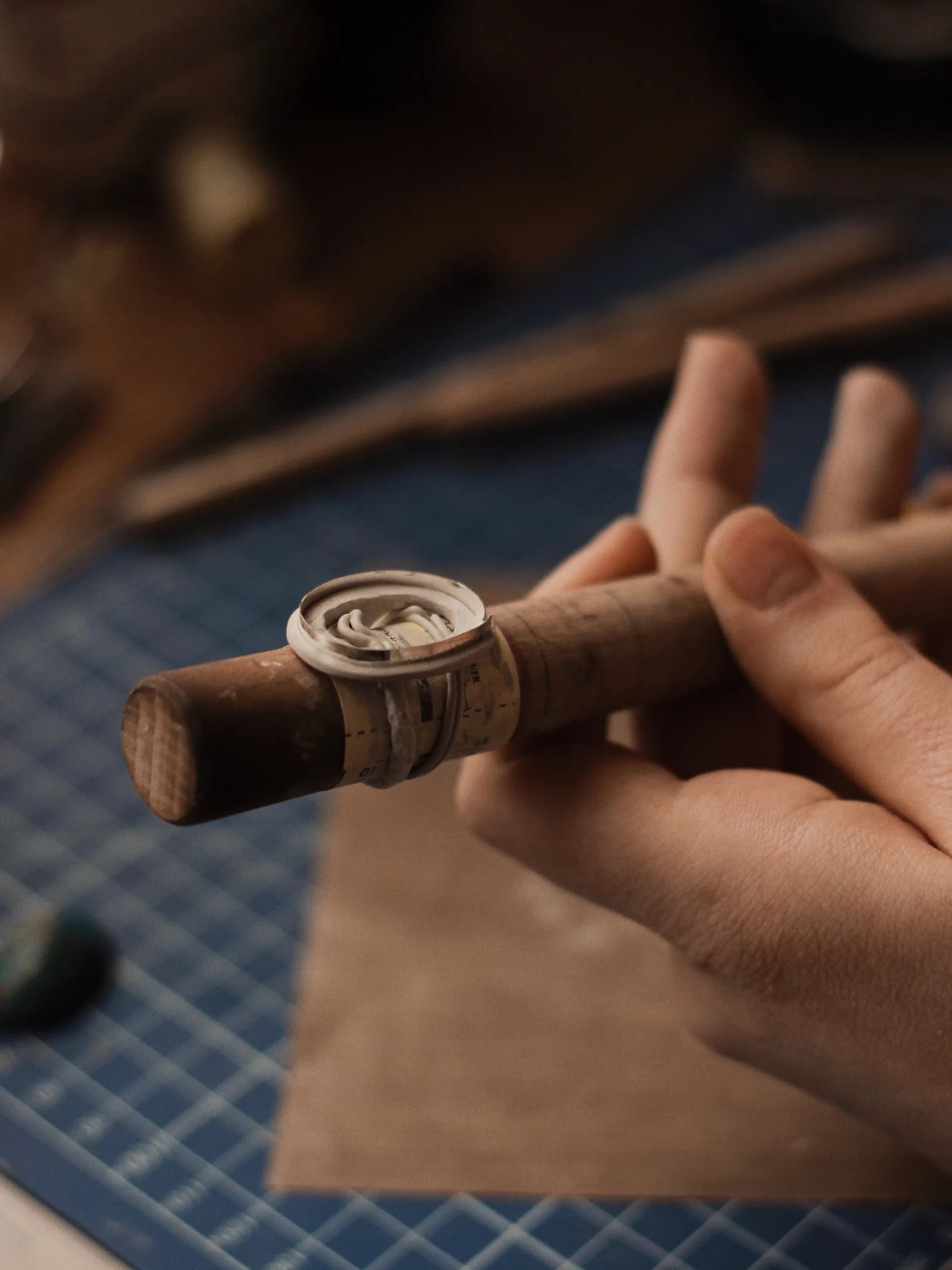
A day at a bench will get you a ring or a simple pendant, and will teach you the three things everything else is built from: sawing accurately, filing patiently, and soldering without melting what you have made.
Silver is forgiving. It can be annealed and reworked more or less indefinitely, which means most mistakes are recoverable and the ones that are not are dramatic.
Year round. If you want a piece made in the Sámi tradition by a Sámi maker, that is a different arrangement and needs notice, and it comes with the maker's mark.
Before you ask
Silversmithing: common questions
Anything not answered here, ask us directly — we'd rather you did.
What can you make in a one-day silversmithing class?
A ring or a simple pendant. The day teaches the three things everything else is built from: sawing accurately, filing patiently, and soldering without melting what you have made.
Is silversmithing hard for beginners?
Silver is forgiving. It can be annealed and reworked more or less indefinitely, so most mistakes are recoverable, and the ones that are not are dramatic.
What is traditional Sámi silver?
A working tradition rather than a jewellery one: collar brooches, belt fittings and spoons, heavy in form, worn as wealth that could be moved and pawned. Its signature is a hanging fringe of small conical drops that move and chime; the sound was the point.
Can you commission a piece from a Sámi silversmith?
Yes, but it is a different arrangement from the bench day and needs notice. A piece made in the Sámi tradition by a Sámi maker comes with the maker's mark.