



Made by HandYear round
Glassblowing
An hour at the furnace in Småland's glass country, blowing your own lopsided piece with a glassmaker ready to rescue it.
Fourteen glassworks since 1742
The glass country is a stretch of forest in Småland with fourteen glassworks still in it and a continuous history since 1742. At the end of the nineteenth century there were seventy-seven glass factories in Sweden and more than half were here, because the forest supplied the fuel and the sand was underfoot.
Most have closed. The ones that remain are smaller than they were and are kept alive by design, tourism and stubbornness in roughly equal parts.
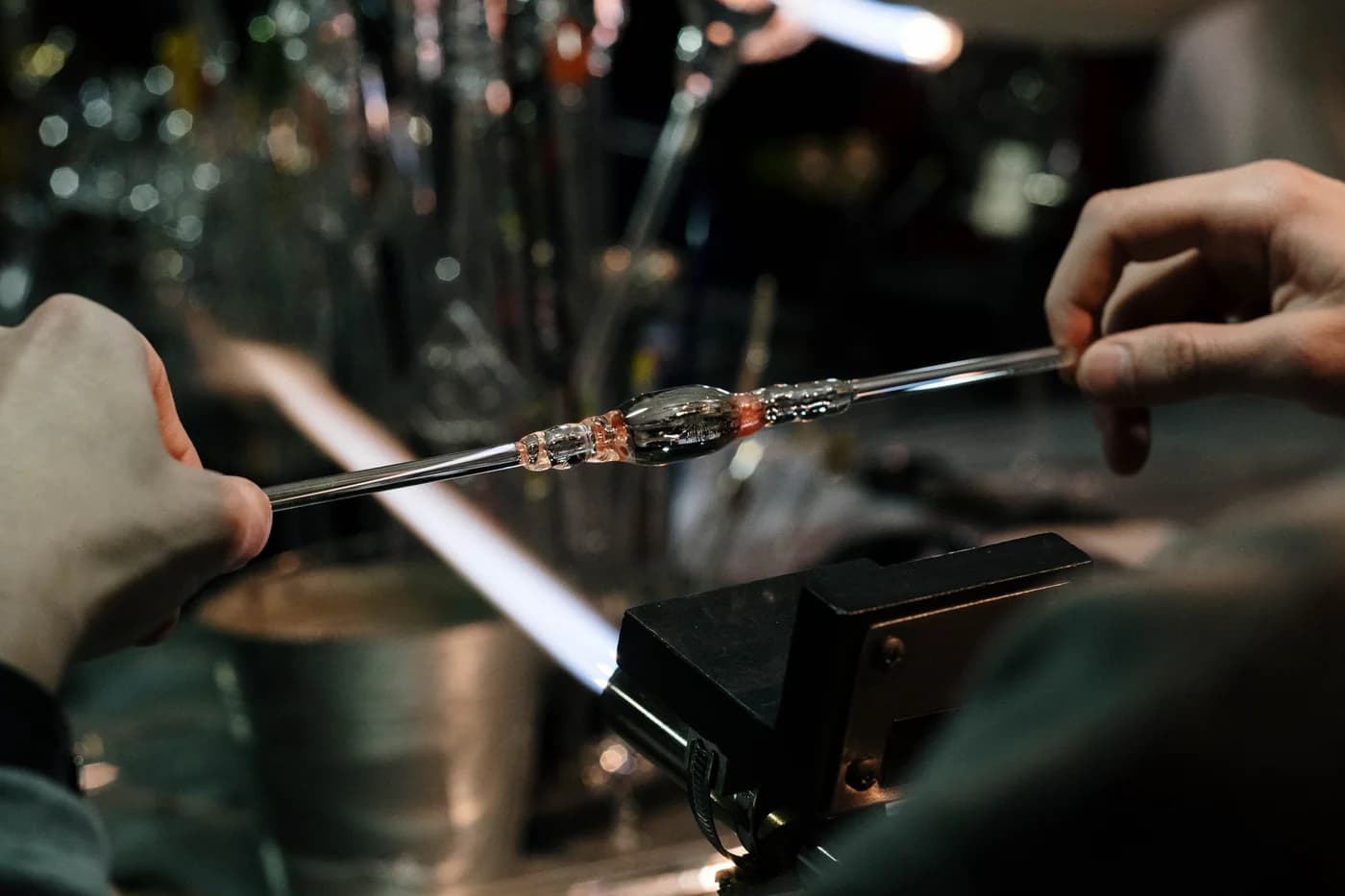
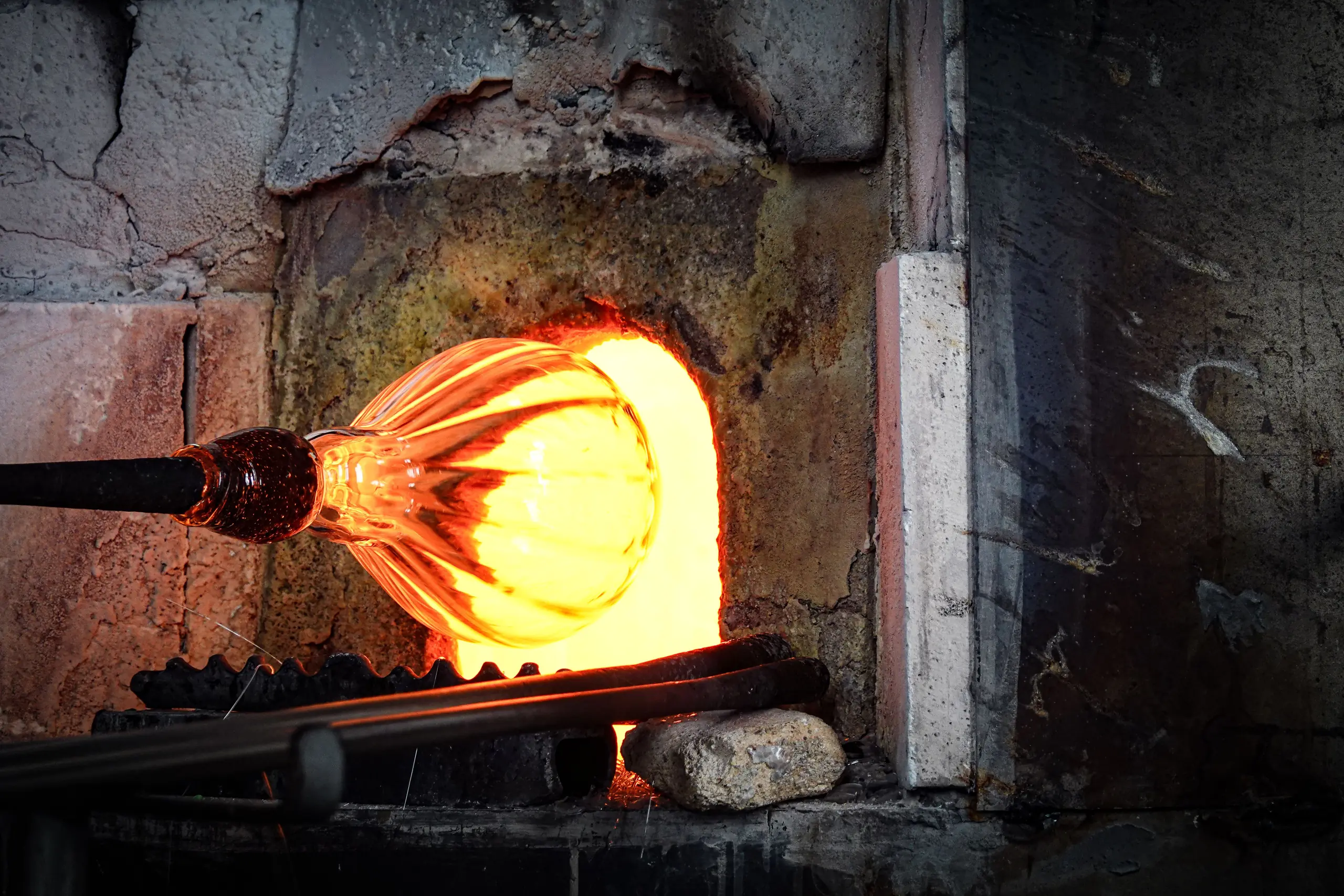
Blowing your own is an hour of being much too close to a furnace, learning that molten glass behaves like honey and never stops moving. You gather, you turn constantly, you blow when told, and somebody more competent rescues it at three separate points.
Yours will be lopsided
What you make will be lopsided. Everybody's is. It goes into the annealing oven overnight to cool slowly — glass that cools fast shatters — so you collect it the next day or it is posted on.
There is an old thing worth asking about called hyttsill, which is supper eaten in the glassworks itself, cooked in the furnace, from the days when the hot shop was the warmest room in the parish and people came to sit in it. Several works still do it and it is better than it sounds.
Year round. The hot shop is a straightforwardly excellent place to be in February.
Before you ask
Glassblowing: common questions
Anything not answered here, ask us directly — we'd rather you did.
Where is the glass country in Sweden?
A stretch of forest in Småland with fourteen glassworks still in it and a continuous history since 1742. At the end of the nineteenth century there were seventy-seven glass factories in Sweden, and more than half were here, because the forest supplied the fuel and the sand was underfoot.
Can you blow your own glass in Småland?
Yes. It is an hour of being much too close to a furnace: you gather, you turn constantly, you blow when told, and somebody more competent rescues it at three separate points. What you make will be lopsided. Everybody's is.
Can you take your glass home the same day?
No. It goes into the annealing oven overnight to cool slowly, because glass that cools fast shatters. You collect it the next day, or it is posted on.
What is hyttsill?
Supper eaten in the glassworks itself and cooked in the furnace, from the days when the hot shop was the warmest room in the parish. Several works still do it, and it is better than it sounds.