



City & HistoryYear round
Sigtuna & Drottningholm
Six hours by private car from Stockholm: Sweden's oldest town in the morning, the royal palace on Lake Mälaren in the afternoon.
The first town
Sigtuna was founded in the late 900s on an inlet of Lake Mälaren, and calls itself Sweden's oldest town. The first Swedish coins were struck here, the first Christian kings built their churches here, and the town has kept its shape: Stora gatan, the main street, still runs where the first one did, lined with low wooden houses and cafés.
You are collected from your hotel in Stockholm and driven north, about forty-five minutes. In Sigtuna there is time to walk the old centre properly: the ruins of three stone churches, St Olof, St Per and St Lars; St Mary's, the brick church the Dominicans built; and some thirty runestones, set along the streets and in the churchyards.
A guide who reads runes turns them from grey stones into sentences — who raised them, for whom, and what they wanted remembered. For the longer story of the Viking age around the lake, our Vikings in Sweden guide has it.
Along the lake to the palace
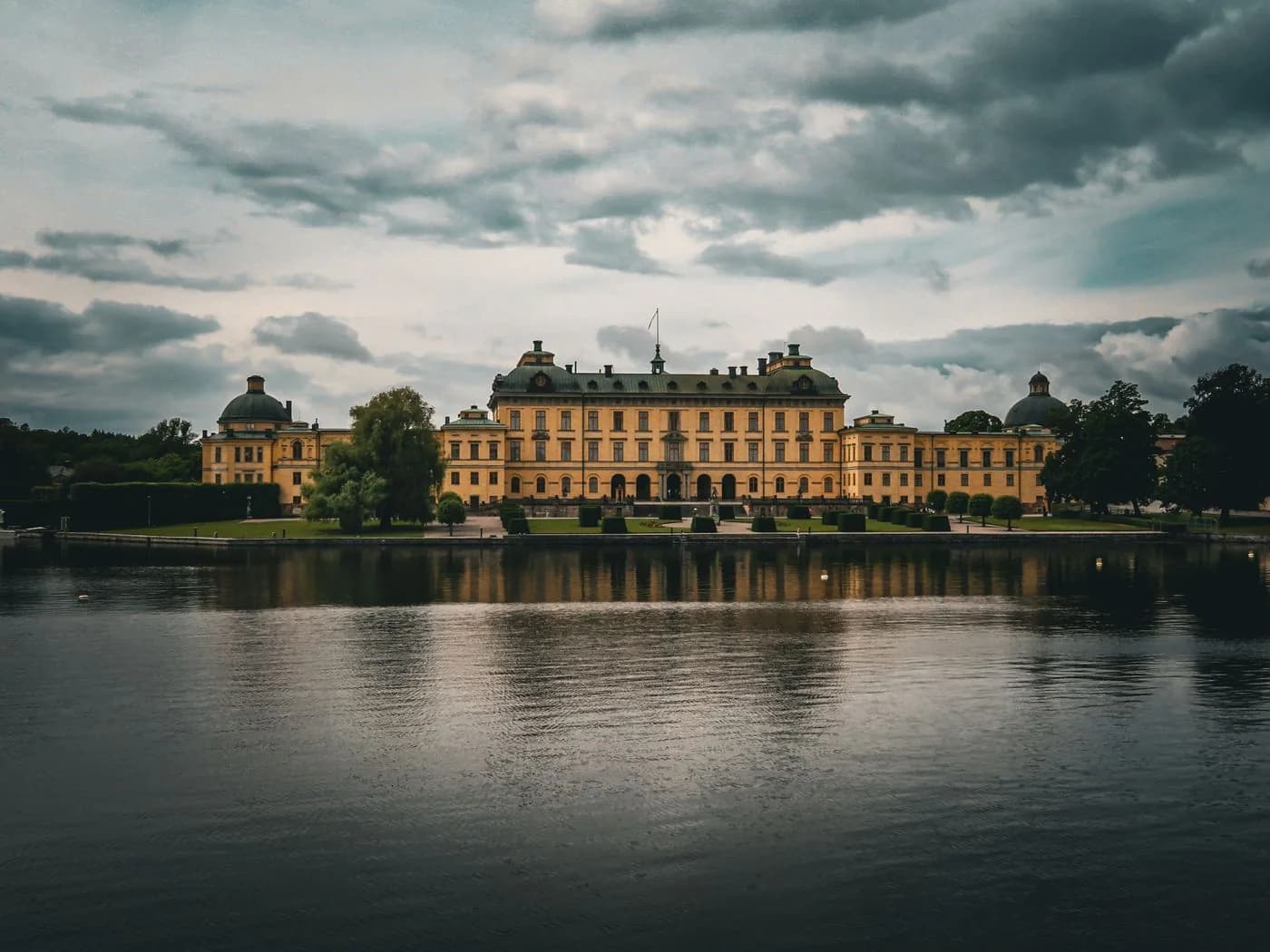
From Sigtuna it is another forty-five minutes to Drottningholm, on an island in Mälaren just west of the city. The palace was built in the 1600s as a summer residence for Sweden's queens, the royal family has lived in part of it since 1981, and together with its theatre, its Chinese Pavilion and its gardens it is a UNESCO World Heritage Site.
The park and gardens are open all year and are worth an hour on their own: a formal baroque garden in front of the palace, and an English landscape park of canals and small islands beyond it.
The palace rooms are the part to plan around. They open daily in summer, but for much of the rest of the year only at weekends, and they close for most of December. We check the dates before we propose a day, so the palace is not a locked door when you arrive.
The theatre and the pavilion
Two buildings in the grounds are why many people come. The Palace Theatre, from 1766, still has its original wooden stage machinery, worked by hand, and still stages opera in summer. The Chinese Pavilion was a birthday present to Queen Lovisa Ulrika in 1753: a rococo dream of China, filled with porcelain and lacquer.
Both keep their own, shorter seasons. The theatre is shown by guided tour from late spring to early autumn, and the pavilion opens in summer. Outside those months you see both from the outside, which is still worth the walk across the park.
Six hours is about two of driving and four of looking. If you want long visits inside the palace, the theatre and the pavilion as well as Sigtuna, make it a longer day rather than a faster one. Then back into Stockholm, about twenty-five minutes, to the door you left from.
Before you ask
Sigtuna & Drottningholm: common questions
Anything not answered here, ask us directly — we'd rather you did.
Can you visit Sigtuna and Drottningholm in one day?
Yes, comfortably, by car. Six hours is about two of driving and four of looking, collected from your hotel in Stockholm and brought back to it. If you want long visits inside the palace, the theatre and the pavilion as well, make it a longer day rather than a faster one.
How far is Sigtuna from Stockholm?
About forty-five minutes north by car. From Sigtuna to Drottningholm is another forty-five minutes, and from Drottningholm back into central Stockholm about twenty-five.
What is there to see in Sigtuna?
Stora gatan, the main street, which still runs where the first one did; the ruins of three stone churches, St Olof, St Per and St Lars; St Mary's, the brick church the Dominicans built; and some thirty runestones set along the streets and in the churchyards. Our Vikings in Sweden guide has the longer story.
Is Drottningholm Palace open in winter?
The park and gardens are open all year. The palace rooms open daily in summer, but for much of the rest of the year only at weekends, and they close for most of December. We check the dates before we propose a day.
Can you see the Palace Theatre and the Chinese Pavilion?
In season. The theatre is shown by guided tour from late spring to early autumn, and the pavilion opens in summer. Outside those months you see both from the outside, which is still worth the walk across the park.