



Wild Ice & SaunaJan – Mar
Nordic Skating
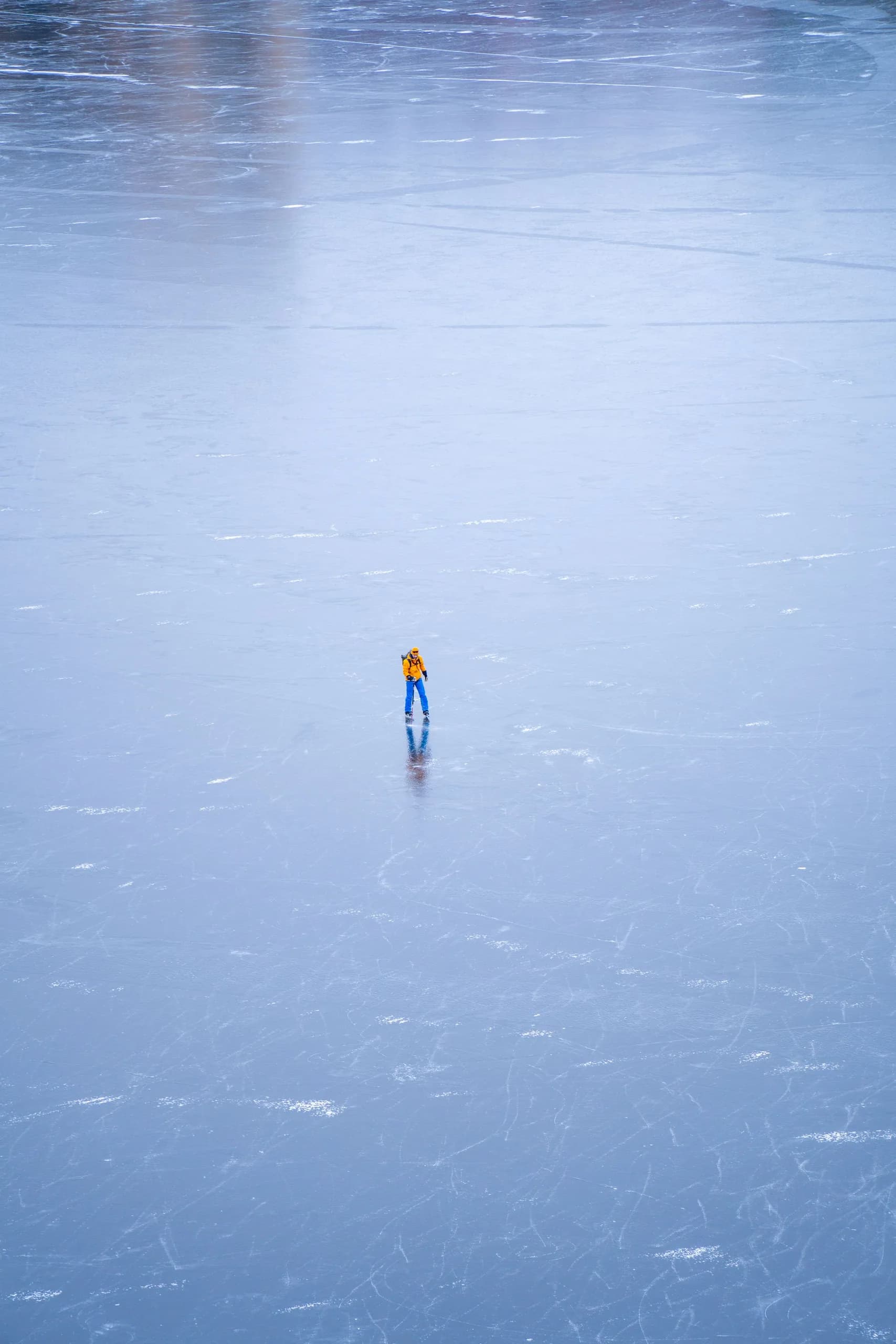
A day on long Nordic blades across wild lake ice, on water the guide chose that morning from the whole region's freeze.
The blade is the difference
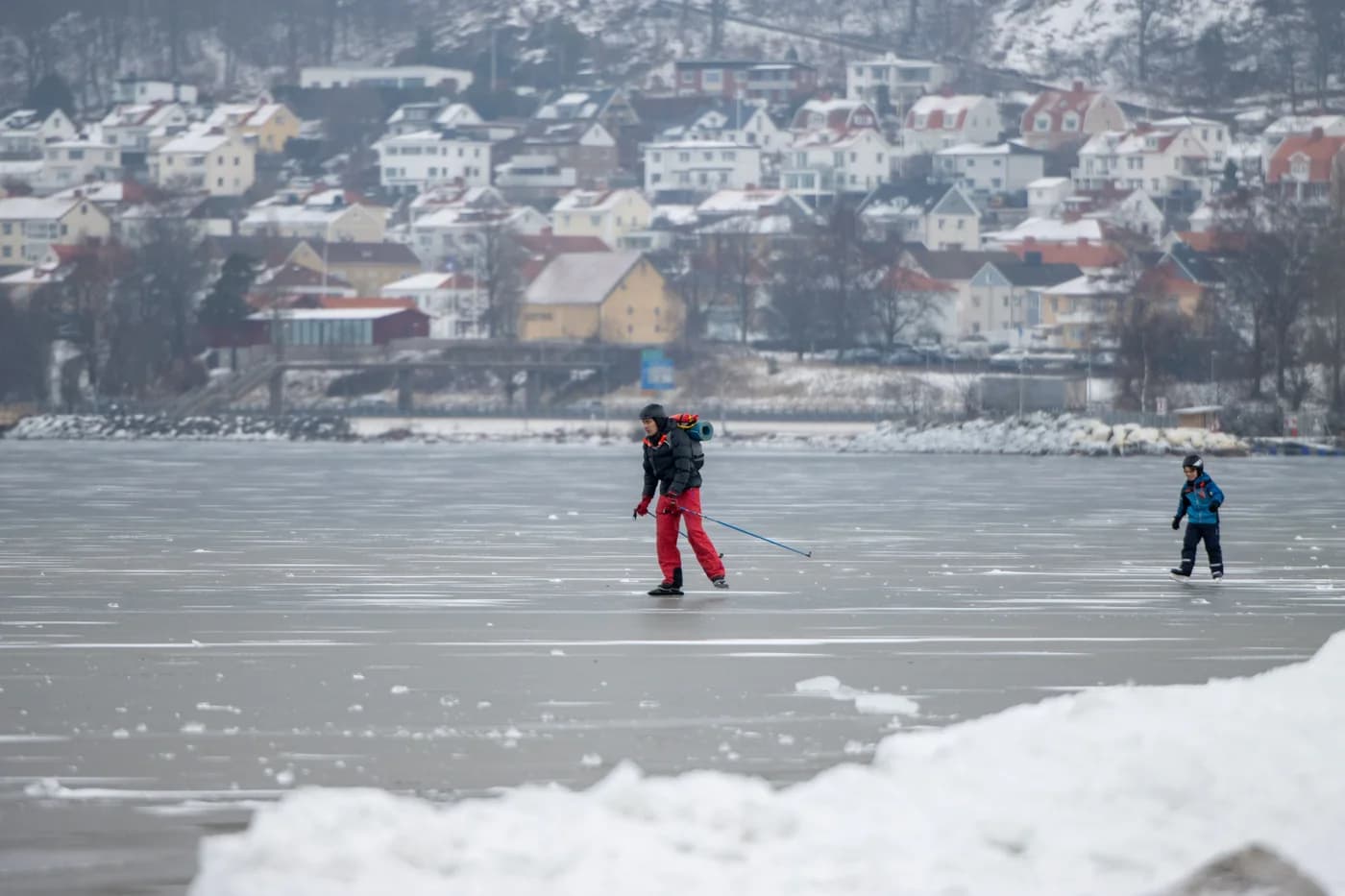
The blade is the whole difference. A Nordic touring skate is forty to fifty centimetres long and clips onto a ski-touring boot, so your ankle is supported and your foot can lift at the heel. It glides where a hockey skate digs, and it is the reason people cover thirty or forty kilometres in a day out here rather than circling a rink.
If you can skate at all, you can do this within an hour. If you cannot, the flat is forgiving and the falls are slow.
The kit is not decorative. Ice claws on a cord round your neck to haul yourself out, a pole to sound the ice ahead, a throw line, and a drybag in the rucksack holding a full change of clothes — which doubles as flotation. Everyone carries all of it, guide included, every time.
Nobody picks the lake early
Nobody decides on Tuesday where Saturday's skating happens. The guide reads the freeze across a whole region and picks the water on the morning, which is why this is planned as a day rather than a place.
Falling through is the thing people ask about. It is a normal part of the sport rather than a disaster — you go in, the claws come off your neck, you kick and haul out onto the ice you came from, and you change into the dry clothes in the bag. Guides rehearse it deliberately, and some will have you do it once in controlled conditions so the first time is not a surprise.
Cold water shock is the real hazard, and it passes in about a minute. Knowing that is most of the training.
Before you ask
Nordic Skating: common questions
Anything not answered here, ask us directly — we'd rather you did.
What is Nordic skating?
Skating on a touring blade forty to fifty centimetres long that clips onto a ski-touring boot, so your ankle is supported and your heel can lift. It glides where a hockey skate digs, which is why people cover thirty or forty kilometres in a day rather than circling a rink.
Do I need to be able to skate already?
If you can skate at all, you can do this within an hour. If you cannot, the flat is forgiving and the falls are slow.
What happens if you fall through the ice?
It is a normal part of the sport rather than a disaster. You go in, take the claws from round your neck, kick and haul out onto the ice you came from, and change into the dry clothes in your bag. The cold-water shock is the real hazard, and it passes in about a minute.
What safety kit do you carry?
Ice claws on a cord round your neck, a pole to sound the ice ahead, a throw line, and a drybag holding a full change of clothes, which doubles as flotation. Everyone carries all of it, guide included, every time.