



Wild Ice & SaunaNov – Apr
Baltic Cold Plunge
A winter dip in the brackish Baltic at close to zero degrees, with the first minute explained before you go in.
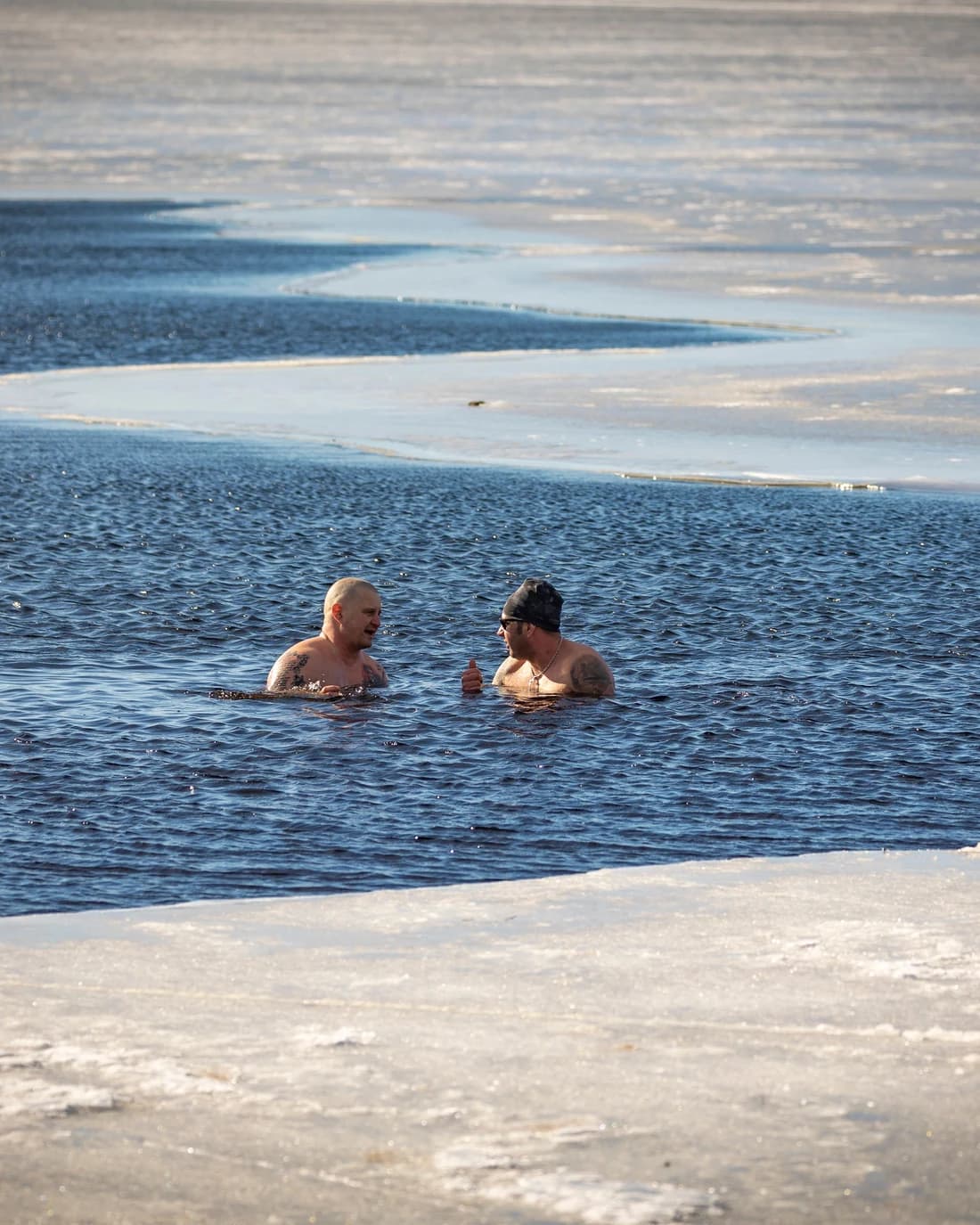
Brackish, and close to zero
The Baltic is brackish, so it freezes at around minus half a degree rather than minus two, and in the weeks either side of the freeze the water sits at zero to four degrees. That is cold enough that the first entry is involuntary rather than decided.
What happens is physiology and it is worth knowing in advance. Below fifteen degrees the body answers with a hard gasp and then breathes far faster than you would choose. Heart rate and blood pressure go up. It settles after roughly a minute.
Which is why the instruction is always the same: go in slowly, breathe out longer than you breathe in, and do not put your head under. Nothing about it is a test of nerve. It is a minute of noisy biology and then it stops.
Stay in less time than you think
Stay in less time than you think. A minute is a full immersion, thirty seconds is not a failure, and coming out before you are cold is the correct call rather than the timid one — the chill keeps deepening for a while after you are dry.
Get dressed immediately and in order: top half first, hat on, then the rest. Shivering afterwards is normal and warming up on your own is the point, so hot drinks rather than a hot shower.
Tell us beforehand about heart conditions, high blood pressure, pregnancy or any medication affecting circulation, and we will pass it to the host. Most of the time the answer is still yes, with a shorter dip.
Before you ask
Baltic Cold Plunge: common questions
Anything not answered here, ask us directly — we'd rather you did.
How cold is the Baltic Sea in winter?
In the weeks either side of the freeze the water sits at zero to four degrees. The Baltic is brackish, so it freezes at around minus half a degree rather than minus two.
What happens to your body in very cold water?
Below fifteen degrees the body answers with a hard gasp and then breathes far faster than you would choose, and heart rate and blood pressure go up. It settles after roughly a minute. Go in slowly, breathe out longer than you breathe in, and keep your head above water.
How long should a cold plunge last?
Less time than you think. A minute is a full immersion and thirty seconds is not a failure. Come out before you are cold, because the chill keeps deepening for a while after you are dry.
How do you warm up after a cold plunge?
Dress immediately and in order: top half first, hat on, then the rest. Shivering afterwards is normal. Hot drinks rather than a hot shower.
What should I tell you before a cold plunge?
Tell us beforehand about heart conditions, high blood pressure, pregnancy or any medication affecting circulation, and we will pass it to the host. Most of the time the answer is still yes, with a shorter dip.