



Wild Ice & SaunaYear round
Floating Sauna
A wood-fired sauna on the water, lit hours before you arrive, with a hatch in the floor and the water beneath it.
The fire, lit hours before you
The stove is lit a couple of hours before you arrive, and that is not ceremony. A wood-fired sauna cannot be hurried — the stones have to take the heat and hold it, and the room has to dry out around them. An electric heater reaches temperature in twenty minutes and feels like it. This one does not.
Somebody keeps feeding it while you are in there, which is the job nobody mentions: a log every so often, the door open for a second, and the heat stepping up a little each time rather than sitting flat.
You smell it before you feel it. Birch smoke, hot pine, wet wood. The walls of a sauna that has been used for years stop smelling of anything else.
Bring nothing. Towels are there, water is there, and the only decision left to you over the next two hours is whether you are getting into the hole in the floor.
The room, and its etiquette
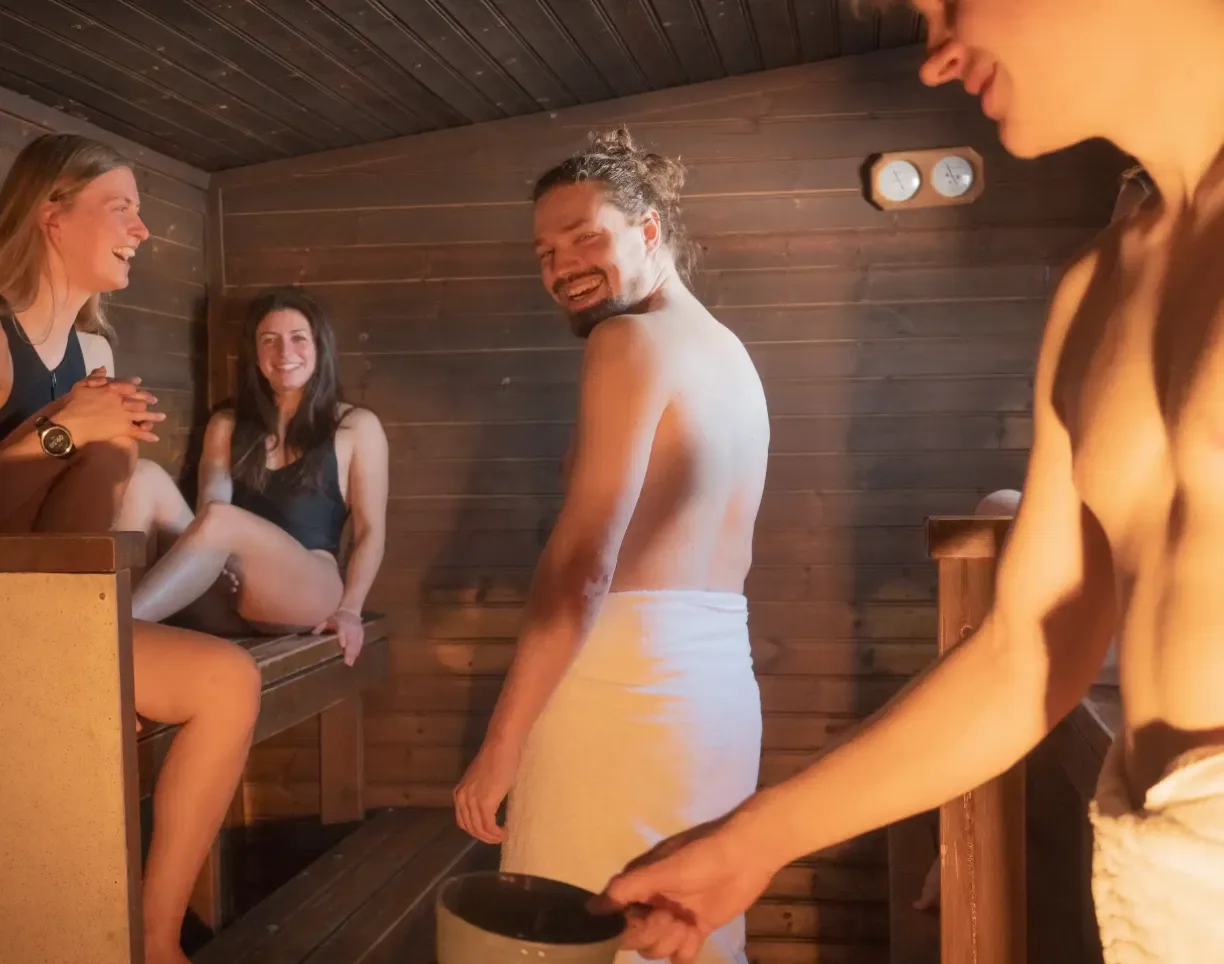
A Swedish bastu runs cooler and wetter than a Finnish sauna — roughly seventy to a hundred degrees against Finland's eighty to a hundred and ten — and the difference is not academic. More water on the stones, less dry scorch, and a room you can hold a conversation in.
The conversation is more or less the point. Swedes sit in here with colleagues, in-laws and strangers, and the etiquette that makes that work is short: a towel under you, eyes up, voices down.
Swimwear is normal in Sweden and nobody will look twice either way. That is the one real departure from Finland, where it usually is not worn. Mixed company is the default rather than the exception.
Nobody will tell you when to come out. You go when you have had enough, which is sooner than you expect the first time and later every time after.
The hatch in the floor
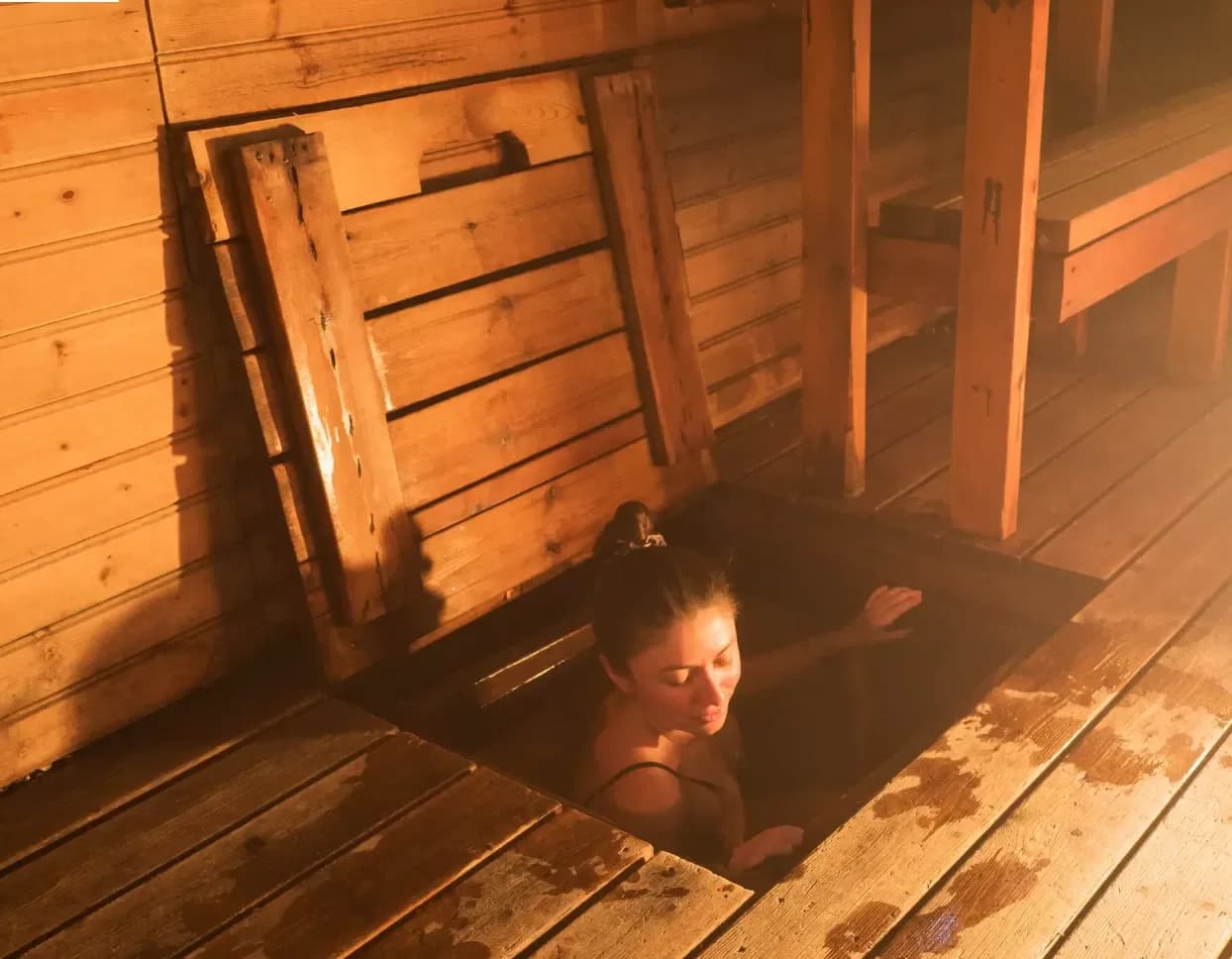
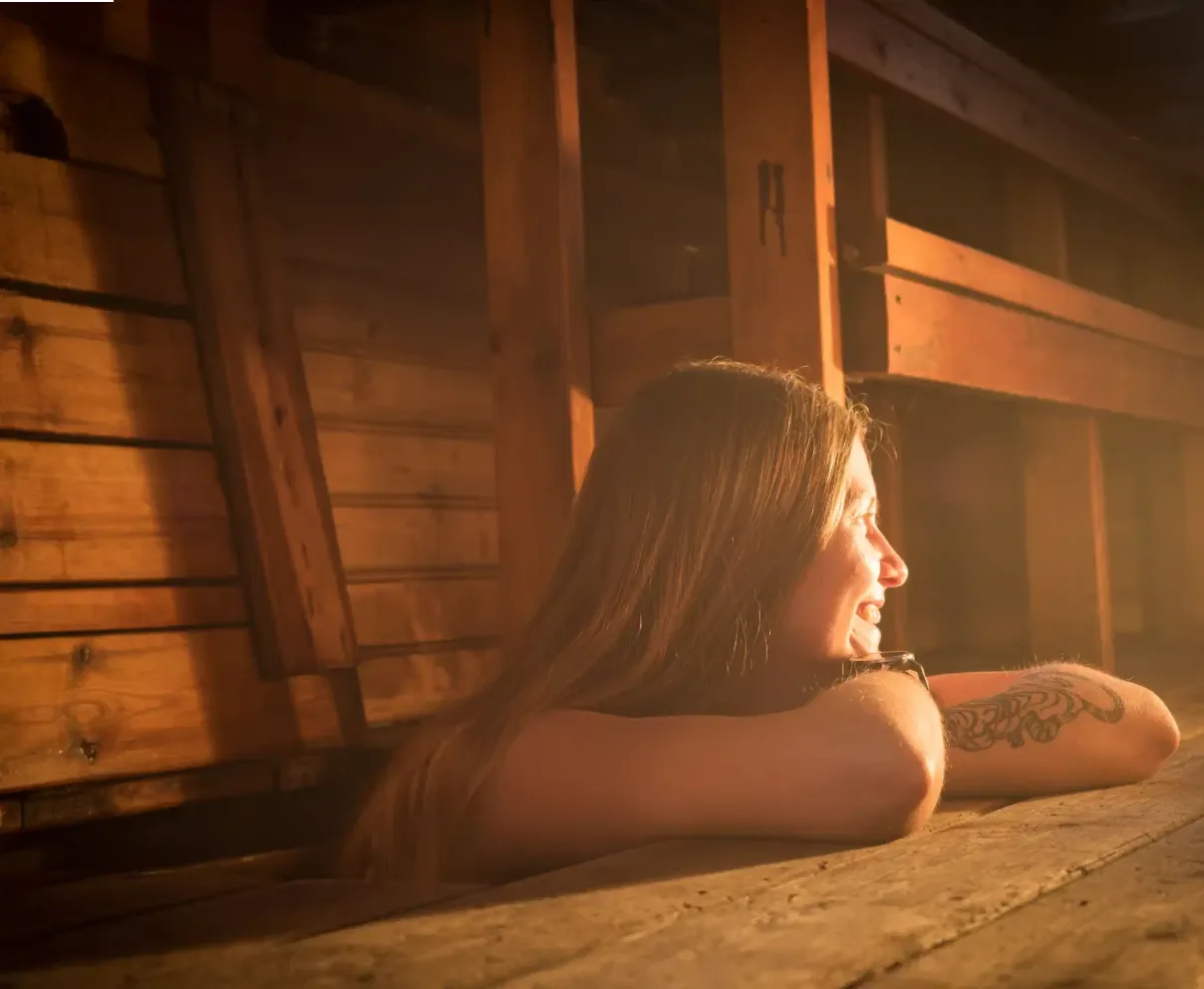
There is a hatch in the floor, and under it the water sits somewhere between four degrees and nothing.
The first fifteen seconds are not a test of character, they are physiology. Below fifteen degrees the body answers with an involuntary gasp and then breathes far faster than you would choose. It settles after about a minute. Knowing that in advance is most of the trick — you are not doing it wrong, and it is going to stop.
Down the ladder, not in off the edge. Stay less time than you think: a minute is plenty, thirty seconds is not a failure, and you come out before you are cold rather than after. Tell us about any heart condition or blood-pressure medication beforehand and we will pass it on.
Then the bench, and the part nobody photographs — twenty minutes of sitting still, feeling disproportionately pleased about very little.
Before you ask
Floating Sauna: common questions
Anything not answered here, ask us directly — we'd rather you did.
What is the difference between a Swedish and a Finnish sauna?
A Swedish bastu runs cooler and wetter: roughly seventy to a hundred degrees, against Finland's eighty to a hundred and ten. There is more water on the stones and less dry scorch, which makes it a room you can hold a conversation in.
Do you wear swimwear in a Swedish sauna?
Swimwear is normal in Sweden and nobody will look twice either way. That is the one real departure from Finland, where it usually is not worn. Mixed company is the default rather than the exception.
How long should you stay in cold water after a sauna?
Less time than you think: a minute is plenty, and thirty seconds is not a failure. The gasp in the first fifteen seconds is physiology, not nerve, and it settles after about a minute. Go down the ladder rather than in off the edge, and come out before you are cold.
What do I need to bring?
Nothing. Towels and water are there. Do tell us beforehand about any heart condition or blood-pressure medication, and we will pass it on.