Animals, and their schedule
The Dogs' Week
Five nights, two of them at a shared wilderness camp with no electricity and no running water, where the animals' needs set the schedule instead of yours.
What you'll remember
- Two nights at a camp with no electricity and no running water, where the water for the sauna comes out of the lake
- Driving a team you harnessed yourself, for a full day rather than a demonstration lap
- Feeding, watering and bedding down sixty-odd dogs before anyone thinks about dinner
- A wood-fired sauna beside a frozen lake, heated with water you carried
The story
Nobody eats until the dogs have eaten, and by the second morning you have stopped thinking of that as an inconvenience.
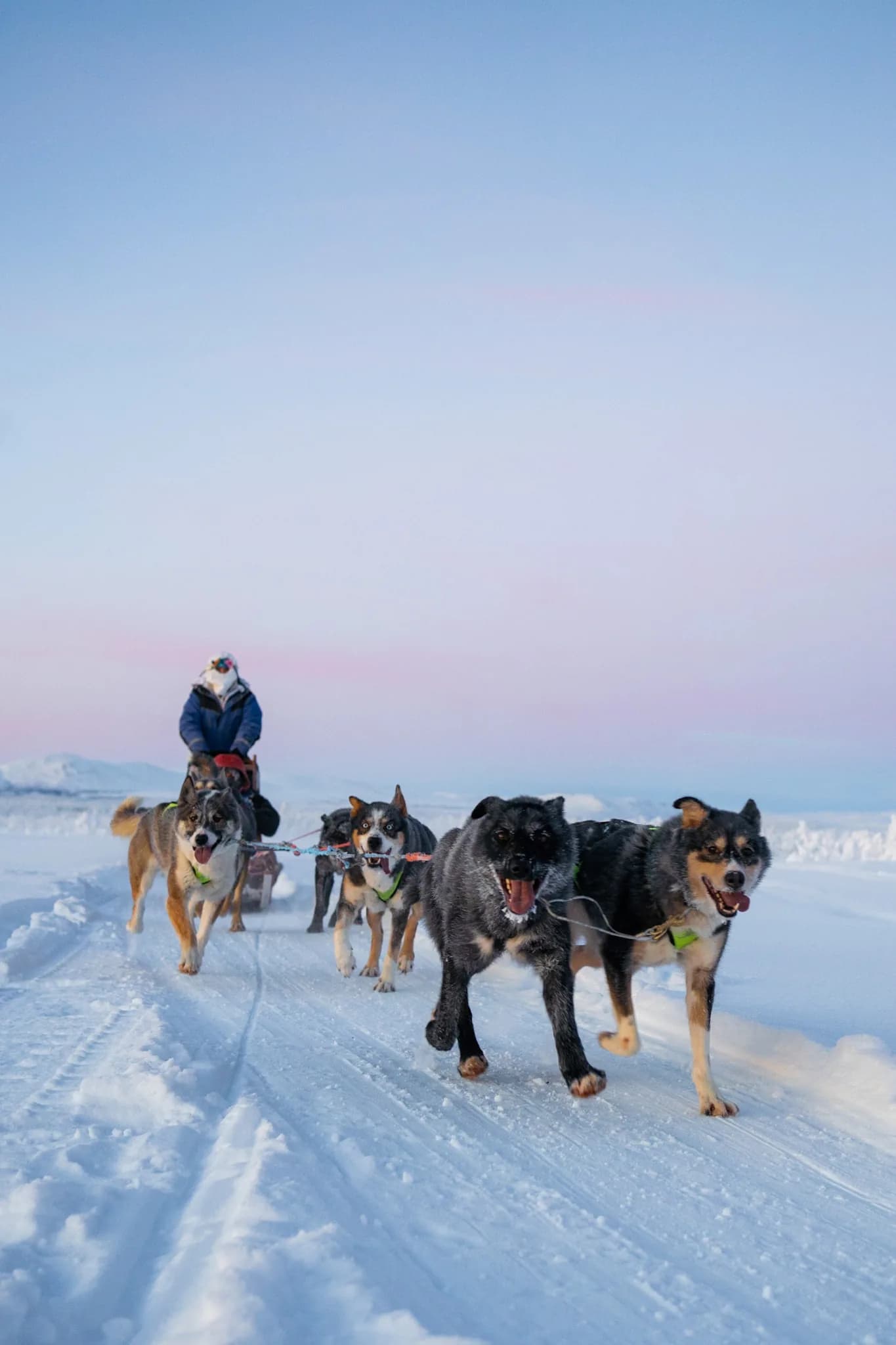
Almost every dog-sledding product in the north is an hour and a half, a photograph and a hot drink. This is not that, and the difference is not length — it is that for two days in the middle of this week you are not a guest.
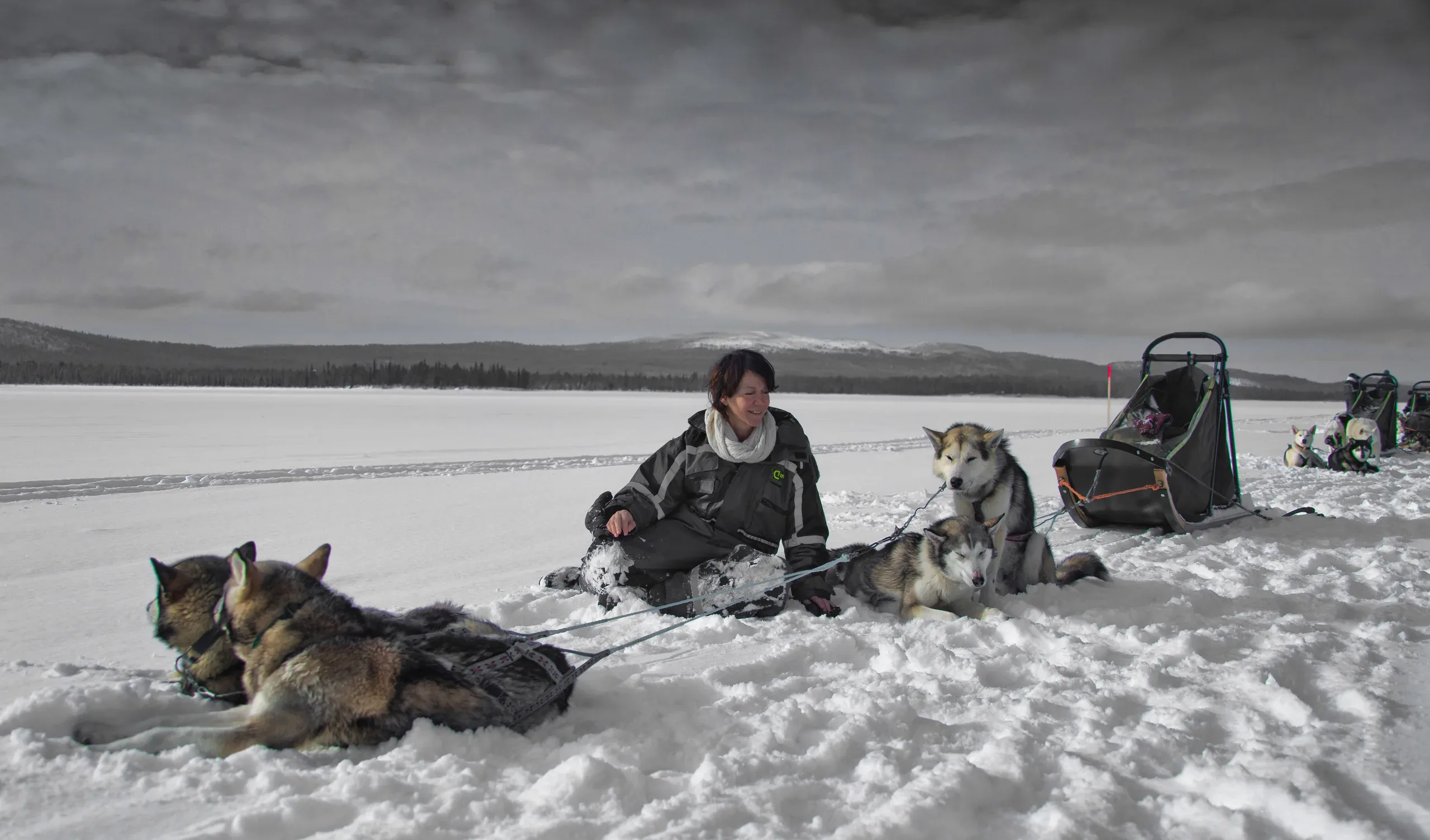
The camp sits by a frozen lake and has no electricity and no running water. Water for the dogs, for cooking and for the sauna is collected from the lake through a hole in the ice, which means somebody carries it, and that somebody is you. Fires are made. Food is cooked rather than served. An axe gets used. Around sixty to seventy-five dogs live at the kennel this runs out of, and a working team's needs come first in a way that reorders the whole day within about four hours of arriving.
It is the most physically involved journey we sell and the one people describe first afterwards. It is also five nights rather than three, because the two nights at the camp are considerably better if you have already met the dogs, and because coming straight back to an airport after them is a waste of what the week does to you.
The camp runs Friday to Sunday, so the week starts on a Wednesday, and it takes six guests — occasionally eight — which means you may share it unless you book it privately.
This is a curated journey we can arrange. Book it as designed, tailor it around your dates, your pace and who is coming, or use it as the starting point for something new.
Where you'll be
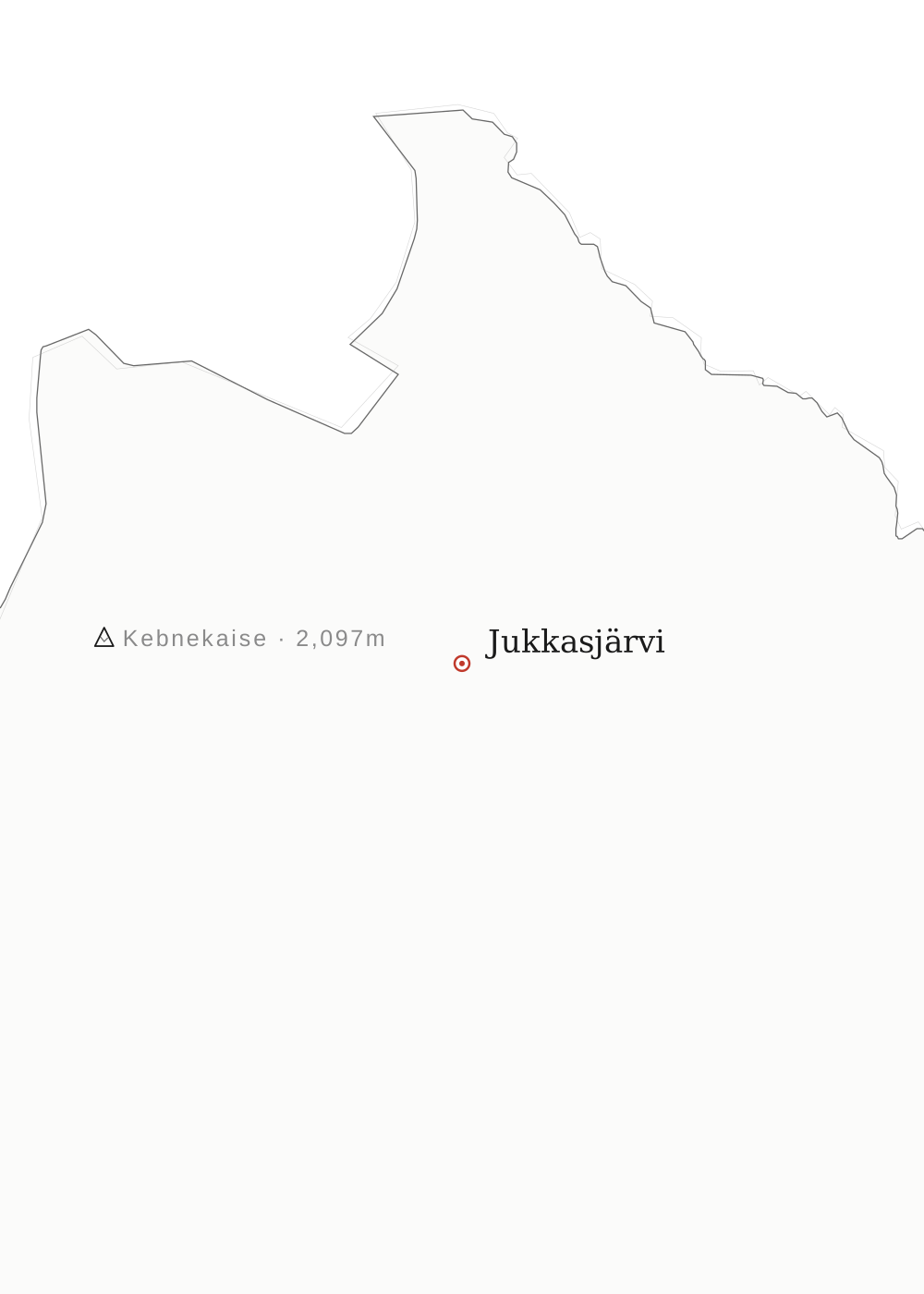
Five nights, of which two are out at a wilderness camp reached by sled and not shown on this map. Only the village at the start and end of the week is mapped here.
- JukkasjärviSwedish Lapland
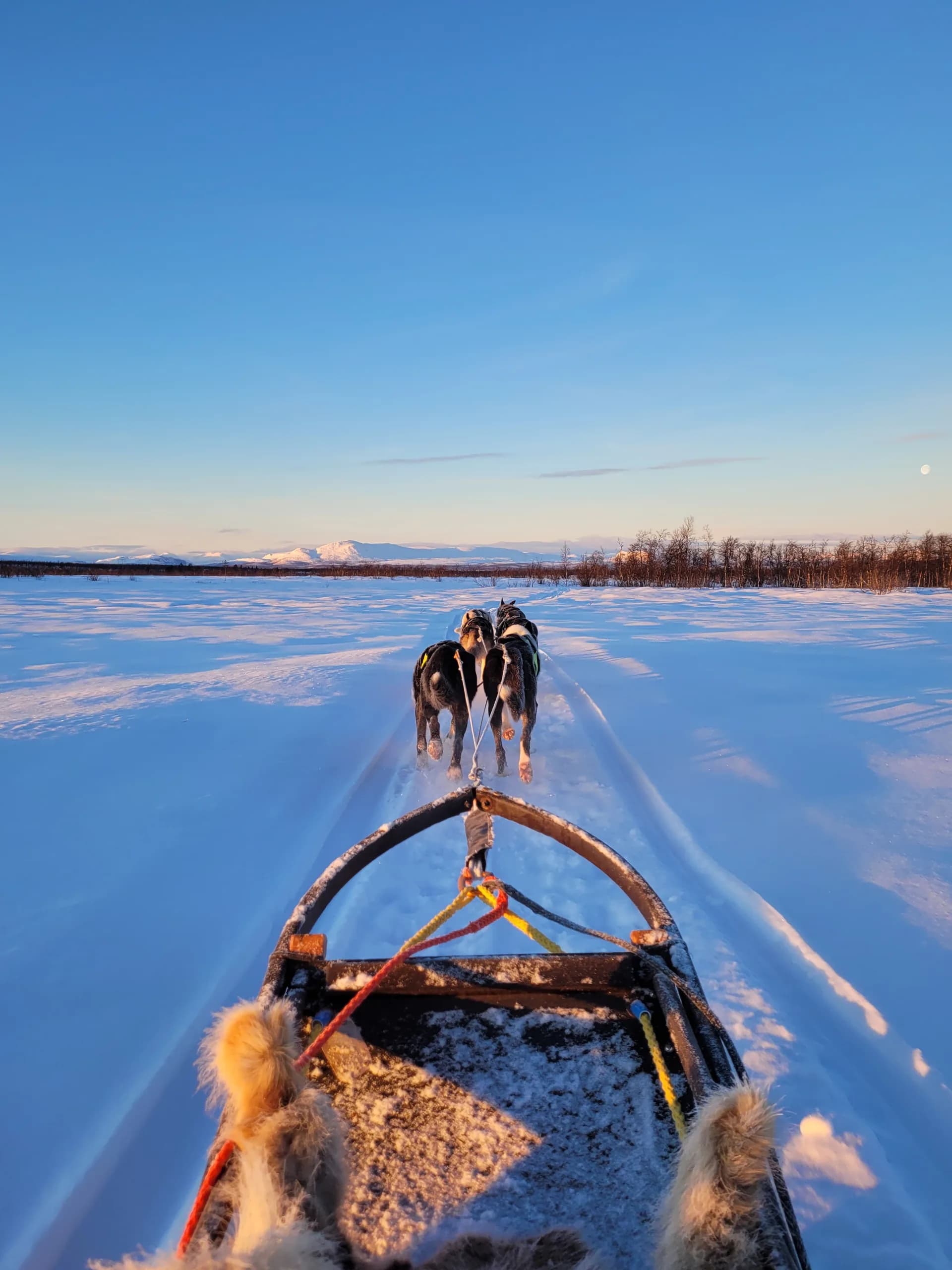
Laxforsen, outside Jukkasjärvi
Learning which dogs are which
Fifteen minutes from the airport, on the river, at a kennel that has been family-run for over a decade. The first two days are the apprenticeship, and they are not a formality: harnessing a team is a genuine skill, and doing it badly in front of sixty dogs who know you are doing it badly is a specific kind of education.
You do a half day and then a full day with lunch out in the forest, driving your own sled with two of you sharing and swapping. By the end of the second day you can get a team out of the yard without help, which is the entry requirement for the rest of the week rather than an achievement in itself.
The evenings are warm and heated and there is a shower, and you should use both, because there will not be another one until Sunday.
The wilderness camp
Two days on the dogs' clock
You leave on Friday morning with the teams and you get back Sunday around midday, and in between there is no power and no tap. This is the part of the journey that is not for everyone and we would much rather you knew the details now.
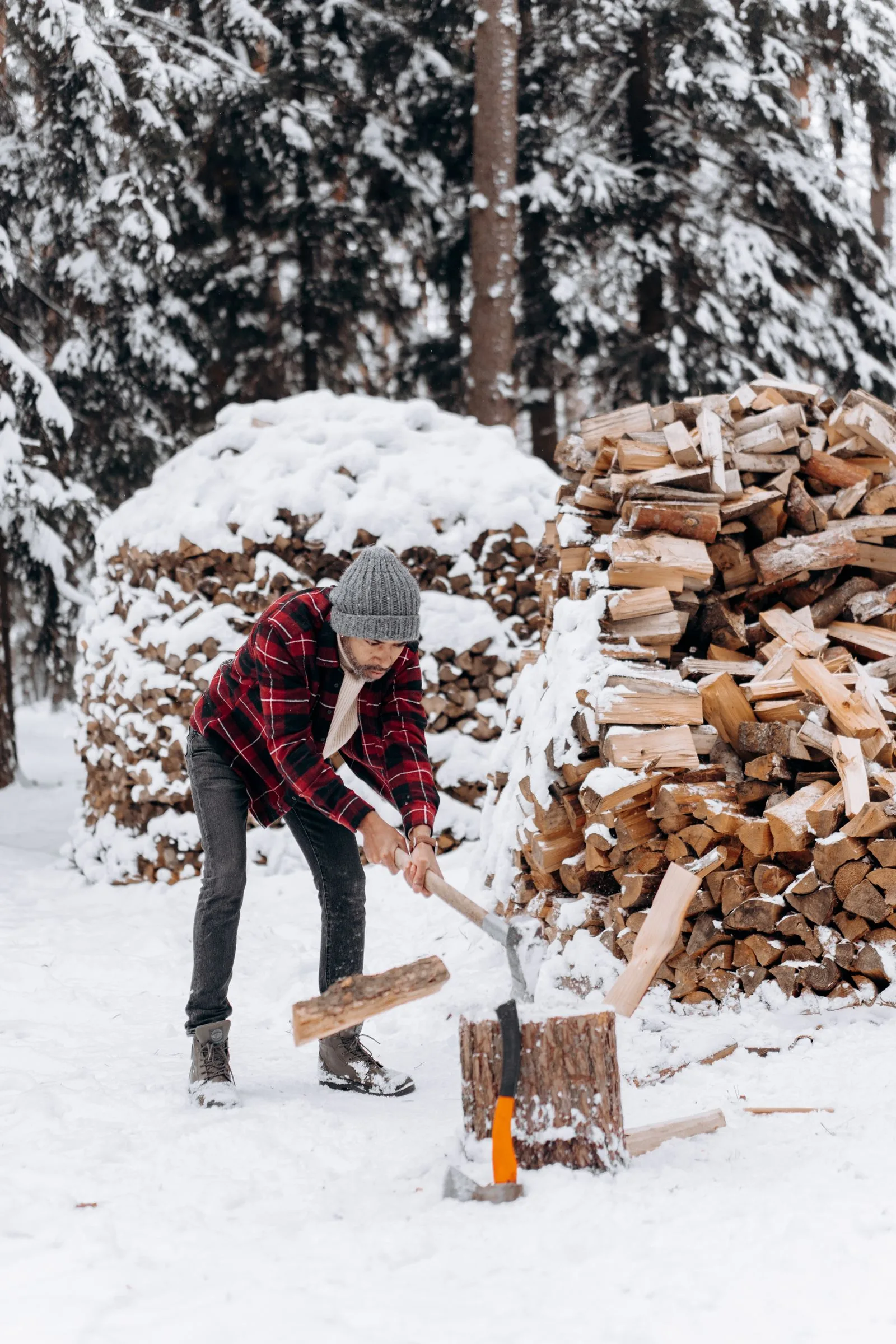
The camp is beside a lake. Water comes up through the ice in buckets — for the dogs first, then for cooking, then for the sauna, in that order and not negotiable. You will collect it. You will help cook. You will make and feed a fire, and at some point you will use an axe, probably badly. Sixty animals get fed, watered, checked and bedded down before any human sits down, twice a day, and the second evening you will do most of it without being asked.
And then there is a sauna by a frozen lake, heated with water you carried, at the end of a day you spent outdoors doing something real. Nobody who has done it has needed the connection between those two facts explained.
Back at the river
The night you notice what you have done
Back to the heated cabin, a long shower, and one night that has nothing scheduled in it at all. This is not padding. Coming off two days at the camp straight into an airport queue is the single most common way to waste this week.
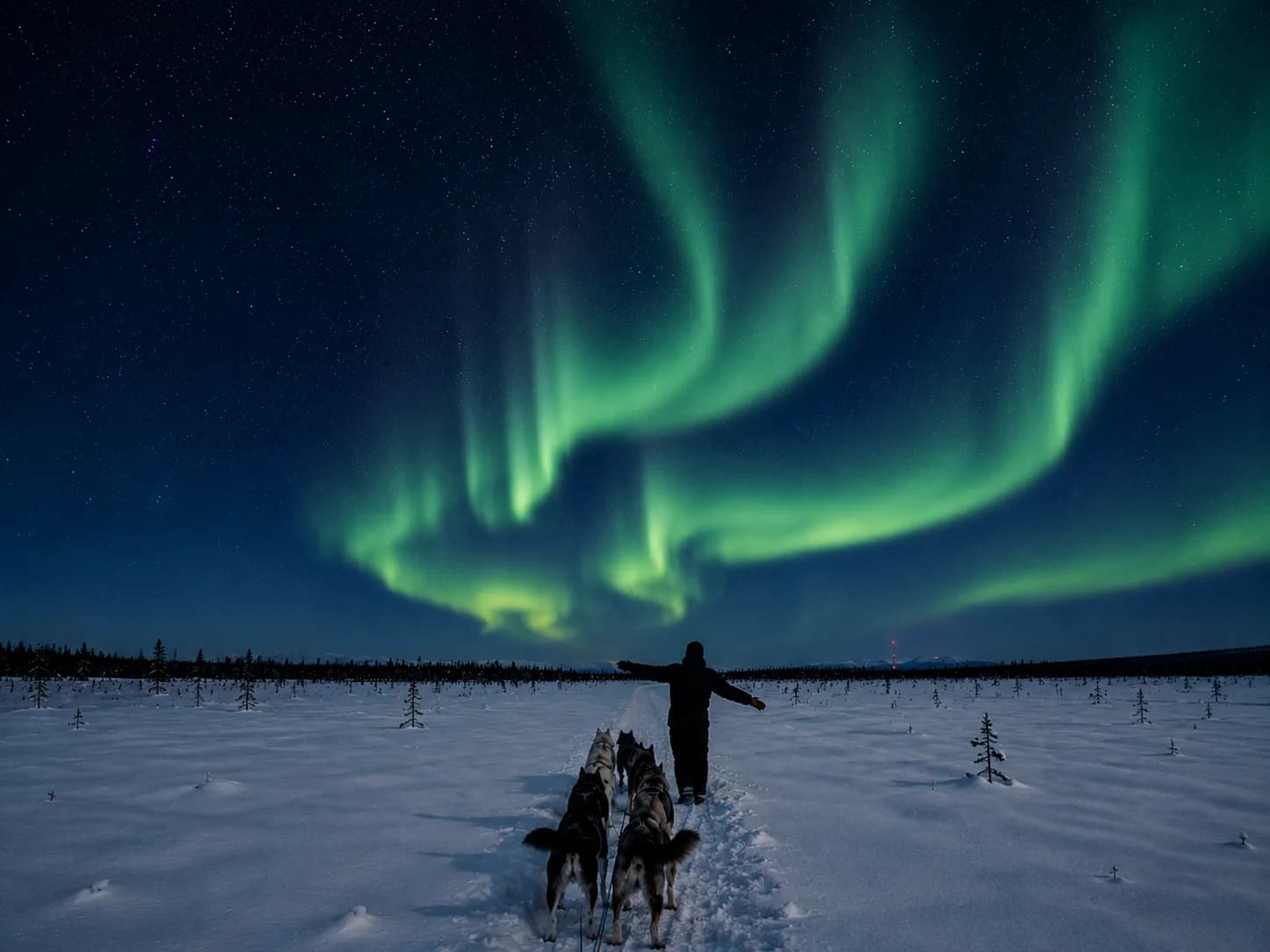
There is an evening out with the dogs if you want it — a shorter run in the dark, away from the town's light, with the chance of the aurora over the trees. Or there is a chair, a heated room and the considerable satisfaction of aching in places you had not previously located.
Before you ask
Anything not answered here, ask us directly — we'd rather you did.
How hard is it, really?
Hard. Not technically difficult — the sledding is rated for beginners and it genuinely is — but two days of carrying water, making fires, cooking and handling animals in the cold is real physical work, and it is work you cannot opt out of halfway through because there is no road to the camp. There is no indoor toilet and no shower for two days. If that reads as a list of reasons not to go, this is not the journey for you and we will not talk you into it; the two days of sledding at the start work perfectly well as their own short trip.
Can we go on our own dates?
Not for the camp, and this is the one genuine constraint on the week. The camp runs Friday morning to Sunday midday during the season and not on other days, with a normal maximum of six guests. So the whole journey is pinned to a Wednesday arrival. We can move everything else; we cannot move that, and anyone who tells you otherwise has not checked.
Can we have the camp to ourselves?
Sometimes. It takes six, occasionally eight, and it can be made private if nobody else has booked that departure yet — which means the answer depends entirely on how early you ask. It costs more. Our honest view is that sharing it with two or four other people is not the compromise it sounds like, because everyone there has chosen the same fairly unusual thing and the work is more fun distributed. If you want it private, ask early rather than nearer the time.
What ages does this suit?
The camp has a minimum age of eight and we would treat that as a floor rather than a recommendation — twelve upwards is where it starts to be genuinely good, because the appeal is being useful and that lands differently once a child can actually carry a bucket. Under eight, the two days of sledding at the start work well on their own and The Road West is the better family week. There is also a weight limit of around ninety-five kilos per person to declare when booking, so the sleds and teams can be arranged accordingly.
How are the dogs treated?
It is the right question and the reviews are consistent on it: guests repeatedly say the animals seem enthusiastic and well cared for, and that the guides watch the dogs' condition throughout rather than the clock. We have also been straight in our own notes that no independent welfare accreditation exists for this or any other kennel in our set — that is an industry-wide gap rather than a mark against this one. What we can tell you is that the whole shape of this journey is that the dogs come first, literally, at every meal. If that were not true it would be obvious within a day.
Will we see the northern lights?
Possibly, and nothing here is built on it. You are at a lower and considerably more humid spot than the valley journeys, and the camp is not chosen for its sky. The optional last-night run gets you away from the town's light and is the best chance of the week. If the aurora is the reason you are coming north, One Hundred Winters or The Road West are the honest recommendations and we would rather point you there.
Ready when you are
Make it yours
Tell us roughly when you'd like to travel and who's coming, and we'll shape this into something built around you. One conversation is all it takes to start.