




TableLate Sep
Lobster Premiere
The opening of Sweden's lobster season in Bohuslän: pots down from seven on Monday, the first haul on Tuesday, and the auction if access allows.
At seven, the pots go in
Before seven, the harbour is awake but held. Engines are running, bait is aboard and pots are stacked in the order they will leave the deck, but Sweden's lobster season does not open until exactly 07:00 on the first Monday after 20 September. Nobody gains a minute by setting early.
Once the hour turns, the boat moves across rocky ground chosen long before that morning. Each baited pot goes down with its rope and marked buoy, its position recorded before the next is released. The places are not random: depth, current, broken rock and what a fisher remembers from earlier seasons all matter, and the best ground is knowledge people keep.
Monday is expectation, not reward. The pots are empty when they leave the boat and remain unseen through the night while European lobster moves out of the rock. Wind can still keep everyone ashore; the calendar fixes the opening, not the sea. Nothing about the morning guarantees what Tuesday will bring.
The first haul is Tuesday
Tuesday begins with the marked buoys. The line comes aboard, a hauler takes the weight, and the first pot breaks the surface after its overnight soak. It may hold a legal lobster, a small one, an egg-bearing female, crab, or nothing at all. That uncertainty is not a weakness in the experience; it is proof that the pot was not prepared for an audience.
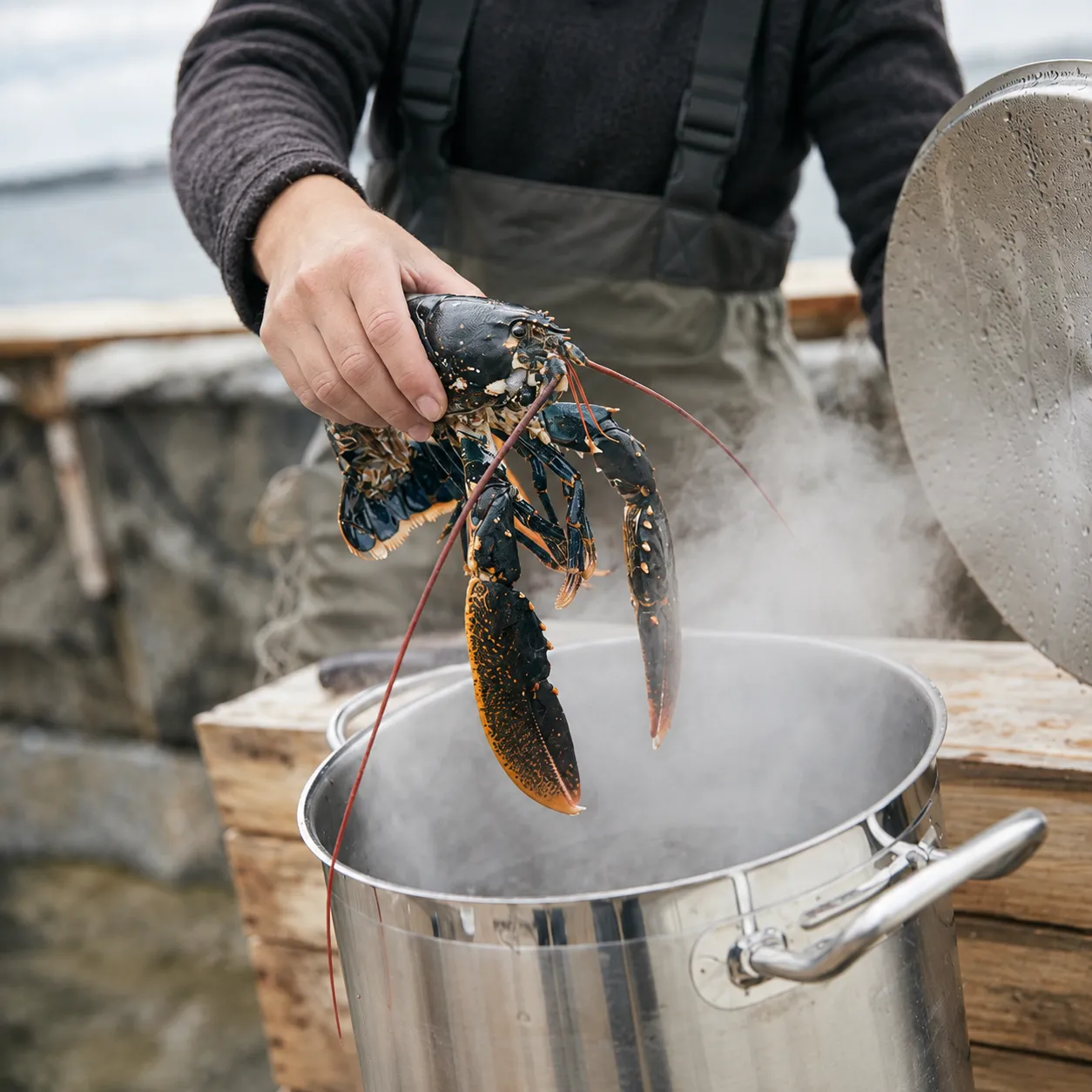
Every lobster is checked before it becomes part of the landing. The fisher measures the carapace, looks beneath the abdomen and returns anything protected or undersized to the sea immediately. A live European lobster is blue-black rather than red; the familiar colour appears only with heat. Legal catch is handled carefully, its claws secured, and kept alive for the return to harbour.
Guests are there to observe the decisions and work around them, not to operate the hauling machinery or claim the first animal as dinner. If there is a meal, it follows the landing and uses confirmed legal catch. The first pot can still come up empty.
The first kilo is not the price
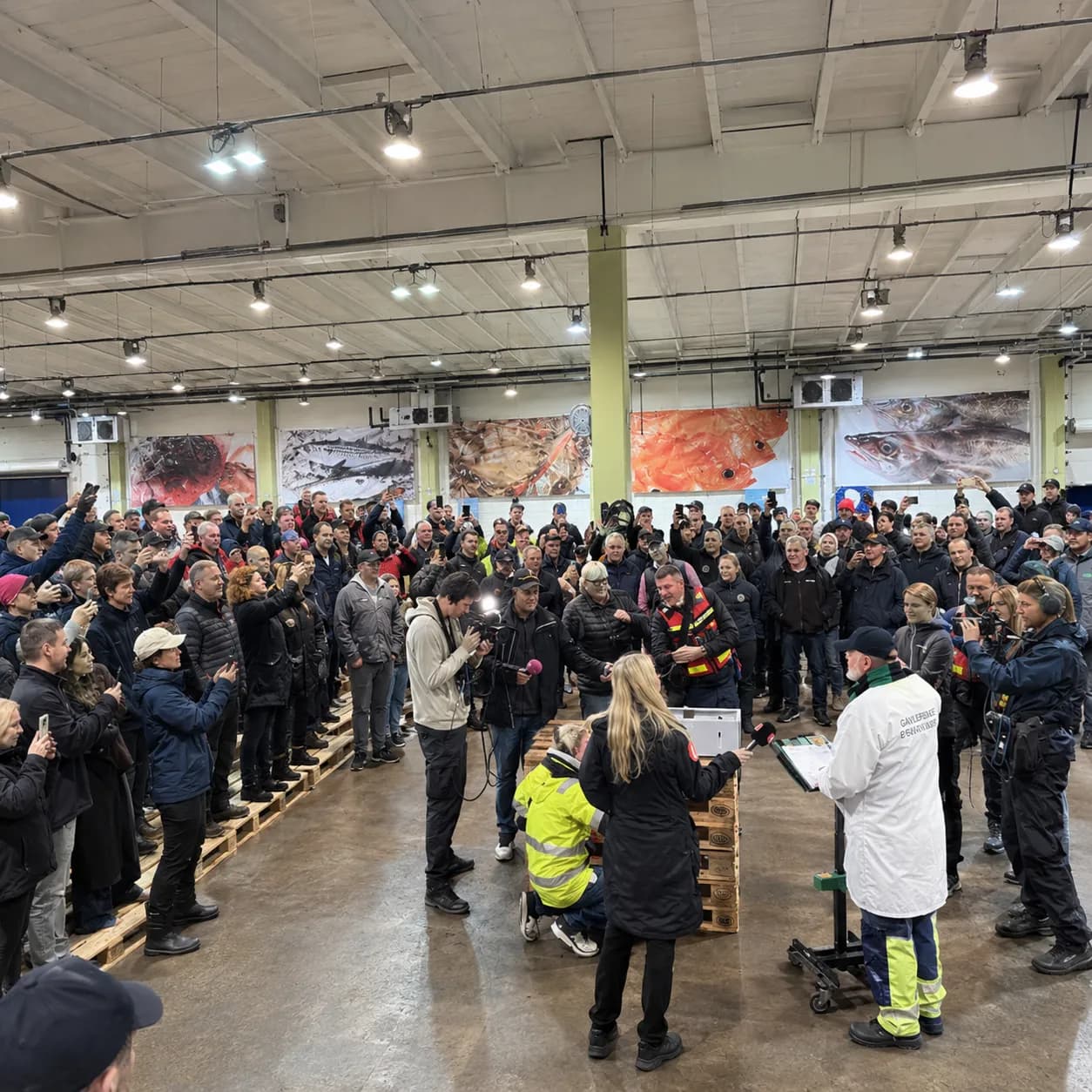
At the auction, the catch becomes a lot rather than a story from the boat. Lobsters are landed alive, registered, weighed and presented to buyers for restaurants, fishmongers and wholesalers. It is a working room, with wet floors, moving crates and areas not automatically open to visitors, so visitors need permission first.
The first lot is different. It is the first legal Swedish lobster of the season, which brings cameras, publicity and bidding far beyond ordinary wholesale value. That figure is not the price of Swedish lobster. It is the price of being first, closer to a ceremonial first bottle than a market guide.
The fishery and live-lobster trade on this coast are centuries old; the headline auction is a modern ritual. After the cameras move on, the remaining catch enters the ordinary market and the room goes back to work.
Before you ask
Lobster Premiere: common questions
Anything not answered here, ask us directly — we'd rather you did.
When does the Swedish lobster season open?
At exactly 07:00 on the first Monday after 20 September. Nobody gains a minute by setting early.
Do you catch lobster on the first day?
No. Monday is when the baited pots go down, and they soak overnight. The first haul is on Tuesday, and even then the first pot can come up empty. Wind can also keep everyone ashore: the calendar fixes the opening, not the sea.
Can guests haul the lobster pots?
Guests observe the decisions and work around them rather than operating the hauling machinery. Every lobster is measured and checked, and anything protected or undersized goes straight back to the sea.
Why does the first lobster sell for so much at auction?
It is the first legal Swedish lobster of the season, which brings cameras, publicity and bidding far beyond ordinary wholesale value. That figure is the price of being first, not the price of Swedish lobster.
Can you visit the lobster auction?
Visitors need permission first. It is a working room, with wet floors, moving crates and areas not automatically open to visitors.