



Field & ForestDec – Apr
Horseback in Snow
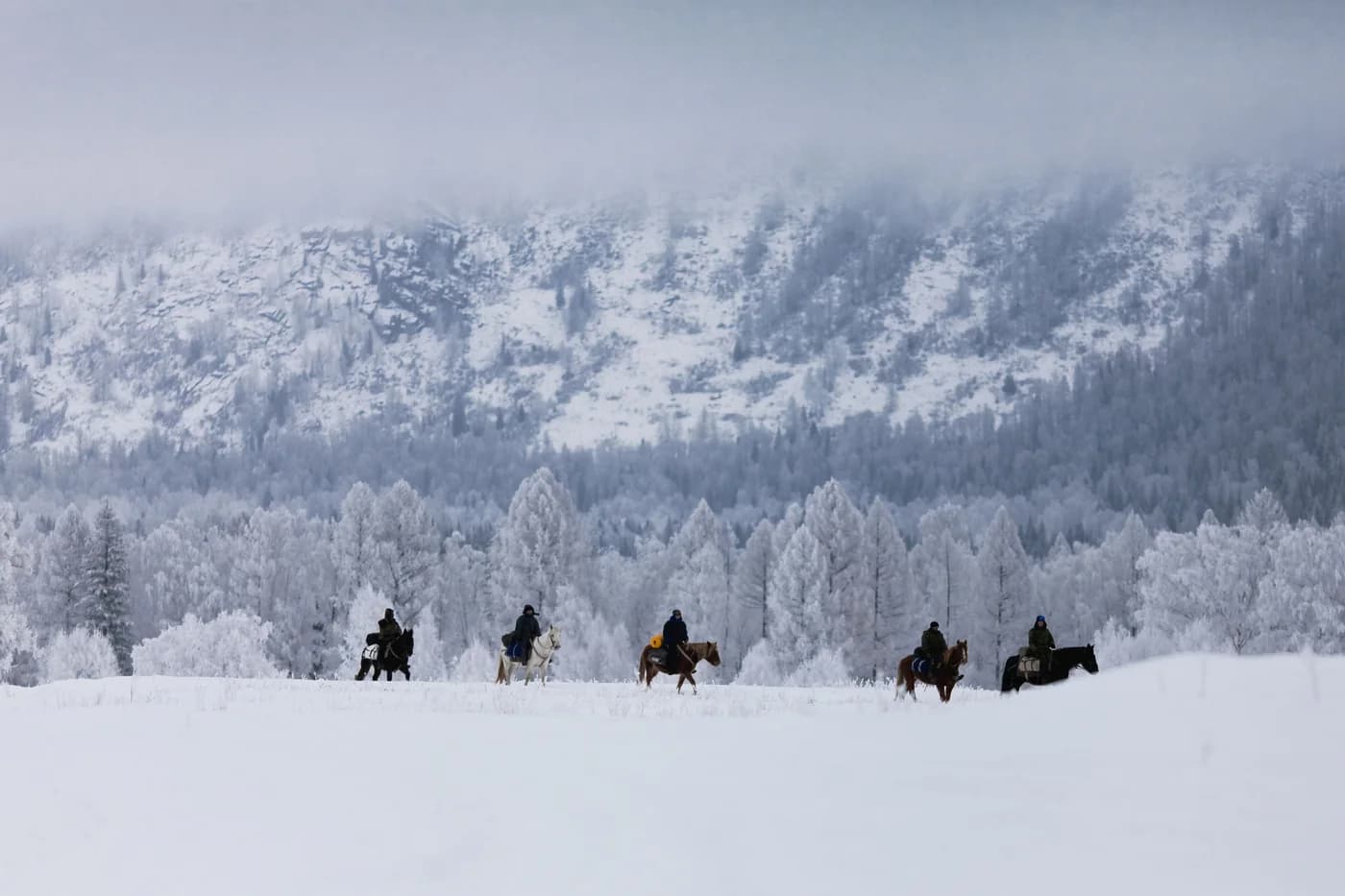
Riding small, sure-footed northern horses through snowy forest, at a walk or at the smooth, fast tölt.
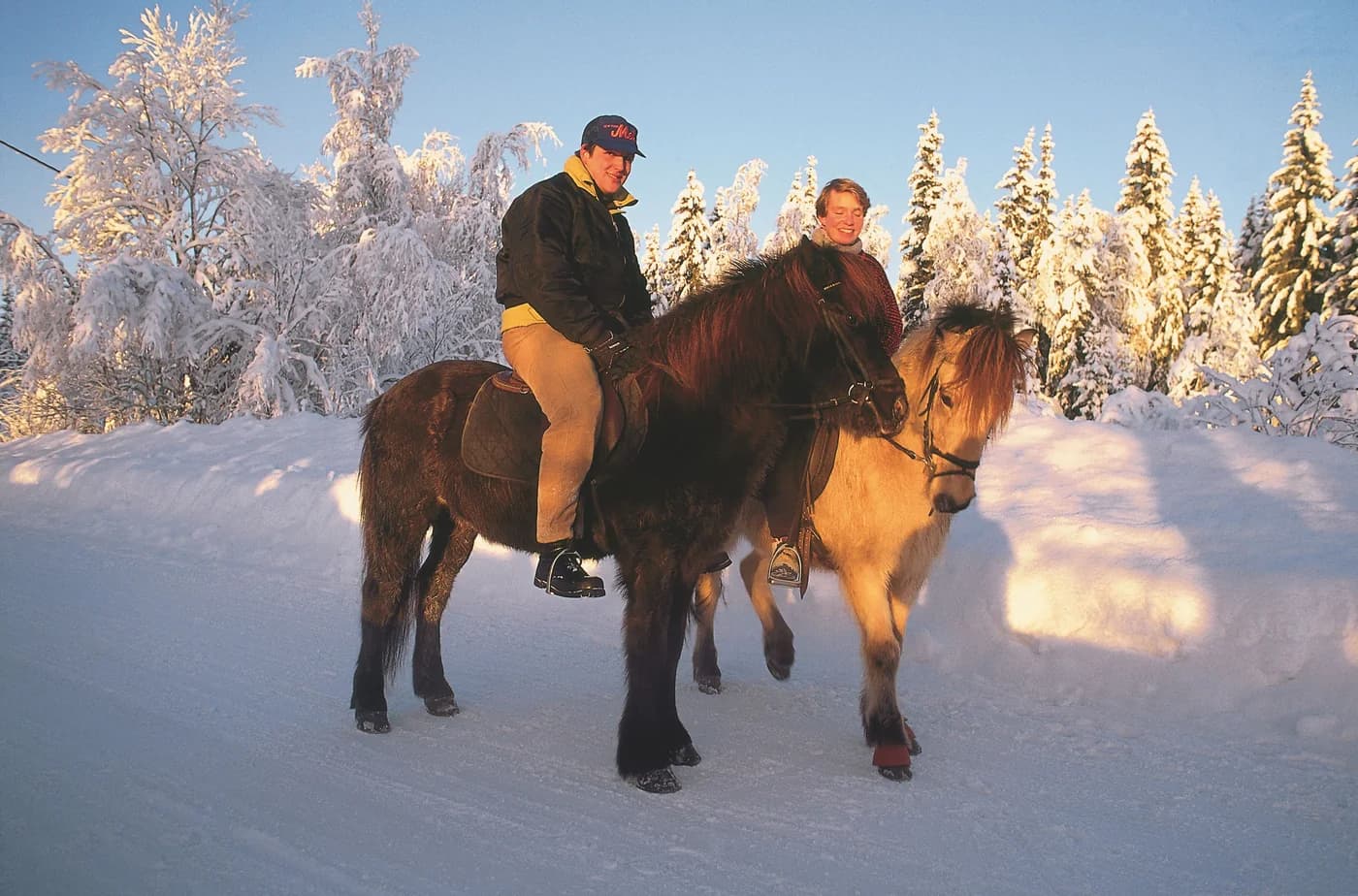
Icelandics, built for this
The horses are Icelandics or north Swedish natives, and the point of both is that they are built for this — small, broad, unbothered by cold, and sure-footed on snow in a way a riding-school horse is not.
The Icelandic has a fifth gait, the tölt, which is a four-beat run with no bounce in it. On snow, on a forest track, at speed, with nothing to hear but hooves in powder, it is the single most persuasive argument for riding that exists.
You do not have to be an experienced rider. You do have to be honest about what you can do, because the difference between a walk in the trees and an hour of tölt is significant and we would rather point you to the right ride.
Dress for standing still
Dress for standing still rather than for exercise. You generate very little heat on a horse, your hands are out in front of you holding reins, and your feet are in stirrups not moving — so it is colder than a walk at the same temperature, every time.
Mittens over gloves, and boots a size up with room for thick socks. Most yards will lend you an overall and they are worth taking.
December to April, and the best of it is late — March and early April, when the light is long, the snow has settled hard enough to carry a horse off the track, and the cold has come off the edge.
Before you ask
Horseback in Snow: common questions
Anything not answered here, ask us directly — we'd rather you did.
Do you need riding experience to ride in the snow?
No, but be honest about what you can do. The difference between a walk in the trees and an hour of tölt is significant, and we would rather point you to the right ride.
What is the tölt?
The Icelandic horse's fifth gait: a four-beat run with no bounce in it. On a snowy forest track at speed, with nothing to hear but hooves in powder, it is the most persuasive argument for riding there is.
What should I wear for winter horse riding?
Dress for standing still rather than exercise, because riding is colder than walking at the same temperature: you generate very little heat on a horse. Mittens over gloves, and boots a size up with room for thick socks. Most yards will lend you an overall, and it is worth taking.
When is the best time for horse riding in the snow?
The season runs December to April, and the best of it is late: March and early April, when the light is long, the snow has settled hard enough to carry a horse off the track, and the cold has come off the edge.