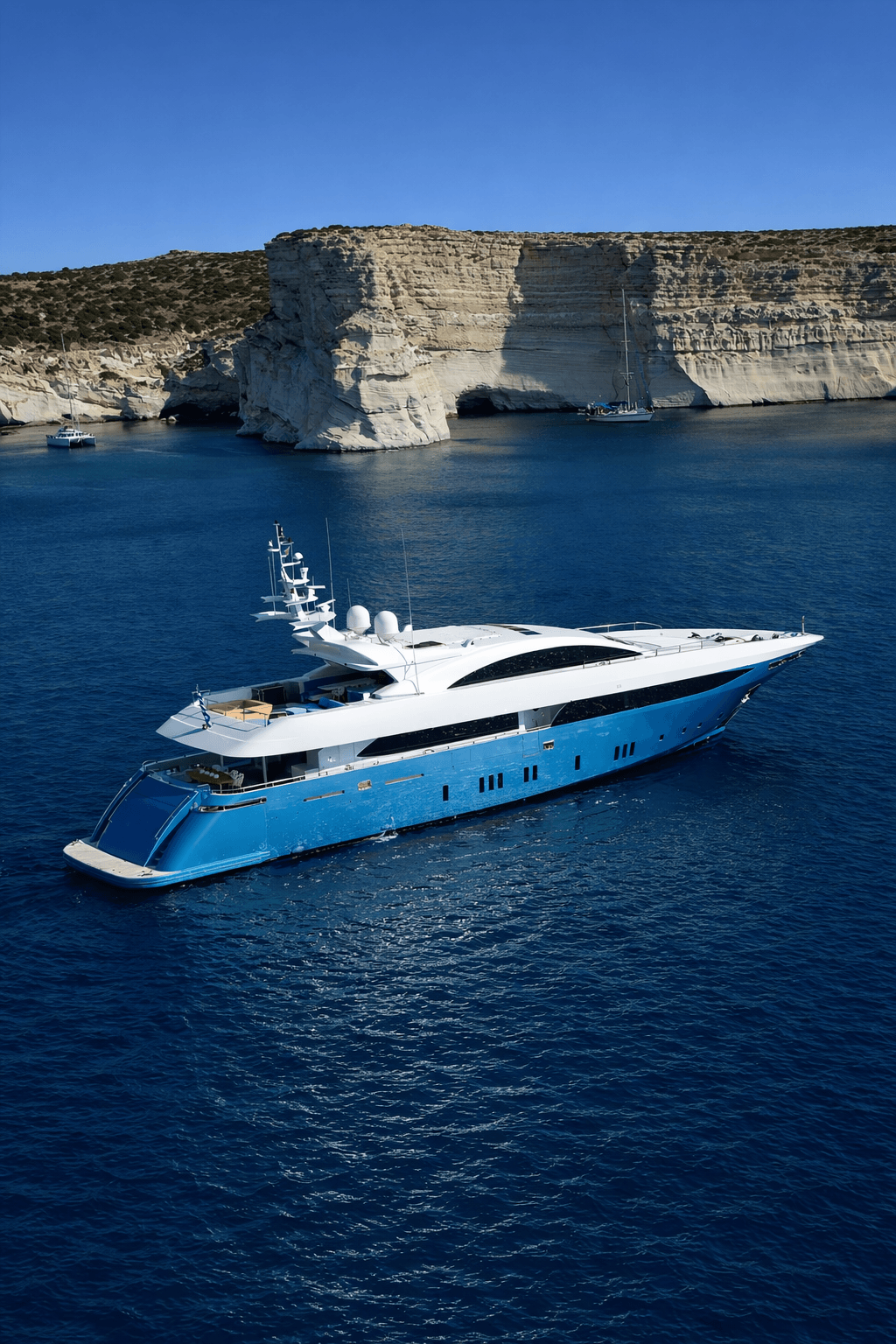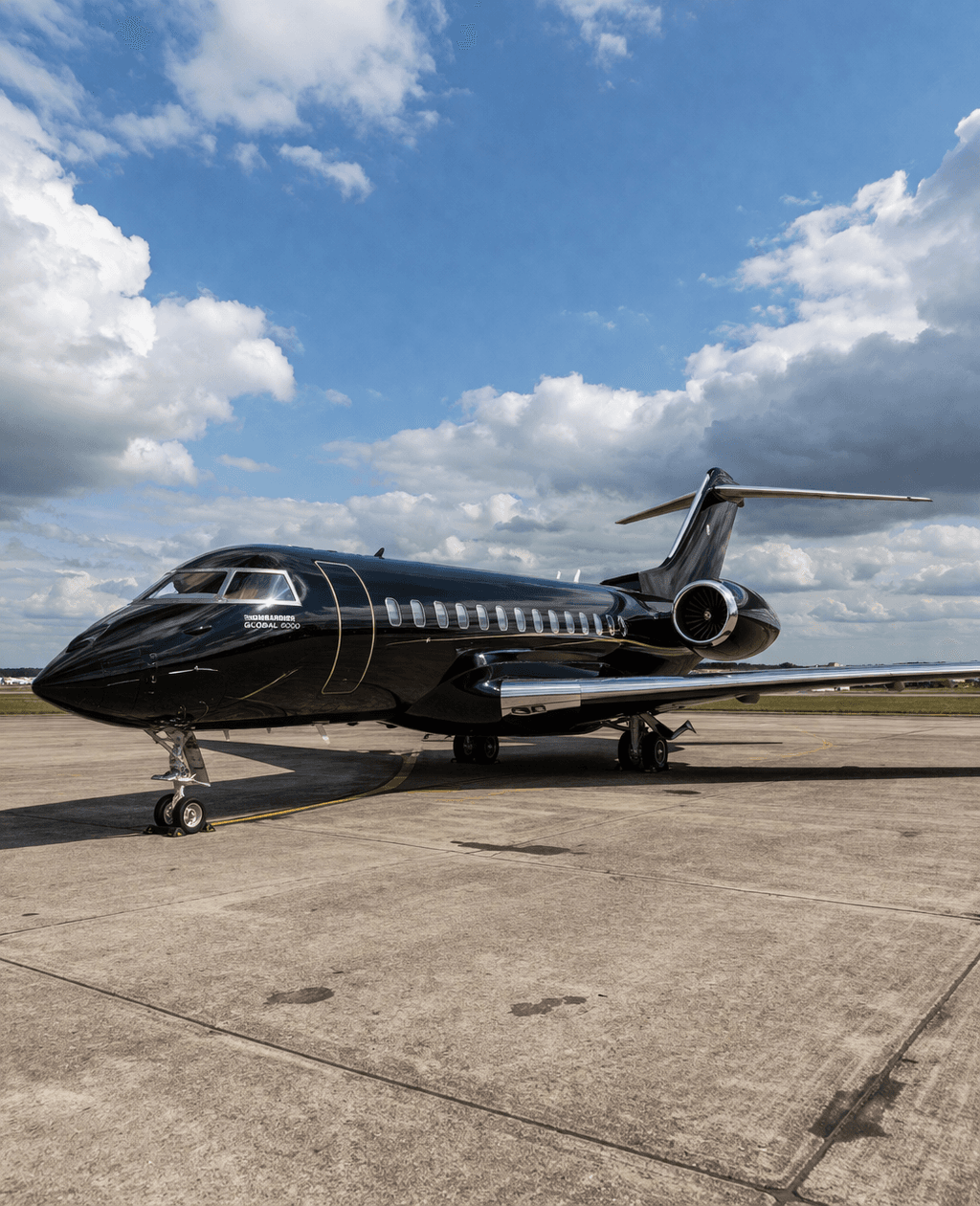
The photograph everyone carries is the staircase: the aircraft on the apron, the door open, the champagne implied. It is a real image, and it is almost entirely beside the point. What private aviation actually sells is not glamour. It is time — and a kind of control over it that scheduled flying gave up decades ago.
Strip the image away and what remains is a different mechanics of travel. Different airports, different timings, different rules about what a day can hold. That mechanics is worth understanding properly, because it is the substance of the thing.
What changes at the airport.
Private flights do not use the terminal. They use the FBO — the fixed-base operator, a small private facility usually on the far side of the field. There is no queue because there is no crowd: you drive in, you are met by name, and the time between the car door and the aircraft door is measured in minutes. Security still happens; it simply happens around you rather than to you.
The aircraft leaves when you arrive, which inverts the entire psychology of flying. You are not early for a flight. The flight is on time for you. If the meeting runs long, the aircraft waits. If you finish early, you leave early.
How does private jet charter work?
Charter means you take the whole aircraft for the journey, with a certified operator providing the crew, the fuel, the handling, and the flying itself. The market behind it is a network of operators of every size, and the craft of chartering well lies in matching the journey to the right machine: a light jet for two people on a short European hop, a midsize cabin for a family with a week of luggage, a long-range aircraft for a crossing where everyone needs to sleep flat and arrive working.
It is also why two quotes for the same route can differ wildly. Where the aircraft is based, whether it must be positioned empty to collect you, the airfield fees and slot times, the season — all of it moves the number. This is one of the places where being arranged by someone who does this constantly, rather than occasionally, quietly pays for itself.
“You are not early for a flight. The flight is on time for you.
When is flying private worth it?
The strongest case is never the famous city pair. The great hub-to-hub routes, flown up front on a good airline, are a solved problem. The case is everywhere the airlines are weak: the three-cities-in-a-day itinerary that scheduled flying makes physically impossible. The small airfield twenty minutes from the villa — La Môle for the Var, Sion for the high Swiss valleys — that turns a three-hour transfer into a fifteen-minute one. The school holidays with four children and a departure time chosen around lunch rather than around an airline.
There is also the quieter case: privacy itself. A cabin where the conversation can be the real one, where the call can happen, where nobody is watching who is on board. For some clients that alone is the entire argument.
And there are days it is not worth it — and an adviser who cannot tell you so is selling, not advising. Part of arranging aviation properly is knowing when the scheduled first-class cabin, booked well, is simply the better answer.
What we look for when we arrange a charter.
The operator before the aircraft. Safety record and audit standing, the age and maintenance history of the airframe, and crew who fly the route rather than merely the aircraft type. Then the routing itself: the airfield closest to where you are actually going, not the biggest one in the region; the slot times that protect the day; the ground handling and the onward transfer arranged as one movement, so that landing and arriving become the same thing.
We coordinate all of it through a vetted network of trusted operators rather than owning aircraft — which keeps the advice clean. The right machine for the journey, whoever operates it.
Who flying private is right for.
People whose time genuinely compounds: the founder doing three countries before Friday, the family for whom the journey is part of the holiday or the ruin of it, the principal whose privacy is not a luxury but a working condition. And, more occasionally, anyone for whom one particular trip simply matters enough — a wedding, an anniversary, a homecoming — that the day should belong entirely to them.
How do you arrange a private jet with CalenVoy?
The way everything here works: with a brief. Where, when, who is travelling, and what the day around the flight looks like. We come back with considered options in plain language — aircraft, timings, the trade-offs that matter — and once you choose, the rest disappears from your view. Routing, handling, transfers, the car waiting at the other end. You see a door open. We see everything else.