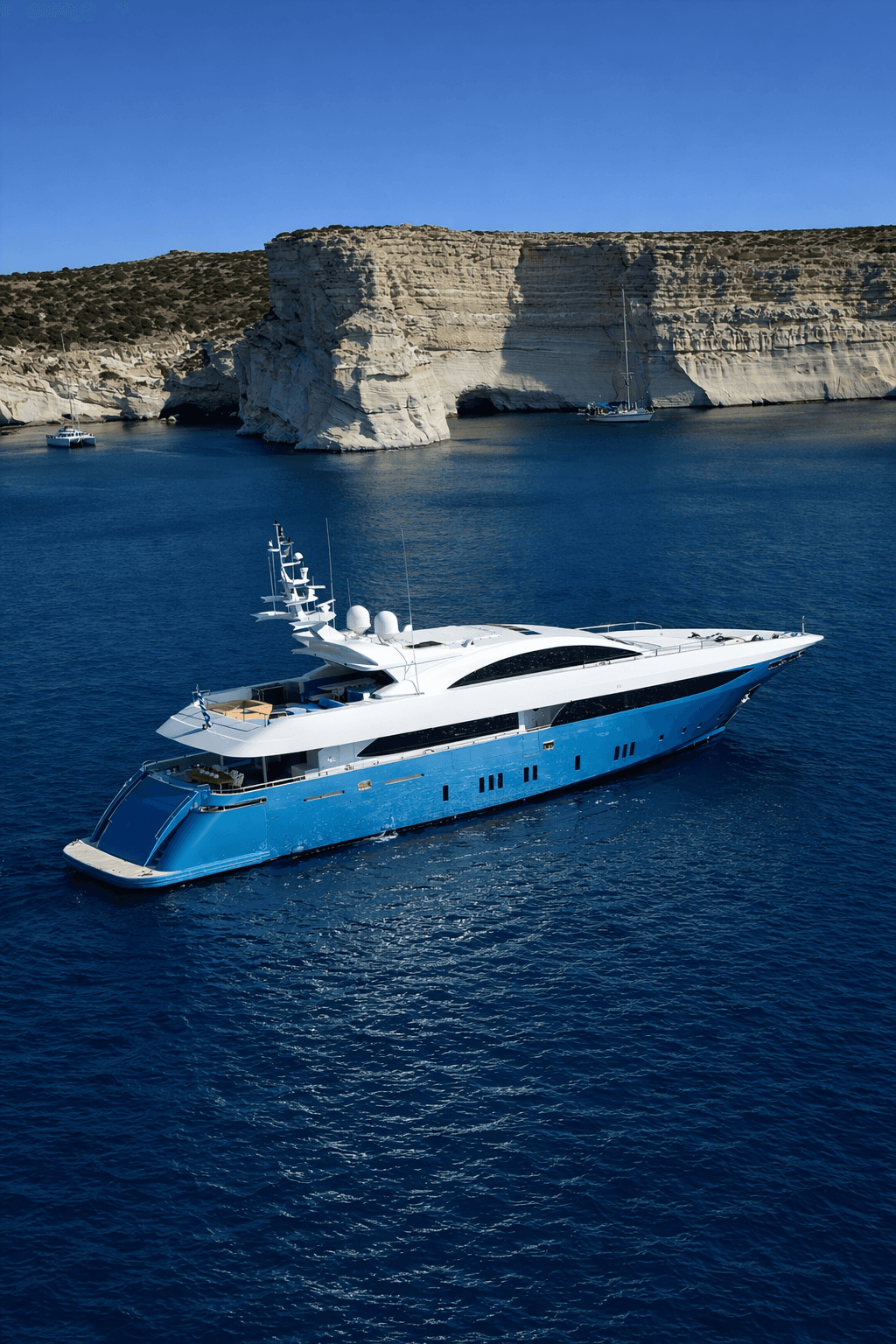
Everyone has seen the photograph: the white hull at anchor, the swim platform down, the impossible blue. What the photograph cannot show is the week itself — and the week is where charters are made or lost. Because the difference between a boat and a good week at sea is almost never the boat.
It is the crew, the route, and the judgement behind both. Which is to say: it is everything the brochure does not list.
What is a crewed yacht charter?
A crewed charter means the yacht comes with the people who run her — at minimum a captain, usually a chef, on larger boats a full interior crew. You take the whole vessel for the period: your route, your pace, your table. It is the difference between staying somewhere and moving through a coastline with your accommodation, your kitchen, and your transport travelling with you.
The alternative — bareboat, where you skipper yourself — is its own pleasure for sailors. But for the travel this journal is about, crewed is the assumption: the point of the week is that nobody aboard is working except the crew.
Day charter or a week aboard?
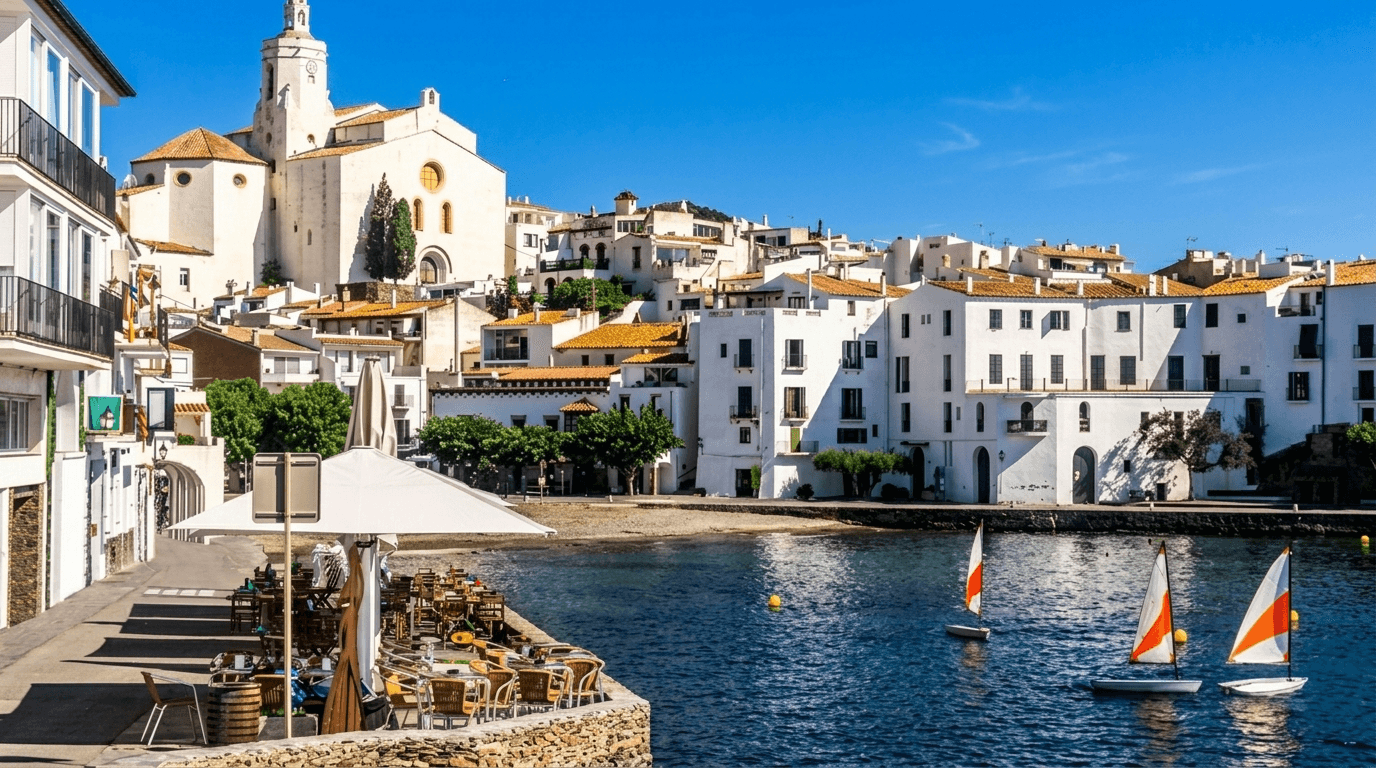
They are different instruments. A day boat is an amplifier for a villa stay: the morning crossing to the islands off Dubrovnik, the empty cove on the far side of Cap de Creus, lunch on the water and home by evening. It asks no commitment and changes the shape of a single day.
A week aboard is a different kind of trip entirely — a moving base along the Turkish Aegean in a wooden gulet, an island-to-island route through the British Virgin Islands where the sea is the geography and the anchorage is the address. Some coastlines are simply built for it; sailing them is not an activity within the trip, it is the trip.
“The crew is the charter.
Why the crew matters more than the boat.
Two identical yachts deliver two entirely different weeks. A captain who has worked a coast for twenty seasons knows the anchorage that is empty at noon and the one that fills by ten, the village quay worth an evening, the wind that arrives every afternoon at four and what to do about it. A chef who shops the morning market at each harbour turns provisioning into the best restaurant on the coast — one that happens to follow you.
And the tone of a crew is the tone of the week. Present without hovering, exact without ceremony. It is the same standard we look for in the staff of a villa or the guides of a camp, and it is rarer afloat than the size of the industry suggests.
Where should you charter?
In Europe, the water is a summer instrument: the Dalmatian islands for green archipelagos and stone harbours, the Aegean coast of Turkey for gulets and antiquity, the coves either side of the French and Spanish borders for short, perfect days. The shoulder months — early summer and September — give the same sea with half the boats on it.
In winter the answer moves across the Atlantic. The British Virgin Islands remain the most naturally arranged sailing geography in the Caribbean — short hops, sheltered sounds, an island always in sight — which is exactly why we wrote about them separately.
What we look for when we arrange a charter.
Crew first, hull second. The captain who knows that specific coast, the chef whose range matches how the guests actually eat, the condition and age of the boat told honestly. Then the route: realistic distances rather than ambitious ones, anchorages over marinas wherever the weather allows, and a plan held loosely enough to follow the days as they come. Provisioning settled before boarding, so the first afternoon is spent swimming rather than shopping.
We arrange charters through the same vetted network as everything else, and to the same brief: the right fit for the right client, handled quietly from start to finish.
Who a yacht charter is right for.
Families, first and last — there is no form of travel children surrender to faster. Friends marking something. Couples who want the coast without the crowd that gathers wherever the coast is reachable by road. And anyone who has watched a harbour from a café at peak season and understood that the people having the better day were on the water, looking back.