There is a version of Britain that every international visitor arrives expecting. Red telephone boxes. A black cab from Heathrow. Afternoon tea somewhere that has been serving it for two centuries. London in all its careful, considered grandeur, a city that genuinely earns the attention it receives, and gives a great deal back to those who take the time.
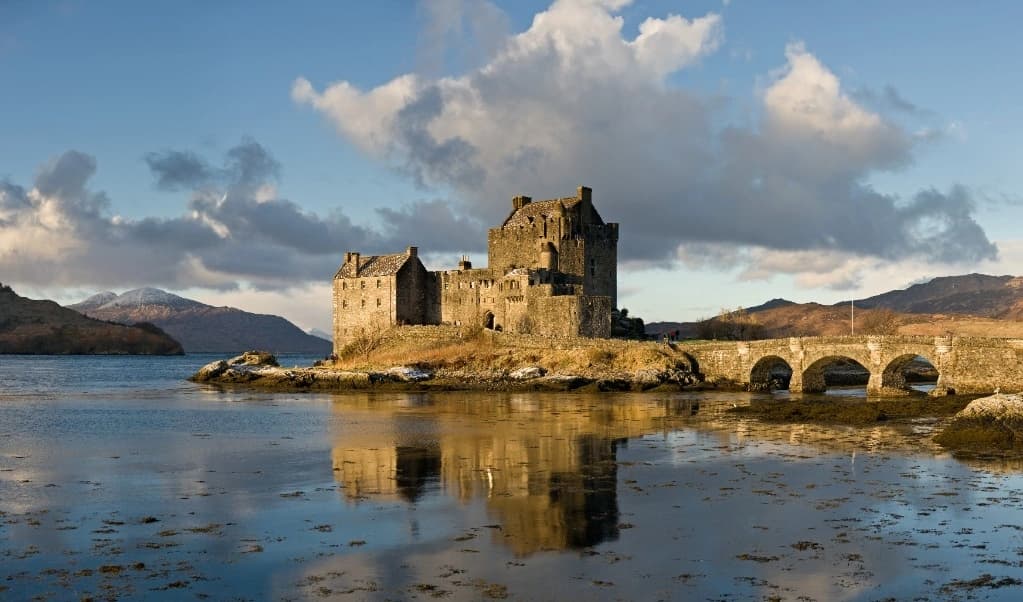
But Britain is not London. It is not even mostly London. Several hundred miles north of King's Cross, on a road that has narrowed by degrees until it runs single-track between hills that have never held a motorway, the country reveals the version of itself that it does not advertise.
This is where this begins.
What the map actually shows.
The far northwest of Scotland is, by some measures, the emptiest place in Europe. Sutherland covers an area roughly the size of Connecticut and contains fewer than thirteen thousand people. In places, the population density drops below two people per square kilometre, figures more often associated with the Australian outback than with a country of sixty-seven million. The roads that cross it are single-track with passing places, the villages are small and widely spaced, and the silence, once the weather settles, is the kind that settles into the bones with it.
The land itself is older than almost anything else on earth. The Lewisian gneiss that forms the basement rock here dates to nearly three billion years ago, making it among the oldest exposed rock on the planet, material that existed when life itself was only beginning to take its first shapes. The mountains that rise out of it, Suilven, Stac Pollaidh, Canisp, do not resemble other British mountains. They are not chains. They are isolated, improbable shapes, each one standing alone like a monument someone forgot to finish.
Assynt is the heart of it. A landscape that geologists travel to from around the world because the rules of what sits above what, and how old relative to what, are inverted here in ways that shaped the entire modern science of plate tectonics. The region was designated a UNESCO Global Geopark. To drive through it is to move through several hundred million years of the earth's history in the course of a single afternoon.
“Rocks that existed before life did. A coast that has never been tamed. A country you can drive through for an hour and not pass another car.
What the islands keep.
West of the mainland, across a channel that turns violent in an afternoon and glass again by morning, the Outer Hebrides begin. A chain of islands running for a hundred and thirty miles along the edge of the continental shelf, each with its own geography, its own villages, its own weather. To fly in from Glasgow is to cross an hour of empty water and see the machair, the narrow coastal plain of shell-sand grassland that carpets the western shores in wildflowers every summer, appear suddenly beneath the wing.
Harris is where the beaches happen. The western shore of South Harris holds stretches of sand that consistently rank among the most beautiful in the world, with turquoise water that looks imported from a much warmer latitude. Luskentyre and Scarista run for miles without a footprint for most of the year. In August, you may share them with a few families. In November, you will have them entirely.
Lewis, to the north, holds the older stories. The Calanais Standing Stones were raised around 3,000 BC, five centuries before Stonehenge, and have stood in an arrangement whose meaning is still being argued about by archaeologists. Gaelic is spoken here in everyday life, not performed for visitors. The tweed woven in the cottages along the coast is the only cloth in the world protected by its own Act of Parliament, by law, it can only be made in these islands, by hand, in the weaver's own home.
How it feels to be there.
Days in the Highlands have a pace that is difficult to reproduce anywhere else. The light is long and slow. The distances between things are real, a drive to dinner can be an hour through country that does not deteriorate for a minute along the way. The phone signal disappears for long stretches, and nobody who has been here more than once regards this as a problem.
Mornings begin with weather. The windows show you what the day will be: cloud low on the hills, sun on the far coast, a squall approaching from the Atlantic. The right response is patience. Within an hour the light will have changed, and what looked impossible for walking will have become the best weather of the week. In mid-June the sun sets after ten and rises before four; the nights are not really dark but a long blue dusk the Scots call the gloaming, holding some residual light until morning. Evenings belong to peat fires, because even in July the temperature drops the moment the sun does, and the point of the fire is not warmth. It is what the room becomes when it is lit.
Food here is built around what the land and the water produce. Langoustines pulled from the sea lochs that morning. Venison from the hills above the glen. Hand-dived scallops, smoked fish, soft cheeses from small crofts that have been making them for generations. The gin distilleries along the coast have multiplied in the last decade; the whisky ones have been there for considerably longer.
What we look for when we plan a stay here.
The Highlands reward a house that understands the climate it sits in. Glass that makes a virtue of the weather rather than apologising for it. Fireplaces in more than one room, because you will use them. Outdoor spaces sheltered enough to be used for breakfast in a changeable wind. Interiors that are warm in the way that old Highland houses are warm, layers of fabric and wood and books, rather than cold in the modernist sense.
What we look for here: real isolation without the practical difficulties that isolation can bring. Proximity to the coast on one side and to hill walking on the other. A kitchen that can be stocked with produce from within twenty miles. And the kind of staffing that disappears when you want to be alone and reappears precisely when you do not, the quiet intelligence that Highland hospitality has, at its best, always understood.
Through our network we have access to private houses and estates here that sit within that standard. Each is arranged personally, matched to the group rather than the calendar, and prepared in advance for the kind of weather the week is likely to bring.
Who the Highlands are right for.
Not those who need the reassurance of familiar infrastructure. The nearest chain hotel is often two hours away. Reception is intermittent. The weather can close in for a day, and nothing makes it do otherwise. If a week's travel depends on everything happening precisely as it was planned, the Highlands will, at some point, disappoint.
This is for travellers who understand that the finest landscapes in Britain are not accidentally the least visited ones. For families who want a week that gives children something other than a pool and a play area, an empty beach, a mountain with an actual summit, a boat trip to an island with puffins on the cliffs. For couples who have done the London circuit and want the version of Britain that begins when you leave it. For those who have learned that the most memorable places are rarely the most accessible, and who are willing to make the drive north to find out why.
London will always be there. The country above it does not advertise itself.
When to visit the Scottish Highlands
The window is May through October, though each month has a different character. May and June are perhaps the most rewarding, the long northern light, the wildflowers in bloom, the midges yet to arrive in force. The midge, the small biting insect that is the defining nuisance of a Highland summer, peaks from late June through August in the wetter inland areas; coastal properties and the islands are largely spared. July and August are the busiest weeks of the year, with the longest light and the only weeks when sea temperatures occasionally reach swimmable for the brave. September and October are the deer stalking season, the red deer are managed at this time of year by the estates, and many of the larger sporting properties run their year around it. The salmon and trout fishing run through the summer into the autumn. Winter, November through April, is mostly closed to the international visitor, but a small number of estates remain open through the coldest months for those who want the country at its most elemental. Booking lead times for July and August on the better properties typically sit at six months ahead, occasionally more for the most-sought lochside houses.
How to get to the Scottish Highlands
Edinburgh (EDI) and Glasgow (GLA) are the principal international gateways into Scotland, with direct connections from across Europe, North America, and the Middle East. From either, the drive into the northwest is long, about four hours to Ullapool from Glasgow, five to the Sutherland coast. The more efficient route is Inverness (INV), the Highland gateway airport in the centre of the country, with regional flights from London, Amsterdam, Manchester, and a small number of other European hubs; from Inverness, the coast at Ullapool is about ninety minutes by road, Assynt about two hours, the far north considerably more. Stornoway (SYY) on Lewis handles regional flights from Glasgow, Inverness, and Edinburgh for direct arrival into the Outer Hebrides; alternatively, the ferry from Ullapool to Stornoway takes about two and a half hours, and the route from Uig on Skye to Tarbert on Harris a little under two. The Caledonian Sleeper from London to Inverness is a useful option for those who want the journey itself to count. Private jets route most easily into Inverness for the mainland and into Stornoway for the islands. We coordinate the routing, the road transfers across the single-track stretches, and any ferry timing ourselves.
Where to stay in the Scottish Highlands
The northwest and the Hebrides offer two distinct propositions. On the mainland, the principal areas divide loosely between Wester Ross, the coast from Applecross north to Gairloch and Poolewe, with the mountain country inland, Assynt and the Coigach to the north of that, holding the strangest landscapes and the highest concentration of the unusual peaks, and Sutherland proper at the far north, the emptiest country and the longest drives. Each gives a different version of the region. The Outer Hebrides are a separate trip in tone and execution: Harris for the beaches, Lewis for the history and the Calanais stones, the smaller southern islands, Berneray, North Uist, Benbecula, for the deepest quiet. A combination across both mainland and islands is the most considered structure, with the inter-island and ferry routing built into the rhythm of the week.
We do not publish a property list. The houses we arrange across the Highlands and Hebrides are matched once the brief is clear, a coastal estate for the long-light evenings, a sporting lodge for the stalking weeks, a quieter house in the islands for the slowest version of all. What we will say is that the right house in the northwest is the one where the weather is part of the architecture, and the wind is part of the welcome.