St Maarten has two airports. On any given morning in high season, wide-body jets are stacking above the runway at Princess Juliana, the famous approach that drops aircraft so low over Maho Beach that the blast from the engines throws people off their feet. It is one of the most photographed aviation spectacles in the world. The beach is always crowded with people watching.
Eight miles to the north, across a channel of water so clear you can read the bottom from the air, sits an island that almost none of those people will visit.
Anguilla is not hidden. It is not difficult to reach. It simply requires a decision, a ferry, a small plane, a willingness to cross a short stretch of water toward somewhere that has, for its entire modern history, chosen not to compete for attention. That choice, made quietly and repeatedly over decades, is the reason it remains one of the most extraordinary places in the Caribbean. And the reason most people have never been.
What Anguilla actually chose.
In 1967, Anguilla made a decision that is essentially unique in the history of Caribbean politics. When the British attempted to bundle it into an independent federation with St Kitts and Nevis, the Anguillans revolted, not toward independence, but away from it. They expelled the St Kittitian police, held a referendum, and asked to remain a British territory. They chose, in effect, to stay small. To stay themselves.
That instinct has defined the island ever since. There are no casinos. No cruise ship terminals. No all-inclusive resorts engineered for volume. Development on the island is governed by rules that have kept the skyline low, the beaches uncluttered, and the character intact. The island's thirty-three beaches, on an island seventeen miles long, are almost entirely public. Most of them, on most days, are nearly empty.
This is not underdevelopment. It is a specific, deliberate idea about what a place should be.
“Eight miles from one of the Caribbean's busiest airports. Almost nobody makes the crossing.
What the water does here.
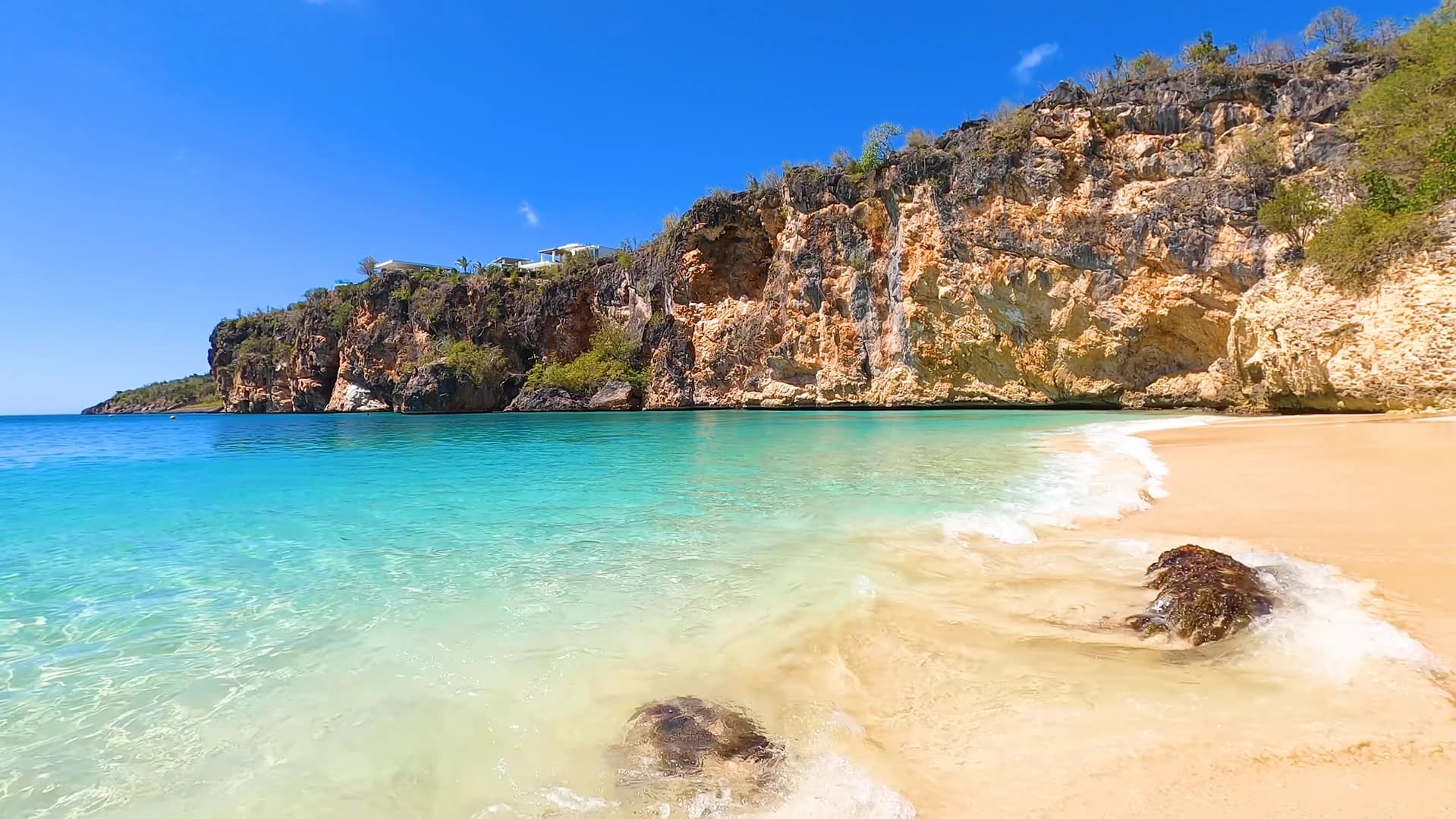
The Caribbean has beautiful water everywhere. Anguilla's is different in a way that is difficult to explain until you have seen it. The island sits on a limestone shelf that drops steeply on all sides, and the combination of the shelf's depth, the sand's composition, and the particular angle of the light produces colours that do not look real from above, turquoise that shifts into green, into white, into a blue so deep it has no name in the standard palette.
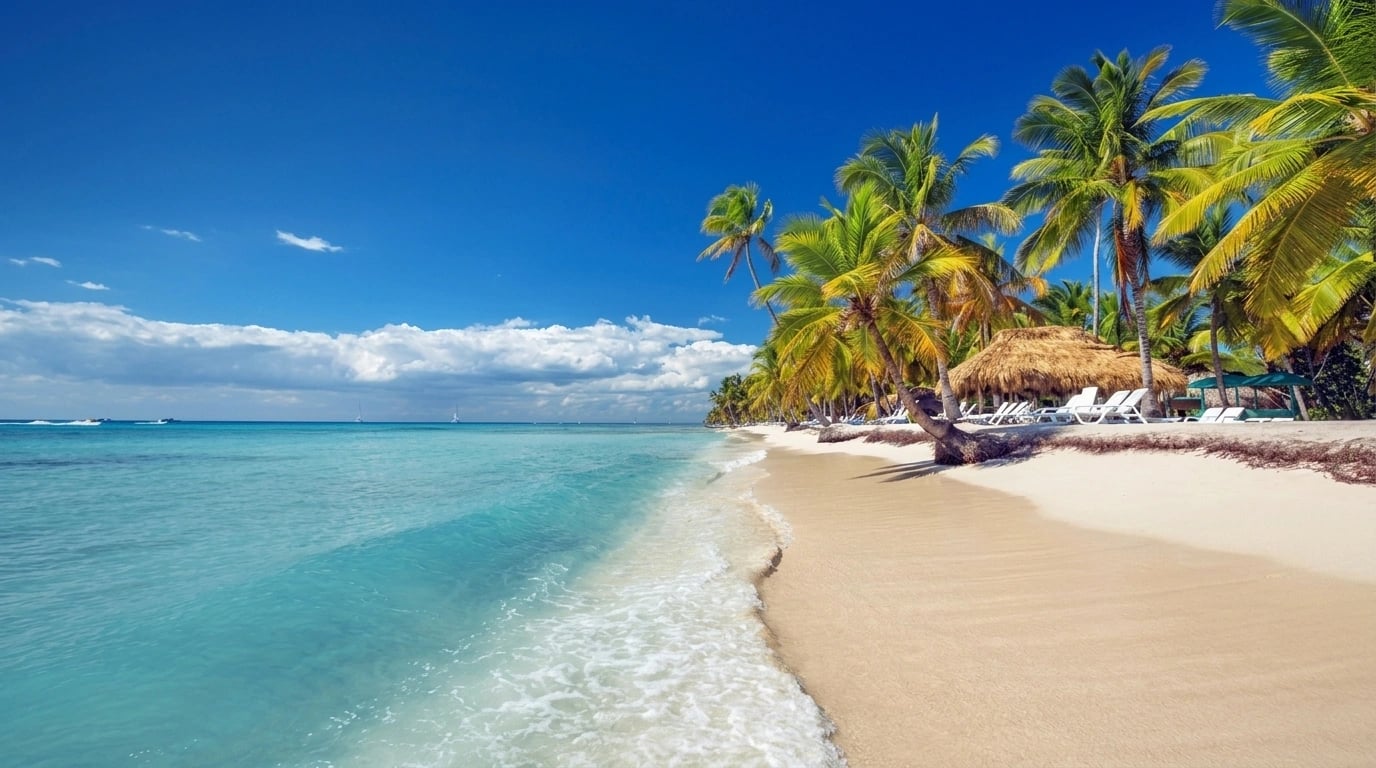
Shoal Bay East is the most celebrated of the beaches, and for once the reputation does not lie. The sand is fine in a way that feels engineered. The water is shallow for two hundred metres and then drops suddenly, the colour changing as it goes. On a Tuesday in February you may share it with a handful of people. The beach has no large hotel behind it, no jet ski operation, no vendor circuit. It simply sits there, as it has for centuries, doing the thing it does.
The west end of the island is different, deeper coves, rockier approaches, the kind of coast that asks a little more of you and gives considerably more back. Rendezvous Bay curves for two miles toward the French side, with St Maarten visible on the horizon, a reminder, quietly present all day, of the decision that separates where you are from where everyone else is.
What the cliff changes.
The property we work with here sits above Little Bay on the island's north coast, a clifftop position that places the Caribbean about a thousand feet below and in every direction. Little Bay is one of the island's most secluded coves, accessible by boat or by a rope descent down the cliff face. From above, the water in the bay runs through every colour the island is known for in the space of thirty metres.
The estate is designed around that view, not as a feature to be glimpsed from the right angle, but as a constant. The living spaces open toward it. The pool extends toward the edge of it. The light at the end of the afternoon crosses the water from the west and does something to the surface that changes by the minute, and there is nowhere better placed to watch it happen than from exactly here.
A team of twenty works for one group alone. The meals are built around what the island produces and what the group wants, Anguillian lobster pulled from the water that morning, produce from the farms in the interior, the kind of cooking that knows the difference between food that is expensive and food that is good. The bar knows what you drank yesterday. The days have no structure except the one you give them.
What we look for when we plan a stay here.
Anguilla rewards doing less than you think you need to. The instinct on a Caribbean trip is to fill the days, excursions, restaurants, movement. The island has all of those things, and they are genuinely worth having. But the thing Anguilla gives to those who slow down enough to receive it is rarer: the feeling that you are in a place that has not been arranged for your consumption. That the beach is beautiful because it is, not because someone built it that way.
What we look for here: a position that earns the view rather than borrowing it. Privacy that is structural, not performed, not a fence and a sign, but actual separation from the noise. Staff who understand that the best service is the kind you forget is happening. And the kind of setting that makes the idea of checking your phone seem genuinely beside the point.
Who Anguilla is right for.
Not first-time Caribbean visitors. The island does not perform. It does not compete. If the point of a trip is the animation of a resort, the beach club, the pool bar, the curated social atmosphere, Anguilla will feel like something is missing. That, again, is precisely the argument for it.
This is for people who have done the Caribbean and found it wanting in some way they couldn't quite name. For couples who want the best beaches in the region without the infrastructure that usually surrounds them. For families who want somewhere their children will remember not because of what was organised for them, but because of what the place itself gave them, the rope into the cove, the lobster on the beach, the water that made them stop talking and just look.
The jets still stack above St Maarten every morning. The blast still throws people off their feet at Maho Beach. Eight miles north, the water sits in the same colours it always has, and the island continues its long, considered, entirely deliberate silence on the subject of why more people don't come.
When to visit Anguilla
The Caribbean's calendar is clearer than most. December through April is the high season, dry, warm, low humidity, near-zero rain. Late January through March is when the island is at its most consistent. May and June form a quiet shoulder: the water and the weather are the same, the guest count is considerably lower, and the rates soften. July through October is technically hurricane season, though Anguilla's actual exposure has historically been limited; the trade-off is short afternoon showers and a touch more humidity. The Christmas and New Year fortnight is in its own category, booked twelve months ahead, atmospheric, and the moment to arrange a stay if you intend to be there for it.
How to get to Anguilla
Anguilla's own airport is Clayton J. Lloyd International (AXA), which handles regional turboprops and private jets, well suited to arrivals from St Maarten, San Juan, or Miami, but not for direct intercontinental traffic. Most guests therefore route into Princess Juliana on St Maarten (SXM), which receives wide-bodies from across the Americas and Europe, and then make the short crossing, twenty minutes by public ferry from Marigot, ten by private charter boat directly to the island, or fifteen by light aircraft into AXA. For private aviation, AXA accepts most mid-size jets directly, and we handle the customs clearance and the onward arrival ourselves.
Where to stay in Anguilla
Anguilla is sixteen miles long and only three across at its widest, and the character of its coast changes considerably from end to end. The east end is the wilder coast, Shoal Bay East at its centre, the trade winds bringing energy to the water, the long beaches mostly empty. The middle of the island, around Meads Bay and Long Bay, holds the cluster of the better-known resorts and the easiest access to the main road and the airport. The west end is quieter and more remote, Rendezvous Bay sweeps for two miles toward the French side, the coves are smaller, the road thins out. Each end suits a different rhythm.
As with every destination, we do not publish a property list. The estate above Little Bay that this piece describes is one of several arrangements possible on the island; each is matched once the brief is clear. What we will say is that the right base in Anguilla is the one where the silence is the loudest thing about it.